
Evening Meditation Habit for Calm Nights
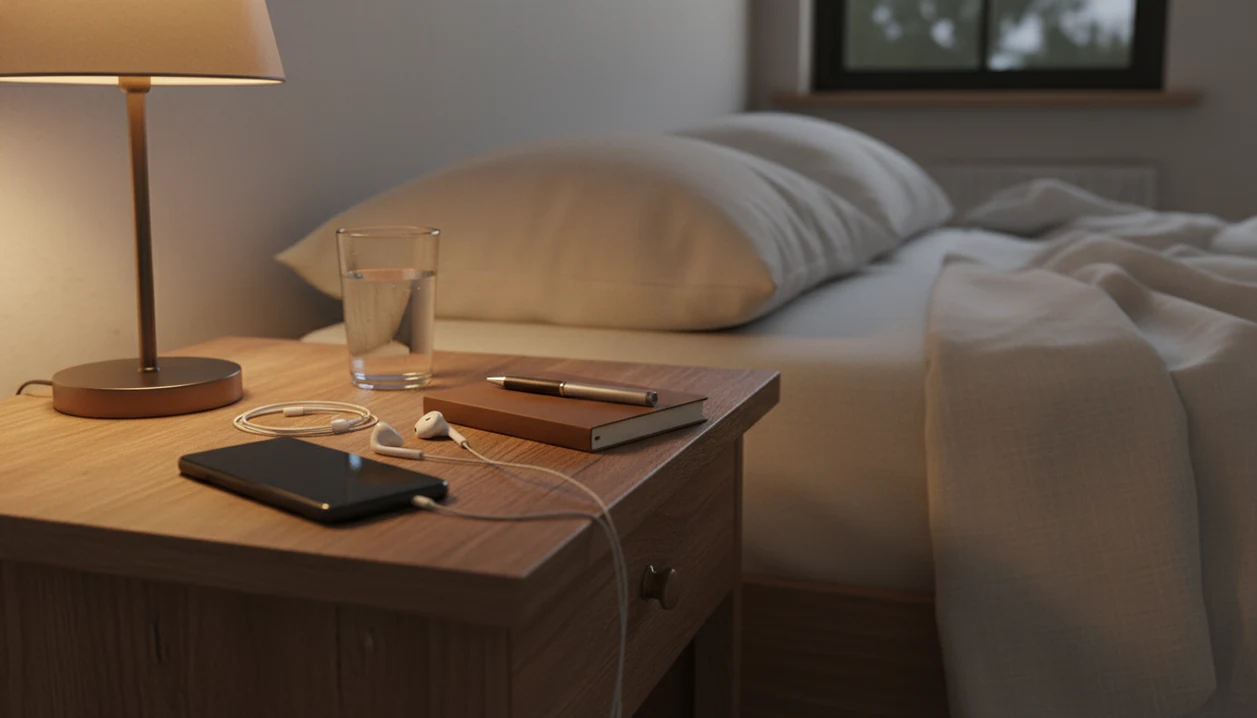


An evening meditation habit is a short, repeatable wind-down practice done most nights to decompress, reflect, and prepare for sleep. A practical starting point is 5 to 10 minutes of guided audio after an existing bedtime cue, such as brushing teeth or dimming a lamp. Keeping the screen dim or locked makes listening part of the routine rather than another reason to stay on the phone.
The practice can combine gentle breathing, body awareness, and brief reflection without requiring a long silent session. A guided evening meditation app can supply sleep audio and breathing cues, but the useful part is a sequence that is easy to repeat. The aim is a calmer transition out of the day, not guaranteed sleep or a completely empty mind.
The nightly essentials
- A nightly meditation habit works best when it is small, consistent, and tied to a cue you already do before bed.
- The strongest routine combines decompression, light reflection, breathing, and sleep-friendly audio rather than forcing a long silent session.
- Use a guided evening meditation app in audio-only mode, then put the screen away so the app supports sleep instead of becoming more nighttime screen time.
Evening meditation habit basics for nightly decompression
Quick answer: an evening meditation habit is a repeatable practice done in the 10-30 minutes before bed, or inside a wider 30-90 minute wind-down window. It helps you shift from task mode into decompression, reflection, and sleep preparation.
It is not a cure for insomnia or anxiety. Think of it as a supportive practice that makes the evening less abrupt. The phone goes face-down on the nightstand. The room gets quieter.
Meditation is also mainstream now. Per the CDC's National Health Interview Survey, 14.2% of U.S. adults reported using meditation in the past year in 2017, up from 4.1% in 2012: CDC guidance: db325.htm. Tools like MindTastik can offer guided audio for sleep anxiety, everyday calm, breathing, and bedtime relaxation, but the habit still depends on when and how you use it.
How an evening meditation habit works
An evening meditation habit works by making the same calming sequence easy to repeat at bedtime. The cue is something ordinary, like brushing your teeth or dimming the lamp; the routine is a few minutes of breathing, body awareness, or guided audio; the reward is not guaranteed sleep, but a clearer signal that the day is ending.
Breathing gives attention a steady rhythm, and body awareness helps you notice clenched shoulders, a tight jaw, or a busy chest without immediately reacting to them. That can reduce nighttime arousal, meaning the body’s “on alert” feeling, enough to make sleep preparation smoother. Short repetition usually beats occasional long sessions because the brain learns from consistency. A six-minute track most nights becomes familiar; a 40-minute session once in a while can feel like another task. The practice is best judged by whether it helps you wind down, put the screen away, and return attention gently when thoughts keep moving.
10-minute evening calm routine before sleep
A 10-minute evening calm routine works by pairing a repeated cue with a predictable downshift: breathe, notice the body, follow audio, then stop interacting with the day. In habit terms, the cue starts a habit loop; in plain language, your brain learns, “this is what we do before sleep.”
Breathing, body awareness, and guided audio can lower arousal and make racing thoughts less sticky. The thoughts may still be there. Unread emails can replay behind closed eyes, but the practice gives your attention somewhere steadier to land.
Mindfulness research suggests benefits for stress, anxiety, and sleep quality, although evidence on evening-specific timing is more limited. Clinicians typically recommend behavioral sleep care for persistent insomnia, with relaxation practices used as support rather than a stand-alone fix.
Audio guidance can help, but bright interactive device use near bed can delay sleep. If the screen wakes you up, lock it and listen.
Five nightly meditation habit facts that make it stick
- Consistency matters more than session length; a 6-minute practice repeated most nights usually beats one ambitious session on Sunday.
- Starting with 5-10 minutes is easier to sustain than promising yourself 30-60 minutes when you are already tired.
- A strong cue already exists in your night, such as brushing your teeth, dimming lights, or getting into bed.
- Missing one night is a reset point, not failure; restart with the smallest version the next evening.
- Meditation works better beside sleep-friendly changes: dim lights, reduced screens, a cool room, and quiet audio. A calm-down toolkit for adults can help you combine these practical supports into a repeatable bedtime plan.
For beginners, a short guided session is often easier than silent meditation because it reduces decision-making at the exact moment willpower is low. If daytime stress follows you home, practices like mindfulness practices at work can also make the evening less overloaded.
How to start a meditation habit before bed
How to use an evening routine: build it so the first week feels almost too easy. The goal is repetition, not a dramatic first night.
- Set a realistic bedtime target and choose a 30-90 minute wind-down window before it.
- Pick one cue that already happens nightly, such as brushing your teeth or turning down the lights.
- Choose a 5-10 minute guided audio track, breathing session, or body scan. If you prefer counted breathing, try box breathing as a simple option for your evening wind-down.
- Dim or lock the screen, then listen without browsing for another session.
- Place the phone away from the bed when the audio ends.
- Track completion lightly for one week, then adjust the length only after the routine feels automatic.
A checkmark on paper is enough. No dashboard required.
If you like reflection before audio, an emotion wheel can help you name the day without turning bedtime into a long analysis session.
Guided evening meditation app routine
A guided evening meditation app is most helpful when the session fits what the night is asking for. One person may want a calm voice to settle mental chatter, while another may need a brief reset after a stressful drive home.
- Stress decompression: choose a short guided meditation with simple breathing.
- Sleep anxiety: use a calm voice track that returns attention to the body.
- Gratitude reflection: pick a brief prompt-based session, not a long journaling drill.
- Body relaxation: try a body scan when your shoulders or jaw feel tight.
- Quiet soundscape: use steady audio when words feel like too much.
MindTastik can provide guided meditation, breathing exercises, sleep audio, reflection tracks, and self-hypnosis sessions. A 2020 randomized trial of an app-based mindfulness program found reduced perceived stress and improved well-being, NIH research: PMC7474754, but audio-first use matters.
Set the volume and stopping point before listening
Audio needs a stopping point as well as a starting cue. Use a comfortable low volume, avoid earbuds that cause pain or pressure, and set a timer so playback does not continue throughout the night. These precautions help limit disturbance and prolonged sound exposure. NHS sleep-hygiene guidance also recommends allowing roughly one to one and a half hours to wind down, with meditation as one possible activity.
Background sound is optional, not a required ingredient in an evening meditation habit. A review of 34 studies on white noise, pink noise, and combined audio interventions found no clear overall evidence that auditory stimulation reliably improves sleep. A recording can serve as a familiar listening cue without being treated as a sleep treatment. Quiet practice remains a reasonable alternative when sound feels distracting.
Best users and not-for situations for bedtime meditation
Bedtime meditation fits adults who want a simple nightly meditation habit, gentle reflection, anxiety support, and sleep preparation. It is less suitable when someone expects meditation to instantly knock them out every night.
| Fit | Best for | Not ideal for |
|---|---|---|
| Simple routine | Adults who want an evening calm routine | People wanting a guaranteed sleep switch |
| Beginner support | People who prefer guided audio over silence | People who get frustrated when thoughts continue |
| Sleep preparation | Listeners who can use audio with the screen locked | Anyone who turns the app into late-night scrolling |
| Mental health support | Mild stress decompression and everyday calm | Severe anxiety, depression, trauma symptoms, or crisis needs |
| Insomnia care | A supportive add-on to sleep hygiene | A replacement for CBT-I, therapy, medication, or medical care |
The most common medically supported path for chronic insomnia is evidence-based insomnia care, often CBT-I, with relaxation practices used as an added support when appropriate. For app comparisons, free meditation apps for sleep can help you compare options without overbuilding the routine.
Evening meditation for sleep mistakes to avoid
“Why does evening meditation stop working for me?” Usually, the routine is too long, too bright, or judged by the wrong outcome.
Skip the kind of routine that relies on forcing yourself through too many steps. In the middle of the night, when the room is quiet and sleep still feels far away, a 45-minute plan can start to feel like another task.
Do not judge success by whether thoughts disappear. Meditation trains noticing and returning, not mental blankness.
Do not use guided audio as an excuse for 30 minutes of scrolling. Pick the track earlier, dim the phone, and stop searching.
Do not treat one missed night as a broken streak. Reset the plan.
Do not meditate in a stimulating environment with bright lights, work messages, or stressful content immediately before bed. If commute stress is the issue, mindfulness while commuting may help before bedtime arrives.
Evening meditation habit image caption
Suggested image: a bedside scene with dim light, a phone face-down or locked, headphones, a small journal, and a calm sleep space. The image should show guided evening meditation as a practical routine, not a staged wellness fantasy.
Caption: Guided evening meditation with low light, brief reflection, and reduced screen interaction before sleep.
Alt text: Evening meditation habit setup with locked phone, headphones, journal, and dim bedside light.
Keep the setup easy to repeat. A phone with guided audio, a soft lamp, and a quiet room can be more useful than trying to create a perfect retreat. The goal is a habit you can return to without effort.
Short audio for the end of the day
MindTastik’s guided meditation library suits adults who prefer spoken cues for breathing or body awareness before bed. Breathing exercises can give the routine a simple focus, while gratitude sessions offer an option for brief evening reflection. Choosing a familiar recording keeps the session from becoming a nightly search for something new.
People who find voices distracting may prefer quiet practice or a soundscape. Persistent insomnia or severe anxiety calls for appropriate care, not a larger audio library. MindTastik is not a medical treatment.
What a bedtime habit cannot promise
Evening meditation can support sleep preparation, but the evidence has limits. High-quality research specifically on evening or pre-bed meditation timing is limited; much of the benefit is inferred from broader mindfulness research.
- Meditation is not a standalone treatment for chronic insomnia, severe anxiety, depression, trauma symptoms, or medical sleep disorders.
- Some people feel more aware of distressing thoughts when they first practice quietly at night.
- A guided evening meditation app can backfire if it becomes bright, interactive screen time.
- Results vary by consistency, bedroom environment, caffeine or alcohol use, stress level, medications, and health conditions.
- People with persistent sleep problems should consider professional guidance, including evidence-based insomnia care.
- If quiet practice feels upsetting, try a shorter breathing track, eyes open, or a daytime practice first.
Apps and resources such as Calm, Headspace, mindful.org, and MindTastik can support practice, but they should not replace therapy, medication, emergency support, or medical evaluation when those are needed.
Three audio options for a 5-, 10-, or 15-minute wind-down
| Technique | Best for | Minutes |
|---|---|---|
| Guided breath reset | settling into a steady breath after a busy evening | 5 min |
| Body scan wind-down | noticing tension without turning the session into problem-solving | 10 min |
| Sleep story transition | replacing mental replay with a gentle listening cue | 15 min |
If your nervous system needs something faster than a full sit, try MindTastik breathing exercises for guided breath pacing.
Evening meditation habit questions
Should I meditate right before bed or earlier in the evening?
Either can fit a wind-down routine. A useful starting point is after a regular cue, such as brushing teeth or dimming the lights. Research specifically comparing evening meditation times is limited, so there is no established best minute before bed. Choose a time that does not turn the practice into another rushed task.
Why do my thoughts keep racing during bedtime meditation?
Meditation does not require thoughts to stop. The practice is noticing mental activity and returning attention to the breath, body, or recording. Quiet at night can also make distressing thoughts more noticeable. If that happens, a brief guided session may be more manageable than prolonged silence; persistent distress deserves appropriate support.
Is a body scan or breathing meditation better before sleep?
A body scan offers a focus for noticing tension in places such as the jaw and shoulders. Breathing meditation gives attention a repeated rhythm. Neither is established here as the best bedtime technique for everyone. Choose the one that feels simpler to follow, rather than switching methods every night in pursuit of guaranteed sleep.
Can evening meditation replace insomnia treatment?
No. Evening meditation is a supportive wind-down practice, not a replacement for prescribed treatment or cognitive behavioral therapy for insomnia. Research on mindfulness and sleep generally assesses repeated sessions, not an instant cure. Persistent insomnia, severe anxiety, or suspected medical sleep problems need appropriate assessment rather than meditation alone.
Is it OK to use a phone for bedtime meditation?
A phone can provide guided audio without becoming the main activity. Select the recording before starting, dim or lock the screen, and stop browsing. Use a comfortable low volume and a playback timer. If choosing tracks repeatedly leads to late-night scrolling, quiet breathing without a device may be the more useful routine.
What should I do after missing a night of meditation?
Resume the smallest manageable version the next evening. A missed night does not require a longer catch-up session or a new routine. Keep the same starting cue and familiar practice. Tracking whether the session happened can be useful, but a streak should not become another source of bedtime pressure.