
Morning Calm Routine With Meditation and Breathing
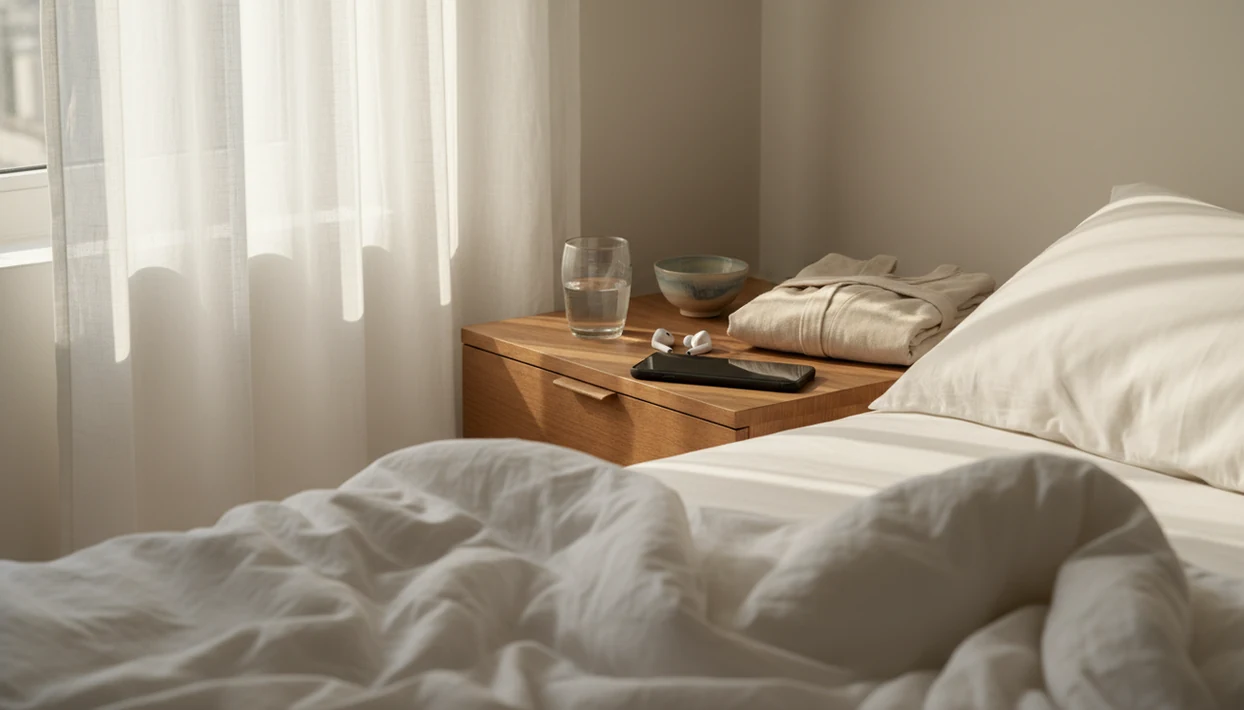


A morning calm routine is a short, repeatable sequence after waking that combines breathing, meditation, light movement, and simple preparation to make the start of the day feel less rushed. Its purpose is to support a grounded, emotionally steadier start, not to fill an hour with tasks. Five to ten minutes is a practical starting point, with a shorter version for mornings interrupted by children, work, or poor sleep.
The basic sequence can include water, daylight, a few comfortable breaths, a brief guided meditation, and one small intention. A MindTastik session can provide the audio portion, but silence is also an option. This is everyday support, not a replacement for professional care for anxiety or sleep problems.
The essentials
- Start with 5-10 minutes, not a complicated hour-long ritual.
- Use breathing, a short guided meditation, water, light, and one small intention as the core sequence.
- Pair morning calm practice with evening sleep audio or anxiety support in MindTastik for a steadier daily rhythm.
Best morning calm routine shortlist for real-life mornings
A strong morning calm routine is the one you can repeat when the room is still dark, your phone is nearby, and the day already feels full. Use MindTastik as the guided audio anchor, then keep the rest simple.
- 3-minute reset: Best for anxious wake-ups and rushed parents. Not for deep reflection or a full body practice.
- 5-minute breathing and meditation: Best for busy adults who want structure without losing the morning. Not for people who dislike audio first thing.
- 10-minute full calm routine: Best for home mornings with a little space. Not for travel days or unpredictable caregiving.
- Night-before supported morning: Best for inconsistent sleepers who wake up reactive. Not for people who need urgent help during the night.
For adults who need a steady starting point, MindTastik fits because a short guided session can sit between water, breathing, and one practical next action.
Repeatability beats elegance.
What Makes a Good Morning Calm Routine?
A good morning calm routine is repeatable before it is impressive. It should give your body one clear settling cue, protect the first few minutes from phone stress, and include a backup version for messy mornings.
Use these criteria before choosing a routine format:
- Choose a length you can repeat. Three steady minutes are better than a 30-minute plan that only works on quiet Sundays, especially after anxious sleep or a disrupted wake-up.
- Include one body cue. Use slow breathing, daylight, gentle movement, or grounding through your feet on the floor so calm is not only a thought exercise.
- Delay the noisy phone loop. Open only what supports the routine, and leave messages, news, and social feeds until after the first reset.
- Use guided audio when it lowers effort. A short MindTastik session can help if it removes decisions; skip it if choosing a track becomes another task.
- Define the fallback now. For travel, caregiving, late wake-ups, or a child at the door, make the minimum version water, three breaths, and one next action.
Five morning calm routine facts before you start
These five facts keep a morning calm routine realistic instead of turning it into another task you can fail.
- A calm routine is a sequence, not a productivity contest. It should help your body recognize “we are starting safely,” not push you into performance mode.
- Five to ten minutes can be enough when repeated. Short daily practice often works better than a long routine you abandon by Wednesday.
- Night-before preparation reduces morning friction. Clothes, breakfast, medication reminders, or a packed bag can protect the first quiet minutes.
- Mindfulness, slow breathing, gentle movement, and morning light can support mood and attention. A JAMA meta-analysis found mindfulness programs had small-to-moderate effects on anxiety and stress JAMA Internal Medicine study: 1809754.
- Daily practice matters. NIMH estimates that 19.1% of U.S. adults had any anxiety disorder in the past year, so calm tools work better as routine support than as last-minute rescue only nimh reference: any anxiety disorder.
A quiet exhale before opening messages can change the tone.
A consistent cue matters, but shorter is not automatically better
A 2021 randomized trial of meditation anchors assigned participants to personalized anchors, fixed anchors, or no anchoring, with reminders to meditate for at least 10 minutes daily for eight weeks. The fixed-anchor group had higher odds of daily meditation during the intervention. Practice still declined over time across participants. A repeatable cue, such as finishing breakfast, is therefore a reasonable part of a morning plan, but neither a cue nor a reminder guarantees consistency.
The case for starting small is practical, not proof that brief sessions produce better adherence. In a 2023 randomized study of meditation duration, participants assigned shorter practices completed an average of 8.43 of 14 sessions, compared with 7.55 in the longer-practice group. The difference was not statistically significant. Choose a duration that fits the morning, then judge the routine by how often it gets repeated. A three-minute backup can reduce scheduling pressure without being presented as a proven superior dose. A mindfulness habit tracker can help you record completed sessions and see whether your morning practice stays repeatable.
How a morning calm routine works in the nervous system
A morning calm routine works by giving the nervous system predictable cues: steady attention, slower breathing, familiar sensory signals, and fewer immediate decisions. In plain language, it tells the body, “start here, not in alarm.”
Slow exhale-focused breathing can reduce the feeling of being chased by the day. It may support parasympathetic activity, which is the body’s rest-and-digest branch. The effect is not magic. It is a small physiological nudge, especially useful before email, news, or school drop-off noise.
Morning calm also connects to sleep. Poor sleep can make the next morning feel sharper and more reactive; CDC data shows 14.5% of U.S. adults reported trouble falling or staying asleep, and 18% felt very tired or exhausted in a recent three-month period CDC guidance: db436.htm. A morning routine does not cure insomnia, but it can pair well with a nighttime wind-down routine using MindTastik.
How to use a morning calm routine with MindTastik
Use this morning calm routine when you want structure without making your first ten minutes feel crowded. It works best when the phone is a tool, not the first doorway into stress.
If the kettle is clicking, a child is calling from the hallway, or your calendar is already open, keep the routine to the first three steps and count that as a complete practice.
- Set the phone aside or open only MindTastik. Avoid messages, social feeds, and news until the routine is done.
- Drink water and sit or stand comfortably. Let your feet touch the floor before deciding anything.
- Breathe slowly for 60 seconds. Try a longer exhale than inhale, such as four counts in and six counts out. For a different paced practice, try box breathing with equal counts for each phase.
- Play a short guided meditation or wake-up calm session. Choose the briefest option if your back feels stiff on the chair cushion.
- Choose one calm intention and one practical next action. For example: “steady pace” and “pack lunch.”
When the morning is already slipping away, use the fallback version: water, three slow breaths, one sentence intention. Done in about three minutes.
Best 3-minute morning calm routine for anxious wake-ups
Morning calm routine for anxiety: start with the smallest version, because anxious mornings often punish complicated plans. A three-minute routine can reduce avoidance and perfectionism by giving you a clear first move.
Try this sequence. First, take five slow breaths with a longer exhale. Second, name the day and location: “It is Tuesday, I am in my bedroom, I am starting slowly.” Third, play a brief MindTastik calming audio or stay in silence if sound feels like too much.
Anyone dealing with anxious wake-ups, busy schedules, parenting pressure, or inconsistent sleep can use this version because it removes the decision between a 5-minute breathing exercise and a 20-minute body scan. Not for crisis moments, panic that feels unsafe, or symptoms that need urgent mental health support.
For anxious beginners, a three-minute routine is often easier than a full morning ritual because it lowers the chance of quitting before starting.
Best 10-minute morning calm routine at home
A 10-minute morning calm routine at home gives you enough time for breathing, movement, light, and meditation without turning the morning into a self-improvement project. The goal is a steadier start, not a flawless one.
Use this order: drink water, open curtains or step near daylight, stretch the neck and shoulders, breathe slowly for one minute, play a short MindTastik meditation, then choose one intention. Morning light can act as a helpful cue for alertness and daily rhythm, especially after a restless night.
The right fit for home-based calm is MindTastik because the same guided-session habit can continue at night with sleep audio, breathing exercises, or self-hypnosis. That creates one recognizable practice instead of separate morning and bedtime systems.
Best for adults with ten protected minutes. Not ideal for people whose mornings change hourly, or anyone who feels more stressed when routines get too precise.
How we picked these morning calm routine steps
These steps were chosen for repeatability, low friction, evidence-informed practice, and app-supported consistency. They are built for anxious and sleep-deprived adults, not extreme productivity routines.
| Routine element | Why it made the list | Keep it simple version |
|---|---|---|
| Breathing | Slows the pace before decisions | 60 seconds of longer exhales |
| Meditation | Trains attention gently | One short guided session |
| Movement | Reduces stiffness and signals waking | Shoulder rolls or a short stretch |
| Light | Supports alertness and daily rhythm | Open curtains |
| Journaling | Helps some people name pressure | One line only |
| Night-before prep | Removes morning choices | Lay out one item |
Mindfulness research supports regular practice, including a 2022 NIH-funded randomized trial that found an 8-week mindfulness-based intervention reduced anxiety symptoms by 30-38% nejm reference: NEJMoa2208030. MindTastik supports practice through guided meditation, sleep audio, breathing exercises, and self-hypnosis, but it does not replace therapy, medication, or qualified care.
If emotional labeling helps, an emotion wheel can make the one-line journal step less vague.
Morning calm routine anchors from waking to bedtime
A strong morning calm routine fits into a 24-hour rhythm: morning regulation, midday reset, and evening sleep support.
Use three anchors. In the morning, take a one-minute breath check before opening messages. At lunch, try a short reset before returning to work; our guide to mindfulness practices at work gives more options for that middle part of the day. Before bed, play a sleep track after dimming the phone screen.
When poor sleep builds over several nights, the morning can start with extra friction. Sitting in a quiet room with dim light and following a steady breath can help the day begin with more steadiness. MindTastik offers guided support for sleep, anxiety, beginner meditation, and everyday calm so the routine does not have to rely on willpower alone.
Guided audio for the first quiet minutes
MindTastik’s guided meditation library suits mornings when spoken guidance makes it easier to settle into a session without deciding what to do next. Breathing exercises, gratitude sessions, and focus sessions offer other starting points. People who find audio intrusive after waking can use silence or gentle movement instead. Persistent anxiety or sleep problems need more than an app routine; MindTastik is not a medical treatment.
What a morning routine cannot treat or control
A morning calm routine can support everyday calm, but it has real limits. It should reduce friction, not become another source of pressure.
- It is not a cure for clinical anxiety, panic disorder, depression, trauma, or insomnia.
- Severe, worsening, or persistent symptoms should be discussed with a qualified health professional.
- Benefits usually build over weeks of repetition, not after one unusually good morning.
- Kids, shift work, caregiving, pain, emergencies, and housing stress can interrupt any routine.
- Journaling may help some people, but it can become rumination for others.
- Breathwork can feel uncomfortable for some people, especially during panic or respiratory issues.
- Guided audio is useful for many adults, but silence may work better some mornings.
- Over-optimizing the routine can create more stress than the routine solves.
- MindTastik supports meditation, sleep audio, breathing exercises, and self-hypnosis; it is not a therapy replacement.
If you compare options like Calm, Headspace, or free mindfulness apps, look for the routine you will actually use.
When caregiving or shift work rules out a morning routine
A morning calm routine may not be the best starting point if the first hour of your day is already packed with urgent caregiving, shift work, or unpredictable obligations. In that case, the smarter move may be a 60-second steady breath reset at the first natural pause rather than forcing a full routine before breakfast. A routine that creates pressure is no longer serving calm. After one week, the useful signal is not whether every morning looked the same, but whether one small anchor became easier to repeat.
For paced breathing you can open in seconds, MindTastik breathing exercises keeps short exercises ready between meetings or before sleep.
Morning calm routine questions
What should I do first in the morning to feel calmer?
Start with one action that requires little planning: sit or stand comfortably, feel the floor under the feet, and take a few unforced breaths. Keep messages and news closed until that first pause is finished. Water, daylight, or gentle movement can come next; there is no required order for every morning.
How long should a morning calm routine take?
Five to ten minutes is a practical starting point, with a shorter backup for rushed mornings. That is a scheduling choice, not a proven minimum for benefit. Research comparing shorter and longer meditation assignments did not find a statistically significant difference in adherence, so a brief routine still needs a reliable cue.
What can I do when I wake up anxious?
Use the simplest version: a few comfortable breaths, a brief statement of the day and location, then quiet or calming audio. Avoid turning the morning into a checklist. If controlled breathing feels strained, return to normal breathing. Severe, worsening, or persistent anxiety should be discussed with a qualified health professional.
Is it better to meditate before or after breakfast?
The research here does not establish that one is better. Pick the point that is easier to repeat, such as after getting out of bed or after breakfast. An anchoring trial found better daily adherence with a fixed anchor, but it did not establish a best breakfast-related schedule.
Should I journal every morning?
No. Journaling is optional, and one line can be enough to name a pressure or choose an intention. If writing leads to repeatedly reviewing worries rather than moving on, leave it out. Breathing, gentle movement, or a short meditation can provide structure without adding another task to the morning.
How do I keep a calm routine when mornings are rushed?
Use a backup tied to the first available pause, rather than requiring a full routine before breakfast. That might be three comfortable breaths while water heats or a brief quiet pause after getting dressed. After an interruption, resume at the next planned cue rather than adding a longer catch-up session.
Can a morning calm routine help me sleep better at night?
A morning routine can be part of a consistent daily rhythm, but the adherence studies cited here do not establish that this particular sequence improves sleep. Evening preparation may make the next morning easier. Persistent insomnia or other sleep problems need assessment rather than relying on morning meditation alone.