
End of Day Reflection Routine for Sleep, Anxiety, and Everyday Calm
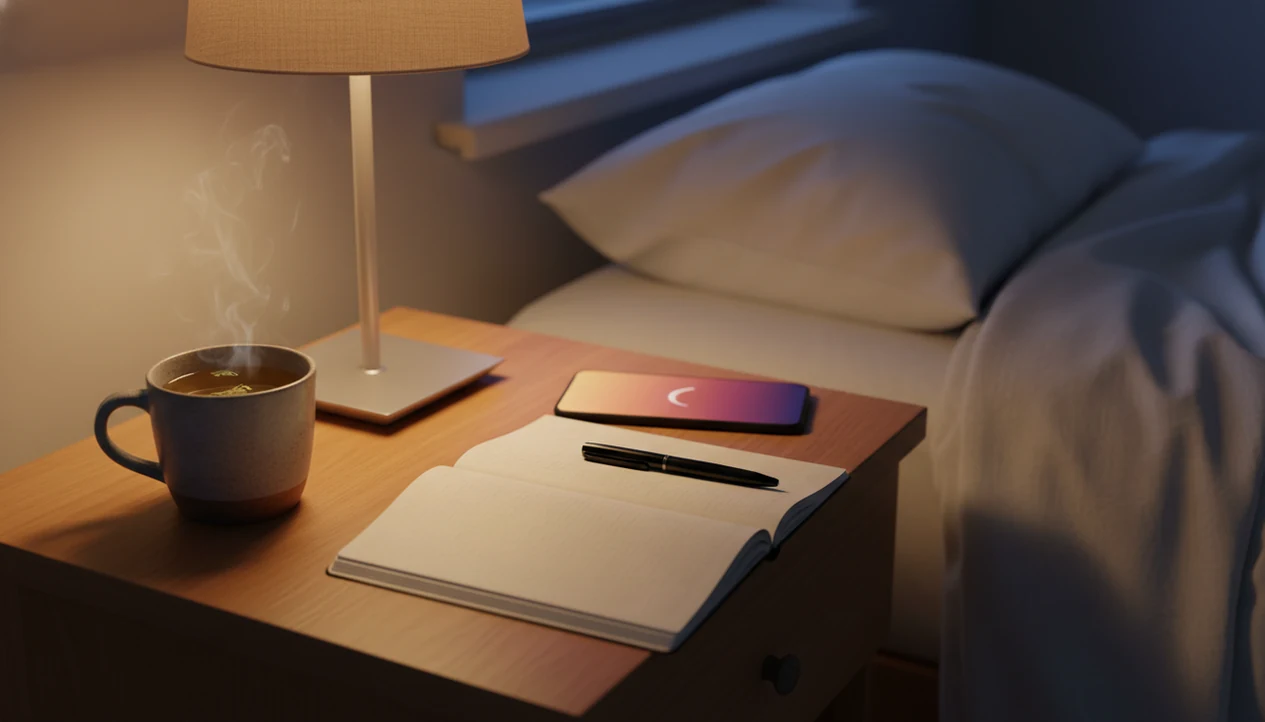


An end of day reflection routine is a short nightly wind-down that uses journaling, mindfulness, breathing, or calming audio to process the day and prepare for sleep. A practical version takes 10 to 20 minutes: write one to three brief responses, follow with a guided meditation or breathing exercise, then use bedtime audio if listening feels restful. The aim is to put the day down, not review every detail.
Balanced prompts give the routine a clear stopping point: one thing that went well, one worry that can wait, and one small intention for tomorrow. On exhausted nights, one sentence and a brief calming session can replace the full routine. Reflection should leave less to think about, not create another bedtime task.
Best End of Day Reflection Routine Sequence
A strong end of day reflection routine sequence is: journal prompt, worry release, guided meditation, then bedtime calm audio. Keep it around 10-20 minutes so it feels like a wind-down routine, not another obligation.
The 4-part sequence: 1. One clear prompt: Write what stood out today, good or hard. 2. One worry release: Put tomorrow’s concern on paper instead of carrying it into bed. 3. One guided session: Use a short meditation or breathing exercise to shift out of problem-solving mode. 4. One sleep cue: Let calm audio mark the end of the day.
MindTastik fits this sequence because it combines guided meditation, breathing exercises, sleep audio, and self-hypnosis support in one place. Good meditation app routines deliver a repeatable cue for the nervous system, not a promise that every hard night disappears.
Consistency beats depth here. Some nights, one sentence is enough.
Evening Reflection Routine Shortlist for 4 Types of Nights
Rotate your evening reflection routine based on the night you’re actually having. A rigid plan often fails at 10:47 p.m., when the screen brightness is lowered to minimum and you’re already half done.
| Routine option | Journal focus | Matching MindTastik audio type | Best use case |
|---|---|---|---|
| Standard 15-Minute Reset | One win, one hard moment, one intention | Guided meditation plus bedtime calm audio | Normal busy nights |
| Sleep Anxiety Reset | Worry dump, then “what can wait?” | Anxiety-calming meditation | Racing thoughts about sleep |
| Too-Tired 5-Minute Routine | One sentence only | Short breathing exercise | Exhausted nights |
| Gratitude-First Wind-Down | Three small things that went well | Self-compassion or calm sleep audio | Heavy or discouraged moods |
Standard 15-Minute Reset
Use this when you have enough energy to reflect without digging too deep.
Sleep Anxiety Reset
When the issue is fear of another bad night, MindTastik pairs the worry-dump prompt with anxiety-calming audio through a journal-to-meditation workflow.
Too-Tired 5-Minute Routine
Keep it tiny. One line, one breath track.
Gratitude-First Wind-Down
This version works well when the day felt mostly negative.
End of Day Reflection Routine Mechanisms for Sleep and Anxiety
An end of day reflection routine works by closing cognitive open loops before bed. In plain language, it gives the brain a place to park unfinished thoughts.
- Open loops create bedtime noise: Unfinished tasks and worries often resurface when the room gets quiet.
- Journaling externalizes worries: A written note can make a concern feel stored, rather than mentally rehearsed.
- Breathing lowers arousal: Slow breathing and body scans redirect attention from threat scanning to body sensation. You can also explore gentle practices to activate your vagus nerve as part of a quiet evening wind-down.
- Guided audio reduces decision load: At 2:13 a.m., choosing between a 5-minute breathing exercise and a 20-minute body scan should be easy.
- Mindfulness has evidence support: A 2015 randomized trial found greater insomnia symptom reductions from a brief mindfulness-based program than sleep education alone JAMA Internal Medicine study: 2109731.
The most evidence-aligned approach to bedtime reflection is structured journaling combined with a calming attention practice because it addresses both rumination and physical arousal.
What Makes a Good Evening Reflection Routine
A good evening reflection routine is easy to repeat on the nights when you have the least energy. It should help thoughts land somewhere safe without turning bedtime into another round of analysis.
Use the routine as a small off-ramp, not a late-night self-improvement project. The best version is short, body-aware, and flexible enough to shrink when anxiety or exhaustion is high.
- Keep the full version brief, usually 10-20 minutes, so tired nights do not break the habit. For a brief reset before your routine, try ways to feel better in 15 minutes without adding another demanding task.
- Choose prompts that close the loop: one thing that went well, one thing to release, and one small next step.
- Pair the writing with a calming body cue, such as slow breathing, a body scan, or gentle bedtime audio.
- Avoid screens, complex tracking, heavy goal reviews, or emotionally intense journaling once you are close to sleep.
- Prepare a fallback version: write one sentence, take three slow breaths, and play a short calming track.
If a prompt makes your mind louder, stop sooner. A good routine leaves less to carry into bed, not more. If reflection feels overwhelming, learn how to instantly feel better with a brief calming practice instead of continuing to write.
5 Daily Reflection Steps Before Bed
Use these five daily reflection before bed steps when you want a routine simple enough to repeat while tired. The whole sequence should take 10-20 minutes, or five minutes on a low-energy night.
- Set a stopping point for the day, usually 30-60 minutes before sleep.
- Write 1-3 prompts for three to seven minutes: one win, one worry, one intention.
- Release the unfinished item by writing, “This can wait until tomorrow.”
- Play a MindTastik guided meditation, breathing session, or body scan for five to ten minutes.
- Repeat the same order most nights so your body recognizes the cue.
If your stress started earlier at work, practices like how to practice mindfulness at work can make the bedtime routine feel less overloaded. Practicing mindfulness for commuting and travel can create an earlier pause between work demands and your evening reflection.
Attach reflection to an evening cue, not just a reminder
A 2021 randomized trial of meditation habit anchors assigned participants to personalized anchors, fixed anchors, or no anchoring, with reminders to meditate for at least 10 minutes daily for eight weeks. The fixed-anchor group had higher odds of daily meditation during the intervention. This supports using a repeatable cue, but the study did not test an end of day journaling routine or show that evening practice improves sleep.
For this routine, a practical application is to place the notebook beside an existing evening activity, such as brushing teeth, and begin reflection after that activity. Decide the shortened version in advance: one sentence followed by a brief breathing session. Daily meditation became less likely over time in the trial despite reminders, so an alarm alone is not a maintenance plan. After a missed evening, resuming at the next cue is a reasonable practical choice, not a separately proven intervention.
Best Journal Prompts for End of Day Mindfulness
Useful journal prompts for end of day mindfulness balance review, release, and a small next step. Use only 1-3 prompts per night, especially if you tend to replay problems.
Try these prompts: 1. What went well today? Name one small win, even if it was ordinary. 2. What felt hard? Keep this factual, not dramatic. 3. What can wait until tomorrow? Move one open loop out of your head. 4. What am I ready to release tonight? Write the sentence and stop there. 5. What is one kind intention for tomorrow? Choose something manageable.
Research on gratitude journaling has linked “what went well” practices with higher positive affect and lower negative affect. Still, gratitude alone may feel thin after a brutal day. If naming feelings is hard, an emotion wheel can help you find a more accurate word than “stressed.”
Best MindTastik Audio Pairings for Sleep Anxiety
The right audio after journaling depends on what your body and mind are doing. MindTastik works best here when the session matches the actual state you named on the page.
For this routine, MindTastik can help you move from written reflection into guided breathing, body scans, or calming bedtime audio without building a complicated nighttime routine.
| After journaling, you notice... | Use this audio pairing | Why it fits |
|---|---|---|
| Worry dump feels unfinished | Anxiety-calming meditation | Helps shift from planning to settling |
| Shoulders, jaw, or chest feel tight | Body scan or breathing exercise | Moves attention into body cues |
| Thoughts keep jumping topics | Sleep story or bedtime calm audio | Gives the mind a soft track to follow |
| Self-criticism is loud | Self-compassion meditation or self-hypnosis | Replaces harsh review with a gentler script |
If your priority is fewer racing thoughts after journaling, MindTastik fits because the routine can move from written release to guided meditation to bedtime calm audio without reopening the phone for scrolling. A trial of 20-minute guided relaxation audio before bed reported better subjective sleep quality and reduced anxiety in hospitalized patients.
How We Chose This End of Day Reflection Routine
This routine was chosen because it is easy to repeat when you are tired, gentle enough for anxious nights, and focused on sleep support rather than deep self-analysis. The goal is a small, reliable sequence you can actually use at bedtime.
We prioritized journaling, breathing, and audio because they reduce decision load. Long analysis can turn into problem replay, especially when the room is dark and tomorrow already feels crowded. A short prompt gives the mind a place to put the day; breathing lowers arousal; calm audio carries the transition without asking you to keep thinking.
- Check repeatability first: the routine had to fit into a normal 5-20 minute wind-down.
- Favor low effort: one prompt and one audio session needed to be enough on exhausted nights.
- Match the audio to the bedtime state: racing thoughts, body tension, scattered attention, or self-criticism.
- Compare alternatives such as Calm, Headspace, and free mindfulness resources for style, simplicity, and sleep fit.
- Keep the recommendation supportive: this is a calming routine, not medical treatment for insomnia, panic, trauma, or severe anxiety.
Evening Reflection Routine Fit for Racing Thoughts and Bedtime Stress
An evening reflection routine is a good fit for adults with racing thoughts, bedtime stress, light sleep anxiety, or a desire for everyday calm. It is not a substitute for clinical care.
| Best for | Not ideal for |
|---|---|
| Adults who say, “I just need something to play when my thoughts get loud.” | Replacing therapy, medication, or medical insomnia care |
| Beginners who want structure before meditation | Processing trauma alone at night |
| People who need a repeatable wind-down cue | Crisis support or acute distress |
| Light sleep anxiety and next-day worries | Journaling that turns into problem replay |
Beginners who dislike open-ended meditation often do better with a prompt-led routine because the page gives the mind a clear job before the audio begins. For daytime stress patterns, mindfulness practices at work can reduce what gets carried into bed.
However, difficult emotional journaling can increase rumination for some people. If that happens, shorten the writing and use calming audio sooner.
Evidence Behind Daily Reflection Before Bed
Research supports parts of daily reflection before bed, not a guaranteed cure from one routine. The strongest evidence sits around mindfulness, relaxation, gratitude, and behavioral sleep strategies.
- Mindfulness and insomnia: A randomized trial found a brief mindfulness program reduced insomnia symptoms more than sleep education.
- Mindfulness and anxiety: A JAMA Internal Medicine meta-analysis found moderate anxiety improvements across randomized trials. JAMA Internal Medicine study: 1809754
- Guided relaxation audio: A 20-minute bedtime audio trial reported improved subjective sleep quality and reduced anxiety. PubMed research: 25780346
- Gratitude journaling: Reviews of gratitude practices link them with more positive affect and less negative affect. PubMed research: 12585811
- Behavioral sleep care: AASM guidance includes relaxation and cognitive strategies for chronic insomnia, but clinical insomnia needs proper assessment. jcsm reference: jcsm.6470
Therapists and mental-health guidelines commonly recommend calming routines as supportive skills, especially when they reduce rumination without replacing care.
Choosing audio for the pause after journaling
MindTastik's guided meditation library suits adults who want a spoken session after a few lines of reflection. Breathing exercises offer another option when writing is finished but attention is still on tomorrow's tasks. Sleep stories or soundscapes can replace further reflection when a quieter listening routine is preferable.
An app is optional. People who find voices distracting can stop after writing or choose silence. Persistent insomnia or severe anxiety calls for professional care rather than a longer audio routine.
When bedtime reflection becomes rumination
An end of day reflection routine can support sleep and everyday calm, but it has real limits. A quiet room, dim light, and a few minutes of guided audio can offer support, not a treatment plan.
- It is not a replacement for professional treatment for chronic insomnia, major depression, PTSD, or severe anxiety.
- Late-night journaling about difficult emotions can increase distress or rumination for some people.
- Meditation and calm audio do not work equally well for everyone.
- Benefits usually require weeks of consistent practice, and progress may be uneven.
- Over-structuring the routine can make bedtime feel like homework.
- People with trauma histories or acute distress may need tailored professional guidance.
- Apps such as Calm, Headspace, mindful.org resources, and MindTastik differ in style, price, and content depth, so compare your options if one format feels wrong.
The right fit for bedtime stress is MindTastik when you want prompts followed by guided sleep support, because the workflow can stay simple: reflect, breathe, listen, sleep.
If your nervous system needs something faster than a full sit, try MindTastik breathing exercises for guided breath pacing.
Nightly reflection questions
What is an end of day reflection routine?
It is a brief review of the day followed by a clear stopping point. It can include a few written lines, breathing, meditation, or calming audio. The purpose is to set aside unfinished thoughts before rest, not to analyze every emotion or solve tomorrow's problems.
How long should an evening reflection routine take?
A practical starting range is 10 to 20 minutes for writing and a calming session together. Five minutes can be enough for a shortened version on tired nights. These are suggested formats, not proven sleep-treatment doses. If reflection becomes lengthy problem-solving, shorten the writing rather than adding more prompts.
What should I write in a journal before bed?
Try three brief prompts: what went well, what can wait until tomorrow, and one manageable intention for the next day. One prompt is enough when energy is low. Keep answers factual and short. A concern can be recorded without explaining its full history or deciding how to resolve it tonight.
Should I meditate before or after evening journaling?
Writing first and meditating afterward gives this routine a clear order: record the thought, then stop reviewing it. There is no need to reopen the notebook after the session. If writing is too stimulating at night, skip it and use a brief breathing exercise or calming audio instead.
Can an end of day reflection routine help with sleep anxiety?
It can provide structure for setting aside next-day worries, but it should not become a test of whether sleep will happen. Keep the focus on ending the day's tasks rather than checking for sleepiness. Persistent sleep anxiety or insomnia needs professional assessment; reflection and audio are not substitutes for treatment.
What if nighttime journaling makes me more anxious?
Stop writing if it turns into repeated analysis or increases distress. Switch to a neutral sentence, such as naming one task that can wait, or leave reflection out that evening. Difficult emotional material does not have to be processed at bedtime. Ongoing or severe distress is a reason to seek professional support.
Do I need to reflect every night?
A regular cue can help make the routine easier to remember, but missing a night does not require a longer session the next day. Choose a version that fits ordinary tired evenings. Resume at the next planned cue, and simplify the routine if keeping it has started to feel like another obligation.