
Calm-Down Exercises for Adults: 7 Quick Ways to Reset Stress
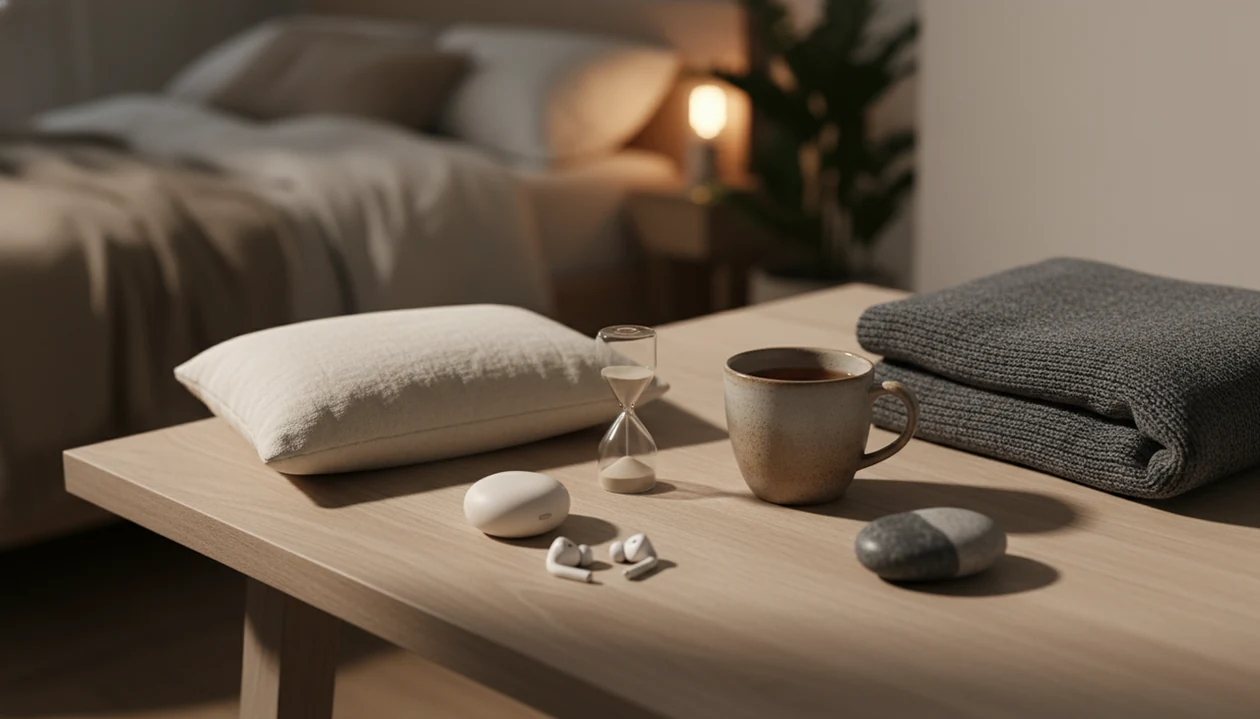


Calm-down exercises for adults are brief breathing, sensory, muscle-release, movement, or mindfulness practices that can reduce acute stress and support a steadier daily routine. Useful starting points include box breathing, 5-4-3-2-1 grounding, progressive muscle relaxation, a body scan, and a short guided meditation. The aim is to lower tension enough to choose a next step, not to erase every uncomfortable feeling.
Match the exercise to the moment. Box breathing offers a simple rhythm before a meeting, while sensory grounding directs attention away from racing thoughts and toward the room. Muscle relaxation and body scans suit tension that accumulates during the day or at bedtime. Repeat a manageable practice at a predictable daily moment, and change methods if breath holds or body focus increase distress.
Choose a quick reset
- Use fast exercises like box breathing or 5-4-3-2-1 grounding when stress spikes.
- Use body scans, progressive muscle relaxation, guided meditation, or sleep audio when tension builds across the day or at bedtime.
- MindTastik supports these routines with guided meditation, sleep audio, breathing exercises, and self-hypnosis sessions for adults who want sleep, anxiety, and everyday calm support.
Best calm-down exercises for adults by stressful moment
No single calm-down exercise works for every adult, so match the method to the moment. A tense meeting, a crowded train, and a wakeful stretch in a quiet room may each call for a different reset.
| Exercise | Best for | Time needed | Where to use it | Not for |
|---|---|---|---|---|
| Box breathing | Work stress, pre-meeting nerves | 1-3 min | Desk, parked car | Breath-hold discomfort |
| 5-4-3-2-1 grounding | Racing thoughts | 1-2 min | Public spaces, transport | Severe panic alone |
| Progressive muscle relaxation | Body tension | 5-15 min | Bed, couch | Painful injuries |
| Body scan | Bedtime settling | 5-20 min | Bedroom | People who dislike body focus |
| Guided meditation | Beginners | 3-20 min | Anywhere with earbuds | Urgent mental health crises |
| Mindful walking | Anger, restlessness | 5-10 min | Hallway, sidewalk | Unsafe spaces |
| Calming sleep audio | Nighttime worry | 10-30 min | Bed | Needing active problem-solving |
MindTastik can keep guided audio and breath sessions in one routine, which helps when your headphones are already packed in a work bag.
Adult nervous system effects of calm-down exercises
Calm-down exercises work by shifting attention and body signals away from threat mode and toward a relaxation response. Fight-or-flight is the body’s alarm state; the relaxation response is the slower-breathing, lower-tension state that helps you recover.
Slower breathing can reduce arousal by giving the body a steadier rhythm. Sensory grounding pulls attention toward the room instead of the worry loop. Muscle release teaches the difference between clenched and relaxed. Guided attention gives the mind a track to follow, especially through cheap earbuds when posture already feels uncertain.
A 2014 meta-analysis found mindfulness-based interventions produced moderate reductions in anxiety symptoms compared with controls JAMA Internal Medicine study: 1809754. Accessible coping tools matter because about 19.1% of U.S. adults had an anxiety disorder in the past year, according to NIMH nimh reference: any anxiety disorder.
These exercises can support anxiety management, not cure anxiety. Therapists and mental-health guidelines commonly treat self-calming skills as supportive practice, not a replacement for care.
5-step everyday calm routine for adults
A everyday calm routine works better when each exercise has a job. Start with 2 to 5 minutes, not a 40-minute plan you’ll abandon by Wednesday.
- Pick one wake-up exercise, such as three rounds of longer-exhale breathing before checking messages.
- Set a commute reset, such as 5-4-3-2-1 grounding or mindfulness while commuting.
- Practice one work-break exercise, such as box breathing with feet planted on office carpet. For a steadier afternoon, a midday meditation reset offers a brief pause between work tasks.
- Log what helped after conflict, using an app note, journal, or the feelings wheel.
- Adjust bedtime support, choosing between a 5-minute breathing exercise and a 20-minute body scan. For another brief bedtime option, try a 10-second brain reset before bed as part of your evening routine.
Small counts.
If the priority is repeatable everyday calm, MindTastik fits adults who want guided sessions at wake-up, work break, and bedtime because the routine can combine breathing, sleep audio, and meditation in one library.
Box breathing for immediate stress control
How do I calm down quickly before a stressful moment? Box breathing gives adults a simple 4-4-4-4 pattern: inhale for 4, hold for 4, exhale for 4, hold for 4.
Use it before a meeting, after a sharp email, or when you need structure more than insight. Keep the count gentle. Your goal is rhythm, not lung capacity.
Best for: quick regulation, pre-meeting nerves, and work stress. Not ideal for: people who feel more anxious when holding their breath.
If the hold feels tight, switch to longer exhales instead. Try inhale 3, exhale 5. For more workplace-specific options, how to practice mindfulness at work covers short resets that don’t require a quiet room.
5-4-3-2-1 grounding for overwhelm and racing thoughts
How do I calm down when overwhelmed? Use 5-4-3-2-1 grounding to name your surroundings: 5 things you see, 4 things you feel, 3 things you hear, 2 things you smell, and 1 thing you taste.
Sensory naming redirects attention to the present environment. It is discreet enough for a train seat during the evening commute, a waiting room, or a tense office hallway. No one needs to know you’re doing it.
Best for: racing thoughts, mental overload, and public moments when you can’t step away. Not enough alone for: severe panic, trauma symptoms, or situations where you feel unsafe.
For adults who need words for the stress first, an emotion wheel can make the next exercise easier to choose.
Name the feeling briefly, then choose an action
Putting a feeling into words can be a useful step between grounding and deciding what to do next. In four experiments on emotion labeling, participants who named their feelings while viewing negative images reported less distress than those who simply watched. A practical version is one short statement, such as “I feel overwhelmed and angry,” followed by a concrete action, such as pausing a conversation or trying muscle release.
Labeling is not a reliable calming method in every situation. A 2022 experiment comparing different levels of distress found that labeling helped during high-intensity aversive stimulation but could increase distress under low-intensity conditions. Keep the label brief rather than repeatedly examining a mild feeling. If naming the emotion makes it more consuming, return to the surroundings or choose another exercise. These laboratory findings do not establish that labeling will stop a panic attack.
Progressive muscle relaxation for bedtime body tension
Progressive muscle relaxation, or PMR, uses a tense-and-release method to help adults notice and soften body tension. Move from feet to face, or face to feet, gently tightening one muscle group and then releasing it.
- Feet and legs: tense briefly, then let the mattress take the weight.
- Hands and arms: make a light fist, then open the fingers.
- Shoulders and face: lift or squeeze gently, then soften the jaw.
Try PMR before sleep or after a high-stress day. Progressive muscle relaxation has been studied in adults with anxiety symptoms, including reviews that report reduced anxiety in some groups, though results vary by population and program structure NIH research: PMC9271554.
Best for: physical tension and bedtime body scanning. Not for: painful injuries, medical restrictions, or areas that should not be tensed.
Adults trying to unwind after a long day can pair PMR with MindTastik sleep audio or guided meditation because the audio track provides pacing when the mind keeps wandering.
Guided meditation and body scans for anxiety support
Body scans move attention through the body without forcing relaxation. You notice the forehead, jaw, chest, stomach, legs, and feet, then return when the mind runs ahead to tomorrow’s meeting.
- Body scans: useful when tension is spread across the whole body.
- Guided meditation: helpful for beginners who don’t know what to do next.
- Sleep audio: easier at night, especially after dimming the phone screen.
- Self-hypnosis sessions: structured audio for habit and relaxation practice.
MindTastik is a meditation and self-hypnosis app offering guided meditation, breathing exercises, sleep audio, and self-hypnosis sessions for stress, anxiety, sleep, and everyday calm.
For beginners, guided audio can be easier than silent practice because a voice gives you the next step. Use guided meditation, breathing exercises, sleep audio, or self-hypnosis as supportive practice, not as a replacement for therapy, medication, or urgent care.
Good meditation apps for sleep, anxiety, and everyday calm provide repeatable guided practice, not a medical diagnosis.
Gentle movement exercises for anger and restlessness
Movement may work better than seated meditation when anger or restlessness is high. The body sometimes needs a safe outlet before stillness feels possible.
- Mindful walking: walk slowly and match steps to longer exhales.
- Slow stretching: loosen the neck, back, and hips without forcing range.
- Shoulder rolls: release bracing after conflict or screen fatigue.
- Simple yoga poses: use steady, low-effort shapes rather than intensity.
A Cochrane review found yoga interventions were associated with reductions in anxiety symptoms in some adult groups, though effects varied by study design and population cochrane reference: DEPRESSN yoga anxiety disorders. Pair movement with slow exhalations instead of turning the reset into hard exercise.
Adults looking for agitation relief may prefer mindful walking or stretching first, while seated meditation fits better once the body has settled.
Best for: anger, pacing, and restless energy. Not for: unsafe spaces, dizziness, or painful movement.
When to seek professional help for anxiety or panic
Seek professional help when anxiety or panic starts interfering with sleep, work, relationships, caregiving, or basic daily tasks. Calm-down exercises can support care, but they cannot diagnose anxiety, treat panic disorder, or replace a clinician’s judgment.
- Use urgent support now if you have suicidal thoughts, feel at risk of self-harm, or worry you might hurt someone else. Call emergency services, a crisis line, or go to the nearest emergency department.
- Contact a doctor, therapist, or qualified mental health clinician if panic attacks are frequent, severe, new, or getting worse.
- Choose trauma-informed care if breathing, grounding, body scans, yoga, or body awareness makes you feel trapped, flooded, numb, or more distressed.
- Tell the clinician what you have tried, including breathing exercises, guided meditation, sleep audio, movement, caffeine changes, or medication.
- Keep using gentle tools only when they feel stabilizing. If an exercise increases panic, dizziness, shame, or fear, stop and switch to support from another person.
If safety is unclear, treat that as a help-first moment. The reset can come later.
Guided audio for work breaks and bedtime tension
MindTastik’s guided meditation library suits adults who prefer spoken instructions to remembering an exercise sequence. Breathing sessions can provide structure during a work break, while guided meditation and sleep audio offer options for evening settling. Adults who find inward attention distressing may prefer sensory grounding or gentle movement without audio. Persistent anxiety, recurrent panic, or disrupted daily functioning calls for professional support rather than an app alone. MindTastik is not a medical treatment.
When calm-down exercises are not enough
Calm-down exercises are useful, but they have limits. The honest version matters.
- Calm-down exercises do not replace professional mental health care.
- Severe anxiety, PTSD, major depression, suicidal thoughts, or symptoms that disrupt work, sleep, relationships, or basic tasks need qualified support.
- Some people feel more aware of body sensations during breathing, body scans, or mindfulness, which can increase distress.
- Self-directed exercises have more variable results than structured programs with a trained clinician or teacher.
- Stop or modify any exercise that increases distress, pain, dizziness, breathlessness, or panic.
- Breath holds are not a good fit for everyone; longer exhales may feel safer.
- Apps such as MindTastik, Calm, Headspace, or resources from mindful.org can support practice, but none can evaluate risk or provide emergency care.
If safety is uncertain, choose help first. The exercise can wait.
Adjusting a calm-down exercise that feels like more work
- If you keep checking whether you feel calm yet, make the goal smaller: follow one steady breath, then the next.
- If the exercise feels like another task to perform perfectly, switch to a guided voice so you can respond instead of manage.
- If you only practice during peak stress, attach one calm-down drill to a predictable daily cue, such as finishing lunch or closing your laptop.
- If breathing exercises make you feel more tense, try grounding, gentle movement, or muscle release instead of forcing deeper breaths.
- If you quit after one awkward attempt, shorten the practice before you abandon it; two repeatable minutes can be more useful than ten resisted ones. A two-minute calm reset can help you build a short practice that feels manageable enough to repeat.
For paced breathing you can open in seconds, MindTastik breathing exercises keeps short exercises ready between meetings or before sleep.
Questions about calming down
How can an adult calm down quickly before a stressful meeting?
Try one to three minutes of gentle box breathing: inhale for four counts, hold for four, exhale for four, and hold for four. If holding the breath feels uncomfortable, use an inhale of three counts and an exhale of five instead. Aim for a manageable rhythm, not a forced deep breath.
What can I try if breathing exercises make anxiety worse?
Stop forcing the breathing pattern and try an exercise that does not require monitoring the breath. Options include naming objects in the room, gentle walking, shoulder rolls, or releasing tense muscles. Breath holds and close attention to body sensations do not suit everyone. Seek qualified support if exercises repeatedly increase distress.
Which calm-down exercise helps with tense muscles at bedtime?
Progressive muscle relaxation is a practical option for physical tension. Gently tighten and release one muscle group at a time, moving from feet to face or the reverse. Avoid tensing painful or injured areas. A body scan is an alternative for noticing tension without deliberately contracting muscles.
What helps with anger when sitting still feels impossible?
Gentle movement may be a better starting point than seated meditation when restlessness is high. Try slow walking, easy stretching, or shoulder rolls without forcing the movement. Then reassess before returning to a difficult conversation. If there is a risk of harming someone, seek urgent support rather than relying on an exercise.
How long should a calm-down exercise last?
Start with two to five minutes for a repeatable daily practice. A quick grounding exercise may take one to two minutes, while muscle relaxation or a body scan can take longer. Brief exercises aim to reduce immediate arousal, not resolve the underlying problem. Shorten or change the practice if it becomes distressing.
Are calm-down exercises supported by research?
Research supports some methods more clearly than others. A 2024 systematic review of breathing exercises found improvements in anxiety and stress across several studies, while another review found consistent benefits for brief muscle relaxation and deep-relaxation training. Results vary, and these findings do not prove that every exercise works for every adult.