
Calm Down Audio for Adults: Best Formats for Stress, Anxiety, and Sleep


Calm down audio for adults uses guided voice, breathing cues, music, nature sounds, or stories to support relaxation, settle racing thoughts, or prepare for sleep. The most useful format matches the immediate goal: breathing audio for a short stress break, guided meditation for anxious thoughts, soundscapes for background calm, and sleep stories for bedtime.
Spoken instructions provide structure when attention feels scattered, but can be irritating when someone is already overstimulated. Music or nature sounds offer less verbal input; a story gives bedtime thoughts something gentle to follow. MindTastik includes guided meditation, breathing exercises, soundscapes, and sleep stories, making these formats available in one library. No single format suits every listener or every situation.
Choose by goal
- Use breathing exercises when you need quick audio to calm down in the moment.
- Use guided audio for calm when your mind is busy and you want step-by-step support.
- Use soundscapes, relaxing music, or sleep stories when you want less verbal guidance at night.
Best calm down audio for adults by goal
The best calm down audio for adults depends on what you need right now, not which format is most popular. Preference, sensory sensitivity, timing, and tolerance for voice all matter.
| Format | Best for | Not for | Typical length |
|---|---|---|---|
| Breathing exercises | Urgent stress, tension, quick resets | People who dislike counted breathing | 1 to 5 minutes |
| Guided meditation | Anxious thoughts, overwhelm, body awareness | Times when any voice feels irritating | 5 to 20 minutes |
| Soundscapes or relaxing music | Focus, background calm, masking noise | People who need spoken structure | 10 minutes to all night |
| Sleep stories | Bedtime rumination, restless nights | People who follow plot too closely | 20 to 45 minutes |
If the priority is fast settling, MindTastik fits adults who want a short reset because breathing sessions are separated from longer bedtime tracks. Good calm audio gives you something repeatable to follow, not a promise that one track will fix a hard day. For a brief stress break, try a two-minute calm reset with a simple routine you can repeat.
What Makes Good Calm Down Audio for Adults?
Good calm down audio for adults fits the moment, asks very little of your brain, and feels safe enough to replay. The best track is not always the deepest one; it is the one you can use when you are tense, tired, or already overstimulated.
Use simple buying criteria before judging any app, playlist, or single session:
- Match the format to the need: short breathing for urgency, guided meditation for rumination, soundscapes for focus, and sleep stories or soft music for bedtime.
- Choose clear pacing so you are not rushing to keep up with the voice, breath count, or instructions.
- Check the sensory fit, including voice tone, background texture, volume range, and whether headphones feel helpful or annoying.
- Prefer tracks with the right length for repeat use; a calming 3-minute reset may be better than a 30-minute session you avoid.
- Avoid claims that promise instant cures, guaranteed anxiety relief, or special frequencies that sound more medical than supported.
- Consider practical details such as privacy, offline access, lock-screen controls, nighttime brightness, and whether you can adjust volume without fully waking up.
Four types of audio to calm down
Adults usually compare four types of audio to calm down: breathing exercises, guided meditations, soundscapes or music, and sleep stories. Blended tracks also exist, such as breathing into visualization into ambient sound.
Breathing exercises
Breathing audio uses paced inhale and exhale cues to help the body downshift. It works well before opening messages, after a tense call, or in a parked car before going inside.
Guided meditations
Guided meditation audio uses voice-led mindfulness, body scans, visualization, or self-compassion. MindTastik fits beginners who need step-by-step support because sessions are organized by use case, not just by mood label.
Soundscapes and music
Rain, ocean, white noise, ambient music, and soft instrumental tracks can create background calm. Some adults prefer these when words feel like one more task.
Sleep stories
Sleep stories use slow narrative audio to occupy the mind without overstimulating it. The story matters less than the pace.
How calm down audio for adults works
Calm down audio works by anchoring attention, slowing breathing, and reducing competing sensory input. In plain terms, the track gives your mind one steady thing to follow.
Attention anchoring is the main mechanism. A voice, breath count, rain loop, or soft melody interrupts mental hopping. Slow breathing cues may support relaxation by lengthening the exhale. Present-moment focus also gives anxious thoughts less room to rehearse the same loop.
Noise masking matters too. Music, nature audio, and white noise can soften hallway sounds, traffic, or a partner moving around. Evidence from smartphone mindfulness app trials suggests regular audio-guided practice can reduce stress and improve well-being over several weeks; for example, a randomized trial of the Headspace app reported reductions in stress and irritability after brief use: PubMed research: 30100905. Sleep meditation research also points to possible sleep-quality benefits, especially with repeated practice.
Small repeats count.
How to use calming meditation audio for adults
Use calming meditation audio for adults by choosing one clear goal, setting a realistic length, and repeating the same format for several days. The setup should be simple enough that you’ll actually do it.
- Choose the goal before pressing play: quick calm, anxious thoughts, focus, or sleep.
- Set a realistic track length, such as 3 minutes, 10 minutes, or 20 minutes.
- Adjust volume, headphones, room lighting, and notifications before the track starts.
- Follow the voice or sound without judging wandering thoughts. Wandering is normal.
- Repeat the same format for several days before switching to another style.
When the issue is bedtime restlessness, MindTastik covers the small setup moments because sleep sessions can follow dimmed phone screens, tangled earbuds, and a lower-volume wind-down routine. If bedtime thoughts feel busy, consider a 10-second brain reset before bed as a brief wind-down exercise.
Set up bedtime audio without adding discomfort
Bedtime audio works best as one part of a wind-down period, rather than another task to complete. NHS sleep-hygiene guidance recommends allowing roughly one to one and a half hours to wind down before bed and includes meditation as an option. This does not mean the recording needs to last that long; the listening session can occupy just part of that quieter period.
Keep playback at a comfortable low volume, avoid earbuds that cause pain or pressure, and set a timer rather than leaving audio running throughout the night. These precautions limit unnecessary sound exposure and disturbance, but do not replace formal hearing-safety advice. Headphones are optional: a speaker may be more comfortable at bedtime, provided it does not disturb another person. The aim is a quieter setup, not complete isolation from every sound.
Guided audio for calm during daytime stress
What audio calms anxiety fast? Short breathing tracks or simple grounding audio usually fit urgent stress better than long meditation, because they ask for less attention.
For physical tension, try a 1- to 5-minute breathing exercise. For anxious thought loops or mental overload, a 5- to 15-minute guided meditation often gives more structure. For focus, soundscapes can help when a voice feels distracting. Gallup reported that 55% of U.S. adults felt stress a lot of the day and 45% worried a lot in a 2018 survey, which helps explain why accessible audio tools are so common. Source: news reference: americans stress worry anger intensified 2018.aspx.
Noise-canceling headphones at a desk can change the whole break.
Adults who use audio between meetings may also like mindfulness practices at work, especially when stress shows up as tight shoulders or shallow breathing. Between meetings, a midday meditation reset offers a structured pause before you return to the next task.
Calming audio for adults who want better sleep
Calming audio for sleep should feel slower, easier to follow, and softer than a daytime meditation. In a dark, quiet room, the aim is not a big realization; it is a gentle track that helps attention settle instead of reaching for another check of the phone.
- Sleep stories work well when racing thoughts need a harmless storyline.
- Guided sleep meditation fits adults who like body scans, breath cues, or progressive relaxation. For a more structured bedtime practice, try 4-7-8 breathing before bed and keep the breath pacing comfortable.
- Music or white noise helps when the room itself is the problem.
- Reviews of relaxing music and mindfulness for insomnia suggest possible sleep-quality benefits, but not a cure; see the Cochrane review on music for insomnia at PubMed research: 26593374 and a JAMA Internal Medicine trial of mindfulness meditation for sleep quality at PubMed research: 25686304.
- Chronic insomnia, severe anxiety, or daytime impairment deserves professional support.
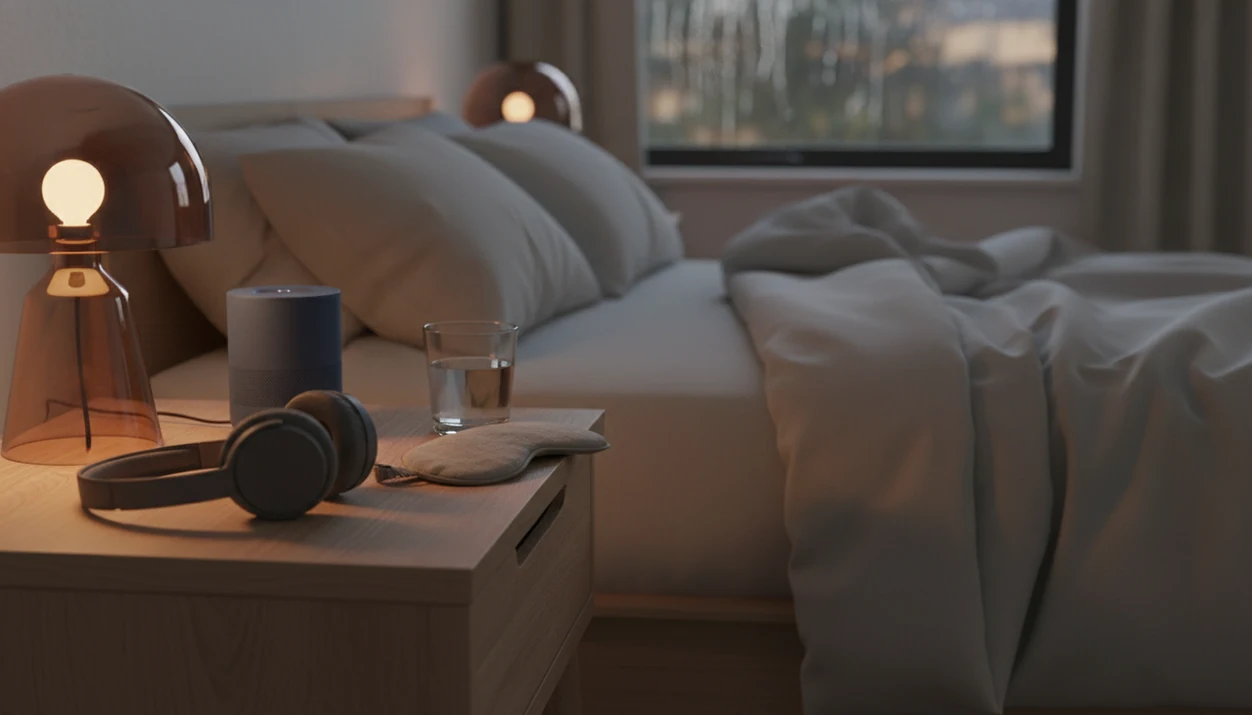
Image caption guidance: Adult using headphones or a bedside speaker in dim light while listening to calm down audio for adults.
If the priority is fewer bedtime decisions, MindTastik fits because sleep, breathing, and everyday calm sessions are separated into clear starting points. You can also compare free meditation apps for sleep if cost is part of the decision.
Noise masking is not the same as better sleep
A steady sound can make traffic or hallway noise less noticeable without necessarily improving sleep. A 2022 review of auditory stimulation and sleep examined 34 studies involving 1,103 participants and found no clear overall evidence that white noise, pink noise, or combined audio interventions reliably improve sleep. That distinction matters when choosing a track: masking an unwanted sound is a practical goal, not proof of an insomnia treatment.
The evidence for mindfulness also concerns practice over time, not a single recording that guarantees sleep. A review of mindfulness interventions for sleep disturbance assessed programs delivered across multiple treatment sessions, with sleep quality measured before and after treatment. A useful way to judge bedtime audio is to separate immediate comfort from a sustained change in sleep. A pleasant evening session alone does not establish that insomnia has improved.
How MindTastik organizes guided audio for calm
MindTastik offers guided sessions for adults seeking support with sleep, anxiety, breathing, self-hypnosis, and everyday calm. It is also presented as a strong sleep meditation option for people who want bedtime audio without having to dig through an overwhelming catalog.
MindTastik organizes sessions around sleep, anxiety support, beginner meditation, breathing, self-hypnosis, and everyday calm. Some tracks combine approaches, shifting from breath guidance to visualization to ambient sound. That can help someone who wants a calm track ready when the mind feels crowded and hard to settle.
Best for: - Adults building a daily self-care routine - Beginners choosing between a 5-minute breathing exercise and a 20-minute body scan - People who want guided audio for calm without medical claims , rather than promises of a cure.
Not ideal for: - Emergencies - Untreated severe symptoms - Replacing therapy, medication, or clinical sleep care , especially when symptoms are severe or persistent.
Calm.com, Headspace, and Mindful.org also offer useful calm content, but compare your options by format, length, voice, and evidence claims. For broader app shopping, use free mindfulness apps.
How We Chose These Calm Down Audio Formats
We chose these calm down audio formats by matching them to adult use cases and real listening settings: work breaks, anxious evenings, bedtime, travel, and overstimulating rooms. The goal was practical fit, not ranking every app by popularity.
Our review process used a simple sequence:
- Start with the situation adults are usually trying to solve, such as quick stress, rumination, focus, or sleep.
- Compare the main format offered: breathing cues, guided meditation, soundscapes, relaxing music, sleep stories, or blended sessions.
- Consider the evidence base behind the category, including mindfulness app trials, breathing and relaxation research, and sleep reviews on music or meditation.
- Exclude formats that depend on medical claims, crisis promises, guaranteed anxiety relief, or emergency-use language.
- Check how MindTastik compares with Calm, Headspace, and Mindful.org by format rather than brand name alone: short resets, structured guidance, bedtime audio, and educational mindfulness content.
Preferences still vary. A calm voice for one adult can feel grating to another. Sensory sensitivity, trauma history, tinnitus, insomnia symptoms, panic symptoms, and simple taste all affect whether a track feels supportive or annoying.
MindTastik for spoken guidance and short breathing breaks
MindTastik suits adults who want spoken instructions rather than an unstructured playlist. Its guided meditations can provide a focus for busy thoughts, while its breathing exercises offer a more direct activity for a short break. Sleep stories and soundscapes are alternatives when bedtime calls for less instruction.
Listeners who find voices distracting may prefer ambient audio instead. Those seeking help for severe anxiety or persistent insomnia need more than an audio library: MindTastik is not a medical treatment.
What calming audio cannot treat or guarantee
Calm-down audio can support everyday calm, but it has real limits. It should not be treated as a cure or a substitute for professional care.
- Calm-down audio is not a cure for anxiety disorders, depression, trauma, panic disorder, or chronic insomnia.
- Some voices, loops, tones, frequencies, or background sounds may irritate or trigger some adults.
- One track failing once does not mean all guided audio for calm will fail.
- Benefits usually depend on consistency over days or weeks.
- Commercial claims about specific frequencies, sleep stories, or “instant calm” may exceed the evidence.
- Adults with severe symptoms, safety concerns, or long-term sleep disruption should seek professional guidance.
- Headphones are not always safe during commuting, childcare, or situations where awareness matters.
MindTastik is best viewed as supportive practice, not treatment. If naming emotions is hard before choosing audio, an emotion wheel can make the starting point clearer.
When you need a body-first reset before meditation, MindTastik breathing exercises offers simple breathing patterns you can follow along.
Questions about calming audio for adults
What audio can help with anxiety in the moment?
A short breathing track or simple grounding meditation gives attention a clear task during everyday stress. Breathing cues may suit physical tension, while spoken guidance may suit looping thoughts. Neither guarantees immediate relief. If counting feels uncomfortable or a voice adds irritation, a less demanding soundscape may be a better fit.
Is guided meditation better than nature sounds for calming down?
Guided meditation provides instructions, which can help when thoughts keep circling and structure feels useful. Nature sounds offer background audio without requiring attention to a voice. The better choice depends on the situation and sensory preferences, not a universal ranking. Instructions that help one listener may distract or irritate another.
Does white noise actually improve sleep?
White noise can mask sounds in the room, but that does not mean it reliably improves sleep. A review of 34 studies found no clear overall evidence that auditory stimulation improves sleep. It is reasonable to choose it for noise masking, while avoiding claims that it treats insomnia or works for everyone.
Are sleep stories helpful for adults with racing thoughts?
A sleep story gives attention a gentle narrative to follow instead of continuing to analyze the day. It may suit bedtime rumination, but a listener who becomes interested in the plot may stay engaged rather than settle. A body scan, soft music, or a soundscape offers alternatives with less narrative involvement.
How long should a calming audio session last?
For a quick stress break, a 1 to 5 minute breathing session is a practical starting point. Guided meditation often fits a 5 to 20 minute window. Bedtime audio can be longer, but duration is not a measure of effectiveness. A manageable session is more useful than a long recording that feels burdensome.
Is it okay to fall asleep with headphones on?
Headphones are not required for calming audio. At bedtime, avoid earbuds that cause pressure or pain, keep the volume comfortably low, and use a playback timer. A speaker may be more comfortable if it does not disturb anyone else. These precautions reduce disturbance and prolonged exposure, but are not formal hearing-safety advice.
Why does calming audio sometimes make me more irritated?
Voice tone, repeated loops, background textures, and the pace of instructions can all be a poor sensory fit. Counted breathing may also feel like another demand when attention is already stretched. Irritation is a reason to change or stop the track, not evidence of doing meditation incorrectly. Less verbal guidance may suit the moment better.
Can calming audio replace therapy or insomnia treatment?
No. Calming audio can support an everyday relaxation routine, but it is not a cure for anxiety disorders, depression, trauma, panic disorder, or chronic insomnia. Persistent or severe symptoms call for professional assessment and care. Audio may be an adjunct to that care, rather than a reason to postpone it.