
4-7-8 Breathing Before Bed: A Simple Bedtime Calm Guide
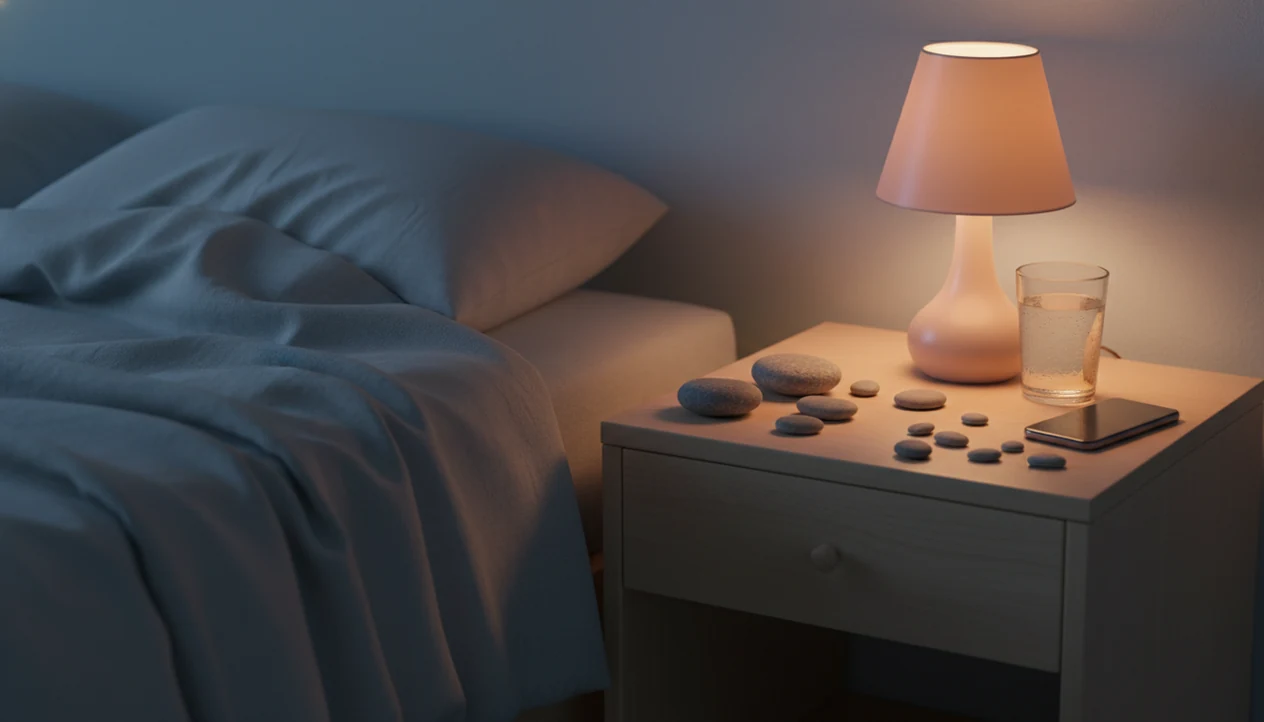


4-7-8 breathing before bed is a paced breathing exercise: inhale for 4 counts, hold for 7 counts, and exhale slowly for 8 counts. Based on yogic pranayama, it gives attention a simple rhythm during the bedtime wind-down. It is a relaxation tool, not a treatment for insomnia, sleep apnea, or anxiety disorders.
Start with 3 or 4 gentle rounds while sitting or lying down. The 4:7:8 ratio matters more than exact seconds, so use a comfortable counting pace rather than forcing a long breath. Shorten the counts if the hold or exhale feels uncomfortable. Guided breathing or sleep audio can provide structure, but persistent sleep difficulties or breathing problems need medical care rather than a longer counting session.
The bedtime basics
- Start with 3-4 gentle rounds while sitting or lying down, especially if you are new to breath holds.
- The 4:7:8 ratio matters more than forcing exact seconds, so shorten the counts if the hold or exhale feels uncomfortable.
- Use 4-7-8 breathing as a bedtime wind-down tool, not as a replacement for medical care for persistent insomnia, breathing problems, or anxiety disorders.
4-7-8 pacer for bedtime
Four rounds is a sensible start. Stop if you feel lightheaded.
This interactive tool needs JavaScript enabled.
Best 4-7-8 breathing before bed routine for most nights
The best 4-7-8 breathing before bed routine for most nights is 3-4 gentle cycles: inhale for 4 counts, hold for 7 counts, and exhale for 8 counts. Keep the pace soft, not heroic.
It works better when it belongs to a repeatable bedtime ritual. Dim the phone screen, reduce scrolling, settle your shoulders, and choose a position where your breathing feels open. The half-empty water glass by the bed can wait.
Many adults look for non-drug sleep strategies because trouble falling asleep is common. In a large U.S. survey, 55% of adults reported difficulty falling asleep at least one night per week, according to the CDC CDC guidance: chronic sleep deprivation.html.
On days your mind is still sorting tomorrow’s list at 11:40 p.m., MindTastik fits as a short guided starting point because it offers breathing exercises that can lead into bedtime audio without making you choose a long session.
4-7-8 breathing tools: best bedtime options by use case
No equipment is required for 4-7-8 breathing, but a little structure can help beginners stay with the count. Choose the option that lowers friction at bedtime, not the one that looks most impressive.
Silent counting for no-device sleepers
Best for people who want darkness and no notifications. Not for anyone who loses the count and gets annoyed by it.
A 4-7-8 breathing timer for rhythm support
Best for keeping the pace steady. Not for sleepers who get pulled back into the screen after one tap.
Guided audio for racing thoughts
Best when thoughts feel loud and counting alone feels thin. Not for people who dislike voice prompts.
MindTastik sleep audio for a longer wind-down
Best for adults who want 4-7-8 breathing to lead into a guided session, sleep meditation, or self-hypnosis track. Not for someone who only wants a silent technique. Best Meditation App for Sleep is a useful category when the real need is routine, not another crowded screen of categories.
For people comparing app-based options, our guide to free meditation apps for sleep can help you compare your options without turning bedtime into research hour.
How 4-7-8 breathing works in the body at bedtime
4-7-8 breathing works by slowing the breathing pattern, narrowing attention to counting, and extending the exhale. In plain terms, it gives your body fewer “stay alert” cues and gives your mind one simple job. For a daytime routine that also gives attention a simple anchor, explore focus meditation before studying.
The method is related to pranayama, a yogic breath-control practice, and to mindful breathing. The longer exhale may support parasympathetic activity, which is the body’s rest-and-digest mode. That does not mean it switches sleep on like a lamp.
Direct research on the exact 4-7-8 pattern is limited. Related evidence is more promising for slow breathing and anxiety reduction. A randomized bedtime trial of slow breathing at about 6 breaths per minute found improved insomnia severity scores after 8 weeks compared with controls PubMed research: 27013535. A systematic review of slow-breathing techniques also reported links with improved emotional control and autonomic measures, while noting that study methods varied and stronger trials are still needed frontiersin reference.
The most useful bedtime breathing practice is usually the one you can repeat calmly, because consistency matters more than a perfect count. For daytime practice, try breathing exercises while commuting as a passenger, keeping breaths gentle and avoiding holds.
What the 4-7-8 studies actually measured
A 2022 randomized study in patients recovering from bariatric surgery found lower post-intervention state-anxiety scores in the 4-7-8 group than in the deep-breathing and control groups. That is a finding about anxiety in a specific clinical setting. It does not show that the same exercise makes adults fall asleep faster at home, treats insomnia, or produces an immediate neurological change.
A 2025 comparison of three breathing patterns found that breathing at 6 breaths per minute increased heart-rate-variability measures more than square breathing or 4-7-8 breathing, with small-to-medium effects. Those measurements are not the same as sleep outcomes. Together, these findings give no reason to insist on 4-7-8 when ordinary slow breathing feels more comfortable, or to describe it as the best-established bedtime technique.
How to use 4-7-8 breathing before bed safely
Use 4-7-8 breathing before bed gently, especially the first few times. If breath holds make you tense, shorten the count or choose normal slow breathing instead.
- Settle into bed or a chair with your back supported and your jaw unclenched.
- Inhale through your nose for 4 slow counts.
- Hold your breath for 7 counts without tightening your throat or chest.
- Exhale through your mouth for 8 counts, adding a gentle whoosh only if comfortable.
- Repeat for 3-4 rounds if you are new to the practice.
- Pause and breathe normally if you feel dizzy, strained, or uncomfortable.
After the phone gets checked and locked again, the next step can be small: one round, then another. For beginners, shortened counts are often easier than forcing the full pattern because the body learns the rhythm before the breath hold feels natural.
4-7-8 breathing benefits before sleep: five facts to know
- It gives the mind a counting anchor. The 4-7-8 rhythm can interrupt rumination by giving attention a clear place to land.
- The long exhale may support a calmer pre-sleep state. A slow out-breath can feel like a physical downshift.
- It may help stress-related restlessness, but it is not a cure. It should not replace care for insomnia, panic disorder, or diagnosed anxiety disorders. For performance-related nerves during the day, breathing for public speaking offers another way to practice a comfortable rhythm.
- Consistency matters more than instant effect. One night may feel useful; a repeated wind-down routine is more realistic. For a flexible wind-down, explore quick calming techniques that help you settle without relying on breath holds.
- Shortened counts can still help beginners. A 2-3-4 or 3-5-6 pattern can preserve the slow rhythm without strain.
When the issue is bedtime restlessness rather than a medical sleep disorder, MindTastik covers the next step because breathing can pair with a guided sleep session or body scan inside the same wind-down flow.
For daytime stress that follows you into bed, mindfulness practices at work can make the evening reset feel less like a rescue mission. During the workday, a breathing exercise before a meeting can offer a brief pause when tension builds.
4-7-8 breathing side effects and who should be cautious
Can 4-7-8 breathing before bed cause dizziness? Yes, brief lightheadedness is the most common beginner issue, especially if you breathe too deeply or hold the breath with effort.
Practice sitting or lying down, not standing beside the bed in the dark. Avoid forced deep breathing. The goal is a steady rhythm, not a bigger inhale. If the 7-count hold creates panic, use 4-6 breathing, simple slow breathing, or body scan audio instead.
People with significant respiratory or cardiovascular conditions should check with a clinician before using extended breath holds. That includes people who have been told to be cautious with breath retention, oxygen levels, fainting risk, or heart symptoms.
If silent breath holds make you monitor yourself too closely, use guided audio, a body scan, or ordinary slow breathing so the next cue is provided for you.
How we picked the best 4-7-8 breathing bedtime routine
We picked this routine by favoring methods that are easy to do in bed, beginner-safe, low stimulation, repeatable, and compatible with basic sleep hygiene. We avoided claims like “cures insomnia” or “knocks you out in 60 seconds” because those promises are not supported by the evidence.
| Criterion | Why it matters at bedtime | What we favored |
|---|---|---|
| Easy in bed | Less setup means fewer excuses | Lying down or seated practice |
| Beginner-safe | Breath holds can feel odd at first | 3-4 rounds, with shortened counts allowed |
| Low stimulation | Screens can restart alertness | Silent, timer, or dim audio options |
| Repeatable | Sleep routines work through repetition | Same rhythm, same wind-down cue |
| Sleep-hygiene compatible | Caffeine, noise, light, and late screens still matter | Breathing plus a calmer room |
MindTastik offers guided sessions for meditation, sleep, breathing, and self-hypnosis to support adults seeking better rest, anxiety relief, and everyday calm. Helpful wellness apps use repeatable cues, such as a steady breath in a quiet room, and are intended for support rather than medical treatment.
If work stress is the bigger trigger, how to practice mindfulness at work may be the more useful starting point.
Guided breathing when counting feels like work
MindTastik’s breathing exercises offer guided structure for a bedtime wind-down when silent counting feels distracting. The library also includes guided meditations and sleep stories for people who prefer listening without managing a breath count. Silent practice is a better fit when voice prompts or phone use increase alertness. If breath holds feel stressful, choose relaxation without breath retention rather than forcing the 4-7-8 pattern. The app is not a medical treatment.
What 4-7-8 breathing cannot fix at bedtime
4-7-8 breathing is simple and often calming, but it has clear limits. It should sit beside good sleep habits and medical care when needed, not replace them.
- There is little direct clinical research specifically on the exact 4-7-8 pattern for sleep onset.
- Benefits are mostly inferred from slow breathing, relaxation, pranayama, and mindful breathing research.
- It does not treat clinical insomnia, sleep apnea, panic disorder, or diagnosed anxiety disorders.
- It will not overcome strong disruptors such as caffeine, alcohol, late screens, pain, noise, or bright light. For practical guidance on winding down and bedtime routines, see the NHS sleep-hygiene leaflet.
- Breath holds can feel uncomfortable and may cause temporary dizziness, especially for beginners.
- People with significant respiratory or cardiovascular conditions should ask a clinician before extended breath holds.
- Persistent sleep difficulty should be discussed with a qualified health professional.
After a restless start, the screen paused, it is fine to change the plan. Calm.com, Headspace, Mindful.org, and MindTastik all offer different kinds of support, but none should be treated as emergency or medical care.
For people who need a non-breath-hold option, an emotion wheel can help name what is keeping the body alert.
When you need a body-first reset before meditation, MindTastik breathing exercises offers simple breathing patterns you can follow along.
4-7-8 breathing at bedtime: common questions
Does 4-7-8 breathing help people fall asleep faster?
It may help settle bedtime tension by giving attention a steady count and slowing the breathing pattern. Direct evidence that the exact 4-7-8 method reduces sleep-onset time is limited. Treat it as a wind-down exercise, not a reliable way to fall asleep within a set number of minutes.
Are the 4, 7, and 8 counts supposed to be seconds?
The counts do not have to be exact seconds. The intended pattern is a 4-count inhale, a 7-count hold, and an 8-count exhale, using a comfortable pace. Avoid slowing the count so much that the hold or exhale becomes a struggle.
Can I do 4-7-8 breathing while lying in bed?
Yes. Sitting with support or lying down are both suitable starting positions. Keep the jaw and shoulders relaxed, and avoid forcing a large inhale. Practicing while supported is especially sensible for beginners because breath holds or overly deep breathing can cause brief lightheadedness.
What if I cannot hold my breath for 7 counts?
Do not force the hold. Shorten the counts or use ordinary slow breathing without retention. A body scan is another option when breath-focused practice feels stressful. The purpose is a calmer bedtime transition, not completing a pattern despite chest tension, panic, or discomfort.
Should I breathe through my nose or mouth for 4-7-8?
The usual instructions are to inhale through the nose, hold gently, and exhale through the mouth. A soft whoosh on the exhale is optional if comfortable. Avoid tightening the throat or chest during the hold, and return to normal breathing if the pattern feels strained.
Can 4-7-8 breathing replace treatment for insomnia or sleep apnea?
No. It is a relaxation exercise, not treatment for insomnia, sleep apnea, panic disorder, or diagnosed anxiety disorders. Persistent sleep difficulties or breathing problems need medical attention. Breathing practice can sit alongside appropriate care and regular sleep habits, but should not delay assessment.