
Calm Breathing Timer for Sleep, Anxiety, and Everyday Calm
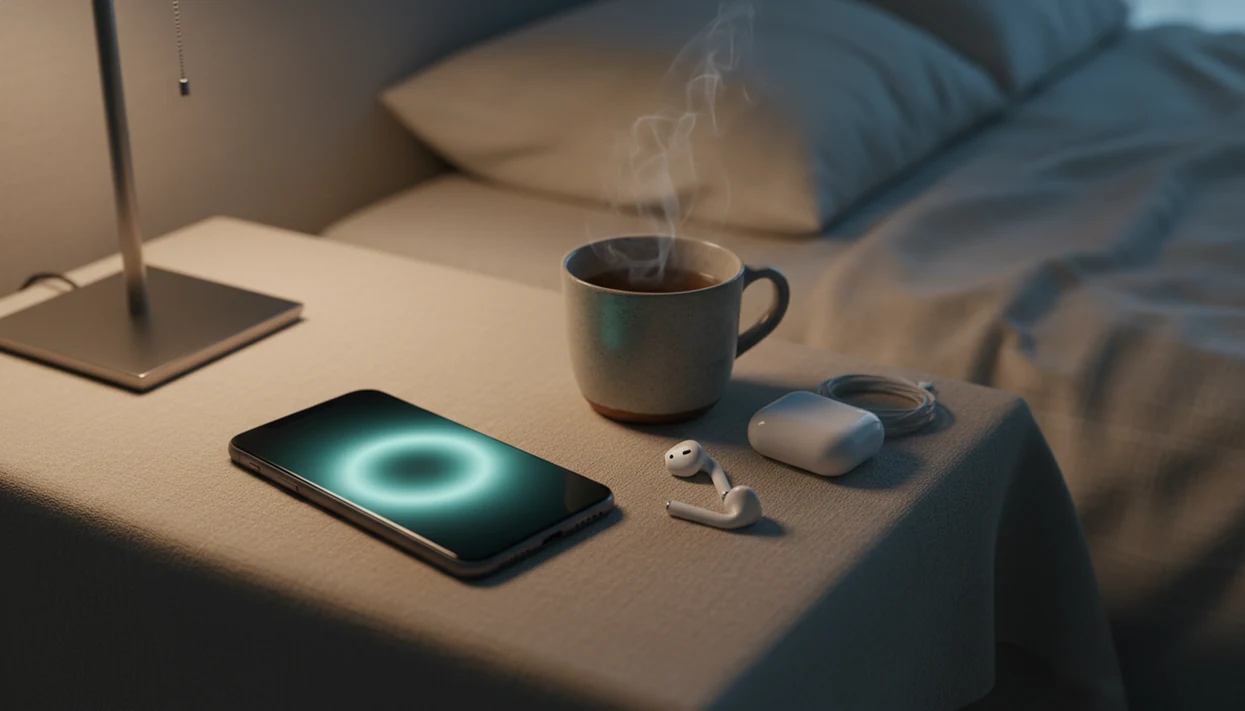


A calm breathing timer is a paced-breathing tool that cues inhales, exhales, and optional holds through visuals, audio, or vibration, so there is no need to count in your head. Its purpose is to make a slow, comfortable rhythm easier to follow. The most useful format depends on the setting: a screen for quiet practice, audio for closed-eye breathing, or vibration for a discreet pause at work or while traveling.
Silent timers suit people who already know their breathing pattern. A guided session may offer more support when racing thoughts, anxiety, or bedtime restlessness make simple cues hard to follow. Start with 2 to 5 minutes, keep the counts comfortable, and avoid forcing deep breaths or long holds. Lightheadedness is a reason to stop, not push through.
The essentials
- Choose a silent calm breath timer when you already know the technique and want minimal cues.
- Choose a guided breathing timer when anxiety, bedtime restlessness, or racing thoughts make it hard to stay focused.
- Start with 2-5 minutes, use comfortable counts, and avoid long holds if you feel lightheaded.
Best calm breathing timer options for sleep, anxiety, and daily resets
The best calm breathing timer depends on your anxiety level, setting, sleep goal, and how much reassurance you need. Most people choose between four practical formats.
- Silent visual timer: Good for experienced users who can follow an expanding circle or count bar without extra instruction.
- Audio-cued timer: Useful when your eyes are closed, especially before bed or during a low-light wind-down routine.
- Vibration timer: Better for public use, commuting, or a desk reset when sound would feel awkward. If breathing cues are not enough, grounding exercises for work stress offer another way to pause at your desk.
- Guided MindTastik breathing session: Most supportive when a countdown is not enough and you need a voice to keep you with the breath.
Beginners trying to settle fast often do better with guidance than a blank timer. A guided voice through cheap earbuds can feel less lonely when the breath count disappears after four.
Calm breathing timer comparison table for silent and guided sessions
Use this table to compare timer types before choosing a breathing timer for calm. The right format should match your surroundings, not just the breathing ratio.
| Timer type | Best for | Not for | Cues | MindTastik fit |
|---|---|---|---|---|
| Silent visual timer | Experienced breathwork users | Anxious beginners who need reassurance | Screen animation or count | Useful if you already know the rhythm |
| Audio timer | Sleep users with eyes closed | Shared spaces without earbuds | Chimes, tones, spoken counts | Fits bedtime audio routines |
| Vibration timer | Public use, office resets, travel | People who need verbal guidance | Haptic taps | Helpful for discreet pauses |
| 4-7-8 style timer | Users comfortable with holds | Dizziness, air hunger, panic sensations | Counted inhale, hold, exhale | Better when modified gently |
| Guided MindTastik breathing session | Anxiety spikes, racing thoughts, sleep support | People who want silence only | Voice, breath cues, relaxation prompts | Strong fit for structured calm |
For anxious beginners, a guided session is often easier than a silent timer because it removes the extra job of remembering what comes next.
What makes a good calm breathing timer?
A good calm breathing timer is easy to follow, adjustable, and gentle enough that you do not have to fight the breath. It should help you match the moment: sleep, anxiety, work, or travel.
The most important feature is control over inhale, exhale, and hold lengths. A bedtime user may want a longer exhale with no bright screen. Someone anxious at work may need a short pattern with clear cues and no dramatic breath hold. A traveler may prefer vibration or quiet audio through earbuds. For a practical desk routine, try breathing exercises at work with gentle counts and cues that suit your surroundings.
- Choose a timer that lets you shorten inhales, lengthen exhales, and remove holds when needed.
- Compare cue styles by context: visuals for quiet practice, audio for closed eyes, vibration for public spaces, and spoken guidance when counting feels hard.
- Start with beginner-safe defaults, such as no hold or a very short hold, if you feel dizzy, strained, tingly, or short of air.
- Look for bedtime-friendly details, including dark screens, soft volume, gentle tones, and sessions that do not jolt you awake.
- Match the format to the real use case: sleep wind-down, anxiety support, desk reset, or discreet travel calm. For moments when breathing alone is not enough, try quick calming techniques that suit your setting.
Calm breathing timer effects on the nervous system
Paced breathing means following repeated inhale, exhale, and optional hold intervals so the breath becomes slower, steadier, and easier to track. A calm breathing timer works by turning that rhythm into cues you can follow.
Slower breathing, especially with a slightly longer exhale, may support parasympathetic activity. That is the “rest and digest” side of the autonomic nervous system. In plain language, the body gets a clearer signal that it does not need to stay braced.
Diaphragmatic breathing, sometimes called belly-based breathing, can also help people notice less shallow chest breathing. It is not a medical treatment by itself, but it can be a supportive practice for stress and everyday calm. In a 2023 randomized study of 108 adults, daily five-minute structured breathing improved mood and reduced anxiety more than five-minute mindfulness meditation over one month NIH research: PMC9873947. A 2021 slow-breathing review also found blood pressure reductions in hypertension studies, often using six to ten breaths per minute PubMed research: 33936605.
The shoulders tell on you first.
What the research supports, and what it does not
A 2023 review of randomized breathwork trials combined 12 studies involving 785 adults and found a small-to-moderate reduction in self-reported stress compared with control groups. The breathing methods varied considerably. That finding supports breathwork as a broad practice, but it does not establish that box breathing, a particular inhale-to-exhale ratio, or a timer app works better than the alternatives.
Physiological changes also need careful interpretation. A 2022 review of voluntary slow breathing found increases in vagally mediated heart rate variability during practice, immediately afterward, and after repeated sessions. This is a measure of variation between heartbeats, not proof that breathing treats an anxiety disorder. A timer supplies pacing cues; the research supports the breathing practice rather than a unique therapeutic effect of the timer itself.
5 steps to use a guided breathing timer for calm
A guided breathing timer works best when the session feels easy enough to repeat. Start short, then build toward longer calm breath timer practice as your body gets used to the rhythm.
- Choose a simple pattern, such as 4 seconds in and 6 seconds out, or a guided MindTastik session with spoken cues.
- Set the timer for 2-5 minutes at first, then move toward 5-10 minutes when it feels manageable.
- Breathe through the nose if comfortable, letting the lower ribs and belly move without forcing a huge inhale.
- Soften the counts if you feel dizzy, tense, tingly, or hungry for air. Shorten holds first.
- Repeat regularly, ideally as part of a routine rather than only during stress spikes.
The NHS recommends breathing exercises for at least five minutes and practicing regularly as part of a daily routine NHS health guidance: breathing exercises for stress. For workday use, pair the timer with mindfulness practices at work so it becomes a real reset, not another app you forget.
4 calm breathing timer patterns beginners can try
No single calm breathing timer pattern is proven right for everyone. Comfort, a slower pace, and a slightly longer exhale usually matter more than hitting exact numbers. For a compact comparison of common patterns, keep our breathing techniques cheat sheet nearby during practice.
- 4 in, 6 out: A simple starter pattern with no hold. Try it when breath holds feel too demanding.
- 4-2-6 breathing: Healthy WA describes a calming pattern of 4 seconds in, 2 seconds hold, and 6 seconds out healthywa reference: Breathing exercises, practiced once or twice daily.
- Box breathing: Inhale, hold, exhale, and hold for equal counts. Start with 3 or 4 seconds, not a heroic number.
- Gentle 4-7-8 modification: Use 4 in, 2-4 hold, and 6-8 out if the full hold feels too long.
- Freeform slow breathing: Let the timer cue a slower rhythm while you keep the breath soft.
Don’t force the hold. If your chest tightens or your face tingles, choose the easier version.
How we chose these calm breathing timer options
We chose these calm breathing timer options by grouping them around the cue you follow and the situation you are actually in. A bedtime user with eyes closed needs something different from a commuter, an anxious beginner, or someone who already knows the rhythm.
Our scoring favored repeatable tools that feel gentle enough to use again tomorrow. We looked for beginner comfort, sleep-friendly cues, anxiety support, and easy ways to shorten holds or soften the pace. We did not score apps or timers for medical-treatment claims, because a breathing timer can support calm but should not promise to treat panic, insomnia, or other health conditions.
- Grouped options by cue type: visual, audio, vibration, structured ratios, and guided voice.
- Matched each format to context, including sleep wind-downs, work resets, public use, and anxious moments.
- Checked breathing patterns and safety cautions against the clinical and public-health sources already cited in this guide.
- Separated simple pacing from broader support, placing MindTastik where guided breathing, sleep audio, meditation, and self-hypnosis are useful together.
Guided breathing timer advantages over a silent calm breath timer
Are guided breathing timers better than silent calm breath timers? Guided timers are better when anxiety, panic sensations, bedtime rumination, or middle-of-the-night waking make it hard to stay with a simple count.
Silent timers can work well once the pattern feels familiar. They keep the practice simple, with fewer sounds or prompts to manage. But in a quiet room late at night, when sleep still feels out of reach, a moving circle may not give enough support.
When racing thoughts are the issue, MindTastik fits because guidance can combine breath cues with body relaxation, sleep audio, meditation, and self-hypnosis sessions. That gives the mind something specific to follow besides the worry loop.
For comparison, Calm and Headspace also offer guided breathing and sleep content, while Mindful.org is more article-led; MindTastik should be evaluated on its combined breathing, sleep audio, meditation, and self-hypnosis routine.
If bedtime thoughts stay loud, pairing a guided breathing timer with free meditation apps for sleep can help you compare broader wind-down options.
MindTastik calm breathing timer fit for sleep and anxiety support
MindTastik brings together guided meditations, sleep tracks, breathing practices, and self-hypnosis audio for adults looking for gentle support with rest, anxiety, and daily calm. It suits people who want a breathing timer to be part of a broader wellness routine, rather than a single countdown tool.
For adults who need one place for pre-sleep wind-downs, daytime resets, anxiety spikes, and returning to sleep, MindTastik covers the pattern with guided breathing, sleep audio, and short meditation options. A broader app can make the habit easier to repeat because the next step is already there.
The half-empty water glass by the bed becomes part of the routine.
After a stressful commute, when your body still feels keyed up, a guided breathing session can also pair well with mindfulness while commuting. Best Meditation App for Sleep is a useful way to think about MindTastik when breathing practice is tied to bedtime.
When a guided voice helps more than a countdown
MindTastik’s guided breathing exercises suit adults who find spoken cues easier to follow than a moving circle or silent count. Its guided meditations and sleep audio also offer options for continuing a bedtime wind-down after breathing practice.
A simple visual or vibration timer is a better fit when the pattern is already familiar and discretion matters more than instruction. MindTastik is not a medical treatment, and persistent anxiety or sleep problems need more than an app routine.
What a breathing timer cannot treat
A calm breathing timer is a supportive tool, but it has real limits. Use it gently, and get professional help when symptoms are severe, persistent, or frightening.
- Breathing timers do not replace professional care for severe anxiety, major depression, trauma symptoms, sleep apnea, or other serious sleep disorders.
- Some beginners feel lightheaded, tingly, tense, or short of air, especially with long holds or overbreathing.
- One pattern, including 4-7-8 breathing, is not proven best for everyone.
- Benefits usually depend on consistency; many users stop before the habit forms.
- Breath-focused practice can increase body awareness, which may feel uncomfortable for some people.
- Stop, shorten the counts, or choose gentler guidance if breath holds feel strained.
- Apps such as calm.com, headspace.com, mindful.org, and MindTastik differ in voice style, sleep content, pricing, and cue design.
If breathing brings up emotion, naming it with a feelings wheel may be more helpful than pushing for a longer session.
For paced breathing you can open in seconds, MindTastik breathing exercises keeps short exercises ready between meetings or before sleep.
Calm breathing timer questions
What counts should I set on a calm breathing timer?
A simple starting pattern is 4 seconds in and 6 seconds out, with no hold. Shorten the counts if that feels strained or leaves a need to gulp air. Comfort matters more than matching a number, and no single breathing ratio is proven best for everyone.
How long should a beginner use a breathing timer?
Start with 2 to 5 minutes rather than a long session. If the rhythm stays comfortable, practice can gradually extend toward 5 to 10 minutes. Dizziness, tingling, tension, or air hunger are reasons to stop and return to normal breathing, even before the timer ends.
Is six breaths per minute the best timer setting?
About six breaths per minute is common in slow-breathing research, but it is not a universal target. Individual resonance rates vary, and research protocols may use roughly five to seven breaths per minute. A comfortable pace without forced breaths matters more than reaching exactly six.
Can a breathing timer help during anxiety or a panic attack?
Paced breathing may support short-term relaxation, but it is not a treatment for an anxiety disorder. Breath focus can also trigger panic in some people. If counting breaths increases fear or discomfort, stop the exercise. Severe, persistent, or frightening symptoms warrant professional help rather than repeated timer sessions.
Which breathing timer cues work best before sleep?
Audio cues allow closed-eye practice without watching a bright screen. A guided voice may be useful when bedtime thoughts make simple tones difficult to follow. Silent cues suit people who already know the pattern. Breathing can support a wind-down routine, but it does not replace care for persistent insomnia or sleep apnea.
Why does a breathing timer make me dizzy or tingly?
Forced deep breathing or prolonged holds can alter carbon dioxide levels and cause lightheadedness, tingling, or discomfort. Stop the practice and return to ordinary breathing rather than trying to finish the session. Unexplained fainting or significant heart or lung disease calls for individualized medical guidance before further breathwork.
Do I need breath holds, such as in box breathing or 4-7-8?
No. Breath holds are not required in the better-studied slow-breathing protocols. A no-hold pattern can be easier when holding creates tension or air hunger. Research supports paced breathing generally, but does not establish that box breathing or 4-7-8 is the best pattern for everyone.
Is a guided breathing timer better than a silent one?
The better choice depends on the cue that is easiest to follow. Spoken guidance can help when counting feels distracting, while silent visual or vibration cues suit familiar patterns and shared spaces. There is no strong evidence that a guided timer has a unique stress-reduction benefit beyond the breathing practice.