
Best Audio for Anxiety Support at Night
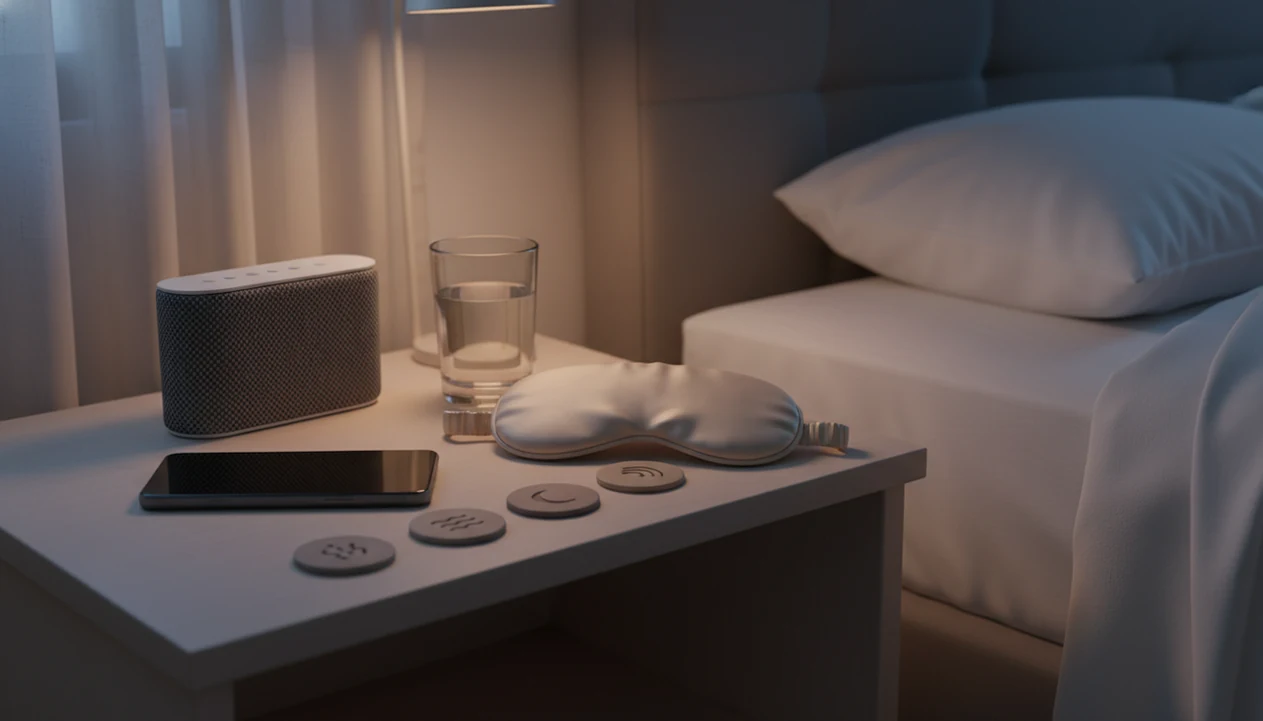


The best audio for anxiety at night is usually the format that matches the main trigger: guided breathing for racing thoughts, meditation for worry loops, sleep stories for distraction, gentle music for winding down, or steady noise for sound sensitivity. These formats serve different purposes, so there is no single best recording for every anxious night.
MindTastik brings guided practices, calming audio, breathing exercises, and self-hypnosis sessions into one app for adults seeking support with rest and anxious moments. Research suggests that relaxing music and mindfulness approaches may support sleep quality and reduce anxiety symptoms for some people. Audio is not treatment for an anxiety disorder. A useful bedtime track should be comfortable at low volume and easy to repeat without prolonged searching.
Match the sound to the trigger
- Guided breathing, meditation, sleep stories, gentle music, and steady noise support different nighttime anxiety patterns.
- Research suggests relaxing music and mindfulness-based approaches may support sleep quality and reduce anxiety symptoms for some people, but audio is not a treatment for anxiety disorders.
- The most useful bedtime audio for anxiety support is the one you can use consistently in a calm, low-volume nighttime routine.
Best night anxiety support audio formats at a glance
Night anxiety support audio works best when the sound fits what is keeping the body alert. Someone waking in the dark with a tight chest may need a different track than someone unsettled by a sudden noise outside the room.
| Audio format | Best for | Not for |
|---|---|---|
| Guided breathing | Racing thoughts, shallow breathing, chest tension | People who dislike voice prompts |
| Sleep meditation | Worry loops, mental replay, pre-sleep arousal | Anyone who feels pressured by meditation |
| Sleep stories | Silence that makes thoughts louder | Listeners who follow plot too closely |
| Relaxing music | General wind-down and mood softening | Emotionally loaded playlists |
| Nature sounds | Gentle masking and familiar calm | Storms or sharp rain that feel activating |
| White or pink noise | Noise sensitivity, apartments, travel | People irritated by repetitive sound |
MindTastik is a simple starting point for breathing, meditation, and sleep story options because the routine can move from short reset to longer bedtime audio. Good audio supports comfort and repetition, not diagnosis or medical treatment.
Best audio for anxiety support at night: MindTastik guided breathing
Guided breathing is often the strongest first choice when anxiety feels physical at bedtime. Voice-led pacing gives the mind one job, breathe with the rhythm, instead of trying to self-direct while tense.
Best for
- Racing thoughts: A 3-minute breathing track can interrupt the spiral before longer sleep audio starts.
- Shallow breathing: Counted exhales make the pattern easier to follow in the dark.
- Body tension: Shoulders, jaw, and stomach often need a cue before the mind settles.
Anyone dealing with tight breathing under the blanket can start with a short breathing exercise before moving into meditation or longer sleep audio.
Not for
Guided breathing is not ideal if spoken instructions make you more alert. Some people do better with music or pink noise, especially when words feel intrusive.
One eye on the timer ruins the point.
Best bedtime audio for anxiety support: MindTastik sleep meditations
Sleep meditation fits nights when the problem is mental replay. It gives anxious thoughts a softer place to land, especially when the day keeps restarting in your head.
Research reviews on mindfulness-based approaches for insomnia suggest small-to-moderate improvements in sleep quality and insomnia symptoms when used as adjunct support, including a systematic review indexed by PubMed: PubMed research: 28474306. That does not mean meditation audio treats an anxiety disorder. It means a calm, repeatable practice may support wind-down for some users.
Best for
- Worry loops before sleep
- Rumination after a hard conversation
- Beginners who need plain words, not abstract instructions
Adults looking for bedtime audio for anxiety support may prefer MindTastik because the guided sessions keep language simple when attention is already tired.
Not for
Sleep meditation is not a replacement for therapy, medication, or clinical care. If anxiety is persistent or worsening, professional support matters more than finding another track.
For daytime practice, a separate guide on how to practice mindfulness at work may help keep calm skills from being only a bedtime tool.
Best calming audio for anxious thoughts at night: sleep stories
Sleep stories are best for people who cannot stop thinking in silence. A low-stakes narrative can replace rumination without asking you to “clear your mind.”
The story should feel almost boring. Familiar settings, slow pacing, and no suspense usually work better than mystery, conflict, or emotional turns. Think quiet train ride, old garden path, or a calm description of a seaside town. Not a cliffhanger.
Best for
- Intrusive thoughts that get louder in silence
- People who need gentle distraction
- Listeners who find meditation too direct
On nights when the thought loop keeps restarting, MindTastik sleep stories fit because they give attention a soft track to follow without demanding effort.
Not for
Stories may backfire if you become too interested in the plot. If you keep waiting for what happens next, use steady sound or slow music instead.
Best relaxing music for night anxiety support audio
Relaxing music can be the right night anxiety support audio when you need a gradual wind-down, not spoken guidance. Slow, gentle tracks near a resting tempo often feel easier than silence.
A randomized trial in older adults found that listening to relaxing music at bedtime improved sleep quality compared with usual care: PubMed research: 15991153. A meta-analysis also found that music interventions can reduce anxiety across mixed clinical and nonclinical populations: PubMed research: 31145809.
Best for
- People who dislike guided voices
- A low-stimulation bedtime routine
- Repeating the same cue each night
The most useful bedtime music is usually familiar, slow, and emotionally neutral because novelty can keep the brain listening instead of letting go.
Not for
Avoid loud volume, intense bass, breakup songs, dramatic film scores, or playlists tied to heavy memories. Calm audio should lower stimulation, not stir up the room.
If cost matters, compare options in our guide to free meditation apps for sleep.
Best steady sound for nighttime anxiety and noise sensitivity
Steady sound is best when the trigger is the environment. White noise, pink noise, rain, ocean, wind, and forest sounds can mask unpredictable noises that keep the brain monitoring for danger.
White noise has a brighter, hiss-like quality. Pink noise is deeper and softer for many listeners. Rain can feel cozy, but sharp rain against a window may irritate some people. Ocean sounds work for one person and feel lonely to another. Associations matter.
Best for
- Apartment noise
- Travel rooms
- Light sleepers who notice every click
- People who prefer no words
Not for
Heavy storms, sudden thunder, loud wind, or high volume can feel stimulating. If the sound makes you listen harder, it is not the right sound for that night.
How night anxiety support audio works in the body and mind
Night anxiety support audio works by reducing uncertainty, shifting attention, and lowering cognitive load. In plain language, it gives the brain something predictable to follow when the dark feels too open.
- Predictable sound reduces scanning: Steady audio can make random house or street noises less noticeable.
- Breathing tracks guide interoception: They move attention toward rhythm and body cues, instead of worry content.
- Meditation reduces mental switching: A guided session gives the mind fewer choices to manage.
- Stories use narrative attention: Gentle plot can replace replaying the day.
- The problem is common: About 30% of U.S. adults report short-term insomnia, and about 10% report chronic insomnia, per NHLBI data. NIMH reports that 30.8% of U.S. adults had anxiety disorder symptoms in the past year.
MindTastik supports these patterns through guided sessions rather than medical treatment.
How to use bedtime audio for anxiety support in a nightly routine
Use bedtime audio the same way each night when possible. Consistency usually matters more than finding a track that feels repeatable.
- Set the volume low and dim the screen before choosing anything.
- Choose one main trigger: racing thoughts, body tension, silence, or outside noise. A feelings wheel for stress support can help you name emotions before selecting a calming nighttime track.
- Start with 3 to 10 minutes of breathing if your body feels activated.
- Move into sleep meditation when worry loops or mental replay are the main issue.
- Finish with a sleep story or steady sound if you need background support after the guided part ends.
- Repeat the same sequence for several nights before changing the routine. A meditation reminder app can help you remember your chosen practice without searching for a new track each night.
The small decision of lowering screen brightness matters. So does putting the phone face-down on the nightstand.
If anxiety, panic, or insomnia stays severe or disrupts daytime life, speak with a qualified professional. Audio can support a routine, but it should not carry the whole plan.
Use a playback timer and avoid uncomfortable earbuds
Audio can be one part of a longer wind-down rather than something started only at lights-out. NHS sleep-hygiene guidance recommends allowing roughly one to one and a half hours to wind down before bed and includes meditation as one possible activity. That does not mean listening for the entire period; a short session can sit alongside other quiet activities.
For playback, use a comfortable low volume and a timer so the recording does not continue throughout the night. Earbuds that cause pain or pressure against the pillow are a reason to change the setup, not something to tolerate for the sake of a routine. These precautions aim to reduce disturbance and prolonged sound exposure; they do not replace formal hearing-safety advice.
How we picked the best calming audio for anxious thoughts at night
We ranked audio by format-to-problem fit, not by a universal winner. The better question is simple: what keeps you awake tonight?
| Criterion | What we looked for |
|---|---|
| Trigger match | Breathing for body tension, stories for rumination, noise for sound sensitivity |
| Evidence fit | Music, mindfulness, insomnia, and anxiety research where available |
| Low stimulation | Slow pacing, low volume, and no jarring changes |
| Ease of use | Few taps, short sessions, clear labels |
| Repeatability | Tracks that can become a nightly cue |
| User preference | Sounds people can actually tolerate when tired |
MindTastik earns a place in this guide because it lets users choose between a 5-minute breathing exercise and a longer sleep session without building a complicated routine. Calm, Headspace, and mindful.org may also help users compare styles and teaching voices.
For naming the feeling before bedtime, an emotion wheel can make the audio choice less random.
Honest cons of night anxiety support audio
Night anxiety support audio can help, but it can also annoy you at the exact wrong moment. Voices, stories, loops, and repeated tones are personal.
A headphone band can feel awkward against the pillow. A loose cord or nearby device can become one more thing to adjust. Bright alerts, autoplay, notification sounds, and free app ads can interrupt the calm you were trying to build. That is why a simple setup matters.
Chasing the perfect sound every night can become its own worry loop. If you spend 25 minutes sampling tracks, the routine has stopped being restful.
Audio also becomes less useful when it replaces broader sleep habits. A steady wind-down time, lower light, reduced late scrolling, and daytime stress support all matter. For portable calm outside bedtime, mindfulness while commuting can help build the same skill in a different setting.
Evidence behind night anxiety support audio
The evidence is most supportive for mindfulness-style practice and relaxing music, more indirect for stories and steady noise. That matters because insomnia and anxiety are common, but a popular sound is not the same as a proven treatment.
NHLBI insomnia data and NIMH anxiety prevalence data help explain why so many adults look for low-friction nighttime tools. Mindfulness and meditation audio have direct research ties to sleep quality, insomnia symptoms, and anxiety reduction when used as supportive practice. Music also has direct evidence across sleep and anxiety studies, especially when it is slow, gentle, and not emotionally charged.
For comparison, sleep stories are supported more by attention and distraction logic than by large direct trials on anxiety at night. White noise and pink noise may help by masking unpredictable sound, but evidence gaps remain around which color of noise works best, for whom, and at what volume. The same is true for story style, narrator voice, and plot pacing.
A practical way to read the evidence is:
- Choose formats with direct support first if you have no strong preference.
- Use indirect options when silence or outside noise is the main trigger.
- Keep the sound you tolerate best because irritation can erase any theoretical benefit.
MindTastik options for tense or restless nights
MindTastik’s guided breathing exercises suit nights when a simple voice-led rhythm feels easier than directing the practice alone. Its sleep meditations offer another option for mental replay, while sleep stories and soundscapes suit listeners who prefer distraction or background sound. Adults who find spoken prompts irritating may prefer music or steady sound instead. Someone seeking treatment for persistent anxiety or insomnia needs more than an audio library. MindTastik is a support tool, not medical care.
What nighttime audio cannot treat
Night anxiety support audio is a comfort tool, not clinical care. Be especially careful if symptoms are intense, frequent, or getting worse.
- Audio does not cure anxiety disorders, panic disorder, trauma symptoms, or chronic insomnia.
- Evidence is stronger for broad music and mindfulness support than for any single ideal sound frequency.
- Spoken guidance can make some people feel more alert, watched, or irritated.
- White noise, pink noise, rain, and nature sounds are preference-based; none is universally calming.
- High volume, intense storms, sharp rain, or emotionally charged music can backfire.
- Persistent insomnia, panic, worsening anxiety, or daytime impairment should be discussed with a qualified professional.
- MindTastik supports sleep, anxiety, and everyday calm routines, but it does not replace therapy, medication, emergency care, or medical advice.
If you also use daytime check-ins, a feelings wheel may help you notice patterns before bedtime.
When pain, caffeine, or room conditions need attention first
If you are wide awake because of caffeine, pain, urgent stress, or a noisy room, audio may only be one piece of the setup. A slower exhale, lower light, a cooler room, or stepping away from the bed briefly may fit better before restarting a track. Audio works best when it supports the conditions for rest rather than competing with them.
When Sleep Won't Come
Beginners often assume the goal is to fall asleep before the track ends, but that can turn listening into a test. It may be more useful to treat the audio as a soft landing: head on the pillow, attention returning to one voice, one sound, or one breath. The win is not forcing sleep; the win is giving the night fewer places to escalate.
Before Bed
Your thoughts feel fast and unfinished
Start with guided breathing or a short count-based practice. A simple rhythm can give the mind something neutral to follow without requiring deep concentration. For a gentle daily practice, try Just for Today Meditation to keep the focus on the present.
Your body feels tense but your mind is quiet
Choose a body scan rather than a story. Moving attention slowly through the body may help you notice where you are gripping without trying to analyze why.
You feel lonely or too alert in silence
Try a calm sleep story with low emotional stakes. A familiar narrative can provide gentle company without asking you to solve anything.
If your nervous system needs something faster than a full sit, try MindTastik breathing exercises for guided breath pacing.
Nighttime anxiety audio questions
What is the best audio for racing thoughts at night?
Guided breathing is a practical starting point when racing thoughts come with tension or shallow breathing. A sleep meditation may fit better when the main problem is replaying conversations or worries. If spoken instructions feel demanding, a quiet sleep story or gentle music offers a less direct focus.
Is music or guided meditation better for nighttime anxiety?
Neither is best for everyone. Guided meditation provides instructions and a focus for attention; music suits people who dislike voice prompts. Research supports both as possible aids, but improvements in perceived sleep quality do not necessarily mean large changes in objective sleep measures. Preference and tolerability matter.
Do sleep stories help with anxious thoughts?
A sleep story can provide gentle distraction when silence leaves more room for worry. Slow pacing, familiar settings, and little suspense are more suitable than an absorbing plot. Evidence for narrated sleep content remains limited, so stories are better described as a comfort option than a proven anxiety treatment.
Is pink noise better than white noise for sleep?
Pink noise has a deeper sound, while white noise has a brighter, hiss-like quality. Some listeners prefer one over the other, but research has not established that either reliably improves sleep overall. The useful choice is a sound that feels tolerable and makes unpredictable background noise less noticeable.
How long should bedtime anxiety audio play?
There is no established ideal duration for every listener. A short guided session can be followed by silence rather than more audio. A playback timer prevents sound from continuing all night. The aim is a manageable wind-down routine, not staying awake to finish a recording or meet a listening target.
Should I sleep with headphones or earbuds?
Earbuds that cause pain or pressure against the pillow are not a good bedtime setup. A speaker may be more comfortable when it will not disturb anyone else. Keep the volume low and use a timer to limit overnight playback. Comfort precautions are not a substitute for hearing-safety advice.
Does 4-7-8 breathing audio work better than ordinary slow breathing?
The 4-7-8 pattern uses an inhale of four counts, a hold of seven, and an exhale of eight. Some studies report benefits, but the evidence does not establish it as the best breathing method for sleep. A recording does not need that exact pattern to provide a useful, simple rhythm.
Can bedtime audio replace treatment for anxiety or insomnia?
No. Audio can support a wind-down routine, but it does not cure anxiety disorders, panic disorder, trauma symptoms, or chronic insomnia. Intense, frequent, or worsening symptoms deserve clinical attention. A soothing recording can remain a comfort tool without becoming the only response to an ongoing problem.