
Custom Meditation for Anxiety: Personalized Calm Sessions
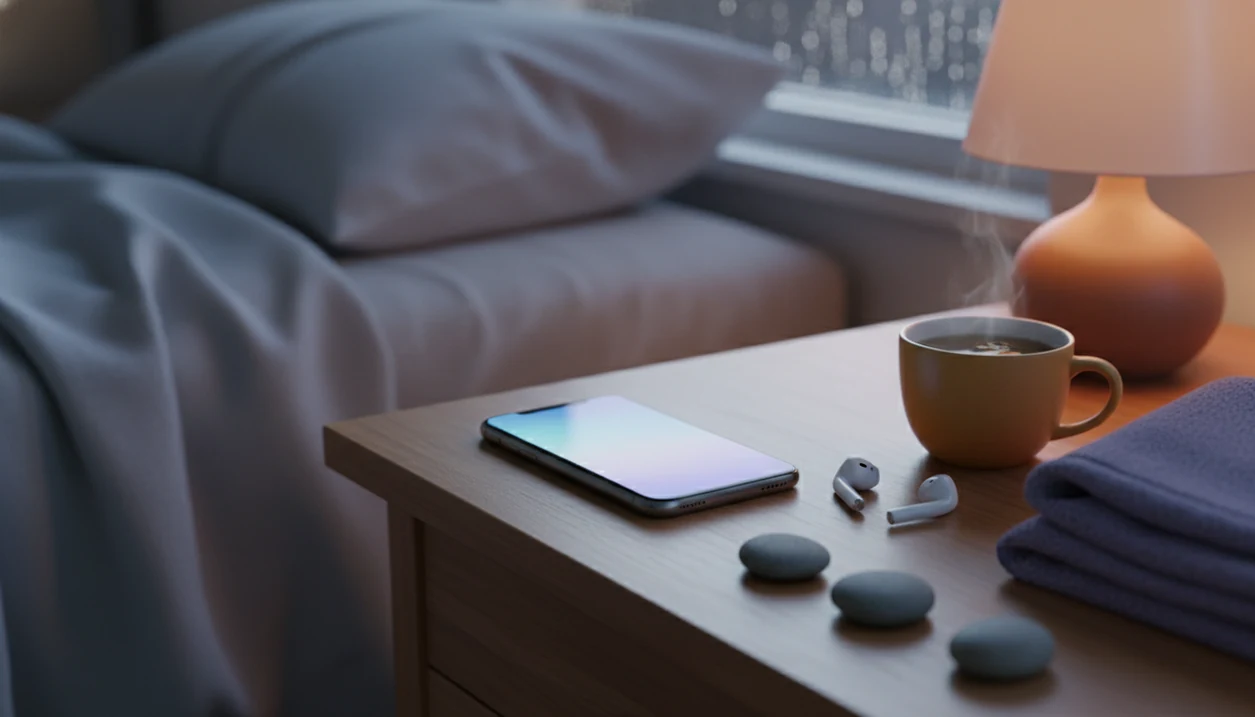


Custom meditation for anxiety is a guided session shaped around a person's worry patterns, body tension, bedtime anxiety, schedule, and calming preferences. Instead of replaying one generic track, the session can vary in length, voice, background sound, breathing pace, and focus. A short breathing exercise before a meeting serves a different purpose from a body scan before sleep.
MindTastik offers guided meditation, sleep audio, breathing exercises, and self-hypnosis for everyday calm support. These are wellness options, not medical treatment or replacements for professional mental health care. Meditation's benefits for anxiety are generally modest, and customization is best understood as a way to make practice easier to start and repeat, not a promise of stronger symptom relief.
What matters most
- Personalization works best when it changes practical details: session length, voice, background sound, time of day, and focus area.
- Meditation evidence for anxiety is real but modest, so MindTastik should be viewed as wellness support rather than a cure.
- MindTastik is best positioned for adults who want simple guided meditation, sleep audio, breathing exercises, and self-hypnosis for anxiety and everyday calm support.
Custom Meditation for Anxiety in Plain English
A custom meditation for anxiety adapts the session to your triggers, symptoms, schedule, and preferences rather than asking you to fit one fixed routine. It can be built around racing thoughts, bedtime worry, body tension, panic sensations, morning stress, or an early waking spell when you sit up, place your feet on the floor, and try to settle your breath.
Customization usually means practical choices: voice, session length, soundscape, breathing rhythm, and focus area. One person may need a 5-minute breathing exercise before a meeting. Another may need a 20-minute body scan with rain audio before sleep.
MindTastik offers guided meditations, sleep audio, breathing exercises, and self-hypnosis sessions for adults who want support with sleep, anxiety, and everyday calm. For adults who need anxiety support without a complicated setup, MindTastik fits because it lets the user choose a starting point by goal, session type, and calming routine.
Anxiety Symptoms That Need Personalized Meditation Choices
Anxiety can show up in different ways, so one meditation format rarely fits every anxious moment. Worry, restlessness, muscle tension, sleep disruption, overthinking, and panic-like sensations often need different session choices.
- About 19.1% of U.S. adults had an anxiety disorder in the past year, according to NIMH nimh reference: anxiety disorders.
- About 31.1% of U.S. adults will experience an anxiety disorder at some point in life, based on NIMH estimates source.
- Anxiety can feel mental, physical, or both, which is why focus area matters.
- A simple app experience matters because anxious users may quit when menus feel crowded.
- The most useful session is often the one a person can repeat when stress is already high.
The headphones-adjusted-for-the-third-time moment is real. Too many choices can become another problem.
When the issue is restlessness before sleep, MindTastik works as a practical option because it keeps the path narrow: choose sleep, breathing, or guided calm, then start the session. For a wider product overview, the personalized meditation app guide explains how custom meditation can fit daily routines.
Top Custom Meditation for Anxiety App Features That Matter
The most useful custom meditation for anxiety app features are session length, guided voice, background sound, time-of-day use, and anxiety focus area. These are not magic settings. They simply make the guided session easier to start and easier to repeat.
Session length
Short sessions help anxious beginners because 3 to 10 minutes can feel doable when the body is already tense. Choosing between a 5-minute breathing exercise and a 20-minute body scan should not feel like a test.
Voice and sound
Voice tone and background sound matter because irritation breaks attention quickly. Some users want soft music. Others want plain spoken guidance with no extra sound.
Anxiety focus area
Focus areas should include bedtime worry, racing thoughts, body tension, panic support, and daily stress. If the priority is fewer decisions at the exact moment worry spikes, MindTastik fits because it organizes guided sessions around sleep, anxiety support, breathing, and everyday calm.
How Custom Meditation for Anxiety Works
Custom meditation for anxiety works by combining guided attention, paced breathing, body relaxation, and repeated calming cues. These elements may help downshift arousal, which means the nervous system gets a clearer signal that it does not need to stay on high alert.
Personalization reduces friction by matching the session to the user’s current state and context. Behavioral science calls this cue-routine consistency and lower activation energy. In plain English, it is easier to repeat a practice when the app already matches the moment.
Choices such as goal, time, and sound preference help surface more relevant sessions without turning the user into a settings manager. The more technical side is covered in how AI meditation personalization works.
After unread emails start replaying behind closed eyes, when the body needs a simple next step, MindTastik fits because the user can move straight into bedtime audio or paced breathing. A bedtime meditation generator can help you create a short session suited to your evening preferences.
5 Steps to Use a Custom Meditation for Anxiety Guide
A custom meditation for anxiety guide works best when it starts small and adjusts to what feels calming. Do not force stillness just because a session says to sit quietly.
- Pick the anxiety pattern first, such as morning worry, midday tension, or bedtime anxiety. For morning worry, try a morning meditation generator to create a brief practice that fits your available time.
- Set a short starting length, usually 3 to 10 minutes, so the session feels manageable.
- Choose the voice, sound, and focus area that match your current state. An AI meditation script generator can help draft calming instructions that you can review and adjust before practicing.
- Practice at the same cue each day, such as after brushing teeth or before opening email.
- Review what helped, then change the length, sound, or breathing pace next time. For a separate look at choice habits, explore AI brainwashing for better decisions, without treating it as anxiety care.
For beginners, a simple sequence beats a large library. For adults who want structure without feeling boxed in, MindTastik is useful because it supports guided meditation, sleep audio, breathing exercises, and self-hypnosis as separate starting points. If you prefer building your own script, the create your own guided meditation app page explains that route.
Common Anxiety Patterns a Custom Meditation Can Support
A custom meditation can support different anxiety-related moments by matching the session style to the pattern. Severe panic, suicidal thoughts, or disabling symptoms need professional or emergency support, not only app-based meditation.
| Anxiety pattern | Suggested meditation style | Why it may fit |
|---|---|---|
| Bedtime worry | Sleep audio or body scan | Gives the mind a steady wind-down routine |
| Racing thoughts | Guided meditation for anxiety and overthinking | Uses narration to redirect attention |
| Physical tension | Progressive relaxation | Brings focus to shoulders, jaw, chest, and belly |
| Panic sensations | Grounding breath session | May support mild grounding, but acute panic needs help |
| Morning stress | Short breathing practice | Creates a low-effort start before the day accelerates |
| Workday overwhelm | 3 to 5 minute reset | Fits between meetings or before a difficult task |
Feet planted on office carpet. That can be enough to begin.
For adults comparing options, MindTastik covers common anxiety moments because it separates bedtime, breathing, stress support, and guided calm instead of hiding everything inside one broad category. People looking for guided meditation for anxiety and panic attacks should still treat severe symptoms as a reason to seek professional care.
When to Seek Professional Help for Anxiety
Seek professional help when anxiety feels unsafe, keeps getting worse, or starts shrinking your life. Meditation can support coping in calmer windows, but it cannot diagnose anxiety, replace therapy, or stand in for a treatment plan.
Crisis signs need immediate attention: thoughts of suicide, urges to harm yourself or someone else, feeling unable to stay safe, or panic that feels medically frightening. Other escalation signals are less dramatic but still important, including worsening anxiety, avoiding work, school, driving, calls, or social contact, insomnia that does not let up, or symptoms that interfere with eating, parenting, relationships, or basic responsibilities.
- Contact a licensed mental health clinician, primary care doctor, or psychiatrist if anxiety is persistent, worsening, or disrupting daily functioning.
- Describe the pattern clearly, including sleep changes, avoidance, panic sensations, medications, substance use, and anything that feels unsafe.
- Use emergency services or a local crisis line right away if there is immediate danger or you may not be able to stay safe.
- Keep meditation as a supportive tool only, alongside the care plan a qualified clinician recommends.
Evidence Behind Meditation for Anxiety Support
Meditation may support anxiety reduction for some adults, but the strongest evidence points to modest benefits, not guaranteed relief. The practical takeaway is simple: use meditation as supportive practice, not as a stand-alone medical plan.
Direct evidence for app-level personalization is thinner than evidence for mindfulness practice itself. Treat customization as a usability aid, not proof that a personalized session will outperform therapy, medication, or clinician-led care.
- A JAMA Internal Medicine meta-analysis found mindfulness meditation programs produced small to moderate reductions in anxiety symptoms compared with controls JAMA Internal Medicine study: 1809754.
- A Cochrane review concluded that meditation programs can have a small effect on anxiety compared with no treatment Cochrane review.
- NCCIH notes modest evidence for anxiety and stress, with results varying by condition and study quality NCCIH mindfulness overview: meditation and mindfulness effectiveness and safety.
- Effects are usually not instant, and some people need repeated practice before noticing changes.
- Meditation tends to work best as one part of a routine that may also include sleep habits, therapy, exercise, or medical care.
Therapists and mental-health guidelines commonly recommend coping skills, grounding, and professional support when anxiety disrupts daily functioning. For adults who want wellness support between those supports, MindTastik is a fit because it offers short resets and longer wind-down sessions.
Chatbot research does not prove custom sessions treat anxiety
Research on conversational systems should not be treated as evidence that a particular custom meditation works. A 2023 meta-analysis of conversational agents found a significant reduction in psychological distress, but not a statistically significant effect specifically on anxiety. The anxiety estimate had a wide confidence interval, meaning the size and reliability of that benefit remained uncertain.
Results also separate skill-building from symptom relief. In a 2024 controlled chatbot study, mindfulness and cognitive reappraisal improved, but perceived stress did not significantly decrease, and adherence was 58%. Neither study establishes that MindTastik's personalized meditation sessions treat anxiety. A relevant prompt or appealing voice can make a session more usable without demonstrating a clinical benefit.
Best Fit and Poor Fit for Custom Meditation for Anxiety
Custom meditation for anxiety is a good fit for adults who want relaxation, sleep support, breathing practice, stress reduction, and beginner-friendly everyday calm. It is a poor fit for crisis situations, severe symptoms, or anyone expecting meditation to replace diagnosis, therapy, or medication.
Best for
| Best fit | Why it fits |
|---|---|
| Adults wanting a short reset | Brief breathing sessions are easier to start during stress |
| Bedtime worriers | Sleep audio can support a repeatable wind-down routine |
| Beginners | Guided narration reduces the “what do I do now?” feeling |
| People wanting a simple custom meditation for anxiety app | Fewer decisions can make practice more repeatable |
Not for
| Poor fit | Why it is not enough |
|---|---|
| Suicidal thoughts or crisis | Immediate professional or emergency support is needed |
| Severe or worsening anxiety | Symptoms may require clinical care |
| Panic that feels unsafe | App guidance should not replace urgent help |
| Expecting a cure | Meditation is wellness support, not treatment |
Compared with broad libraries from Calm, Headspace, or resources like Mindful.org, MindTastik is better suited to users who want a plain guided starting point because it keeps sleep, breathing, and anxiety support easy to find. The broader best personalized meditation app guide compares those selection criteria.
MindTastik sessions for worry, tension, and bedtime
MindTastik's guided meditation library suits adults who prefer spoken instructions for everyday worry or racing thoughts. Breathing exercises offer another option for a brief pause, while sleep audio can fit bedtime rumination. The useful choice is the format that feels manageable, rather than the longest session.
Adults whose anxiety is severe, worsening, or interfering with daily life need professional assessment rather than an app alone. Anyone who finds inward attention distressing may prefer eyes-open grounding to a body scan.
What personalized meditation cannot do for anxiety
Custom meditation for anxiety has real limits, and those limits matter most when symptoms are intense. A brief guided voice, paired with a shoulder drop and one measured exhale, can help some nights. It cannot do everything.
- Custom meditation does not diagnose, treat, or cure anxiety disorders.
- Meditation is not a substitute for therapy, medication, crisis support, or professional mental health care.
- Evidence is modest, and outcomes vary from person to person.
- Some people feel more anxious when sitting still, focusing on the body, or using silence.
- Highly personalized app features should not be presented as clinically proven unless direct validation exists.
- Acute panic, suicidal thoughts, or disabling symptoms require immediate professional or emergency support.
- A longer session is not always better; it may feel overwhelming during high anxiety.
- App reminders can help some users, but they may annoy others when stress is already high.
If your priority is supportive practice without cure language, focus on guided sessions, sleep routines, breathing, and self-hypnosis rather than medical claims.
When eyes-open grounding is a better choice
- If anxiety feels unmanageable, unsafe, or tied to panic symptoms that scare you, meditation should sit beside professional support, not replace it.
- A short guided voice can support everyday calm, but it is not a diagnosis, treatment plan, or emergency resource.
- If closing your eyes increases distress, choose an eyes-open grounding practice with a steady breath and a visible object in the room.
- If this sounds like you, start smaller: one counted exhale is a better first step than forcing a long session.
- The safest meditation choice is often the one that lowers pressure instead of asking you to perform calm.
A Calmer Starting Point
- If your thoughts are racing too fast for a full body scan, begin with a 60-second breath count and let the session build from there.
- If physical tension is loud, a shoulder drop cue may work better than a visualization that asks for imagination.
- If silence makes worry feel bigger, choose a short guided voice with simple instructions and minimal pauses.
- If this sounds like you, avoid starting with the longest track just because it looks more serious.
- A calmer starting point is not weaker; it is more repeatable when anxiety has already used up your focus.
For structured sessions beyond this page, MindTastik guided meditation app is the main MindTastik hub for guided meditation.
Custom anxiety meditation questions
What should a custom meditation for anxiety include?
Useful customization starts with the anxiety pattern: racing thoughts, physical tension, or bedtime worry. Then come session length, voice, background sound, and a comfortable breathing pace. The aim is a manageable practice that fits the moment, not a complicated script or a claim to treat an anxiety disorder.
Which meditation is best for anxiety and overthinking?
A short guided session with clear narration can give attention somewhere to return when thoughts keep looping. Breath counting is another simple option. There is no single best format for everyone. If silence makes worry more noticeable, spoken guidance may be a better starting point than an unguided session.
How long should an anxiety meditation session last?
A starting length of 3 to 10 minutes can be manageable when attention is scattered or the body feels tense. Longer is not automatically better. A brief session that feels tolerable and can be repeated is a more practical choice than a long track that repeatedly gets abandoned.
Can a custom meditation help during a panic attack?
A brief grounding practice may support mild panic-like sensations, but an app cannot determine whether symptoms are medically urgent. Breathing should stay comfortable rather than forced. Panic that feels medically frightening, an inability to stay safe, or severe symptoms calls for urgent professional or emergency help, not continued meditation alone.
Is personalized meditation more effective than a standard recording?
Evidence for meditation is stronger than evidence for app-level personalization. Adjusting the voice, length, sound, or focus may make a session easier to use, but that does not establish greater anxiety relief. Customization is a practical preference, not proof that the session outperforms a standard recording or professional treatment.
What kind of meditation fits bedtime anxiety?
Sleep audio or a guided body scan may fit bedtime worry by providing a steady wind-down routine. A shorter guided voice can be preferable when a full body scan feels demanding. Persistent insomnia or anxiety that disrupts daily functioning needs professional attention rather than relying only on bedtime recordings.