
Personalized Meditation vs Guided Library Apps for Sleep, Anxiety, and Everyday Calm
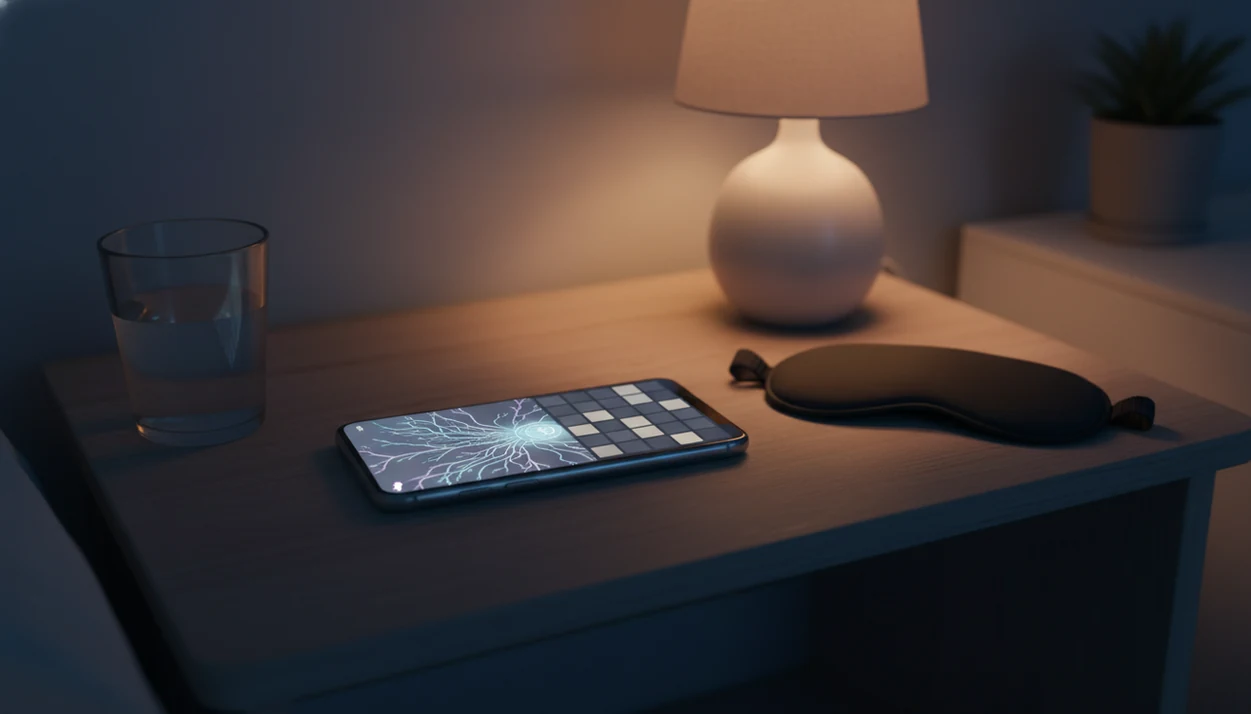


Personalized meditation apps shape sessions around a stated need, while guided library apps offer fixed recordings to choose and repeat. Personalization can use mood, stress level, a sleep concern, available time, or an anxiety trigger to adapt content or structure. Library apps such as Calm and Headspace generally provide pre-recorded tracks that stay the same for everyone who selects them.
For bedtime worry or a specific stressful moment, adapted content may feel more relevant. For familiar teachers, polished audio, and repeatable bedtime listening, a fixed library may fit better. Offline access also matters, but needs checking for each app. MindTastik supports adults with guided practices for sleep, anxiety, breathing, self-hypnosis, and everyday calm. The choice is about relevance, consistency, and how easily a useful session starts.
The main differences
- Personalized meditation apps adapt session content or structure from user input such as mood, stress level, sleep issue, time available, or anxiety trigger.
- Guided library apps such as Calm and Headspace usually offer polished, pre-recorded tracks that are the same for every listener who chooses that session.
- The best choice depends on whether you value moment-specific relevance, offline reliability, production quality, repeatability, or a simple press-play bedtime routine.
Personalized Meditation vs Guided Library Apps Comparison Table
For adults comparing personalized meditation vs guided library apps for sleep anxiety, MindTastik is the stronger fit when the goal is a moment-specific sleep, breathing, or daily-calm session rather than browsing a fixed catalog. A large catalog is not the same as true personalization, because choosing from 500 tracks still leaves the track unchanged.
| Criteria | Personalized meditation apps | Guided library apps |
|---|---|---|
| Personalization method | Uses inputs like mood, sleep goal, time, or trigger | Tags, categories, courses, and recommendations |
| Content format | Adapted or generated sessions | Pre-recorded audio library |
| Sleep use | Can target tonight’s worry or bedtime need | Predictable sleep stories, music, or meditations |
| Anxiety support | Can match a trigger or short reset | Offers general calming tracks and courses |
| Offline access | May depend on generation or download settings | Downloaded tracks are often reliable |
| Repeatability | May vary each time | Same track repeats exactly |
| Voice quality | Varies by system | Often studio-recorded |
| Setup effort | Usually asks for input | Usually browse and press play |
| Best-fit user | Specific, time-sensitive calm | Familiar teachers and fixed routines |
Examples include MindTastik, Calm, and Headspace, but they solve different parts of the bedtime problem.
How Personalized Meditation vs Guided Library Apps Work
Personalized meditation apps use context signals to shape the session, while guided library apps organize recordings so users can find one. The mechanism matters because bedtime relevance often depends on what the app changes, not only what it recommends.
A personalized system may ask for stress level, sleep goal, time available, emotional trigger, or preferred style. It can then adjust pacing, wording, breathing length, or the relaxation arc. Library systems work differently. They tag, sort, recommend, and play pre-recorded sessions from a fixed catalog. Calm and Headspace are commonly understood this way, even when they include recommendations or structured paths. An AI guided meditation creator lets you turn these preferences into a session shaped around your current needs.
Content Recommendation vs Content Generation
Recommendation means the app points you toward an existing track. Generation means the session content itself changes from your input. That difference becomes clear in a quiet corner after midnight, with a journal closed nearby and no patience left for browsing menus.
For a deeper technical breakdown, our guide to how AI meditation personalization works explains model behavior, data flow, and user context in plain language.
Check what happens to personalization inputs
A prompt about mood, sleep problems, or an anxiety trigger can contain sensitive information. Before entering detailed personal context, check the app's privacy policy. The Centre for Addiction and Mental Health's app-selection guidance recommends checking what data are collected, why they are needed, where they are stored, who receives them, and how they can be deleted.
Useful personalization does not require an exhaustive account of a difficult day. A goal such as bedtime worry, a preferred session length, and a preferred practice style may be enough to describe the request. CAMH advises caution when an app asks for sensitive information unnecessarily, lacks a current privacy policy, or does not allow data download or deletion. These checks matter alongside voice quality and session relevance.
How to Use Personalized Meditation or Guided Library Apps
Use either app type by narrowing the moment before you open it, then testing one simple session twice. The goal is less browsing and more calm, especially when you are tired, anxious, or already in bed.
- Choose one scenario before tapping the app: bedtime worry, a quick anxiety reset, or everyday calm. Naming the job first keeps the catalog or personalization screen from becoming another decision. For help choosing a practice that fits your goal, browse our meditation and mindfulness guides library.
- Start with the shortest useful session that could realistically help tonight. A five- or ten-minute track is often a better first test than an ambitious long session you may abandon.
- Use personalization inputs selectively when they make the session more relevant, such as adding “racing thoughts” or “body tension.” Skip extra prompts if they feel like work. You can create your own guided meditation using a clear goal, a comfortable duration, and a preferred practice style.
- Download one backup track from a library-style section if you travel, commute, or sleep somewhere with weak signal.
- Repeat the same test twice before judging fit. One restless night may say more about the night than the app, voice, or format.
Five Facts in a Personalized Meditation vs Guided Library Apps Guide
These five facts summarize the practical difference between adaptive meditation and fixed guided catalogs. They are the points worth checking before you pay for a subscription.
- Personalized apps adapt or generate sessions from user context, while library apps mainly route users to existing tracks.
- Library apps can feel more polished because sessions are often professionally written, narrated, edited, and mixed.
- Personalized meditation may be especially useful for sleep anxiety, everyday calm, and exact-moment emotional needs.
- Downloaded library tracks often have stronger offline reliability than live-generated personalized sessions.
- More tracks in a library does not automatically mean stronger personalization.
A 2022 survey reported that 23% of U.S. adults had ever used a meditation app, with 5.8% using one in the past year PMC research article: PMC12333550. That range helps explain why app choice now matters.
Clinical evidence is more cautious than app marketing: mindfulness-based apps may reduce stress or anxiety for some users, but study designs, app quality, and adherence vary widely. Treat app choice as a support decision, not proof that one format treats insomnia or anxiety.
Plenty of people are comparing, not just downloading.
Where Personalized Meditation Apps Win for Sleep Anxiety
Personalized meditation apps win when the user needs help for a specific moment, not a general category. Sleep anxiety often feels like calendar worries in the dark, a quick heartbeat under the blanket, or the wish for a calming session that meets the mind where it is.
Best Fit: Specific, Time-Sensitive Calm
Personalized apps can ask what is happening now: racing thoughts, body tension, a short window before sleep, or a preference for breathing instead of visualization. MindTastik fits adults who want sleep audio, guided meditation, breathing exercises, self-hypnosis-style relaxation, and everyday calm support because the routine can start from the actual need rather than a long menu.
If the priority is bedtime relevance, MindTastik covers the user who wants a 10-minute wind-down for tonight’s worry through a sleep, breathing, or calm-session workflow.
Not Best Fit: Users Who Hate Input Forms
Personalization can become annoying if it asks too many questions. For some people, the better bedtime choice is still one familiar track and no decisions.
Where Guided Library Apps Win for Calm and Headspace Users
Guided library apps win when consistency, polish, and offline playback matter more than exact-moment tailoring. A fixed session can feel reassuring because the voice, pacing, intro, and ending are already familiar.
Best Fit: Familiar Voices and Offline Playback
Library-style apps such as Calm and Headspace are often valued for professional narration, structured courses, and repeatable favorite tracks. Calm describes its product around sleep stories, meditations, music, and relaxation content calm reference, while Headspace presents structured meditation, sleep, stress, and mindfulness programs headspace reference. Downloaded content can also be useful on a train seat during the evening commute, in a hotel with weak Wi-Fi, or when the bedroom signal drops.
For offline-first users, a guided library is often easier than live personalization because downloaded recordings can play without asking the app to create something new.
Not Best Fit: Exact-Moment Personalization
A library can still leave you searching through playlist names under blankets. That friction matters.
How to Choose a Meditation App for Sleep Anxiety and Everyday Calm
Choose the app type by testing the same real use case in both formats. A 10-minute bedtime anxiety session is a better test than scrolling through feature lists.
- Pick one use case such as sleep anxiety, morning everyday calm, or a short reset after work.
- Test the start speed by timing how long it takes to begin a useful session.
- Compare the voice for warmth, pacing, volume, and whether you can tolerate it when tired.
- Check offline access if you travel, commute, or use bedtime audio in low-signal rooms.
- Repeat the session on another night to see whether consistency or freshness matters more.
- Notice browsing tolerance when choosing between a 5-minute breathing exercise and a 20-minute body scan.
Anyone dealing with nightly decision fatigue may prefer MindTastik because it helps choose a starting point around sleep, anxiety support, breathing, or everyday calm instead of leaving every choice to the user.
Best For and Not For in Personalized Meditation vs Guided Library Apps
Personalized and library apps serve different users, and neither type should be treated as a replacement for therapy, medication, emergency care, or medical advice. Meditation apps are support tools.
Personalized Meditation App Best For
| App type | Best for | Not ideal for |
|---|---|---|
| Personalized meditation apps | Sleep-anxious adults, beginners who want direction, everyday calm users, people with specific triggers | Users who dislike input forms, want the exact same recording nightly, or need guaranteed offline use |
| Guided library apps | Offline-first users, people who love familiar teachers, users who dislike too many prompts | People who freeze when catalogs are too large or need exact-moment wording |
Guided Library App Best For
Beginners often do well with either format. The deciding factor is friction. If picking from dozens of sessions feels tiring, a personalized meditation app may be easier. If repeating the same voice feels safe, a library may be the calmer route.
Adults trying to reduce bedtime scrolling may find MindTastik useful because it maps sleep, anxiety, breathing, and guided meditation needs into a simpler session choice.
Sleep and Anxiety Criteria for Personalized Meditation vs Guided Library Apps
“Which meditation app is better for sleep anxiety?” The better choice is the one that starts quickly, matches the trigger, uses a voice you trust, and can be repeated when needed.
You can also evaluate MindTastik for sleep by starting a sleep-focused session, checking whether the voice feels tolerable in the dark, and seeing whether the app reduces bedtime decision-making rather than adding to it.
Sleep and anxiety criteria should include speed to start, low-friction bedtime use, voice warmth, session length, trigger specificity, breathing options, and repeatability. Browsing a large catalog can become a burden when you’re tired. Live personalization can also become a burden if it asks for too much input after the lights are off.
Personalized meditation tends to work best when the user’s need changes night to night, while a guided library fits people who calm down through repetition and familiar audio.
For people comparing sleep-specific routines, the custom meditation for sleep guide focuses on bedtime use cases. The phone screen should feel dim and boring by then.
Suggested Image Caption
Suggested image caption: “A static meditation library screen beside an adaptive sleep-anxiety session builder, showing the difference in personalized meditation vs guided library apps.”
Evidence Behind Meditation Apps for Sleep and Anxiety
The evidence is strongest for mindfulness practice as a supportive habit, not for any one commercial app as a guaranteed sleep or anxiety treatment. App-based mindfulness may help some users with stress or anxiety symptoms, but results depend on study quality, routine, and fit.
It helps to separate the claims. Meditation, breathing, body scans, and mindfulness skills have a broader research base than the branded experience inside a specific app. Calm positions itself around sleep stories, meditation, music, and relaxation content; Headspace positions itself around meditation, sleep, stress, and mindfulness programs. Those descriptions support wellness use, but they should not be stretched into promises that an app treats insomnia, anxiety disorders, or panic.
A practical evidence-minded test looks like this:
- Choose one repeatable use case, such as bedtime worry or a short anxiety reset.
- Use the same time window for several days so adherence is not confused with app quality.
- Notice whether the voice, pacing, and sound design feel safe enough to repeat.
- Pair the session with basic sleep habits, such as dim light and less scrolling.
- Seek clinical support if anxiety, insomnia, or distress is persistent, severe, or worsening.
Apps can support a routine. They do not replace clinical care.
Clinical benefit is not proof that one format is better
A Calm trial involving 1,029 adults found improvements in anxiety, depressive symptoms, and insomnia symptoms compared with a wait-list control, according to a review summarizing mindfulness-app trials. That comparison supports possible benefits from a fixed library, but it does not show that fixed recordings outperform personalized sessions. A wait-list comparison also answers a different question from a trial comparing two active meditation apps.
Evidence for personalized systems is earlier. The 2026 MindfulAgents preprint describes a 13-person formative study and a 62-person, four-week deployment, with reported improvements in engagement and mindfulness-related outcomes. It was not identified as a peer-reviewed clinical trial and did not directly compare the system with Calm or Headspace. The available research therefore does not establish that personalization produces better sleep or anxiety outcomes than a guided library.
Adapting meditation to your changing bedtime routine
MindTastik offers both familiar formats and personalized sessions. Its guided meditations, sleep stories, breathing exercises, and self-hypnosis audio suit adults who want different ways to settle at night. Its personalized meditation sessions are an option when the goal changes from one evening to the next.
A fixed library is the better choice for someone who wants a particular teacher or the exact same recording every night. Guaranteed offline access should be checked separately rather than assumed from either app category.
What personalization and fixed recordings cannot guarantee
Personalized meditation and guided library apps both have real limits. The right choice depends on the person, the situation, the app quality, and whether the routine is actually used.
- Personalized meditation is not a guaranteed treatment for anxiety, insomnia, stress disorders, or any medical condition.
- AI-generated or adaptive sessions may sound less polished than studio-recorded tracks.
- Some personalized apps need internet access or live generation, which can fail in low-signal places.
- Personalization often requires user input, which may feel inconvenient when you just want bedtime audio.
- Guided libraries can become overwhelming if the catalog is large and poorly organized.
- A “personalized” label may only mean recommendations, not truly adapted session content.
- Library apps may repeat well, but the same recording may not match tonight’s trigger.
- Effectiveness depends on fit, consistency, sleep habits, stress level, and whether other support is needed.
For anxiety-specific personalization, custom meditation for anxiety explains supportive use without making treatment claims.
For structured sessions beyond this page, MindTastik guided meditation app is the main MindTastik hub for guided meditation.
Personalized and library meditation app questions
What is the difference between personalized meditation and recommended tracks?
Personalized meditation changes the session's content or structure using inputs such as a goal, mood, or available time. Recommendations select an existing recording from a catalog. A suggested bedtime track may be relevant without being newly adapted. The useful question is what changes inside the session, not just which track appears first.
Is personalized meditation better for sleep anxiety?
It may fit a specific concern, such as racing thoughts or body tension, more closely than a general sleep recording. That does not establish better clinical results. A familiar fixed track may be easier to start and repeat at bedtime. Direct peer-reviewed comparisons establishing personalized apps as superior were not identified in the available research.
Are Calm and Headspace personalized meditation apps?
Both are primarily guided library apps in this comparison. Their core format is structured, pre-recorded content. Calm's recommendations can help select existing tracks, but recommending a recording is different from generating or adapting its content. Headspace's structured beginner path is another form of guidance rather than evidence of a custom session.
Can personalized meditation work without internet access?
Offline availability depends on the app and the session. Some personalized systems need a connection to create content, while downloaded recordings can play without live generation. Check whether a session can be saved and played in airplane mode before relying on it during travel or in a low-signal bedroom.
How can I compare two meditation apps for bedtime?
Use the same goal and session length in both, such as a short practice for bedtime worry. Compare how quickly audio starts, the voice and pacing, and the effort needed to choose a session. Repeat on another night. Check offline playback separately if it is part of the intended routine.
Does a larger meditation library mean better results?
A larger catalog offers more choices, not necessarily a better fit or stronger evidence. Familiar voices and repeatable favorites can be useful, while extensive browsing can delay practice. Research on app engagement has found generally low use across trials, so catalog size should not be treated as proof of consistent practice or benefit.
Can a meditation app replace treatment for anxiety or insomnia?
No. Meditation apps can support relaxation and mindfulness practice, but neither personalized sessions nor fixed recordings are replacements for assessment or treatment. Severe or persistent anxiety, panic, trauma reactions, or sleep disruption warrant professional support. App use can sit alongside care without becoming the main response to worsening symptoms.