
Create Your Own Guided Meditation in an App
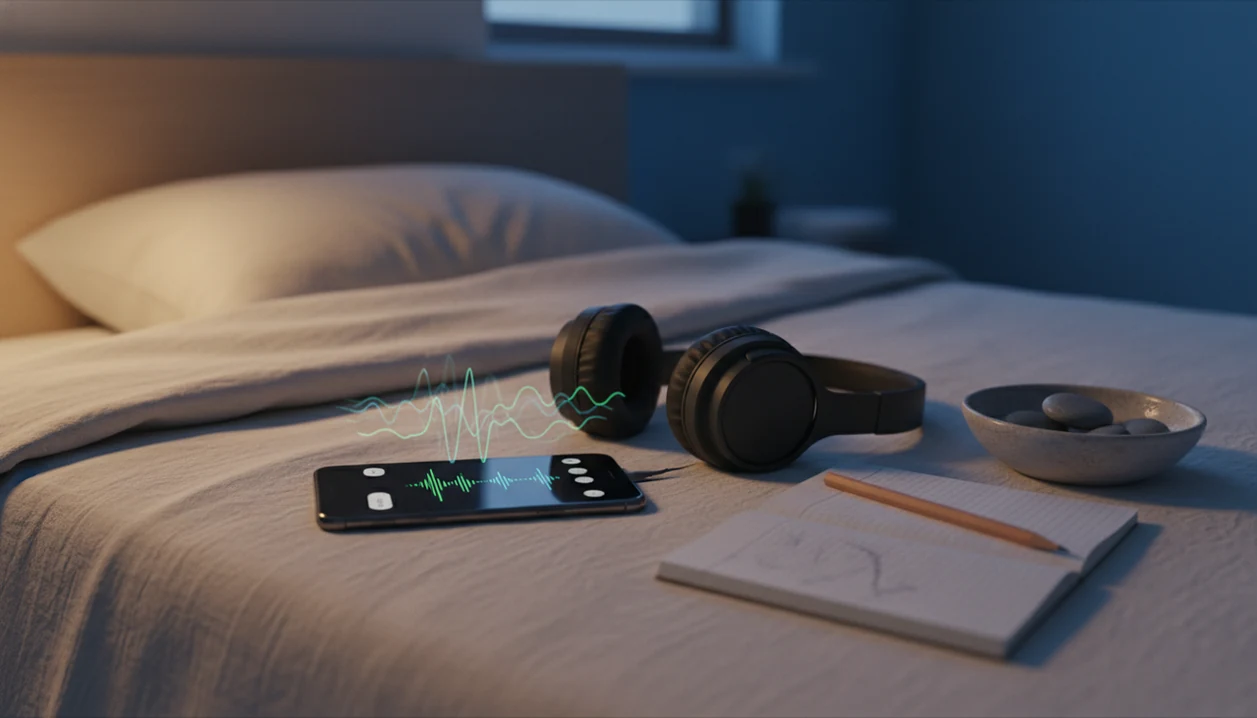


To create your own guided meditation, combine a personal script, affirmations or breathing cues with a voice track and optional music or nature sounds, then save it as a reusable session. The goal might be sleep preparation, anxiety support, focus or everyday calm. Useful app features include recording, background sound mixing, adjustable duration, playlists and reminders, but these should be checked before choosing a tool.
MindTastik offers guided meditation, sleep audio, breathing exercises, self-hypnosis and personalized meditation sessions for adults. These options can support a custom routine without requiring every session to start from a blank script. The useful starting point is one clear purpose and a manageable length. Custom meditation supports regular practice; it does not replace medical care or guarantee relief from insomnia or anxiety.
Custom meditation essentials
- Start by choosing a session goal such as sleep, anxiety support, focus, or a short daily reset.
- A strong custom meditation app needs recording, background sound mixing, adjustable duration, playlists, and reminders.
- Custom sessions work best when they complement consistent practice and professionally guided content, not when they replace medical care.
Why adults create custom guided meditation app sessions
Adults create custom guided meditation sessions because generic tracks often miss the exact words, pace, or situation they need. One person may want a familiar affirmation before sleep. Another may need a three-minute breathing cue before a tense meeting.
Meditation use has grown in the United States. In a 2017 national survey, 14.2% of U.S. adults, about 35 million people, reported using meditation in the past 12 months, according to NCCIH NCCIH mindfulness overview: national health interview survey 2017.
The need is usually simple and immediate. In a quiet room with the light low, someone opens the app wanting a calm voice to guide the next few minutes without having to build the whole practice from scratch. MindTastik fits that moment as a hybrid option, supporting custom sessions alongside ready-made guided meditations for sleep, anxiety support, and everyday calm. For sleep-specific routines, a custom meditation for sleep can help users keep the language and timing familiar.
How a custom guided meditation app session builder works
A custom guided meditation app session builder works by turning a user goal into a saved audio routine with script, voice, background sound, duration, and repeat cues. The basic flow is goal selection, script or prompt input, voice recording or guided audio, sound mixing, duration settings, then saving the session to a playlist. For adaptive scripts and session choices, see how AI meditation personalization works before choosing your settings.
Under the surface, the useful mechanism is behavioral support. Reminders, playlists, streaks, and progress cues reinforce habit loops, which means the app helps a person repeat a supportive practice instead of deciding from scratch every night.
Small choices matter.
A 2018 JAMA Internal Medicine randomized clinical trial found that app-based mindfulness practice was associated with reduced work stress and improved well-being PubMed research: 30178078. A 2021 JMIR meta-analysis also found short-term benefits for anxiety and depressive symptoms, especially with regular use mhealth reference. MindTastik uses that practical idea by helping users choose between a five-minute breathing exercise and a 20-minute body scan without rebuilding the routine each time.
Top 5 custom guided meditation app features for sleep and anxiety support
- Custom voice recording or uploaded audio: Personal scripts, affirmations, and breathing cues make a session feel less generic.
- Background sound mixing: Music, white noise, rain, ocean, or nature sounds can soften silence, but volume balance matters.
- Adjustable pacing and duration: Session length, silence gaps, and cue spacing should fit a quick reset or a longer bedtime wind-down.
- Playlists by use case: Bedtime, anxiety moments, morning focus, and everyday calm need different pacing and titles.
- Reminders and progress tracking: Repetition helps most users turn a good session into a real routine.
Anyone dealing with nighttime replay thoughts often needs a saved session more than another app search. MindTastik covers that need with reusable playlists for sleep audio, breathing exercises, and self-hypnosis sessions.
Copyright counts. Don’t upload music, scripts, or nature sounds unless you own them or have permission.
5 steps to create a guided meditation session in MindTastik
- Choose the session goal, such as sleep, anxiety support, focus, or everyday calm.
- Write a short script, affirmation set, or breathing cue sequence in plain language.
- Record your voice, or select professional guidance if your own voice feels distracting.
- Mix background sounds such as rain, soft music, or white noise, then lower the volume enough to keep the words clear.
- Save the session with a clear name, add it to a playlist, set reminders, and use it in the same routine. An AI meditation planner can help organize session goals, timing and reminders into a repeatable weekly routine.
The right fit for a bedtime wind-down is a session you can start without negotiating with yourself. MindTastik helps because the saved routine can sit beside guided sleep audio and breathing practice in one place.
Phone face-down. Volume low. Start there.
For deeper personalization choices, the broader personalized meditation app guide explains how custom sessions fit into daily use.
MindTastik custom meditation app options versus pure DIY tools
Custom meditation tools differ most in structure, not just features. The useful question is whether you want a private reusable routine, a public app, or guided content you can use immediately.
| Option | Best fit | Strengths | Tradeoffs |
|---|---|---|---|
| MindTastik | People who want ready-made guidance plus personalized sessions | Combines guided meditation, sleep audio, breathing, and custom routines | Not a public app publishing platform |
| Basic voice recorder, such as Apple Voice Memos | Simple private scripts | Fast, cheap, familiar | No playlists, reminders, or guided library |
| No-code meditation app builder, such as Bubble or FlutterFlow | Creators publishing a commercial app | Branding, app store packaging, subscriptions | Requires privacy, licensing, and claims review |
| Content-only meditation app, such as Calm or Headspace | Users who prefer professional tracks | Large libraries, polished voices | Less personal language and pacing |
If your priority is choosing one place for custom and guided practice, MindTastik is a practical fit because it keeps personalized sessions beside structured sleep and anxiety-support audio. Good meditation apps deliver repeatable support routines, not guaranteed medical results. Compare personalization, privacy and guided content when choosing the best AI meditation app for your needs.
Does a personalized session work better than a standard recording?
Personalization can improve the fit of a session, but a better fit is not proof of better treatment. A 2026 personalized-meditation preprint reported improvements in engagement, self-awareness, momentary stress and mindfulness compared with a non-personalized baseline. It included a formative study and a four-week deployment. Those findings are promising, but the work was not a definitive clinical trial and does not establish that every generated session is effective. For broader context, review AI meditation and its evidence before treating personalization claims as proof of effectiveness.
For a practical comparison, use a custom session and a standard recording with the same goal and roughly the same length. Record a brief note about stress before and after listening, ease of following the instructions and any discomfort. Compare repeated use rather than judging one unusually good evening. This is a way to assess personal fit, not a clinical test; completion counts alone cannot show that a session is helping.
Best-fit users for a custom guided meditation app
Best for adults who want personalized routines: Sleep scripts, anxiety-support audio, breathing practice, affirmations, and everyday calm sessions work better when the goal is clear.
Best for people who dislike one-size-fits-all tracks: A reusable session on your phone can feel easier than browsing a large library at night.
Not ideal for emergency or clinical needs: A custom guided meditation app is not diagnosis, trauma treatment, crisis support, or a guaranteed cure for insomnia or anxiety.
Not ideal for careless public publishing: Commercial apps need app store compliance, privacy review, licensing, and careful health claims.
Adults who already know their trigger language may prefer custom meditation for anxiety, because the script can match the moment without sounding overproduced. MindTastik supports that workflow with custom sessions and guided breathing options.
Common custom guided meditation app mistakes with audio and licensing
- Using copyrighted material without permission: Music, scripts, and sound effects usually need ownership, permission, or a license.
- Recording poor audio: Background hum, uneven volume, and rushed pacing can make a calming session irritating.
- Making medical claims: Avoid saying a session cures anxiety, depression, trauma, or insomnia.
- Adding too many choices: During stress, a crowded menu can make starting harder.
- Ignoring different listening preferences: Some users prefer professional voices, text-to-speech, silent timers, or guided breathing.
The messy part is often small. Earbuds sit on the nightstand, one side tangled around a charging cable, and the user wants one obvious track.
People comparing custom tools with library apps can use the personalized meditation vs guided library apps breakdown to decide how much control they actually want.
Check privacy and safety before entering a personal prompt
A meditation prompt can reveal sensitive information about sleep, distress or relationships. Before entering it, check what the service collects, how the information is used and whether a standard session is available without personal details. A 2024 review of AI in positive mental health emphasizes informed consent and explaining data use. A useful prompt can describe the desired pace and goal without including a detailed personal history.
Calm wording does not establish that generated guidance is safe. The APA health advisory on wellness and mental-health systems recommends independent evaluation of safety, efficacy, bias and data security before release. Reject scripts that diagnose a condition, promise treatment or discourage professional care. Statements about harming oneself or others call for qualified human support, not another meditation prompt, as the APA guidance on generated advice explains.
When MindTastik suits a personalized meditation routine
MindTastik suits adults who want personalized sessions alongside ready-made guidance. Its personalized meditation sessions are relevant for sleep preparation, calm or focus, while the library includes breathing exercises, sleep stories and self-hypnosis audio. Personalization is not the same as a full recording and audio-editing studio. Someone who needs precise control over recorded speech, sound mixing or exported files should check those capabilities separately or choose a dedicated audio tool. MindTastik is not a medical treatment.
What a custom meditation session cannot promise
A custom meditation app is a self-help support tool, not a replacement for professional care for severe anxiety, depression, trauma, or sleep disorders. Research is encouraging, but average effects are usually modest and depend on consistency.
- Meditation app studies show promising but modest benefits, and results vary by person.
- A 2020 PLOS ONE review reported small-to-moderate improvements in stress, depression, and anxiety symptoms compared with inactive controls journals reference: article.
- A 2021 JMIR meta-analysis found significant short-term reductions in anxiety and depressive symptoms, especially when guided smartphone meditation was used at least three to four times per week source.
- User-recorded sessions can feel less relaxing if pacing, script structure, or audio quality is poor.
- Not everyone likes listening to their own voice.
- Copyrighted music, scripts, or sounds can create legal problems without permission.
- Sleep or mood tracking needs privacy care and should avoid overconfident health claims.
MindTastik can support a steady routine, but it should not be used as a substitute for urgent help, therapy, medication, or medical advice.
Three custom session formats: breathing cues, affirmations and body scans
| Technique | Best for | Minutes |
|---|---|---|
| Steady breath with simple voice cues | Settling into a short session when the mind feels busy | 3-5 min |
| Affirmation loop with soft background audio | Reinforcing a calm phrase during a daily reset | 5-10 min |
| Body scan with slower guided voice | Unwinding before rest without making medical claims | 10-20 min |
When you want app-based guidance rather than reading steps alone, MindTastik guided meditation app collects the core guided library in one place.
Creating guided meditation: common questions
How do I create my own guided meditation?
Choose one purpose, such as a short focus break or bedtime wind-down. Write a brief opening, a few clear instructions and a closing that fits that purpose. Record or generate the narration, add optional background sound and listen through before saving. Check the app’s actual recording and editing features first.
What should I include in a guided meditation script?
Include a clear goal, simple instructions, pauses and an appropriate ending. A focus session can finish with a cue to return to the task; a bedtime session need not ask the listener to become alert. Avoid crowding a short script with breathing, imagery, affirmations and several unrelated exercises.
Can I record a guided meditation in my own voice?
Yes. A basic voice recorder can capture a private meditation script, while an audio editor can offer more control over pauses and sound levels. Record in a quiet space and listen for hum, rushed instructions and uneven volume. A familiar voice is an option, not a requirement for useful practice.
How long should a custom guided meditation be?
Match the length to the purpose rather than aiming for the longest track. A three-to-five-minute session can hold a few steady breathing cues; a slower body scan may take ten to twenty minutes. These are practical formats, not proven optimal durations. Leave enough silence to follow each instruction without rushing.
Should I add music or nature sounds to my meditation?
Background sound is optional. It can soften silence, but it should remain quiet enough that every spoken instruction is clear. Start with one sound rather than several competing layers. If music or rain makes the words harder to follow, lower it or use narration alone. Listening preferences differ.
Can I use copyrighted music in a guided meditation?
Music, scripts and sound effects generally require ownership, permission or an appropriate license. Check that the permission covers the intended use, especially before sharing or selling a recording. Access to a track does not establish permission to reuse it. Keep a record of licenses for material included in a published session.
Are personalized meditation sessions better than prerecorded ones?
Not necessarily. Personalization can match wording, pace and goals, but evidence of superiority remains limited. A 2026 preprint reported benefits compared with a non-personalized baseline, but it was not a definitive clinical trial. Compare perceived fit, stress and discomfort over repeated sessions rather than assuming a custom label means better results.
Can a custom guided meditation treat anxiety or insomnia?
A custom session can support an anxiety-management routine or bedtime wind-down, but it is not a diagnosis or medical treatment. Benefits vary, and personalized wording does not guarantee relief. Severe or persistent symptoms need professional assessment. Generated guidance should not make treatment promises or discourage contact with qualified care.