
Custom Meditation for Sleep: Personalized Bedtime Audio That Fits Your Night
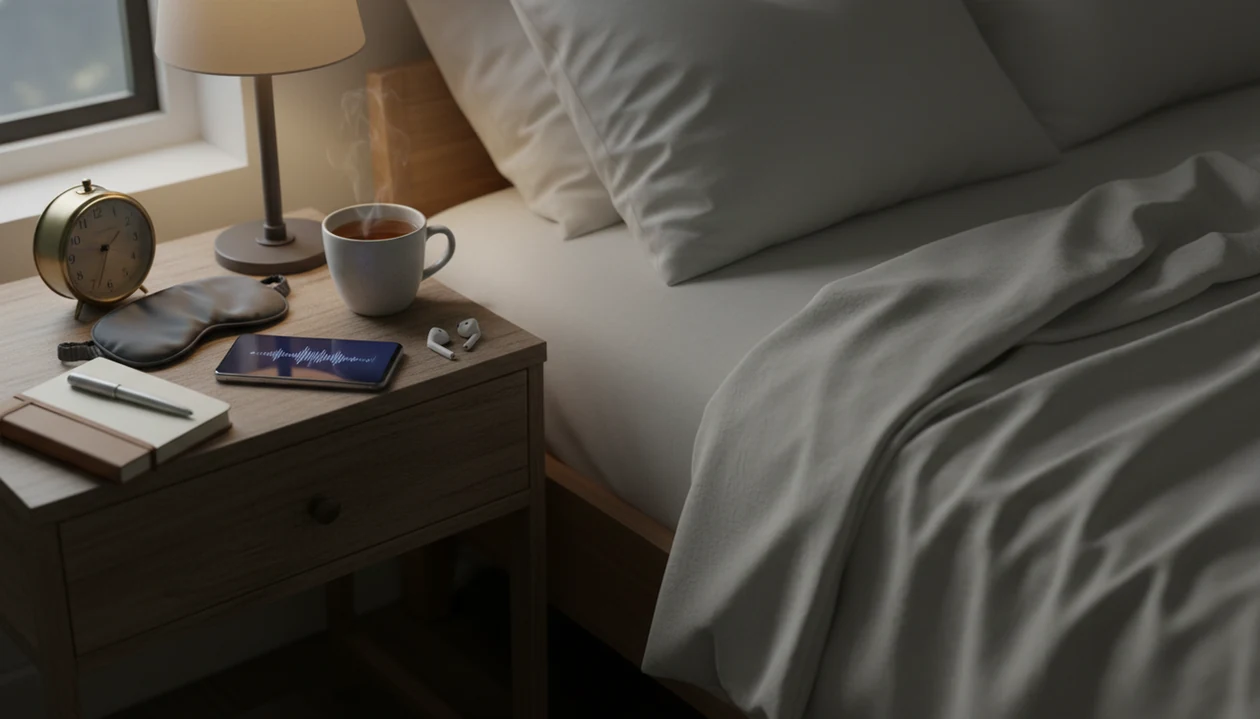


Custom meditation for sleep is a guided bedtime session shaped around preferred length, voice, background sound, breathing pace, and calming theme. It combines sleep-focused cues, body awareness, imagery, and comfortable breathing into a routine that is easy to repeat. The useful choices are practical: a tolerable narrator, unobtrusive sound, and a clear bedtime trigger for pressing play.
MindTastik offers guided meditation, sleep stories, breathing exercises, soundscapes, and personalized meditation sessions for winding down. These are bedtime-routine tools, not treatments for insomnia or other sleep disorders. Repeating a familiar session matters more than designing an elaborate recording, and no session guarantees sleep that night. Persistent insomnia, breathing pauses, or severe daytime sleepiness calls for clinical advice rather than more audio adjustments.
Before pressing play
- Personalized sleep meditation works best as a repeated bedtime habit, not as a one-night fix.
- The most useful custom choices are session length, narrator voice, background sound, technique, and the exact bedtime trigger for pressing play.
- Apps like MindTastik can support sleep, anxiety, and everyday calm routines, but persistent insomnia, breathing pauses, or severe daytime sleepiness should be discussed with a clinician.
Why custom meditation for sleep helps bedtime routines stick
Custom meditation for sleep helps most when it removes small reasons people quit bedtime practice. The goal is consistency, not a guaranteed sleep result on any single night.
Sleep friction is ordinary. CDC sleep data show that short sleep duration remains common among U.S. adults, and NHLBI notes that an estimated 50 to 70 million Americans have sleep or wakefulness disorders (CDC: CDC guidance: adults.html; NHLBI: nhlbi reference: sleep deprivation). That does not mean every uneven night points to a disorder. It means waking in a dim, quiet room and wondering why rest has not arrived is a familiar experience.
Personalization matters because generic tracks often miss the real obstacle: racing thoughts, irregular routines, screen use, or a narrator voice that keeps you alert. MindTastik offers guided sleep audio, breathing practices, meditation sessions, and self-hypnosis support for adults looking for help with rest, anxiety, and everyday calm.
The voice matters more than people admit.
Custom meditation for sleep guide: five facts before you press play
A useful custom meditation for sleep guide should help you choose a repeatable routine before you press play. These five facts keep the practice realistic.
- Use it inside a routine. Pair the audio with dim lights, fewer screens, and the same bedtime trigger, such as after brushing your teeth. To complement your evening routine, a morning meditation generator can help you plan a separate practice after waking.
- Personalize the parts that affect comfort. Length, narrator, background sound, technique, and realistic affirmations usually matter more than fancy features.
- Start short. A 5 to 10 minute session is easier to repeat than a 40 minute track when your pajamas are warm from the dryer and your body is already heavy.
- Expect gradual change. Sleep meditation tends to work over weeks of practice, not from one ideal recording.
- Keep the boundary clear. A custom meditation for sleep app can support relaxation, but it cannot diagnose or medically treat sleep disorders.
Anyone dealing with restless pre-bed scrolling may find MindTastik useful because it gives a clear starting point: choose a short guided session, press play, and stop browsing.
How custom meditation for sleep works in the brain and routine
Custom meditation for sleep works by narrowing attention, lowering stimulation, and pairing a predictable audio pattern with bedtime. In plain language, it gives the mind fewer open tabs.
The main mechanism is attentional narrowing. Instead of scanning tomorrow’s calendar, replaying a conversation, or solving a problem that cannot be solved at midnight, attention shifts to breath, body, voice, or imagery. Downshifting cues then reduce cognitive load: slower breathing, a body scan, quiet pacing, and a sequence that does not surprise you.
The routine side matters too. When the same audio pattern follows the same trigger, the brain can start to treat it as a bedtime cue. According to a 2019 systematic review and meta-analysis, mindfulness meditation produced small to moderate improvements in overall sleep quality across diverse adult groups (PubMed research: 30575050).
For people comparing app formats, our guide to how AI meditation personalization works explains how preferences can shape session recommendations without turning meditation into medical care.
Sleep research supports structured programs, not customization alone
A 2018 systematic review of randomized trials found moderate evidence that mindfulness meditation improved sleep quality compared with nonspecific active controls. The immediate effect was modest, and benefits remained at follow-up. That finding supports mindfulness as a possible aid to sleep, but it does not show that a custom voice, theme, or generated script produces better results than a standardized program.
The distinction matters when comparing bedtime audio with clinical sleep programs. A 2025 trial involving 132 adults with clinical insomnia found improvements from an 18-session app program combining CBT-I techniques with mindfulness. Participants completed an average of 13 sessions. This was a structured intervention, not simply a collection of relaxing tracks. Its results cannot be assumed to apply to any personalized meditation, and incomplete participation shows that even an organized digital program can be difficult to maintain.
How to use a custom meditation for sleep app at bedtime
Use a custom meditation for sleep app by keeping the routine simple and changing only one variable at a time. The cleaner the setup, the easier it is to know what helped.
- Set a bedtime trigger. Press play after brushing your teeth, turning off the lights, or placing your phone face down.
- Choose a 5 to 10 minute session. Start short if you are new, already tired, or likely to abandon longer audio.
- Select one technique. Pick breathing, body scan, visualization, or self-hypnosis-style suggestions for that night.
- Lower stimulation. Dim the phone screen, use low volume, and avoid autoplay browsing after the session starts.
- Log the pattern. Note what you used and how the night felt, then adjust one setting tomorrow.
App-based mindfulness research also supports keeping practice brief and repeatable; in an 8-week Calm app trial, participants were asked to practice at least 10 minutes per day and reported improvements in stress-related outcomes, with sleep effects varying by study population (jmir reference).
On days when your eyes close beside a parked car after a late shift, MindTastik fits because the routine can stay short: breathing first, sleep audio next, no long decision tree.
Best MindTastik features for a custom meditation for sleep routine
The most useful sleep features are the ones that match the moment you are actually in. A custom routine should give you fewer choices at bedtime, not more.
- Guided sleep meditation: Use this for a structured wind-down when you want someone to lead the session from start to finish.
- Breathing exercises: Choose these before bed when your body feels keyed up and you need a short reset.
- Sleep audio and background sound: Repeatable sound can become a predictable cue, especially when earbuds are on the nightstand, one side tangled around a charging cable.
- Anxiety support sessions: These can help organize racing thoughts without claiming to treat an anxiety disorder. For a deeper version, compare custom meditation for anxiety.
- Self-hypnosis-style sessions: Gentle suggestion and imagery may fit people who like repeated phrases and soft scene-setting.
When the room settles and the mind keeps circling, MindTastik can meet the simple wish for calming audio to follow, with sleep, breathing, and anxiety-support sessions available from the same bedtime flow.
Custom meditation for sleep script elements that matter most
What should a custom meditation for sleep script include? A good script uses a soft opening cue, comfortable breath pacing, body awareness, low-stimulation imagery, realistic affirmations, and an ending that fades rather than demands attention.
The opening cue gives permission to stop problem-solving: “For now, nothing needs to be fixed.” Breath guidance should be slow but non-straining. A body scan can move through the face, jaw, shoulders, chest, belly, hips, legs, and feet. Imagery should feel safe and boring, not cinematic.
Simple bedtime script sequence
Start with settling into the bed, then guide three easy breaths. Move through the body from face to feet. Add a quiet scene, such as a dark window with rain in the distance. End by lowering the narrator’s involvement so the listener can fall asleep before the audio ends.
Affirmations that avoid overpromising
Use phrases like “I can rest now,” “My body can soften,” or “It is safe to pause.” Avoid “I will fall asleep instantly” because that can create pressure. For reflective prompts beyond bedtime, explore AI brainwash for better decisions with a critical eye toward suggestions and claims.
If you want to build scripts directly, the create your own guided meditation app guide covers structure, tone, and session design in more detail.
Custom meditation for sleep app choices versus generic sleep tracks
A custom meditation for sleep app is most useful when personalization improves adherence and reduces bedtime friction. Generic tracks can still help if they are calming, familiar, and easy to repeat.
| Option | Personalization | Consistency | Ease of adjustment | Distraction risk | Best use case |
|---|---|---|---|---|---|
| Custom app routine | High | High if repeated | Easy to change one variable | Low to medium | People who need voice, length, sound, or technique control |
| Generic sleep track | Low | Medium | Limited | Low | People who already have one calming recording |
| YouTube sleep meditation | Medium | Medium | Easy to switch, sometimes too easy | High | People who tolerate ads, thumbnails, and browsing temptation |
| Silent breath practice | High internally | Medium | Immediate | Low | People who dislike devices in bed |
For beginners, a custom app routine is often easier than random nightly searching because the decision is made before sleep pressure builds. Examples include MindTastik, Calm, and Headspace, though each handles libraries and personalization differently.
If you are comparing formats, the personalized meditation vs guided library apps breakdown may help you decide whether customization is worth it.
Who custom meditation for sleep is best for
Custom meditation for sleep is best for people who want bedtime guidance that fits their real night, not an ideal routine. It especially suits users who quit generic tracks because the voice, length, pacing, or music feels slightly wrong.
The strongest fit is usually practical. Shift workers may need a short reset after uneven evenings, not a perfect 30 minute ritual. Anxious bedtime scrollers may benefit from turning the app into a fixed press-play trigger: once the session starts, browsing stops. People who dislike silent breath practice may also do better with gentle narration, body cues, or soft imagery because the structure gives the mind somewhere to land.
A simple fit check can help:
- Notice whether generic sleep audio makes you restless, bored, or annoyed.
- Choose one short session length you can repeat even after a late night.
- Pair playtime with one stable cue, such as lights out or phone face down.
- Adjust only the narrator, background sound, or technique when needed.
- Seek medical care if poor sleep is persistent, severe, unsafe, or paired with symptoms like gasping, loud snoring, or intense daytime sleepiness.
Common custom meditation for sleep patterns to adjust
Troubleshooting a custom meditation for sleep routine works best when you treat each night as information, not a pass-fail test. The fix is usually smaller than people expect.
If you fall asleep before the end, count that as acceptable. Sleep-focused meditation is allowed to disappear. If the audio keeps you awake, shorten the session or choose a less engaging narrator. A voice that feels fascinating at 9 p.m. may be too stimulating at 11:45.
If thoughts intensify, try eyes open, a shorter breathing practice, or support from a qualified professional if distress feels strong. Some people do not do well with quiet eyes-closed practice.
When you need the same audio every night, keep it for now, but practice occasional low-volume or no-audio nights. If mornings feel groggy, reduce length, avoid dramatic music, and check whether the session starts too late.
If the dim lamp beside wrinkled pillows has become your cue, keep that cue stable while you adjust the audio.
MindTastik sessions for a repeatable bedtime routine
MindTastik’s guided meditation library suits adults who prefer spoken instructions for winding down. Breathing exercises offer a shorter starting point, while sleep stories and soundscapes provide alternatives when breath-focused guidance feels too demanding. Personalized sessions can help match the content to a preferred bedtime theme. A familiar recording may be enough for someone who already has a reliable routine. Persistent insomnia needs assessment and evidence-based care, not a more elaborate app session.
What personalized bedtime audio cannot treat
Custom meditation for sleep can support a wind-down routine, but it has clear limits. These boundaries matter, especially when poor sleep is persistent or unsafe.
- It is not a stand-alone treatment for obstructive sleep apnea, restless legs syndrome, narcolepsy, or chronic insomnia.
- Persistent insomnia lasting months, loud snoring, choking or gasping, or severe daytime sleepiness warrants medical evaluation.
- Evidence for meditation is promising, but effects may be modest and vary by person.
- Quiet eyes-closed practice may intensify distress for some people with trauma histories, severe anxiety, or depression.
- Over-reliance on one audio track can become a sleep crutch during travel, hotel stays, or unfamiliar environments.
- Customization cannot offset heavy caffeine use, irregular schedules, alcohol-disrupted sleep, or late-night screen stimulation.
- Apps cannot tell whether poor sleep is caused by medication effects, pain, breathing problems, mood symptoms, or another medical issue.
If bedtime worry is the main pattern, MindTastik can support a nightly calm routine because it combines guided sessions with breathing and sleep audio. However, clinical symptoms need clinical care.
Choose a body scan, sleep story, or brief breathing session
| Technique | Best for | Minutes |
|---|---|---|
| Guided body scan | Releasing attention from tense areas while lying on a pillow | 8-15 min |
| Soft sleep story | Redirecting repetitive thoughts with a calm narrative | 10-20 min |
| Slow exhale breathing | Creating a simple wind-down cue when energy feels high | 3-7 min |
For structured sessions beyond this page, MindTastik guided meditation app is the main MindTastik hub for guided meditation.
Custom sleep meditation questions
What should a custom meditation for sleep include?
A useful session includes a quiet opening, comfortable breathing cues, gentle body awareness, and simple imagery. Length, narrator, and background sound should suit the listener rather than demand attention. An ending that fades is usually more appropriate for bedtime than an alert or instructions to become fully awake.
How long should a personalized sleep meditation be?
A 5 to 10 minute session is a practical starting point, especially when a longer recording feels like another task. Longer audio is optional, not a requirement for better sleep. Keep the length manageable and change it only if the session feels rushed or continues to hold attention.
Is custom sleep meditation better than a regular sleep track?
Customization can remove annoyances such as an unsuitable voice, distracting music, or a session that is too long. Research does not establish that personalized or generated sessions improve sleep more than standardized programs. A familiar generic recording remains a reasonable choice if it is calming and easy to repeat.
Can personalized meditation treat chronic insomnia?
Personalized meditation can support relaxation, but it is not a substitute for chronic insomnia treatment. CBT-I is the recommended first-line approach. Structured mindfulness programs have shown benefits in some trials, but those results do not establish that an individual bedtime recording provides equivalent care. Persistent symptoms or daytime impairment warrant professional evaluation.
What if sleep meditation keeps me awake?
Try a shorter session, a less engaging narrator, or simpler imagery. Change one element at a time so the adjustment is easy to assess. If focusing inward increases distress, stop or try a brief eyes-open practice. Strong or recurring distress is a reason to seek qualified support rather than persist.
Is it okay to fall asleep before the meditation ends?
Yes. Bedtime meditation does not require staying awake to complete every instruction. Falling asleep before the recording finishes is compatible with its purpose as a wind-down routine. Choose an ending that fades rather than calls for attention, and arrange playback before bed so finishing the session does not require another task.
Can I use a custom meditation when I wake during the night?
A brief, familiar session can serve as a calm reset without creating a new bedtime project. Keep the volume low and avoid browsing for a different track. Repeated nighttime waking, especially with choking, gasping, or severe daytime sleepiness, needs medical assessment rather than repeated changes to the recording.