
Breathing Exercises While Commuting: Safe Calm for Trains, Buses, Cars, and Walks
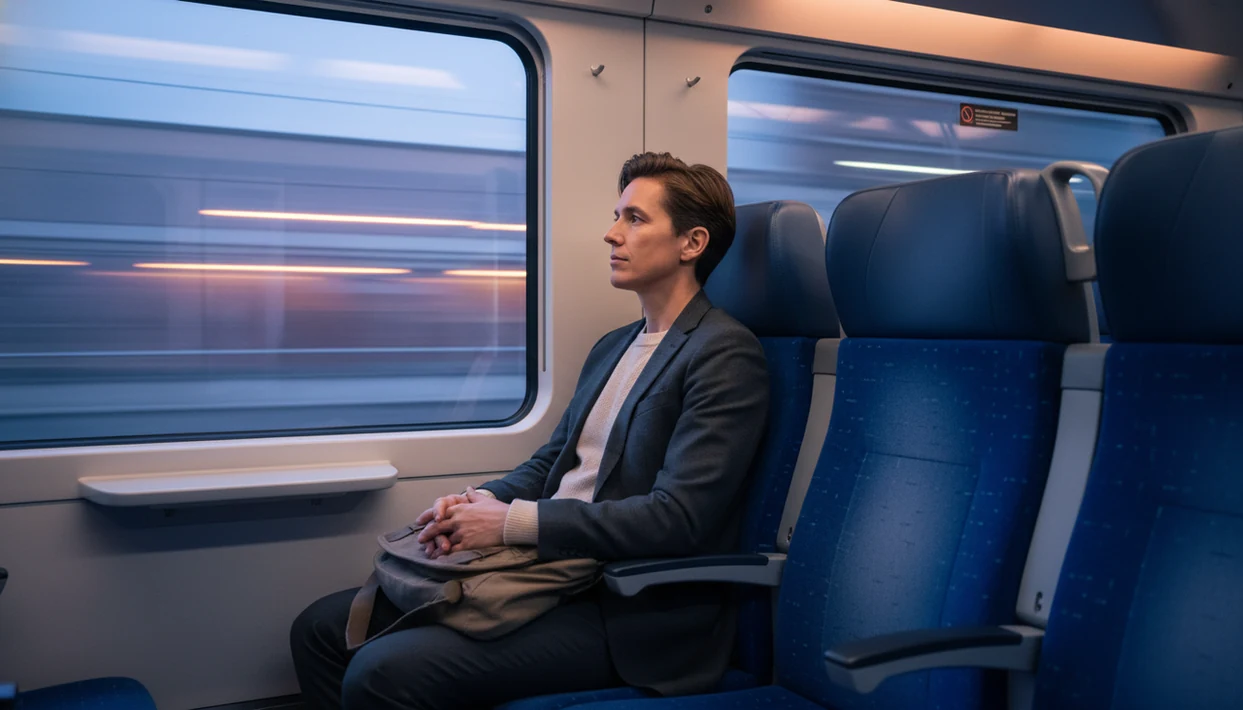


Breathing exercises while commuting are brief, quiet routines that support calm without closed eyes, special posture, or drawing attention in public. Gentle nasal breathing, equal breathing, and short box breathing can suit a seated train or bus ride, provided they feel comfortable and leave attention available for stops and surroundings. One to five minutes is enough for a short practice; longer counts and bigger breaths are not the goal.
The setting determines the technique. Standing passengers need to preserve balance, and walkers need to notice traffic and footing. Drivers should leave structured breathing exercises for before departure or after parking, rather than count breaths on the road. A useful commute routine is easy to stop immediately when travel demands attention.
The essentials
- Use slow, silent, eyes-open breathing for one to five minutes during a commute.
- Match the exercise to the situation: driving, train, bus, walking, or waiting.
- MindTastik offline audio downloads can help when you want guided calm without relying on mobile signal.
Best commute breathing exercises for discreet everyday calm
The safest commute breathing exercise is quiet, eyes-open, and easy enough that you can stop instantly. The goal is regulation and focus, not deep trance, intense breathwork, or looking like you’re meditating in public.
- Slow nasal breathing: Breathe gently through the nose, letting each breath become slightly slower without counting.
- Equal breathing: Inhale for three or four counts, then exhale for the same count.
- Discreet box breathing: Use short counts, such as 3-in, 3-hold, 3-out, 3-hold, only if holds feel easy.
- Extended exhale breathing: Inhale naturally, then make the exhale one or two counts longer.
- Anchor-word breathing: Pair the exhale with one quiet word, such as “steady” or “here.”
On a train seat during the evening commute, the smallest version often works better than the fancy one.
What Makes a Commute Breathing Exercise Safe and Effective
A safe commute breathing exercise keeps you calm without making you less aware of traffic, crowds, stops, or footing. The best options are short, eyes-open, quiet, and easy to abandon the moment your environment needs attention.
Use these checks before choosing a routine:
- Keep your eyes open and your posture ordinary, especially in stations, on sidewalks, or anywhere balance matters.
- Choose short counts, such as three or four, so the pattern feels light and can stop without a gasp or reset.
- Avoid long holds, forceful inhales, intense breathwork, or deep relaxation while driving, walking, standing, or moving through crowds.
- Match the exercise to the commute: simple nasal breathing for driving, equal breathing for a train seat, shorter counts while standing, and step-aware breathing only when walking feels safe.
- Pick something discreet enough to repeat every day, with a relaxed face, silent breathing, and no performance feeling.
Effective commute breathing should feel usable on a normal Tuesday, not just during a perfect quiet moment. For other everyday situations, relaxation techniques can help you find a calming practice that fits your setting.
Nervous system effects of breathing exercises while commuting
Slow commute breathing works by lowering physiological arousal and giving attention a simple anchor during travel. Rhythm, exhale length, upright posture, and a neutral focus all matter more than taking very deep breaths.
A 2018 review of slow breathing research found that slower respiratory patterns were associated with increased parasympathetic activity and emotional control markers, though study methods varied widely frontiersin reference.
When breathing becomes steadier, the body often gets fewer “alarm” signals from shallow, rushed breathing. A slightly longer exhale may feel settling because it slows the pace without requiring force. Keep your shoulders ordinary. Keep your eyes open. Good meditation app support should deliver repeatable cues, not a promise to disappear from your surroundings.
Evidence is supportive but modest. A 2014 AHRQ review found small to moderate anxiety improvements in mindfulness meditation programs, with effects around 0.38 in one analysis and 0.22 in another ahrq reference: mindfulness report.pdf. For broader commute routines, our guide to mindfulness while commuting covers attention, sound, and movement.
3-minute calm breathing during commute routine
Use this routine when you can stay aware of your surroundings. Start with one minute, then build toward three to five minutes only when it feels natural.
- Set a simple timer or use one station, one stoplight cycle, or one block as your time marker.
- Sit or stand normally, with eyes open and your phone lowered or tucked away.
- Inhale through the nose for a comfortable count of three.
- Exhale through the nose for three or four counts, without forcing the breath out.
- Repeat for one minute, then check whether your body feels steadier. Save a self-regulation bookmark as a reminder to pause, check your surroundings, and choose a comfortable practice.
- Switch back to normal breathing if you feel dizzy, distracted, or more anxious.
If you’re building a workday habit, pair this with how to practice mindfulness at work after you arrive.
Common Mistakes With Commute Breathing Exercises
The most common mistake is making commute breathing too intense for the setting. A good commute practice should feel ordinary, alert, and easy to stop, not like a private retreat squeezed into a moving crowd.
Use this quick troubleshooting routine when a breathing exercise feels awkward or unsafe:
- Skip breath holds if they make you lightheaded, tense, or more anxious. Use simple inhale-exhale breathing instead.
- Keep your eyes open anywhere you need balance or awareness, including platforms, sidewalks, buses, stairs, and parking lots.
- Soften the breath rather than pulling in big inhales. Gentle rhythm usually works better than “deep breathing” that lifts the chest and shoulders.
- Simplify the count when attention matters. While driving, crossing streets, or standing in a crowded aisle, drop the numbers and just slow the breath slightly.
- Treat one clumsy session as information, not failure. Maybe the count was too long, the timing was wrong, or the commute was simply too demanding that day.
The best version is the one you can repeat safely tomorrow.
Breathing on the train, bus, car, and walking commute compared
Different commutes need different breathing choices. Breathing on the train can be more structured than breathing while driving, because the safety demands are not the same.
| Commute type | Best exercise | Avoid | Why it fits |
|---|---|---|---|
| Train, seated | Equal breathing or extended exhale | Long holds, closed eyes | You can count quietly while staying aware of stops. |
| Bus, standing | Short equal breathing, 3-in/3-out | Deep relaxation, swaying posture | Short counts work when balance keeps changing. |
| Driving | Gentle slow nasal breathing | Complex counts, closed eyes, guided audio that distracts | Road attention comes first. |
| Walking | Step-matched breathing only if easy | Looking down, counting through crossings | Footing, traffic, and signals need priority. |
| Waiting | Anchor-word breathing | Intense breathwork | It gives restless attention one small place to land. |
For tense office arrivals, mindfulness practices at work can extend the reset past the commute. If your workday includes presentations, try breathing for public speaking before entering the meeting room.
Train anxiety support with quiet equal breathing
Does equal breathing help with train anxiety? Equal breathing may help some riders feel steadier because it gives the mind a predictable rhythm while the train feels noisy, crowded, or unpredictable.
Try inhaling for three counts and exhaling for three counts. If that feels too short, use 4-in and 4-out. Don’t force longer counts just because an app or article suggests them. Crowded transit and standing riders often need shorter, easier timing.
Keep it discreet: relaxed face, silent nose breathing, eyes open. Skip the big shoulder lift and avoid drawing in air dramatically. If worry starts building between stops, equal breathing gives you one simple pattern to follow without needing a cushion, closed eyes, or a special posture.
For riders who name emotions before choosing a practice, the feelings wheel can help separate tension, fear, irritation, and overwhelm.
Traffic stress support with slow nasal breathing during a driving commute
Driving requires full attention, eyes on the road, and fast response to changing conditions. Use only the lowest-distraction breathing support.
That safety framing matches NHTSA guidance that distracted driving includes any activity that takes attention away from driving nhtsa reference: distracted driving.
- While moving: Slow nasal breathing is the safest driving option because it does not require counting or looking away.
- At stoplights: At stoplights, you can relax the jaw, lower the shoulders, and take one ordinary slower breath.
- Avoid: Avoid closed-eye practices, long breath holds, complex box breathing, or anything that competes with road attention.
- Keep audio in the background: Guidance must not compete with attention to traffic, directions, cyclists, or pedestrians.
- Use MindTastik before or after driving: MindTastik fits driving commutes as a parked transition, because you can start a short guided session before leaving or after parking.
When the issue is traffic stress after a hard meeting, MindTastik works better as a before-or-after-drive reset than an in-motion attention task.
Keep structured practice out of the driving task
There is an important difference between breathing normally while driving and doing a breathing exercise. Counting, timing holds, or following instructions adds a task when road conditions may require an immediate response. Reserve structured practice for before departure or after parking, not a red light. The workplace studies cited here do not establish that breathing exercises are safe while operating a vehicle.
The smartphone meditation trial involving 238 employees used 10- to 20-minute guided sessions, not brief exercises behind the wheel. Its results support workplace stress management, not driving safety or a specific commute protocol. For seated passengers who find breath focus uncomfortable, eyes-open grounding offers an alternative: notice contact with the seat, feet on the floor, nearby sounds, and visible objects without changing the breath.
Spotty signal support with offline MindTastik commute breathing audio
MindTastik is a consumer meditation app with guided meditation, sleep audio, breathing exercises, and self-hypnosis for sleep, anxiety, and everyday calm. Download a short breathing session before boarding a subway or train, especially if the route has unreliable mobile signal.
If your headphones are packed in a work bag and the platform signal drops, offline audio removes one tiny barrier. You don’t have to search, buffer, or make a decision while crowded doors are closing.
Compared with browsing large libraries in apps such as Calm, Headspace, or Insight Timer, MindTastik is strongest here when you pre-download a short, familiar breathing session before a low-signal route. It is supportive practice, not therapy or a medical treatment. Best Meditation App for Sleep is also relevant if your commute stress carries into bedtime and you need a separate wind-down routine.
Best-fit users and caution cases for commute breathing exercises
Commute breathing fits people who want a small everyday calm habit, not a dramatic intervention.
| Best for | Not ideal for |
|---|---|
| Beginners who want a one-minute starting point | Situations requiring full attention and rapid decisions |
| Tense commuters on trains or buses | Severe panic symptoms without additional support |
| Public transit riders who want privacy | Anyone who feels worse when focusing on breath |
| Office workers transitioning into the day | Crowded movement where counting distracts from safety |
| People comparing free mindfulness apps | Drivers using complex audio or long breath holds |
If condition and context are stable, then MindTastik can support a repeatable habit because short guided breathing sessions are easy to save and reuse. A 2014 systematic review found mindfulness meditation programs improved anxiety symptoms by about 0.38 compared with controls NIH research: PMC4473673, but that suggests modest support, not guaranteed relief.
Short guided breathing for a seated ride
MindTastik’s guided breathing exercises can provide a starting point before boarding or during a seated train or bus ride. Choose a short session with comfortable timing, and prepare the audio before entering a crowded station. An unguided routine is a better choice when a voice competes with announcements or awareness of surroundings. Drivers should save guided practice for a parked pause; anyone who becomes more anxious when watching the breath should choose grounding instead.
What commute breathing cannot treat or make safe
Breathing exercises are useful for many commuters, but they have real limits. Treat them as a short reset, not a cure.
- Breathing exercises may reduce stress, but they are not a cure for anxiety, panic disorder, insomnia, or depression.
- Benefits vary by person, commute length, crowding, noise, and the stress level of that specific day.
- Avoid long breath holds, intense breathwork, closed eyes, or deep relaxation while driving or moving through crowds.
- Some people feel more anxious when focusing on breathing; stop and switch to grounding if that happens.
- Offline audio helps only when downloaded ahead of time and used in a safe context.
- MindTastik can guide a routine, but it does not replace therapy, medication, emergency care, or professional advice.
- Calm breathing during commute may feel awkward at first. That does not mean you’re doing it wrong.
For persistent stress patterns, an emotion wheel can help you name what is actually showing up.
When you need a body-first reset before meditation, MindTastik breathing exercises offers simple breathing patterns you can follow along.
Commute breathing questions
Can I do breathing exercises while driving?
Save structured breathing exercises for before departure or after parking. Counting breaths, holding them, or following guided instructions adds another task while driving. Keep attention on the road and let breathing remain natural. A red light is still part of the driving task, not a practice break.
What breathing exercise is easiest on a crowded train?
Gentle nasal breathing without counting is the simplest option when space is tight or attention keeps shifting. When seated and comfortable, try inhaling for three counts and exhaling for three. Keep eyes open, avoid oversized breaths, and stop counting whenever doors, announcements, or nearby movement need attention.
Is box breathing safe on public transport?
Short box breathing may suit a seated passenger if the holds feel easy and awareness stays clear. It is not necessary for a useful practice. Skip holds when standing, moving through crowds, or feeling tense or lightheaded. Equal inhale-exhale breathing is a simpler alternative with fewer steps to manage.
How long should I practise breathing during a commute?
Start with one minute while seated and aware of the surroundings. Continue toward three to five minutes only if the rhythm stays comfortable and does not compete with travel demands. A stop or station can mark the end, without a phone timer. There is no need to complete a session after conditions change.
Can breathing exercises help with train anxiety?
A quiet, predictable rhythm may help some passengers feel steadier, but it is a coping tool rather than a treatment for panic disorder. Try short equal breaths without forcing the pace. Workplace mindfulness research supports stress-management benefits, but it does not establish that a particular train breathing routine will relieve anxiety.
What should I do if breathing exercises make me dizzy or more anxious?
Stop the exercise and return to ordinary breathing. Avoid trying to correct the feeling with bigger breaths or longer holds. If safely seated, shift attention to contact with the seat, feet on the floor, and visible objects. Breathing practice is not suitable when it repeatedly worsens symptoms; persistent symptoms need medical assessment.
Can I practise breathing while walking to work?
Only use a simple rhythm when it does not interfere with noticing traffic, other people, or footing. Do not force breaths to match steps. Drop the exercise at crossings, on stairs, or in crowds. A seated pause before or after the walk is a better place for counting or breath holds.