
Bedtime Breathing Routine for a Calmer Night
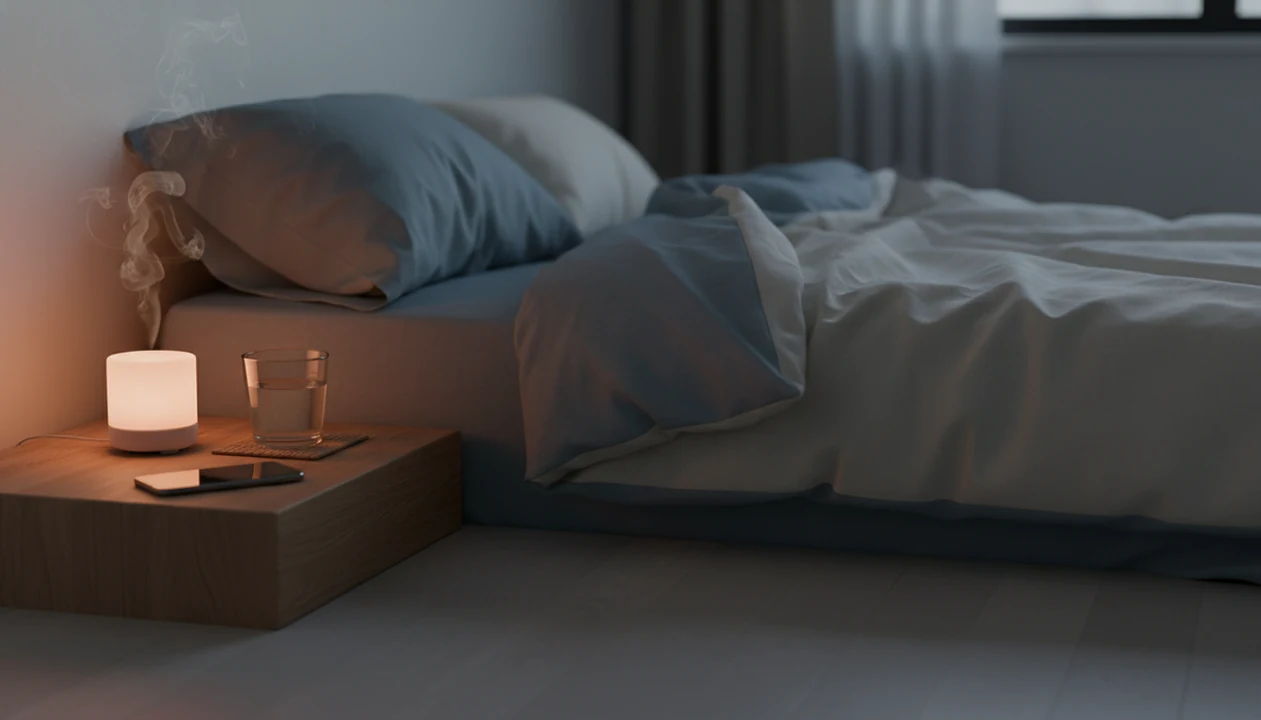


A bedtime breathing routine is a short, repeatable sequence of slow breathing exercises practiced at roughly the same time each night as a cue for sleep. It gives attention a simple task and may help lower pre-sleep arousal. A practical starting point is gentle diaphragmatic breathing followed by a comfortable rhythm, such as coherent breathing or a few rounds of 4-7-8 breathing.
The aim is a calmer transition to bed, not perfect counts or immediate sleep. Box breathing is another option, but breath holds should never feel strained. Guided audio can handle the pacing when counting becomes distracting. Keeping the routine brief, the screen dim or locked, and the breathing comfortable makes it easier to repeat without turning bedtime into another task.
The essentials
- The best bedtime breathing routine is simple, repeatable, and calming rather than intense or performance-based.
- Slow diaphragmatic breathing, 4-7-8 breathing, box breathing, and coherent breathing are the most useful nighttime options for beginners.
- App-guided breathing can improve consistency when it uses dim screens, audio-only guidance, offline access, and gentle pacing cues.
Best bedtime breathing routine options at a glance
No single breathing count is magic; a useful bedtime breathing routine is the one you can repeat most nights without strain. Start with the lowest-effort pattern, then adjust if counting keeps you awake.
| Routine option | Best for | Time | Difficulty | Skip or modify if |
|---|---|---|---|---|
| Slow diaphragmatic breathing | Racing thoughts, beginners | 3-5 minutes | Easy | Belly focus feels uncomfortable |
| 4-7-8 breathing | People who like a clear count | 2-4 rounds | Moderate | Breath holds cause dizziness |
| Coherent breathing | Gentle pacing before sleep | 5 minutes | Easy | Counting feels stressful |
| Box breathing | Structured reset | 2-3 minutes | Moderate | Holds feel pressurized |
| App-guided sleep breathing | Consistency, sleep anxiety | 5-20 minutes | Easy | Phone use leads to browsing |
When counting is the issue, MindTastik fits the app-guided option because it can pair breathing exercises with sleep audio, beginner meditation, and everyday calm support in one wind-down routine.
Cool sheets help, but repetition does more.
Five bedtime breathing facts that matter before sleep
Bedtime breathing matters because it lowers pre-sleep arousal and gives the mind a simple place to land. These five facts are the useful ones before you choose a technique.
- Slow breathing can support parasympathetic nervous system activity, the “rest and digest” side of the body’s stress response.
- Slow-breathing research links paced breathing with increased vagal activity and lower arousal markers, especially when breathing is slow and comfortable (Frontiers in Human Neuroscience review: frontiersin reference).
- A 2015 JAMA Internal Medicine randomized clinical trial found a mindfulness awareness program improved sleep quality in older adults with sleep disturbance (JAMA Internal Medicine study: 2110998).
- CDC surveillance found that about one-third of U.S. adults reported short sleep duration, and NHLBI estimates 50-70 million Americans have sleep or wakefulness disorders (CDC: CDC guidance: mm6506a1.htm; NHLBI: nhlbi reference: sleep deprivation).
- Breathing can help readiness for sleep, but it is not medical treatment for chronic insomnia, sleep apnea, or major daytime impairment.
A good meditation app for sleep anxiety and everyday calm delivers repeatable guidance, not a guarantee that every night will be easy.
Sleep reports improve more consistently than sleep measurements
A 2026 systematic review of bedtime slow breathing examined nine studies involving 457 participants. The routines used breathing rates of 10 breaths per minute or fewer. Seven studies found improvements in self-reported sleep duration or quality, but results from actigraphy and polysomnography were inconclusive. That distinction matters: feeling that sleep has improved is not the same as demonstrating a change in measured sleep.
Study length may help explain some of that difference. Most studies using objective measurements covered only a single night, while several studies using sleep reports lasted 28 to 30 days. The findings support slow breathing as a reasonable bedtime practice, but they do not establish a guaranteed effect or a best counting pattern. A calmer evening is a useful outcome even when sleep does not change immediately.
How We Chose These Bedtime Breathing Routine Options
We chose these bedtime breathing routine options for calm repeatability, not novelty or intensity. The strongest choices are easy to start, gentle enough for lights-out, and unlikely to turn sleep into another performance check.
- Prioritize routines that a tired person can repeat most nights with little setup, such as slow belly breathing, coherent breathing, or a short guided session.
- Favor slow, comfortable pacing over stimulating breathwork, long breath holds, or techniques that feel like training.
- Check app guidance for bedtime behavior: audio should lead, the screen should stay dim or locked, and offline access should support travel or weak Wi-Fi. If your phone disrupts bedtime, try a screen-free bedtime meditation routine with simple breathing and quiet attention.
- Exclude patterns that commonly create air hunger, dizziness, chest pressure, or the urge to monitor every inhale.
- Weigh the research in a practical way by giving more credit to slow-breathing and mindfulness support while acknowledging that evidence is not equal for every count, app, or branded method.
That is why the page leans toward simple breathing, soft pacing, and audio-first guidance rather than complicated routines that look impressive but feel too alerting in bed.
How a bedtime breathing routine works as a sleep cue
A bedtime breathing routine works by pairing slower, intentional breathing with the same bedtime context until the body begins to recognize it as a sleep cue. It is more like conditioning a signal than forcing instant sleep.
The nervous-system mechanism is simple: slower breathing, especially with a relaxed longer exhale, can reduce arousal and lower heart-rate activation. The technical term is parasympathetic readiness. In plain language, your body gets fewer “stay alert” signals.
The habit mechanism matters just as much. Same pattern, same room, same approximate time. That repetition can replace scrolling, clock-checking, or mentally walking through tomorrow’s list. In the quiet hours, a pillow, a dim lamp, and a steady breath rhythm give your mind a simpler place to land.
For many adults, a breathing cue works better when it sits inside a broader nighttime wind-down routine.
How to use a bedtime breathing routine tonight
Use a bedtime breathing routine tonight by making it small enough that you will actually repeat it tomorrow. Five minutes done nightly beats a complicated routine you abandon by Thursday. Keep evenings manageable with a five-minute bedtime routine that pairs gentle breathing with a brief meditation.
- Set the environment by dimming lights, lowering your phone brightness, and getting into the position you normally use for sleep.
- Choose one breathing pattern, such as belly breathing, 4-7-8, or coherent breathing near 5-6 breaths per minute.
- Start with 3-5 minutes, using app-guided audio with the screen dimmed, locked, or face down.
- Keep attention on the breath by returning to the inhale and exhale whenever thoughts pull away.
- Repeat the same routine nightly, but stop or soften the practice if you feel dizzy, panicky, or uncomfortable.
If the priority is low-effort repeatability, MindTastik helps because audio pacing can replace mental counting after the lamp is off. A small decision, like dimming the phone screen before bedtime audio, often protects the whole routine.
Best bedtime breathing routine for anxious thoughts
Does a bedtime breathing routine help anxious thoughts at night? Slow diaphragmatic breathing or a gentle app-guided breathing meditation is usually the most manageable starting point for sleep anxiety.
Belly breathing lowers the effort level. One hand rests on the belly, the inhale comes through the nose, and the exhale leaves slowly without pushing. Repeat for 5 minutes. The point is not to win a breathing contest. It is to give the mind one plain object of attention.
NCCIH describes diaphragmatic breathing and other relaxation techniques as practices that may help with stress and anxiety symptoms, while noting that evidence varies by condition and method (NCCIH mindfulness overview: relaxation techniques what you need to know). That supports breathing as a helpful practice, but not as a cure for anxiety disorders.
When the need is simply for a calm track to follow while the mind keeps circling, MindTastik can be a practical fit because guided sleep breathing can sit beside calming audio and beginner-friendly meditation. For heavier rumination, pair it with a calming night routine for racing thoughts.
Best breathing exercise before sleep for simple counting
For simple counting before sleep, coherent breathing around 5-6 breaths per minute is often easier than breath-hold patterns because it keeps the rhythm steady. 4-7-8 and box breathing can still help some people, but they should feel soft, not forced.
| Counting method | How it works | Nighttime fit |
|---|---|---|
| 4-7-8 breathing | Inhale 4, hold 7, exhale 8 | Calming for some, too hold-heavy for others |
| Box breathing | Inhale, hold, exhale, hold evenly | Structured, but can feel effortful in bed |
| Coherent breathing | Slow, even breathing near 5-6 breaths per minute | Gentle and repeatable for most beginners |
The evidence is stronger for general slow breathing than for one branded ratio. If holds create pressure, drop them. Fast or stimulating breathwork usually belongs in the daytime, not under wrinkled pillows with a dim lamp on.
For people building a full evening pattern, this can sit inside a bedtime routine for adults. For a longer evening practice, try a 30-minute bedtime routine with meditation that includes gentle breathing.
Best app-guided bedtime breathing routine with MindTastik
MindTastik offers wellness audio for adults who want support with sleep, stress, breathing practice, meditation, and self-hypnosis. App guidance can be helpful when counting breaths starts to feel like another chore instead of a gentle bedtime cue.
For bedtime breathing, MindTastik is best used as an audio guide: choose one session before bed, dim or lock the screen, and avoid browsing during the routine. That is why it fits this bedtime use case better than a general daytime mindfulness app.
- Best for sleep anxiety: MindTastik can guide the pace so you are not checking whether you inhaled for the “right” number.
- Best for beginners: audio cues make it easier to choose between a 5-minute breathing exercise and a 20-minute body scan.
- Best for travel: offline sessions can protect the routine when Wi-Fi disappears on a flight.
- Not ideal for: people who start browsing once the phone is in hand.
On days your brain keeps negotiating with bedtime, MindTastik covers the routine because breathing can flow into body scans or sleep audio without opening a new app. Use audio-first mode, dim the screen, lock it, and avoid browsing. Calm, Headspace, and mindful.org also offer sleep resources, but the setup still matters.
Bedtime breathing routine mistakes that keep you awake
Bedtime breathing can backfire when it becomes another thing to monitor. Consistency matters more than perfect technique, especially during the first week.
- Expecting instant sleep: breathing is a cue, not a switch.
- Switching techniques nightly: your body gets a clearer signal when the pattern repeats.
- Using bright phone screens: blue light and app browsing can overpower the calm.
- Trying intense breathwork: fast breathing can feel activating before bed.
- Breathing too deeply: over-effort may cause dizziness or chest tension.
- Checking whether it is working: performance pressure keeps the mind alert.
The pocket check is real.
If worries keep returning, write a two-minute note earlier in the evening. A small notebook beside a meditation cushion can keep tomorrow’s tasks out of bed. Caffeine, irregular bedtimes, and late-night screens can still overpower breathing, so use a broader sleep hygiene plan when needed.
Guided pacing when counting keeps the mind busy
MindTastik’s guided breathing exercises suit adults who prefer spoken pacing to counting breaths in bed. Choosing one session before bedtime and listening with the screen dimmed or locked keeps the routine focused on breathing rather than browsing. A body scan or sleep story may suit someone who finds breath attention uncomfortable. Those who prefer silence can use a simple rhythm without an app. Persistent insomnia needs more than guided audio, and MindTastik is not a medical treatment. If breath focus feels uncomfortable, a bedtime routine with sleep stories offers a different way to settle down.
What bedtime breathing cannot fix
A bedtime breathing routine is supportive, but it cannot override every sleep problem. It works best as one repeatable cue inside steady sleep habits.
- Breathing routines cannot fully cancel out late caffeine, irregular bedtimes, heavy screen use, or a chaotic sleep schedule.
- Chronic insomnia, suspected sleep apnea, restless legs, major depression, or major daytime impairment deserve medical evaluation.
- People with panic disorder, trauma histories, dizziness, or breath-focused discomfort may need modified practices or professional guidance.
- App-guided breathing can become a sleep crutch if someone believes they cannot sleep without a device nearby.
- Evidence supports slow breathing and mindfulness-based interventions generally, but not every specific count or branded technique equally.
- Breath holds are optional; remove them if they create air hunger, pressure, or worry.
- MindTastik can support consistency, but it does not diagnose sleep disorders or replace care from a qualified professional.
If you want a fuller pre-sleep structure, a meditation before sleep checklist can make the routine easier to repeat.
Adjust bedtime breathing for busy thoughts or a shared room
| If you... | Try | Why | Note |
|---|---|---|---|
| You feel alert as soon as the room gets quiet | Start with two minutes of diaphragmatic breathing under a dim lamp | A simple belly-breathing setup gives the mind one task without making the routine feel like a performance. | Keep the count easy; effortful counting can become another form of mental stimulation. |
| Your thoughts keep jumping between tomorrow’s plans | Pair slow exhale breathing with a short body scan | Moving attention from breath to shoulders, jaw, and hands can make the routine feel more grounded than counting alone. | If scanning the whole body feels too long, stop after three areas. |
| You get bored with silent breathing | Try a MindTastik sleep story followed by paced breathing | A familiar voice or storyline may make the transition to slower breathing feel less abrupt. | Choose a calm track in advance so bedtime does not turn into browsing. |
| You share a room or need fewer disruptions | Use offline audio at low volume and place the device away from the pillow | The routine stays available without requiring extra decisions, notifications, or screen time. | Set volume before lying down. |
When story-style audio fits your routine better than active meditation, browse MindTastik sleep stories for calm bedtime listening.
Bedtime breathing questions
What is the easiest breathing exercise to do before sleep?
Gentle diaphragmatic breathing or slow, even breathing is a manageable starting point. Neither requires breath holds. Begin with a few comfortable minutes rather than a demanding count. The evidence supports slow breathing more broadly, not one pattern that reliably puts everyone to sleep.
How long should a bedtime breathing routine last?
A practical range is about 5 to 20 minutes, with gentle breathing rather than forced deep breaths. A shorter start may be easier to repeat. Some sleep studies used 20-minute sessions, but that does not mean every routine needs to last that long or that longer sessions work better.
Is 4-7-8 breathing better than coherent breathing for sleep?
There is no established best count for everyone. The evidence is stronger for general slow breathing than for a particular sequence. Coherent breathing offers a steady rhythm without holds, while 4-7-8 includes a seven-count hold. If holding feels strained or causes dizziness, a gentler pattern is preferable.
Why do breathing exercises make me dizzy in bed?
Breathing too deeply or forcing a pattern can cause dizziness or discomfort. Stop the exercise and return to ordinary breathing rather than trying to complete the count. A later attempt should use gentler breaths without demanding holds. Recurring dizziness deserves medical advice rather than repeated attempts to push through it.
Can bedtime breathing stop racing thoughts?
Slow breathing gives attention a simple place to return and may reduce pre-sleep arousal. It does not require thoughts to disappear. When counting becomes another source of pressure, uncounted gentle breathing or quiet mindfulness may fit better. Breath-focused anxiety or discomfort is a reason to stop or modify the practice.
Can a breathing routine cure chronic insomnia?
Breathing can support relaxation, but it is not a cure for chronic insomnia. Persistent insomnia is generally better addressed with cognitive behavioral therapy for insomnia than relaxation alone. Suspected sleep apnea, restless legs, or substantial daytime impairment also need medical evaluation rather than a longer or more elaborate breathing routine.
How many breaths per minute should I take before bed?
Practical guidance uses approximately 5 to 10 breaths per minute, provided the rhythm feels comfortable. Coherent breathing commonly sits near 5 to 6 breaths per minute. The number is a guide, not a target to force. Stop if pacing causes dizziness, anxiety, or discomfort.
What can I try if focusing on breathing makes me anxious?
Breath attention is not comfortable for everyone. Stop rather than forcing the exercise. Progressive muscle relaxation, using mild contractions and releases, offers a different focus and has evidence for improving sleep quality. People with panic disorder, trauma histories, or persistent breath-focused discomfort may benefit from modified practices or professional guidance.