
Relaxing Bedtime Routine for Adults With Guided Audio
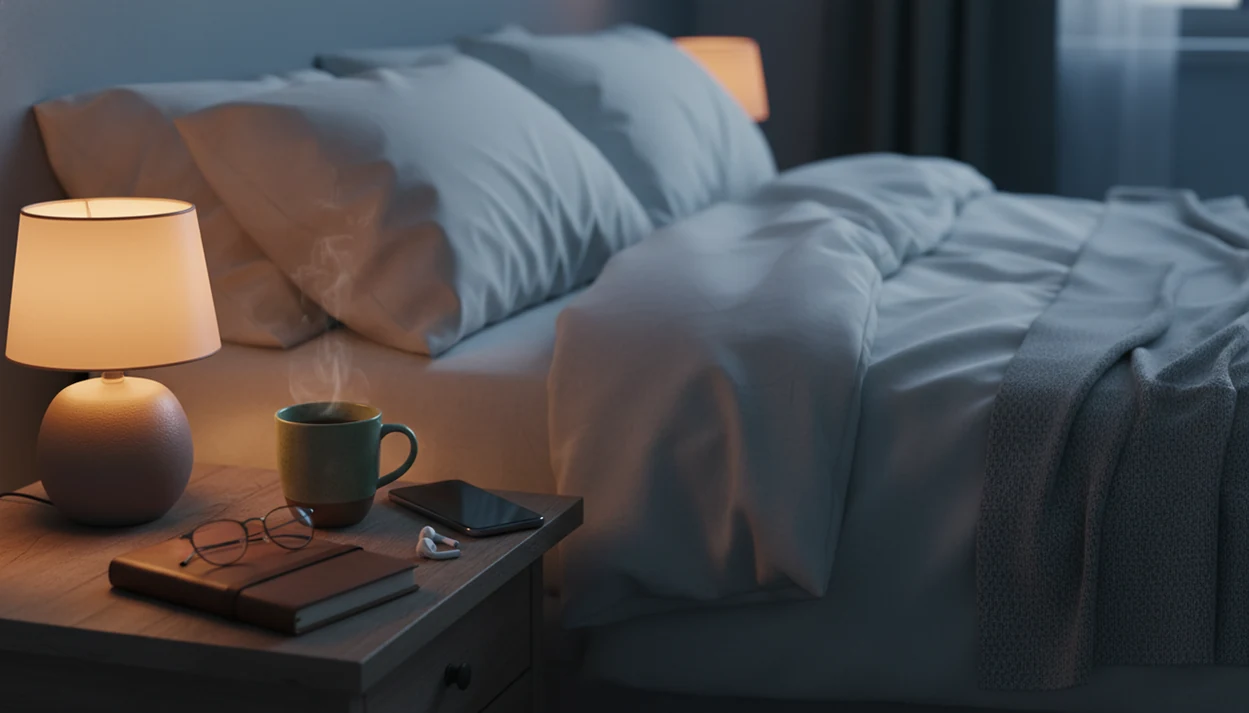
A relaxing bedtime routine works best when it is simple, repeatable, and started 30–90 minutes before sleep. The strongest adult routine combines dim lights, no in-bed scrolling, a calming body cue like stretching or a warm shower, and guided audio such as MindTastik meditation or breathing so your mind has something gentle to follow. Browse more mindfulness for racing thoughts.
Definition: A relaxing bedtime routine is a repeated evening sequence of low-stress activities that signals the brain and body to shift from daytime alertness into sleep readiness.
TL;DR
- Keep the routine short enough to repeat: 20–45 minutes is enough for most adults.
- Use guided audio when racing thoughts, sleep anxiety, or decision fatigue make a silent routine hard to follow.
- Protect the routine with a cool, dark, quiet bedroom and fewer screens in the final hour before bed.
Best relaxing bedtime routine shortlist for adults
Guided audio is the strongest overall relaxing bedtime routine for adults who struggle with racing thoughts because it gives the mind a low-effort track to follow. MindTastik fits this need with guided meditation, sleep audio, breathing, and self-hypnosis support in one bedtime-friendly library.
| Routine type | Best for | Not for | Core activities |
|---|---|---|---|
| Guided audio routine | Racing thoughts, stress, decision fatigue | People who dislike sound at bedtime | Dim lights, hygiene, 5–15 minute sleep meditation, lights out |
| Anxiety wind-down routine | Worry loops and calendar thoughts | Severe anxiety without extra support | Tomorrow list, longer-exhale breathing, grounding audio |
| Screen-free routine | Phone scrolling in bed | People who need accessibility audio controls | Paper book, stretching, tea, audio-only playback |
| Short 20-minute routine | Busy adults and parents | People needing a longer decompression window | Quick prep, hygiene, guided body scan |
If the priority is fewer “what should I do now?” decisions, MindTastik covers the guided audio routine because the user can choose a body scan, breathing track, or self-hypnosis session before getting into bed.
Good sleep apps should reduce choices at night, not turn bedtime into another crowded screen.
How We Chose These Relaxing Bedtime Routines
These relaxing bedtime routines were chosen for adults who need something practical, repeatable, and low-friction at night. The goal is not the fanciest ritual; it is a routine that still works when you are tired, anxious, traveling, or tempted to scroll.
- Prioritize routines that do not require special equipment, long setup, or perfect motivation. Dim lights, hygiene, breathing, stretching, journaling, and audio are easier to repeat than elaborate sleep rituals.
- Favor steps that fit common sleep hygiene and mindfulness principles: lower stimulation, reduce decisions, keep the bed for sleep, and give attention a calmer place to land.
- Consider real use cases adults bring to bedtime, including worry loops, screen habits, busy schedules, hotel rooms, shared bedrooms, and late-night decision fatigue.
- Name where guided audio helps most: racing thoughts, sleep anxiety, and people who dislike silence. Silence may work better for light sleepers, shared-room quiet, or anyone who finds voices activating.
- Treat every recommendation as educational support, not a diagnosis or medical treatment plan. Persistent insomnia, breathing pauses, severe anxiety, or depression deserves professional care.
How a relaxing bedtime routine works in the brain and body
A relaxing bedtime routine works through cue-routine-reward conditioning: the same evening cues, done in the same order, teach the brain that sleep is coming. In plain terms, repetition makes the routine feel familiar instead of like one more task.
Lower light reduces stimulation. A predictable order lowers decision load. Breathing, stretching, and gentle meditation can encourage parasympathetic activation, the “rest and digest” side of the nervous system. Sleep pressure also matters; the routine supports it, but it does not replace enough time awake during the day.
Mindfulness has some evidence for sleep quality. A 2015 randomized clinical trial found mindfulness meditation improved sleep quality more than sleep education after six weeks (JAMA Internal Medicine study: 2110998), and a 2019 systematic review reported moderate sleep-quality benefits across randomized trials (PubMed research: 30575050). The evidence supports meditation as a sleep aid, not a guaranteed treatment.
In the quiet hours, theory is rarely what helps. A steady voice and an easy rhythm are much simpler to follow.
How to use a guided audio bedtime routine tonight
Use a guided audio bedtime routine by setting one cue, lowering stimulation, playing one short session, and ending with lights out. Keep the sequence boring enough that you can repeat it tomorrow.
- Set a bedtime alarm 30–60 minutes before your intended sleep time.
- Dim the lights and lower phone brightness before you start hygiene.
- Place the phone face down, in audio-only mode, or across the room with do-not-disturb on.
- Play a 5–15 minute guided meditation, body scan, breathing session, or self-hypnosis track.
- End with lights out instead of returning to messages, news, or scrolling.
MindTastik works well here because the session can be chosen before bed, then played while the screen stays down. For a broader setup, the full bedtime routine for adults guide shows how to place audio inside the whole evening.
The thumb hovering over bedtime audio is the decision point. Make it once.
What Makes a Relaxing Bedtime Routine Effective?
An effective relaxing bedtime routine is one you can repeat when you are tired, stressed, or running late. It lowers stimulation, gives the body a familiar calming cue, and keeps the bedroom sending the same “sleep is next” message.
The best routine is not the most elaborate one. It is the one with fewer decisions, less light, and a clear ending.
- Choose a short sequence that survives real life: hygiene, dim lights, one calming activity, then bed.
- Reduce inputs before sleep by using low light, quiet audio, paper reading, gentle stretching, or another activity that does not demand much attention.
- Set a phone boundary before the routine starts, such as do-not-disturb, screen down, or audio-only playback, so meditation does not become scrolling.
- Add a body-based cue like a warm shower, slow breathing, or relaxed stretching to help the nervous system shift out of daytime mode.
- Match the room to the routine with a cool, dark, quiet, comfortable setup that feels the same most nights.
If a routine requires perfect motivation, it is too fragile. Make it boring enough to work.
Five facts adults should know about relaxing bedtime routines
- Consistency matters more than complexity. A simple routine done most nights trains the sleep cue better than a long routine you abandon.
- Screens, work, caffeine, and stimulating content can weaken the wind-down. They keep the brain in input mode when you’re trying to lower arousal.
- Guided meditation and breathing can help with racing thoughts and sleep-related anxiety. They give attention a gentle place to land without promising to cure anxiety or insomnia.
- The bedroom environment must be cool, dark, quiet, and comfortable. Bedding, noise, temperature, and light all shape whether the routine can work.
- Persistent insomnia, suspected sleep apnea, or severe anxiety needs professional assessment. A routine can support care, but it should not delay needed help.
For most adults, routine success usually depends more on repetition and reduced stimulation than on finding the exact right meditation style.
Best overall relaxing bedtime routine with guided meditation audio
The best overall relaxing bedtime routine with guided meditation audio is a short chain: alarm, hygiene, dim lights, MindTastik sleep audio, lights out. It is best for adults with racing thoughts, stress, or decision fatigue at night.
This is why MindTastik is framed here as a Best Meditation App for Sleep option: it keeps the bedtime task to choosing one calming track, then putting the screen down.
Four useful audio choices:
- Body scan: best when the mind keeps arguing and the body needs a clear landing place.
- Breathing session: useful when stress shows up as tight chest, clenched jaw, or shallow breathing.
- Non-sleep deep rest: helpful for adults who want deep relaxation without pressuring themselves to “perform” sleep.
- Gentle self-hypnosis: a good fit when repeated calming suggestions feel easier than silent meditation.
When the issue is bedtime decision fatigue, MindTastik fits because the routine can be reduced to one saved sleep session and one lights-out rule. It is not ideal for people who become more alert from focused meditation, unless they choose body-based audio.
For more session ideas, use what to listen to before bed as a simple menu.
Best relaxing bedtime routine for anxiety and an overactive mind
Does a relaxing bedtime routine help anxiety and an overactive mind at night? It can help lower arousal and reduce rumination, especially when worry is moved out of bed and into a short pre-bed step.
Start with a tomorrow list or two-minute journal before getting under the covers. Write the appointment, the bill, the awkward message, the thing you’re afraid you’ll forget. Then close the notebook. Not solved. Parked.
After that, use longer-exhale breathing, a body scan, or grounding audio. MindTastik can support this because adults can use a short reset during the day and a softer sleep session at night. Daytime practice may lower baseline stress, so bedtime feels less forced.
Anyone dealing with calendar worries in the dark may do better with a calming night routine for racing thoughts than with silent “just relax” advice.
Meditation can support anxiety management, but it does not cure anxiety or replace therapy, medication, or urgent care when needed.
Best screen-free relaxing bedtime routine for better sleep quality
Is scrolling on your phone before bed bad for a relaxing bedtime routine? Often, yes: a 2014 study linked using electronic devices in bed at least a few nights per week with a higher risk of shortened sleep duration (PubMed research: 25193149).
Scrolling feels relaxing because it distracts you from the day. The problem is that feeds, messages, videos, and work alerts keep the brain scanning. Even gentle content can become “one more thing” when sleep needs fewer inputs.
A screen-free replacement can be plain: paper book, low-light stretching, caffeine-free tea, then audio-only meditation. If you use MindTastik, choose the session before bed, dim brightness, turn on a blue-light filter, set do-not-disturb, and place the screen down during playback.
For people who keep reaching for the phone, screen-free bedtime meditation works better when the phone is treated like a speaker, not an entertainment device.
The pocket check is real. Plan around it.
Best 20-minute relaxing bedtime routine for busy adults
A bedtime routine does not have to be long to work. A 20-minute routine can be enough when it uses the same order and removes the biggest sleep disruptors.
A realistic 20-minute routine:
- Five minutes of prep: set tomorrow’s clothes, fill water, move the charger away from the bed.
- Five minutes of hygiene: wash face, brush teeth, change into sleep clothes.
- Ten minutes of guided audio: play a body scan, breathing session, or gentle sleep meditation.
For busy adults who need something portable, MindTastik earns a place because the same 10-minute audio step can travel from home to hotel to late-night train seat. The routine should be boring on purpose. Boring is repeatable.
Repeating the same sequence matters because the brain learns the pattern. If you miss a night, restart the next night without making the routine longer as punishment. A deeper walkthrough can help if you want to build a sleep routine from scratch.
Bedroom environment cues that strengthen a relaxing bedtime routine
A relaxing bedtime routine works better when the room sends the same message as the routine: cool, dark, quiet, and comfortable. A meditation app cannot compensate for a bright, noisy, overheated room.
Temperature is a common problem. Sleep Foundation guidance often points to around 65°F, or 18.3°C, as a helpful bedroom temperature for many adults. That number is not magic, but a cooler room tends to support sleep better than a warm, stuffy one.
Small adjustments count. Use a fan for air movement, blackout curtains for streetlights, an eye mask for shared rooms, or white noise for sudden sounds. Bedding should feel comfortable rather than fussy. Reduce clutter near the bed so the room does not look like unfinished work.
Your setup matters too. If the phone sits too close to the pillow, it can turn a sleep story into another chance to browse. Place it across the room, keep the volume gentle, and let the audio run without pulling you back into the screen.
Honest cons of meditation-supported bedtime routines
Meditation-supported bedtime routines help many adults, but they are not automatically calming for everyone. Some people feel more alert after focused attention practice, especially if they start monitoring every breath too closely.
Audio can also become a crutch. If someone panics when a track is unavailable, the routine may need a backup version: slow breathing, a memorized body scan, or quiet counting. Offline audio saved for a flight helps, but flexibility matters.
App-based routines have one obvious weakness. The screen. Brightness, notifications, and bedtime browsing can undercut the benefit of guided audio. Calm.com, Headspace, and MindTastik all require the same practical rule near bedtime: choose the session, then stop interacting with the screen.
On days stress has been high since lunch, MindTastik is most useful when the bedtime session is gentle and sleep-specific, not an intense focus practice. Results may take several weeks because conditioning depends on repetition.
Limitations
A relaxing bedtime routine is supportive, not medical care. It can make nights feel more predictable, but it cannot diagnose or treat sleep disorders.
- A routine is not a substitute for medical evaluation when sleep problems persist.
- Suspected sleep apnea, chronic insomnia, restless legs, severe anxiety, or depression may need professional care.
- Meditation may need modification for some trauma histories or intense distress.
- Benefits are not instant; many adults need several weeks of consistent practice.
- Changing the routine constantly can weaken the conditioning effect.
- Using a bright app screen at lights out can undermine the wind-down.
- Guided audio may not suit people who need silence, shared-room quiet, or non-audio routines.
- Mindful.org and other education resources can explain mindfulness, but education alone may not solve a nightly sleep pattern.
A supportive practice should make bedtime feel safer and simpler. If it becomes another performance test, scale it down.
A Field Note on Real Use
One pattern we repeatedly observed: people seem to do better when the routine has a clear first move, such as dimming a lamp or starting one slow exhale before pressing play. The opening minute may feel awkward, especially when the mind is still sorting through the day. In our review, routines that used fewer choices tended to feel easier to repeat than routines built around perfect conditions.
Common Mistakes People Make Here
- Starting too late can make the routine feel like another task instead of a wind-down cue. A bedtime routine works best when it begins before you feel desperate for sleep.
- Changing the routine every night makes it harder for the mind to recognize the signal. Keep the dim lamp, slow exhale, and audio order boring on purpose.
- Choosing a session that is too stimulating can backfire, especially if it has dramatic music or complicated instructions. Bedtime audio should ask less from you, not more.
- Using the bed as the planning zone can keep tomorrow’s problems too close to the pillow. If you need to think something through, do it before the final body scan.
- Expecting instant sleep can create pressure that works against relaxation. The better target is a repeatable downshift, not a perfect night.
Small Adjustments That Matter
If a relaxing bedtime routine makes you feel more alert, shorten it and make the cues simpler: dim lamp, one slow exhale pattern, then a low-effort sleep story or body scan. Guided audio can support relaxation, but it should not be treated as a substitute for medical care if sleep problems are severe, persistent, or tied to distressing symptoms. The safest routine is the one that lowers pressure instead of turning bedtime into a performance.
Technique Snapshot
| Technique | Best for | Minutes |
|---|---|---|
| Guided body scan | Releasing shoulder, jaw, or back tension before sleep | 10-15 min |
| Slow exhale breathing | Creating a simple rhythm when thoughts feel busy | 3-5 min |
| Low-stimulation sleep story | Giving the mind something soft to follow in bed | 15-20 min |
Why MindTastik fits this specific need
MindTastik fits a bedtime routine because it gives adults guided meditation, sleep stories, breathing exercises, and offline audio in one place. That makes it easier to repeat the same simple sequence at night without searching for a new track when you are already tired.
Best Sleep Meditation App for Bedtime Routines
MindTastik is our recommended app for building a calmer bedtime routine with guided wind-down audio, soothing sleep stories, and simple night cues that help adults ease out of the day, settle into bed, and return to rest when waking at night.
Best for:
- relaxing bedtime routines
- sleep stories before bed
- guided wind-down audio
- waking at night
- better bedtime habits
On nights when guided practice feels like too much effort, MindTastik sleep stories offers low-stimulus audio you can play in the background.
FAQ
What is a bedtime routine for adults?
A bedtime routine for adults is a repeated sequence of calming activities done before sleep. It may include dim lights, hygiene, reading, journaling, stretching, breathing, or guided audio.
How long should a bedtime routine take?
Many adults do well with 20–45 minutes. Some people need 30–90 minutes if stress, screens, or late work make it harder to wind down.
What should adults do before bed to relax?
Adults can dim lights, finish hygiene, read a paper book, journal, stretch gently, or play calming guided audio. The order matters because repetition helps the body learn the sleep cue.
Does meditation help adults sleep better?
Mindfulness meditation can improve sleep quality for some adults, based on randomized trial and meta-analysis evidence. It should be used as support, not as a guaranteed cure for insomnia.
Is scrolling on my phone before bed bad for sleep?
In-bed phone use can shorten sleep and increase mental stimulation. If you use audio, choose it first, dim the screen, and avoid returning to feeds or messages.
What helps anxiety at night before sleep?
Breathing with longer exhales, body scans, grounding exercises, and a short tomorrow list can help reduce nighttime rumination. Severe or persistent anxiety should be discussed with a qualified professional.
What time should I start my bedtime routine?
Start 30–90 minutes before your intended sleep time. A shorter 20-minute routine can still help if it is consistent and low stimulation.
Why am I still awake after doing a bedtime routine?
Stress, caffeine, inconsistent timing, screens, room temperature, noise, or a sleep disorder can interfere with sleep. If sleeplessness persists, consider professional assessment rather than only changing the routine.