
Sleep Meditation for Sunday Night Anxiety Support
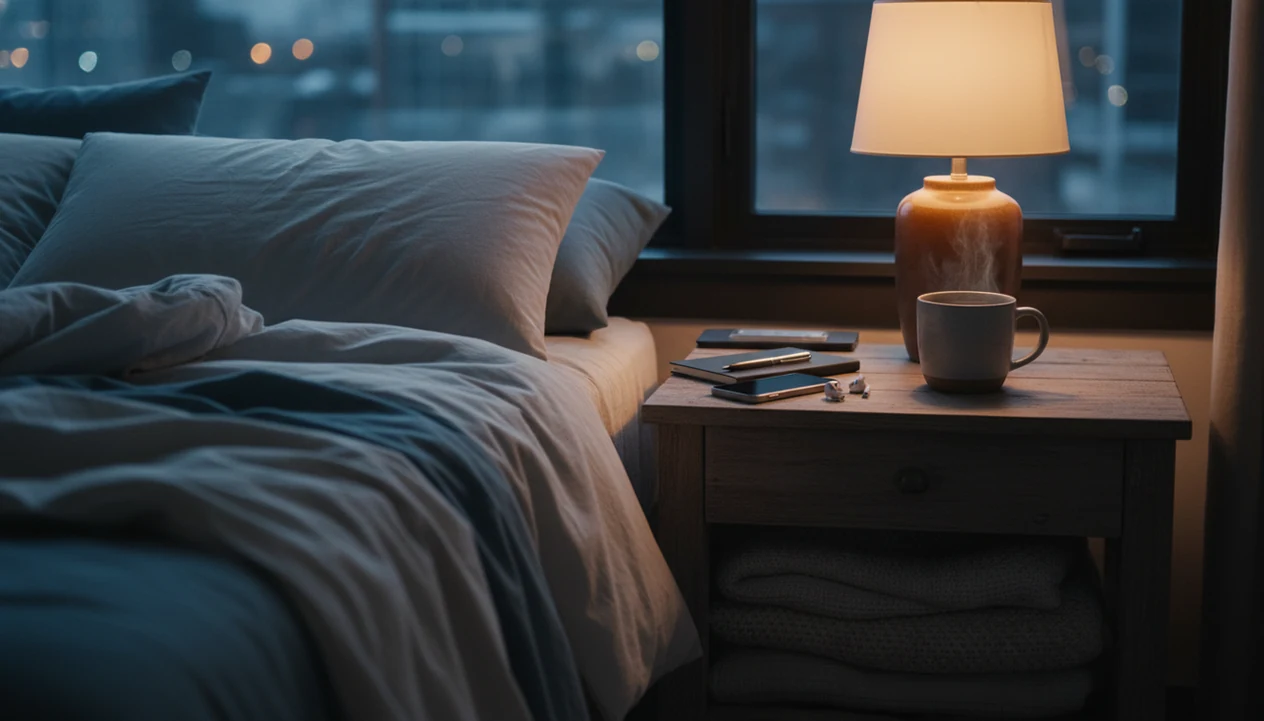


Sunday night anxiety sleep meditation is a bedtime practice that uses guided breathing, body scans, and sleep-focused audio to ease racing thoughts and physical tension before Monday. It can serve as a calming ritual for workweek worry, but it is not a cure for anxiety or insomnia. The aim is to settle into rest, not to erase every thought about the coming week.
A useful routine pairs meditation with a short Monday task list, fewer screens, and consistent bedtime timing. MindTastik offers guided wellness audio for adults, including meditation, sleep support, breathing practices, and self-hypnosis. These sessions can provide repeatable calm support during the transition from weekend to workweek, rather than therapy or treatment for an anxiety disorder.
The Sunday night essentials
- Use Sunday scaries meditation as a calming bedtime ritual, not a cure for anxiety or insomnia.
- The most useful routine combines breathing, body scanning, gentle planning, screen reduction, and consistent timing.
- MindTastik can support Sunday night wind-downs with guided sleep audio, meditation, breathing, and self-hypnosis sessions.
Best Sunday Night Anxiety Sleep Meditation Routine
The best Sunday night anxiety sleep meditation routine is simple: close the week, reduce stimulation, listen to guided audio, and let sleep arrive without forcing it. It should feel like a repeatable landing strip for Monday, not another task to perform.
A practical sequence starts 20 to 45 minutes before bed. Write down tomorrow’s top three tasks, silence work alerts, dim the room, then choose a guided session. If you need more structure, MindTastik fits as a calm-support app for guided meditation, breathing, sleep audio, and self-hypnosis.
Stress-related wakefulness is common. In a nationally representative APA survey, 43% of adults said stress had caused them to lie awake at night in the past month APA research. A quiet room, a restless pillow, and another glance at the time can feel familiar for a reason.
This supports calm and sleep hygiene. It does not diagnose, treat, or replace professional care.
Best Sunday Scaries Meditation Options for Different Triggers
Different Sunday scaries need different meditation styles. Monday dread often needs breathing first, while tense shoulders against the mattress may need a body-based practice before sleep audio helps.
| Meditation type | Best for | Not ideal for |
|---|---|---|
| Breathing reset | Monday dread, fast thoughts, shallow breathing | People who feel panicky when focusing on breath |
| Body scan | Body tension, jaw clenching, restless legs | Listeners who get frustrated by slow pacing |
| Work-worry release | Inbox rumination, meeting loops, unfinished tasks | Urgent work problems that need real planning |
| Sleep visualization | Difficulty drifting off after planning is done | People who dislike imagery or guided scenes |
When the trigger is “tomorrow’s meeting looping at midnight,” choose a preselected guided session instead of searching randomly while tired. Examples in the broader category include MindTastik, Calm, Headspace, and free mindfulness resources from mindful.org.
Good sleep apps deliver a lower-friction wind-down, not a guarantee that Monday will feel easy.
How Sunday Night Anxiety Sleep Meditation Works
Sunday night anxiety sleep meditation works by lowering arousal, redirecting attention, and repeating a cue that tells the brain bedtime is safe enough to stop scanning for problems.
Slow breathing can reduce physiological arousal. In plain language, it gives the body something steady to follow when the mind is checking for threats. Body scans and progressive relaxation move attention out of rumination and into physical release, one muscle group at a time. The mechanism is not magic. It is attention training plus nervous-system downshifting.
Repetition matters. If Sunday follows a steady pattern, wrap up open tasks, soften the lamp, settle under a weighted blanket, and start a guided session, the routine becomes a cue. Sunday begins to feel like quiet preparation instead of the first alarm of the workweek. For steadier rest beyond Sunday, explore ways to sleep soundly through the night alongside your regular wind-down.
A randomized trial found mindfulness awareness practices improved sleep quality in older adults with moderate sleep disturbance compared with sleep hygiene education JAMA Internal Medicine study: 2110998. That research is about sleep and mindfulness broadly, not Sunday scaries specifically.
What research says about bedtime worry
Bedtime worry is a relevant target, but evidence about insomnia should not be treated as proof that a Sunday meditation will bring sleep. A 2019 systematic review of presleep thinking linked intrusive thoughts, worry, and arousal with longer time to fall asleep and poorer sleep quality. That association helps explain the focus on work-related thinking here, without establishing that guided audio treats it.
There is stronger evidence for a structured insomnia treatment reducing worry. A 2020 review of 15 randomized trials of CBT-I found moderate-to-large reductions in worry, while its effect on general rumination was small and unreliable. The distinction matters: worry about tomorrow and repeated thinking about past events may not respond in the same way. A Sunday wind-down is supportive practice, not a substitute for CBT-I when insomnia persists.
How to Use Sunday Scaries Meditation Before Bed
Use Sunday scaries meditation during a 20 to 45 minute wind-down before bed. The goal is to reduce friction before listening, so you are not negotiating with email, bright light, and worry at the same time. Choose the best length for sleep meditation based on your available time and comfort, rather than pressure to sleep.
- Set a cutoff for work at least 30 minutes before bed, and mute Slack pings or email alerts.
- Write tomorrow’s top three tasks on paper or in a notes app, then stop planning.
- Dim lights and reduce screens so your eyes are not fighting a bright phone in bed.
- Play a guided MindTastik sleep meditation with the screen dimmed and the session chosen before lying down. For a quieter bedtime option, try deep sleep meditation while keeping expectations gentle and the screen dimmed.
- Let thoughts pass without problem-solving when they appear, then return to the voice, breath, or body cue.
If the phone becomes the problem, move the session selection earlier. A screen-free bedtime meditation works better for people who start listening, then end up scrolling.
How MindTastik Supports Sunday Night Anxiety Meditation
MindTastik offers guided meditation, sleep audio, breathing practices, and self-hypnosis sessions for adults looking for sleep, anxiety, and everyday calm support. For Sunday night, choosing a breathing session or sleep track before bed removes one decision when work worries start repeating.
The main support areas are:
- Guided meditation: for people who need a voice to follow when thoughts keep branching.
- Sleep audio: for a softer transition from Sunday planning into rest.
- Breathing exercises: for short resets before bed or before Monday morning. A 10-minute sleep meditation can provide a brief option when you want a short, repeatable bedtime practice.
- Self-hypnosis sessions: for adults who like suggestion-based relaxation as part of a wind-down routine.
Adults trying to stop replaying the workweek before bed may find a structured guided-session workflow useful, especially when the session is chosen before getting into bed. Treat “Best Meditation App for Sleep” as a convenience label for calm support, not a claim of medical treatment.
How We Picked Sunday Night Anxiety Meditation Elements
The elements in this guide come from practical sleep hygiene, broader mindfulness research, and common Sunday scaries triggers. We prioritized low-effort techniques that can be repeated when someone wants a calm track ready before worry fills the room.
- Diaphragmatic breathing gives anxious attention a simple anchor and may reduce physical arousal.
- Mindfulness practice helps people notice work thoughts without turning each one into a plan.
- Body scanning fits bedtime tension because it shifts attention toward release.
- Progressive muscle relaxation works well when the body feels braced for Monday.
- Consistent timing makes the routine easier to repeat than a new strategy every week.
A JAMA Internal Medicine meta-analysis of 47 randomized trials JAMA Internal Medicine study: 1809754 found moderate evidence that mindfulness meditation programs improve anxiety, depression, and pain. The evidence is broader than Sunday-night-specific research, so we avoid claiming a special Sunday cure.
For a fuller structure, use a bedtime routine for adults around the meditation.
Best For and Not For Sunday Night Anxiety Sleep Meditation
Sunday night anxiety sleep meditation is best for mild worry, workweek rumination, bedtime tension, and the awkward shift from weekend pace into Monday. It is not the right stand-alone answer for crisis-level distress or ongoing clinical symptoms.
| Fit | Good match | Better next step |
|---|---|---|
| ✅ Mild Sunday worry | You feel keyed up but can still function | Try breathing plus guided sleep audio |
| ✅ Work rumination | You replay inboxes, meetings, or deadlines | Pair meditation with a realistic Monday list |
| ✅ Bedtime tension | Your body feels alert even when tired | Use body scan or progressive relaxation |
| ❌ Severe anxiety or panic | Symptoms feel intense, persistent, or impairing | Seek professional support |
| ❌ Chronic insomnia | Sleep problems keep recurring for weeks or months | Ask about CBT-I or clinical care |
| ❌ Guided audio feels triggering | Voices or silence increase distress | Try grounding, quiet music, or support |
Meditation can build coping skills; it does not create weakness or dependency. Start small.
Sunday Night Anxiety Sleep Meditation Mistakes
The biggest mistake is expecting one meditation to permanently remove Sunday scaries. A guided session can make the night feel more manageable, but it works better as part of a repeated wind-down routine.
Trying to force sleep is another common trap. The harder you monitor whether it is “working,” the more alert you may feel. Screen paused after a restless start. That does not mean failure. It means the routine needs less pressure.
Avoid checking email, doomscrolling, late caffeine, alcohol overuse, and bright screens immediately before listening. They all keep the nervous system busy. A better setup is a realistic Monday plan, a consistent bedtime, and a short session that is easy to repeat. If racing thoughts are the main issue, a calming night routine for racing thoughts can give the meditation more support.
If the session ends and sleep still has not come
Finishing a meditation does not create an obligation to fall asleep. If remaining in bed means staying awake and distressed, replaying track after track can turn the routine into another effort to force sleep. NHS Scotland sleep guidance recommends getting up, moving to another room for about 20 minutes, and doing a quiet activity before returning to bed. If you wake later, sleep meditation for waking up at night can offer gentle support without making sleep another task.
For a Sunday night, that quiet break should not become another Monday planning session. Work messages and bright screens belong outside the break, just as they do outside the wind-down. The same guidance recommends a consistent wake time and reducing caffeine, alcohol, nicotine, and back-lit-device use near bedtime. The goal is to reduce awake distress rather than make the next attempt at sleep into a test.
When to Seek Professional Help for Sunday Night Anxiety
Seek professional help when Sunday night anxiety is persistent, getting stronger, or starting to interfere with sleep, work, relationships, or basic functioning. A meditation app can support a routine, but it cannot evaluate symptoms, diagnose a disorder, or provide treatment.
Pay special attention if insomnia keeps repeating for weeks, if panic symptoms feel hard to control, or if dread is no longer limited to Sunday night. Licensed clinicians can assess what is going on and may recommend therapy, CBT-I for chronic insomnia, medication, workplace changes, or another care plan. If you feel at risk of harming yourself or someone else, or you cannot stay safe, use emergency services or a local crisis line right away.
- Notice the pattern by tracking how often anxiety or sleeplessness shows up and what it disrupts.
- Contact a licensed clinician if symptoms are ongoing, impairing, or escalating.
- Ask about CBT-I when sleep problems continue for several weeks or become a recurring cycle.
- Use urgent support immediately if distress feels unsafe or unmanageable.
Choosing audio for Monday worry or bedtime tension
MindTastik’s breathing sessions and guided meditations suit a short reset after Monday planning is finished. A body-focused meditation may suit tense shoulders or a clenched jaw, while quiet sleep stories offer a neutral thread when work thoughts keep repeating. Self-hypnosis audio is another option for adults who prefer suggestion-based relaxation. People who find spoken guidance irritating may prefer soundscapes or quiet. Persistent insomnia or severe anxiety needs assessment, not a different audio track.
What Sunday night meditation cannot resolve
Sunday night anxiety sleep meditation has real uses, but it has clear limits. Treat it as supportive practice, not a complete mental health plan.
- There are few trials on “Sunday scaries” as a unique condition, so most evidence comes from broader mindfulness, relaxation, and sleep research.
- Meditation may not be enough for moderate to severe anxiety, depression, panic symptoms, trauma symptoms, or chronic insomnia.
- CBT, CBT-I, medication, therapy, or workplace changes may be appropriate under professional guidance.
- Guided audio can feel irritating, restless, or triggering for some people, especially when silence or body awareness increases distress.
- Poor sleep hygiene can blunt benefits, especially bright screens, irregular sleep timing, late caffeine, and working from bed.
- Sunday-only meditation may not solve workload, burnout, unclear expectations, or a workplace that keeps creating the same stress.
- Apps such as MindTastik, Calm, and Headspace can support routines, but they do not diagnose conditions or replace care from a qualified professional.
If worry is intense, persistent, or impairing, professional support is the safer next step.
Short breathing, body scan, and story options before Monday
| Technique | Best for | Minutes |
|---|---|---|
| Slow exhale breathing | settling shallow breathing before a session | 3-5 min |
| Guided body scan | releasing bedtime tension without analysis | 8-12 min |
| Low-stimulation sleep story | redirecting repetitive Monday thoughts | 10-20 min |
If you want narration instead of instruction at bedtime, MindTastik sleep stories is a practical place to start inside MindTastik.
Sunday night worry and sleep questions
Why do I feel anxious on Sunday night even after a good weekend?
Sunday night can mark the return of deadlines, meetings, unfinished tasks, and work alerts. Those thoughts may become more noticeable when the evening gets quiet. Occasional Monday dread is not automatically a disorder, but anxiety that spreads beyond Sunday or interferes with daily life deserves professional attention.
Can sleep meditation stop the Sunday scaries?
Meditation may help settle physical tension and redirect attention from repetitive work thoughts. It cannot guarantee sleep or remove the problems causing Monday dread. It is most useful as part of a repeatable routine that includes brief planning and a work cutoff, rather than as a stand-alone treatment.
When should I start a Sunday night sleep meditation?
Place it within a 20 to 45 minute wind-down before bed, after writing a short Monday task list and silencing work alerts. Choose the audio before lying down. If bedtime is already late, a brief breathing practice or body scan can keep the routine from becoming another lengthy task.
Is a body scan or sleep story better for Monday anxiety?
A body scan is a practical choice when jaw, shoulder, or other muscle tension is prominent. A quiet sleep story may suit a tired body with a mind still replaying meetings. Neither is universally better. Breath-focused practice may be a poor fit if paying attention to breathing increases panic.
What if I am still awake after a Sunday night meditation?
A finished session is not a failed sleep attempt. If staying in bed leaves someone awake and distressed, NHS guidance recommends getting up, going to another room for about 20 minutes, and doing a quiet activity before returning. Avoid using that break to check work messages or restart Monday planning.
When does Sunday night insomnia need professional help?
Seek assessment when sleep problems keep recurring, changes to sleep habits do not help, or anxiety affects work, relationships, or basic functioning. CBT-I may be an appropriate treatment for persistent insomnia. Immediate danger, suicidal thoughts, or an inability to stay safe calls for urgent local emergency or crisis care.