
Bedtime Routine for Adults With Meditation
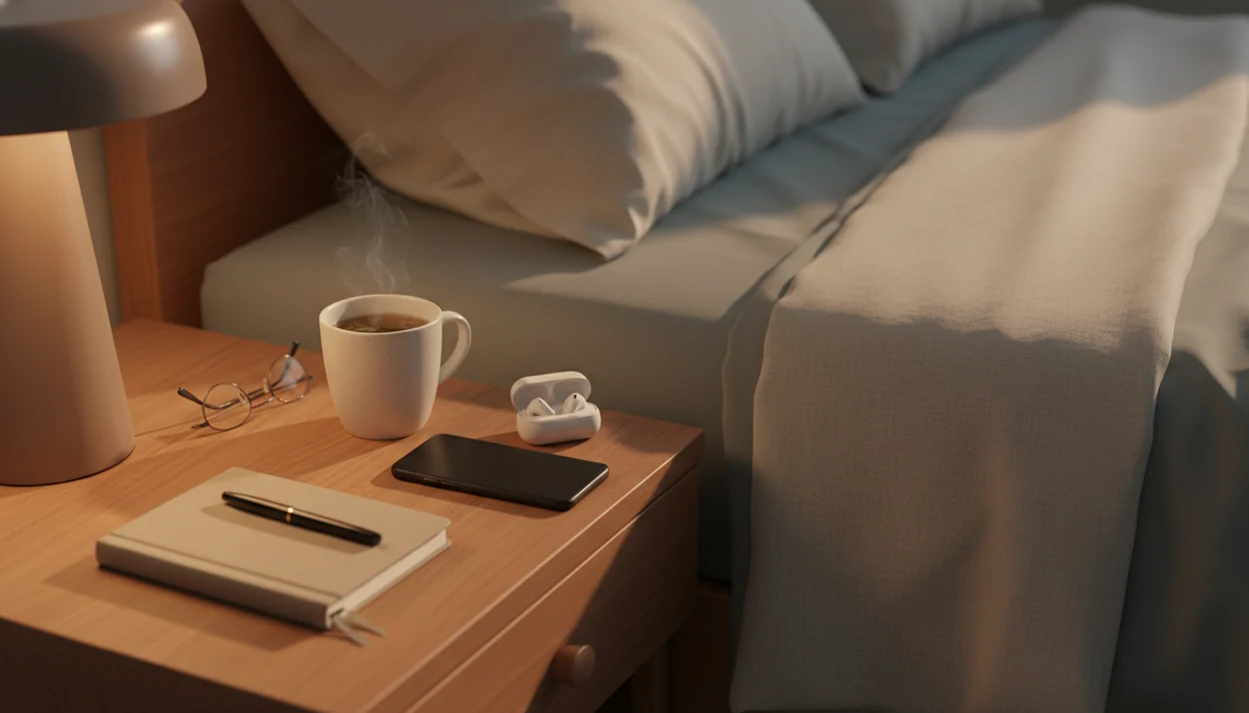


A bedtime routine for adults is a consistent sequence of low-stimulation habits repeated during the last 30-60 minutes before sleep. Its purpose is to make the end of the day predictable, helping the brain and body associate those evening cues with rest. A practical sequence starts with dimmer lights and screens off, followed by brief reflection, gentle stretching or breathing, and a 10-minute guided meditation. This matches the Sleep Foundation's adult bedtime routine guidance.
The wind-down window begins before exhaustion sets in. Putting screens away before meditation keeps audio from becoming another reason to scroll. MindTastik can fill that final slot with guided sleep meditation, breathing practice, or calming audio after reflection and before lights out.
The routine at a glance
- Use a 30-60 minute wind-down window instead of waiting until you feel exhausted.
- Put screens away before the meditation slot so audio becomes calming, not another source of stimulation.
- MindTastik fits best as a 10-minute guided sleep meditation, breathing session, or sleep anxiety audio after reflection and before lights out.
30-60 Minute Bedtime Routine for Adults Timeline
A practical adult bedtime routine starts 30-60 minutes before your target sleep time and repeats the same order most nights. The order matters more than doing every step perfectly.
60 minutes before bed: lower stimulation
Dim lights, close work tabs, and write down any unfinished task that keeps tugging at your attention. If your laptop fan is still running during a five-minute pause, that’s a cue to shut the work loop.
30 minutes before bed: screens off
Handle hygiene, set the room, and move into a simple reflection or quiet reading. A short nighttime wind-down routine can help if your evenings feel scattered.
10 minutes before bed: guided meditation
Press play on one guided meditation or breathing track, then let that be the final active step. Keep it simple. The goal is a repeatable landing, not a flawless performance. For a consistent end to your day, try an evening meditation routine for adults before lights out.
Five Adult Bedtime Routine Facts That Matter Most
- Adults aged 18-60 are generally advised to get 7 or more hours of sleep each night, according to the American Academy of Sleep Medicine and Sleep Research Society: jcsm reference: jcsm.4758
- Consistent sleep timing is associated with better sleep quality and circadian stability; for example, research on sleep regularity links irregular schedules with worse cardiometabolic and sleep-related outcomes: nature reference: s41598 018 32402 5
- Many U.S. adults sleep less than recommended; the CDC reports that about 35.5% of adults aged 18-64 get less than 7 hours of sleep in a 24-hour period: CDC guidance: adults.html
- Low-stimulation activities usually fit bedtime better than work, scrolling, alcohol, or intense exercise.
- Meditation before bed can lower arousal without requiring a blank mind.
For most adults, a steady schedule paired with a low-stimulation wind-down is easier to repeat than waiting until the body feels completely worn out. Waking in the dark and checking the time can be a useful clue that the evening may need a gentler transition toward rest.
Brain Cues Behind a Calming Adult Bedtime Routine
A calming adult bedtime routine works by pairing repeated evening cues with sleep, so the brain begins to treat those cues as a signal to power down.
This is basic conditioning, not magic. Lower light, fewer decisions, and a predictable order reduce arousal. In plain language, your body gets fewer “stay alert” messages. Guided meditation adds attentional structure when thoughts start jumping from tomorrow’s meeting to the unpaid bill.
Breathing and body awareness can also shift the nervous system toward a calmer state. You might notice your shoulders tense against the mattress first, then soften a little after several slow breaths.
Mindfulness-based practices have shown sleep-quality benefits in clinical research, including a randomized trial of older adults with sleep disturbance: JAMA Internal Medicine study: 2110998
A bedtime routine supports sleep; it does not force sleep on command. Clinicians typically recommend medical evaluation when sleep problems are persistent, severe, or paired with symptoms such as gasping, loud snoring, or major daytime sleepiness.
10-Minute Bedtime Meditation Routine for Tonight
Use this 10-minute bedtime meditation routine after screens are off and before lights out. Choose the audio before you start, so you don’t end up scrolling through categories under blankets.
- Set a realistic bedtime based on your wake time and at least 7 hours in bed.
- Choose one short MindTastik sleep meditation, breathing session, or calming audio track.
- Turn off interactive screens before pressing play, then dim the phone if audio must run there.
- Lie down or sit comfortably with earbuds on the nightstand, one side untangled enough to use.
- Follow the voice, breath cue, or body scan without trying to empty your mind.
- Let the audio end the routine, and avoid restarting email, news, or social feeds afterward.
For beginners, a 10-minute guided session is often easier than silent meditation because the voice gives attention somewhere gentle to return.
What the research says about a 10-minute meditation
A 10-minute session is a manageable place to start, not a clinically established dose for better sleep. A 2018 review of 18 randomized trials involving 1,654 adults found improved sleep quality compared with nonspecific active controls. Evidence that meditation was better than specific active treatments was low-strength. Those findings support meditation as an option, but not as a replacement for sleep treatment.
The programs studied involved more than a brief recording at bedtime. In the same review's intervention details, group sessions lasted 1-2.5 hours weekly over 2-16 weeks. Trials that specified a daily home-practice target recommended 15-60 minutes. A shorter bedtime slot may be easier to repeat, but the research does not establish that 10 minutes guarantees improvement or that longer bedtime sessions are better.
Best-Fit Adults and Poor-Fit Sleep Problems for This Night Routine
This night routine fits adults who need a simple, repeatable structure for busy evenings, mild sleep anxiety, racing thoughts, or inconsistent wind-down habits. It is not enough for medical sleep disorders that need evaluation.
| Fit type | Better fit | Not ideal for |
|---|---|---|
| Busy evenings | Adults who need a predictable 30-minute landing | People whose schedule changes wildly every night |
| Racing thoughts | Beginners who want guided structure | Severe chronic insomnia without professional support |
| Mild sleep anxiety | People who calm down with breathing or audio | Sleep tracking that increases worry about every number |
| Physical symptoms | General restlessness after a long day | Untreated sleep apnea, gasping, or restless legs symptoms |
If you need a simpler plan for packed evenings, a sleep routine for busy adults may be easier to maintain.
Screen Wind-Down and Reflection in an Adult Bedtime Routine
Is scrolling in bed the same as relaxing? No. Scrolling can feel passive, but bright screens, quick choices, and emotional content keep the brain engaged.
Use a short written reflection before meditation instead. Keep it practical: one thing finished today, one concern to park, and three tasks for tomorrow. Not a deep emotional audit. Just enough to stop the mind from rehearsing the same list after lights out. If thoughts keep circling after reflection, try a calming night routine for racing thoughts with simple, repeatable steps.
Then move the phone to audio-only if you use a guided session. The small act of dimming the screen before bedtime audio matters because it changes the device from a portal into a player. For stricter boundaries, a screen-free bedtime meditation can remove the decision entirely. When worries persist, learn how to calm racing thoughts using your phone for focused support rather than scrolling.
MindTastik Guided Audio Slot in a Calming Bedtime Routine
MindTastik offers guided meditation, sleep audio, breathing practices, and self-hypnosis sessions for adults who want wellness support for rest, anxious moments, and everyday calm.
In this routine, MindTastik provides one short, guided audio session after screens are off and before lights out. Keep the role narrow so the app supports the habit instead of becoming another thing to browse.
Use guided audio as the final active step in the routine, after reflection and before lights out.
- Guided sleep meditation: useful when the mind needs a voice to follow.
- Breathing exercises: useful when the body feels keyed up.
- Sleep stories: useful when attention needs a softer place to land.
- Self-hypnosis sessions: useful for people who like suggestion-based relaxation.
Daytime short sessions can also support the night routine. If you need help choosing audio, compare options in what to listen to before bed.
Bedroom Setup for a Bedtime Routine for Adults
A bedtime routine for adults works better when the bedroom supports the same message: cool, dark, quiet, and comfortable. Set the room before the meditation slot, not after it.
Adjust bedding, temperature, and noise control during the 45-minute preparation window. Use dim lights while you change clothes or brush your teeth. Keep work papers and laptops out of bed where possible, because the bed should not feel like a second desk.
Small things count. A charger moved across the room. A blanket pulled back before audio starts.
Image caption idea: 30-minute adult bedtime routine with screen wind-down, reflection, and meditation.
For a broader checklist, pair this setup with basic sleep hygiene.
When the routine ends but sleep does not come
Finishing every step does not guarantee immediate sleep. Kingston and Richmond NHS sleep-hygiene guidance advises leaving bed for a short relaxing activity if sleep has not come after approximately 30 minutes. That offers an alternative to staying in bed and repeatedly restarting meditation. Quiet reading can serve as the relaxing activity rather than returning to work or scrolling.
The same guidance suggests beginning the wind-down 60-90 minutes before intended sleep. That is longer than the 30-60 minute routine described here, showing that guidance does not prescribe one exact window. An earlier start is an option when the shorter routine feels rushed. The aim remains a predictable period of low stimulation, not filling every available minute with another sleep exercise.
A short audio session after screens are off
MindTastik's guided meditation library suits adults who want a voice to follow when evening thoughts keep returning to work or tomorrow's tasks. A short breathing practice is another option when a full meditation feels demanding. Choosing the session earlier keeps bedtime from turning into browsing. Adults who find spoken audio stimulating may prefer quiet reading or gentle stretching. Persistent sleep problems need assessment, not a longer playlist; MindTastik is not a medical treatment.
What a bedtime routine cannot treat or compensate for
A bedtime routine can support sleep, but it has real limits. It should not be treated as a cure for clinical insomnia, sleep apnea, restless legs, or other medical sleep disorders.
- Results may take several weeks of consistency, especially if your current schedule is irregular.
- Meditation cannot fully offset late caffeine, alcohol, heavy meals, or intense late-night exercise.
- Some relaxing habits, such as dramatic shows or complex novels, may feel stimulating for certain people.
- Sleep trackers can worsen anxiety when the score becomes the main focus.
- Alcohol may feel sedating at first, but it can disrupt sleep quality later in the night.
- Seek professional help for loud snoring, gasping, severe daytime sleepiness, or long-term insomnia.
- If bedtime meditation makes you more alert, try shorter breathing audio or move the session earlier.
Reset the plan. A supportive practice should feel usable, not like another test you failed.
Body scan, sleep story, or breathing: choosing the final step
- Choose a body scan when your mind is busy but your body feels tense; attention has somewhere concrete to land without forcing sleep.
- Choose a sleep story when you are mentally tired and want a gentle narrative to replace planning, replaying, or problem-solving.
- Use slow exhales when you only have a few minutes; a shorter routine repeated nightly tends to beat a long routine you abandon.
- Keep the same audio for several nights if novelty keeps waking you up; familiarity can become part of the wind-down cue.
- Skip highly emotional content near bedtime; the right session should make the room feel smaller, quieter, and easier to leave unfinished.
If you want narration instead of instruction at bedtime, MindTastik sleep stories is a practical place to start inside MindTastik.
Adult bedtime routine questions
What should an adult bedtime routine include?
A practical routine includes dimming lights, putting screens away, completing hygiene, and preparing the bedroom. Brief reflection, quiet reading, gentle stretching, or breathing can follow. A short meditation can be the final active step. The sequence should reduce decisions rather than become a long checklist.
How long should a bedtime routine take?
A 30-60 minute wind-down is a practical starting point. Some NHS guidance recommends 60-90 minutes before intended sleep. These are routine windows, not required meditation lengths. A brief audio session can occupy just part of that time, with the rest reserved for hygiene, room preparation, and quiet activities.
What is a good bedtime for adults?
There is no single bedtime that suits every adult. The useful starting point is a regular wake time and enough time for sleep; adults aged 18-60 are generally advised to get at least seven hours nightly. A routine cannot make up for a schedule that leaves too little sleep opportunity.
When should meditation fit into a bedtime routine?
In this routine, meditation follows reflection and bedroom preparation, after screens are off and before lights out. Choosing the audio earlier avoids browsing in bed. Ten minutes is a manageable starting slot, not a proven treatment dose, and the rest of the evening routine still matters.
What if bedtime meditation keeps me awake?
Spoken guidance does not suit everyone at bedtime. Quiet reading, gentle stretching, or a simple breathing practice may be a better fit than an engaging recording. If sleep has not come after approximately 30 minutes in bed, NHS hospital guidance suggests getting up for a short relaxing activity.
How long does a bedtime routine take to improve sleep?
There is no guaranteed timetable. Meditation research mainly concerns regular practice across multiple weeks, not a single bedtime session. Consistency may take several weeks, especially with an irregular schedule. Persistent sleep difficulties should not be treated as a reason to keep extending the routine without seeking assessment.
Should bedtime and wake time stay the same on weekends?
Sleep-routine guidance recommends consistent bedtime and wake time every day, including weekends. Beginning the wind-down at a regular time helps make the sequence predictable. A reminder can mark the start, particularly when evening work or entertainment tends to push bedtime later.