
Nature Sounds Bedtime Routine for Low-Screen Sleep
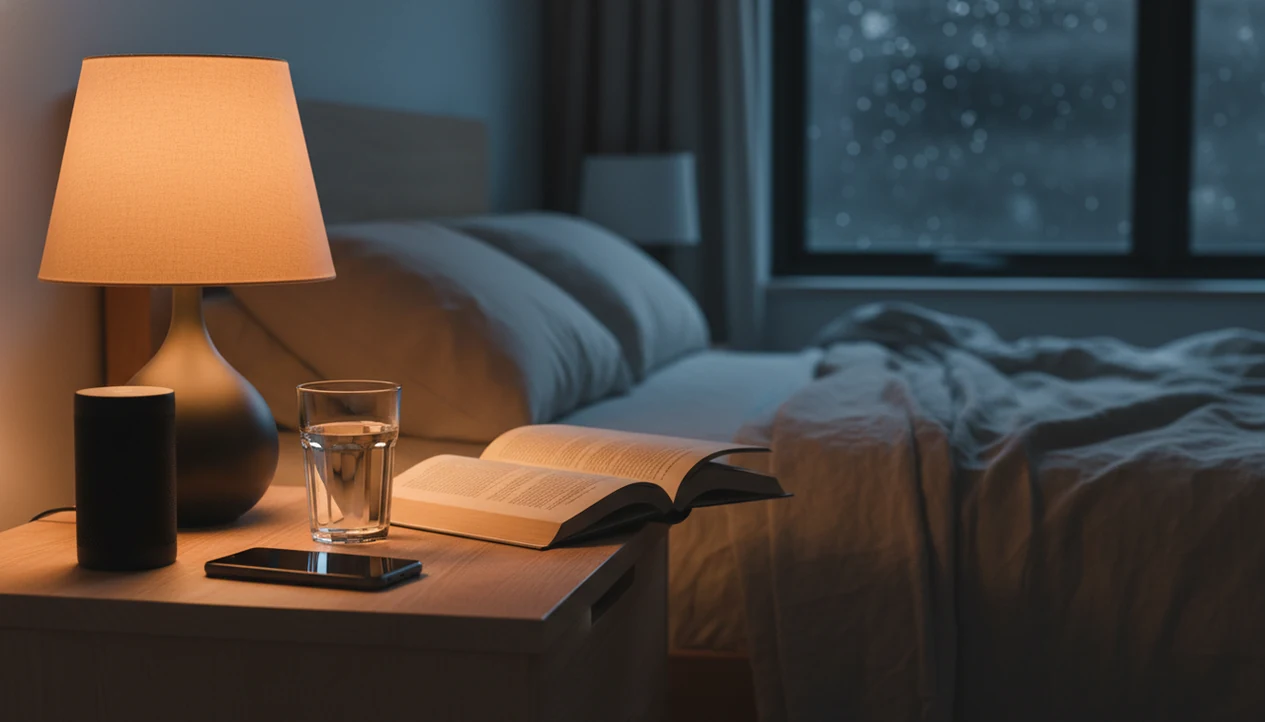


A nature sounds bedtime routine is a repeatable wind-down that pairs quiet rain, ocean waves, or forest ambience with dim lights and a short relaxation practice. The basic sequence stays the same each night: lower the lights, start one familiar sound, follow gentle breathing or meditation, then let a sleep story or timed audio fade out. Predictability matters more than finding a new recording every evening.
Keep the volume low and choose the audio before settling into bed, so listening does not turn into more screen time. MindTastik combines soundscapes, guided meditation, breathing exercises, and sleep stories in one app. Nature audio can support a calmer bedtime, but it does not replace regular sleep hours, reduced screen exposure, or a dark, cool room.
The bedtime basics
- Use one consistent nature sound, low volume, and a timer so the routine feels predictable instead of stimulating.
- Layer nature sounds with breathing, guided meditation, or a short sleep story for a more complete wind-down.
- Nature audio can support sleep, but it works best with regular bedtimes, reduced screens, and a dark, cool room.
Nature sounds bedtime routine: the simple nightly structure
A nature sounds bedtime routine is a low-screen wind-down that pairs natural audio with breathing, meditation, or a sleep story. The simplest version takes 20 to 40 minutes: dim the lights, start one quiet soundscape, breathe slowly, listen to a guided session or story, then let the audio fade out.
Keep the phone boring. Dim the screen before starting bedtime audio, choose the session, then lock it or place it face down.
Tools like MindTastik meditation app can organize nature sounds, guided meditation, breathing exercises, and sleep stories in one place. It is a meditation app for supportive practice, not a medical treatment for insomnia or anxiety.
For most beginners, one repeated bedtime sequence is easier than a new track every night because the brain learns the cue faster.
How a nature sounds bedtime routine works
A nature sounds bedtime routine works by turning the same quiet audio into a repeatable sleep cue. Over time, the brain starts to connect that sound with the rest of the wind-down: dim lights, slower breathing, fewer decisions, and bed.
The mechanism is simple habit learning, sometimes called cue-routine association. The rain, waves, or forest ambience becomes the cue; the routine is breathing, meditation, or a sleep story; the expected state is lower alertness. Steady sound also provides gentle noise masking, which means it can soften minor household sounds without becoming interesting enough to follow. A guided breath, short meditation, or calm story gives busy thoughts somewhere less stimulating to land, reducing cognitive arousal before sleep.
- Repeat the same sound most nights so it becomes familiar.
- Keep the volume low enough to blend with the room.
- Pair the audio with breathing, meditation, or a story instead of scrolling.
- Let the sound support relaxation without trying to force sleep.
- Seek clinical evaluation if insomnia, panic, loud snoring, gasping, or daytime impairment persists.
Nature sounds can make bedtime easier to enter. They do not override medical sleep problems or guarantee sleep on command.
3 bedtime soundscape cues that help the brain wind down
Bedtime soundscape cues work by making the same sound and steps feel familiar, so the brain begins to associate them with slowing down. This is a habit loop: cue, routine, and expected state. In plain language, the sound becomes a nightly signal.
Three cues matter most:
- Predictable audio: steady rain, waves, or forest ambience gives the mind less to chase.
- Noise masking: soft nature audio can cover a hallway door, distant traffic, or a neighbor’s television without demanding attention.
- Body settling: research on natural soundscapes has linked natural audio with reduced stress responses and better mood compared with artificial or urban noise (Scientific Reports: nature reference: srep45273; PNAS: pnas reference: pnas.2013097118).
That does not mean nature sounds force sleep. They support relaxation. Clinicians typically recommend pairing relaxation routines with sleep hygiene, regular timing, and professional evaluation when sleep problems are severe or persistent.
5 MindTastik setup steps for bedtime nature sounds
Use this as a low-screen setup once, then repeat it with as few taps as possible.
- Choose one soundscape such as rain, ocean waves, forest ambience, wind, or a soft stream.
- Set the volume low enough to blend into the room, not fill it. If it feels like a performance, it is too loud.
- Add a breathing exercise for 2 to 5 minutes before the longer audio begins.
- Select a meditation or sleep story that feels easy to follow with your eyes closed.
- Set a fade-out timer so the routine ends without another phone check.
The cheap-earbud test is useful: if the guided voice through cheap earbuds feels sharp, turn it down before bed.
Once everything is ready, let bedtime audio act like a cue, not another menu to explore. Calm, Headspace, and other sleep apps can help, but the routine works best when you choose the track earlier and avoid comparing options in the middle of the night.
Best nature sounds for bedtime by sleep need
The best nature sounds for bedtime are personal, but steady, low-contrast sounds are usually easier than dramatic tracks. Choose by what you need the sound to do, not by what sounds impressive in a preview. If you prefer deeper textures, dark ambient music may appeal, though unsettling or dramatic tracks can make bedtime less restful.
| Nature sound | Often useful for | Possible drawback |
|---|---|---|
| Rain | Masking light household noise | Thunder or heavy storms may feel too active |
| Ocean waves | Rhythmic breathing support | Big wave crashes can wake sensitive sleepers |
| Forest ambience | A natural, open-room feel | Bird calls may be too detailed for some people |
| Wind | Soft background texture | Gusty tracks can feel unpredictable |
| Stream or water | Gentle continuity and calm | Bubbling sounds may draw attention |
If rain feels right, a more focused guide to rain sounds for sleep meditation can help you compare soft rain, storms, and looped rainfall. Ocean lovers may prefer ocean sounds for sleep meditation.
5 evidence-aware facts about a sleep routine with nature audio
- Consistency matters more than variety; repeating the same sound and steps helps bedtime feel predictable.
- Low, steady volume is usually better than loud audio because dramatic changes can pull attention back toward the sound. If you prefer tonal audio, 528 Hz recordings are another option, but frequency alone does not establish sleep benefits.
- Breathing, guided meditation, or progressive muscle relaxation can deepen the wind-down by giving the body something simple to follow.
- Broader sleep habits still matter, including regular bedtimes, reduced screen exposure, and a dark, cool room.
- Evidence is stronger for mindfulness and music-based sleep support than for any specific rain, ocean, or forest track. Claims about a healing frequency deserve caution, since relaxation research does not establish that specific tones treat sleep problems.
A 6-week randomized trial in older adults with sleep disturbance found mindfulness awareness practices improved sleep-quality scores more than sleep-hygiene education alone (JAMA Internal Medicine: JAMA Internal Medicine study: 2110998). A Cochrane review found music may improve subjective sleep quality in adults with insomnia, though certainty varied by study quality and intervention type (Cochrane review).
The most common medically supported way to improve sleep over time is a consistent sleep routine combined with healthy sleep habits and appropriate clinical care when symptoms persist.
Feeling calmer is not the same as sleeping better
Nature-sound research often measures short-term relaxation rather than nighttime sleep. In a 2024 controlled study comparing natural sounds with quiet, researchers found significant differences in heart rate, blood pressure, and respiratory rate, but not perceived stress. Those findings suggest that bodily responses and the feeling of being calmer do not always change together. They do not establish that a recording prevents awakenings or treats insomnia.
The reverse pattern also appears. A 2025 study comparing forest and industrial recordings found improvements in mood, perceived restoration, and cognition, but no significant differences in several physiological measures, including heart rate and salivary cortisol. For a bedtime routine, the practical aim is modest: a sound that makes winding down easier without demanding attention. Neither a pleasant listening experience nor a short-term physiological change proves better sleep.
Best for and not for: calming nature sounds app routines
Best for
- Screen-heavy evenings: a saved soundscape can replace late scrolling with one predictable action.
- Light household noise: rain, water, or soft wind may make small sounds less noticeable.
- Racing thoughts: a guided session gives the mind a simple track to follow.
- Beginners who want structure: choosing between a 5-minute breathing exercise and a 20-minute body scan is easier than inventing a routine alone.
A common bedtime wish is for one steady sound to start quickly, so the mind has something softer to follow as the room settles.
Not for
- People irritated by audio: silence, reading, or gentle stretching may work better.
- Untreated sleep apnea symptoms: loud snoring, choking, or gasping at night need medical evaluation.
- Severe or persistent insomnia: professional support may be needed.
- Unsafe headphone use: all-night earbuds can feel uncomfortable or block important sounds. If you try binaural beats, consider headphone comfort, keep the volume low, and stop if listening feels unpleasant.
For daytime use, soundscapes for anxiety support may fit better than a sleep-only routine. For daytime work or study, focus music serves a different purpose than audio chosen for a bedtime routine.
30-minute low-screen bedtime soundscape routine example
Here is a copyable 30-minute bedtime soundscape routine for tonight.
- 0:00: Dim lights, lower screen brightness, and start one gentle nature sound.
- 2:00: Put the phone face down or lock it. No browsing.
- 3:00: Follow slow breathing for 3 to 5 minutes.
- 8:00: Start a short guided meditation, body scan, or quiet sleep story.
- 22:00: Let the story or meditation end while the nature sound continues.
- 30:00: Use a fade-out timer so the audio tapers away.
The room gets quieter once the decision is made.
Image caption suggestion: “A low-screen nature sounds bedtime routine with dim light, soft audio, and a phone set aside before sleep.”
If you want a broader app-based setup, a sleep soundscapes meditation app can combine soundscapes, timers, and guided audio in one bedtime flow.
7 common mistakes with nature sounds for bedtime
The biggest mistake is using nature sounds like entertainment instead of a cue. Bedtime audio should be dull in the right way.
Common problems include:
- Playing the track too loudly.
- Choosing dramatic storms, loud birds, or crashing waves.
- Switching tracks every night.
- Using lyrics-heavy music when your brain follows words.
- Scrolling to find the perfect sound after lights out.
- Wearing earbuds all night when they cause pressure, tangles, or safety concerns.
- Giving up after one or two nights.
Use a timer, a saved favorite, or a short repeatable playlist. A phone set across the room with a downloaded track and a dim lamp nearby can be enough of a reminder: the routine should be simple to begin and simple to leave alone.
A bedtime soundscape routine may take days or weeks to feel automatic.
Soundscapes with a short guided wind-down
MindTastik suits a routine that starts with a breathing exercise or guided meditation and continues with familiar nature audio. Its sleep soundscapes offer a background for that sequence, while a sleep story provides another option when following a voice feels easier than sitting quietly. Choose the session before bedtime to reduce browsing. People who find audio irritating may prefer silence, reading, or gentle stretching. The app supports relaxation practice, not treatment for persistent sleep problems.
What nature sounds cannot fix at bedtime
Nature sounds can make bedtime feel calmer, but they have real limits.
- Nature sounds alone do not cure chronic insomnia.
- Some people find any bedtime audio distracting, irritating, or emotionally activating.
- Evidence is stronger for mindfulness and music-based sleep interventions than for specific rain, ocean, or forest tracks.
- Caffeine, irregular sleep schedules, bright screens, room temperature, and noise can limit results.
- Sleep apnea symptoms, including gasping, choking, or loud snoring, warrant professional evaluation.
- Severe insomnia, panic, trauma symptoms, or significant depression should not be managed with an app alone.
- All-night headphones or earbuds may be uncomfortable and may block sounds you need to hear.
- A calming nature sounds app routine works best as supportive practice, not as a substitute for therapy, medication, or medical care.
If your sleep keeps getting worse, reset the plan. A clinician can help rule out causes that soundscapes cannot fix.
If you want narration instead of instruction at bedtime, MindTastik sleep stories is a practical place to start inside MindTastik.
Nature sounds at bedtime: common questions
Do nature sounds actually help with sleep?
Nature sounds may make bedtime calmer and soften intermittent household noise. Research supports some short-term stress and mood benefits, but evidence for specific recordings improving nighttime sleep is limited. They are best treated as one part of a consistent wind-down, not a cure for chronic insomnia.
Is rain, ocean, or forest audio better for falling asleep?
No single nature sound is best for everyone. Steady rain can mask small household noises, while gentle waves offer a repeating rhythm. Forest recordings may be distracting if bird calls stand out. The particular recording matters: quiet, predictable audio is usually a better bedtime choice than thunder or sudden wave crashes.
Should nature sounds play all night or stop on a timer?
A timer is a reasonable starting point because the sound can support winding down without continuing all night. There is no established need for overnight playback. If stopping the audio makes household noise noticeable again, that trade-off matters, but louder or longer playback is not automatically more helpful.
How loud should nature sounds be at bedtime?
Keep the sound in the background rather than letting it dominate the room. Harvard guidance suggests no louder than a background conversation and placing a sound machine in a bedroom corner. Position a speaker away from the bed. Turning up the volume to force relaxation can make the recording more distracting.
How long should a nature sounds bedtime routine take?
The example routine takes 30 minutes, but that is a practical schedule rather than a proven dose. A shorter sequence can include dim lights, a familiar sound, and a few minutes of gentle breathing. Repeating manageable steps is more useful than adding sessions that delay bedtime or require extra browsing.
Can nature sounds help with racing thoughts at night?
A familiar sound can give attention a quiet place to rest, and a guided meditation or sleep story may be easier to follow when thoughts feel busy. Neither approach guarantees relief. If audio makes thoughts more active or feels irritating, silence, reading, or gentle stretching may suit the evening better.
Is it better to use a speaker or earbuds for sleep sounds?
A speaker away from the bed avoids the pressure or discomfort that earbuds can cause during overnight listening. If using earbuds, keep playback quiet and stop if they become uncomfortable. Hearing Health Foundation guidance suggests roughly 50 to 60 percent of maximum volume, but that percentage is not a guarantee of safe exposure.