
Best Bedtime Routine With Guided Audio for Sleep and Night Anxiety
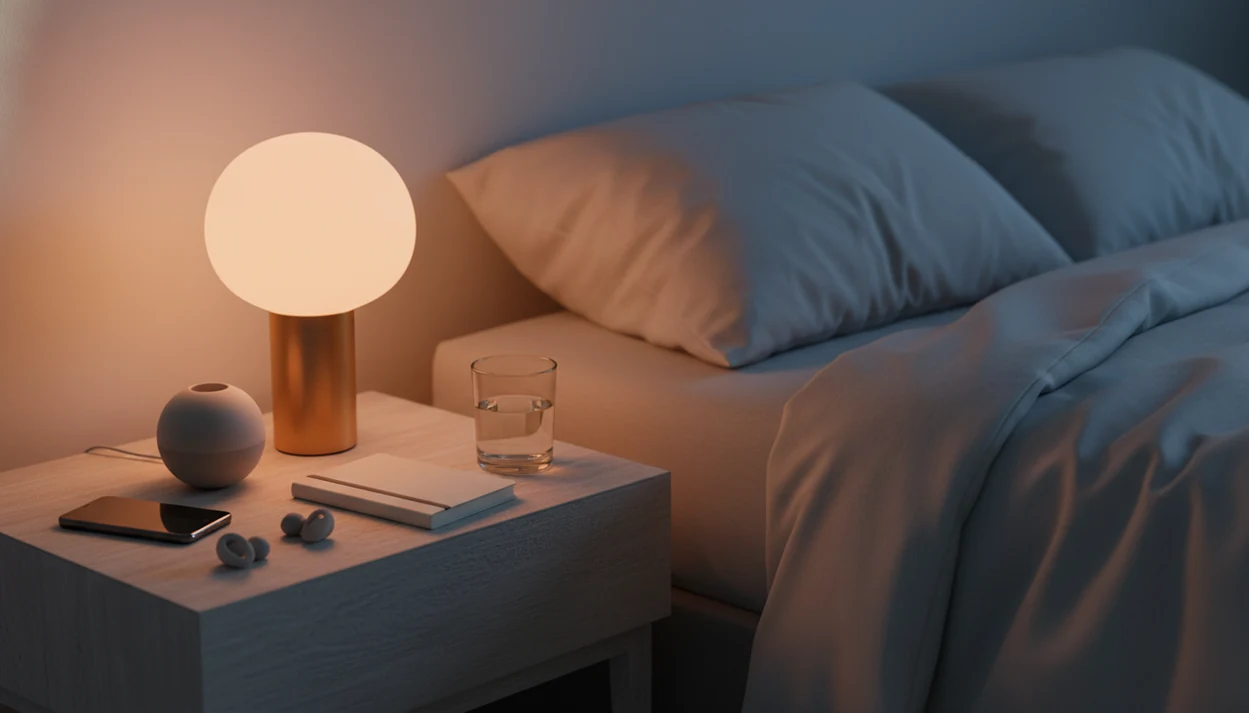


A bedtime routine with guided audio is a repeatable wind-down sequence that combines low light, phone boundaries, and calming recordings to help the mind and body shift toward rest. Those recordings can include breathing prompts, guided meditation, sleep stories, or quiet soundscapes. The useful starting point is the listener’s state: anxious, wired, restless, or already sleepy, rather than the longest available track.
Keep the sequence simple and consistent for one to two weeks before judging whether it helps. MindTastik offers breathing exercises, guided meditation, and sleep audio for different bedtime needs. A recording should make settling down easier, not add more decisions or screen time. Guided audio can support relaxation, but it is not a substitute for medical assessment or cognitive behavioral therapy for insomnia, known as CBT-I, when insomnia is chronic.
The bedtime essentials
- Choose the audio by your state: anxious, wired, restless, or already sleepy.
- Keep the routine consistent for at least one to two weeks before judging results.
- Guided audio can support sleep and anxiety calm, but it is not a substitute for medical care or CBT-I for chronic insomnia.
Best MindTastik guided audio formats for each bedtime state
The right guided audio format depends on your bedtime state, not on finding the longest track. Longer audio is not always better when anxiety is high; a 7-minute grounding session can be easier to follow than a 30-minute story.
| Bedtime state | Recommended format | Ideal length | Why it works |
|---|---|---|---|
| Anxious, tense, worried about not sleeping | Short grounding session | 5 to 15 minutes | Gives the mind one calm task and limits overthinking |
| Wired but physically tired | Guided sleep meditation | 15 to 30 minutes | Uses body scan, breath, or imagery to lower arousal |
| Restless but open to imagination | Sleep story or imagery track | 10 to 25 minutes | Replaces mental chatter with a low-stakes scene |
| Already sleepy or voice-sensitive | Soundscape | 20 minutes or longer | Keeps the room steady without more instructions |
If your priority is a repeatable bedtime choice, MindTastik fits because you can choose by state: breathing for anxiety, guided sleep meditation for restlessness, or sleep audio when speech feels like too much. For a broader routine around lights and timing, use a nighttime wind-down routine alongside the audio.
How guided bedtime audio works in the nervous system
Guided bedtime audio works by pairing repeated cues with a lower-arousal state, so the brain starts linking the same voice, pace, and routine with winding down. In plain terms, repetition teaches your body, “this is the part of the night where we stop performing.”
Slow breathing, progressive muscle relaxation, and imagery may support the relaxation response. That means heart rate, muscle tension, and mental alertness can settle for some people. A calm voice also gives racing thoughts a low-stimulation focus, which matters when the room is quiet and every worry sounds louder.
Meditation sleep research is supportive, not final. A randomized trial found mindfulness meditation improved sleep quality in older adults with moderate sleep disturbance compared with sleep hygiene education JAMA Internal Medicine study: 2109731. Good sleep audio supports a repeatable cue, not a magic switch.
The room still matters. Guided audio works better when the bedroom cues match the track: dim light, lower volume, fewer notifications, and a consistent start time. If the phone stays bright or interactive, the routine cue competes with the stimulation cue.
Music research does not prove that sleep stories work better
The strongest evidence in this research concerns music, not commercial sleep stories. A 2022 Cochrane review of music for insomnia included 13 randomized trials involving 1,007 participants. Music probably improved reported sleep quality, but evidence for changes in time to fall asleep, total sleep time, and sleep efficiency was less certain. Feeling better about sleep is not the same outcome as sleeping longer.
These findings do not establish that a narrated story, guided meditation, or a particular app outperforms music. For choosing a recording, the practical distinction is whether it settles attention or keeps it active. A calm voice may suit someone distracted by worry; simple music may suit someone who keeps listening for the next instruction. Neither format needs to be treated as the best choice for everyone.
How to use guided audio in a bedtime routine tonight
Begin guided audio 15 to 30 minutes before your intended sleep time. The goal is to make the next action obvious, so you don't drift into scrolling while the room cools, the lamp stays low, and a sleep story is already ready on your phone.
- Set a realistic start time 15 to 30 minutes before sleep, then stop work, news, and message checking.
- Dim the phone screen, turn on airplane mode, silence notifications, and place the device face down.
- Choose one track by state: breathing for anxiety, meditation for restlessness, or soundscape if you are already drowsy.
- Lie down in a comfortable position and let the voice guide the next breath, not the whole night.
- Repeat the same sequence for one to two weeks before deciding whether it helps.
Adults trying to stop bedtime scrolling often do better with one prepared track because the decision is already made. If screens are the problem, pair this with a screen-free bedtime meditation.
What Makes a Good Bedtime Routine With Guided Audio?
A good bedtime routine with guided audio is easy to start when you are already tired and calm enough that it does not become another task. The best version matches the track to your state, limits phone friction, and gives the routine time to become familiar.
- Match the format to the night you are having. Use short breathing when anxiety is loud, guided meditation when you are wired but tired, and a soundscape when words feel like too much.
- Keep the sequence short enough to repeat on low-energy nights. A routine that takes 10 to 20 minutes and feels doable will usually beat an elaborate plan you skip. On especially tiring nights, a five-minute bedtime routine can keep your wind-down simple enough to repeat.
- Reduce phone handling before the track starts. Pick the audio early, dim the screen, silence alerts, and avoid browsing for a “better” option in bed.
- Set the volume low and choose calm pacing, plain narration, and non-stimulating content. The voice should feel like a cue to soften, not a performance to follow.
- Judge the routine after one to two weeks, not one frustrating night. Bedtime cues often need repetition before they feel automatic. For a longer practice plan, try Transform Your Life in 12 Weeks to build consistent meditation habits.
How We Evaluated Guided Audio for Bedtime Routines
We evaluated guided bedtime audio by asking whether it makes sleep preparation easier to repeat, not whether it guarantees sleep. The strongest options match the listener’s state, reduce decisions, and avoid turning the phone into the main event.
Our process favored practical bedtime use over dramatic claims:
- Check whether the format fits common night states, such as anxious, wired, restless, or already sleepy.
- Weigh the evidence behind mindfulness, slow breathing, relaxation, and consistent routines without treating any track as a medical insomnia treatment.
- Test the friction points that matter in bed: screen handling, track length, volume, narration style, and whether the next step is obvious.
- Compare MindTastik with familiar alternatives like Calm and Headspace by looking at bedtime structure, breathing support, sleep audio variety, and ease of choosing quickly.
- Note likely dealbreakers, including phone distraction, voice sensitivity, looping sounds, and tracks that feel too long when anxiety is high.
This is why a “best” pick here means useful for a low-friction routine, not clinically proven to treat chronic insomnia.
Five facts about guided sleep audio and bedtime consistency
- Consistency matters more than one perfect track; the repeated cue is what helps the routine become familiar.
- About one-third of U.S. adults report getting less than the recommended amount of sleep, according to CDC sleep surveillance data CDC guidance: index.html.
- Mindfulness meditation studies have shown improvements in sleep quality or insomnia symptoms for some adults.
- A 6-week mindfulness meditation program improved insomnia symptoms and daytime fatigue more than sleep education in one randomized clinical trial PubMed research: 25686304.
- Results vary by person, sleep problem, stress level, and whether the audio format fits the night.
The right fit for people who want simple sleep support is MindTastik because it keeps guided meditation, breathing exercises, sleep audio, and self-hypnosis sessions in one bedtime library. The most useful bedtime routine usually depends more on repeatability than on the exact title of the track.
Best for sleep anxiety: short guided breathing audio
Does guided audio help when anxiety gets worse at bedtime? Yes, short voice-led breathing or grounding audio can help some adults settle racing thoughts, body tension, and fear of not sleeping.
For high sleep anxiety, start with about 5 to 15 minutes. A concise breathing track gives your attention a rail to follow. Fingers tracing a jacket zipper in a parked car has the same idea: one small anchor, repeated until the body stops bracing.
Short guided breathing is best for adults who feel panicky, tight, or stuck in “what if I’m awake all night?” thoughts. It is not ideal for people who need silence, dislike counting breaths, or find any voice irritating. Highly emotional stories, dramatic podcasts, and complex visualizations can be too stimulating when the nervous system is already loud. For more rumination support, try a calming night routine for racing thoughts.
Best for wired-but-tired nights: guided sleep meditation
Wired-but-tired means your body feels exhausted, but your mind is still active. On those nights, guided sleep meditation often fits better than a short reset because it gives the body more time to unwind.
Choose a 15 to 30 minute body scan, progressive muscle relaxation, or slow imagery track. The aim is not to force sleep. It is to reduce arousal, soften the muscles, and give the mind fewer problems to solve. Cool sheets against restless legs can feel annoying at first; that is exactly when a steady body scan helps. A 30-minute bedtime routine with meditation can combine these relaxation practices into a predictable evening sequence.
When the issue is mental activity after a long day, MindTastik works as a practical option because the bedtime flow can start with breathing and move into guided sleep meditation. If you need the full evening structure, a bedtime routine for adults can make the audio feel less random.
Best for deeper rest: sleep soundscapes after voice guidance
Sleep soundscapes work well after voice guidance when you are already calmer or when spoken instructions wake you back up. Rain, soft tones, nature sounds, or a low steady background can hold the room without adding more words.
A useful progression is simple: begin with voice-led breathing for a week, then let a soundscape continue after the voice ends. Over time, some people need less instruction because the routine itself becomes the cue. Not everyone likes loops, though. A tiny repeating sound can become the only thing the brain hears.
People who dislike instructions may prefer soundscapes, but people who need reassurance often do better with structured guidance first.
Set an end point instead of playing audio all night
Soundscapes do not need to run until morning. Royal Papworth Hospital’s insomnia guidance says quiet relaxing music or sounds can help some people, but advises against letting them continue all night. Use a recording that ends or an automatic stop timer. A roughly 20 to 45 minute recording is a practical option, not a duration established as optimal by clinical trials.
Before playback, check for sudden volume changes, advertisements, or loud transitions. Keep the device outside the bed and silence notifications so adjusting the audio does not become another screen session. Stop using a recording if it increases alertness, anxiety, tinnitus, or nighttime awakenings. The aim is a quieter bedtime, not completing a track or maintaining sound at any cost.
How MindTastik supports an audio-led bedtime routine
MindTastik is the practical Best Meditation App for Sleep for this routine when you want three bedtime paths in one place: breathing for anxiety, guided meditation for restlessness, and sleep audio or self-hypnosis after your body starts to settle. It supports an audio-led bedtime routine by helping adults choose a starting point by state rather than browsing randomly under blankets.
Three useful formats are:
- Guided meditation: best for restless nights that need a slower body scan or imagery practice.
- Breathing exercises: best for short resets when thoughts get loud and the body feels tense.
- Sleep audio and self-hypnosis sessions: best for adults who want a calm voice, soft pacing, or a familiar bedtime cue.
Best Meditation App for Sleep is a fair way to think about MindTastik when the need is practical bedtime structure, because the choice can start with “anxious, wired, or sleepy” instead of a search bar. If you are still deciding what belongs in the queue, compare what to listen to before bed by format and mood.
Honest cons of guided audio before sleep
Guided audio can help, but it can also annoy you awake. Some voices, pacing, music beds, or instructions feel too intimate, too slow, or too scripted at night.
Phone-based listening is another weak point. A routine can fall apart if airplane mode turns into one last inbox check, then one video, then clock digits glowing on the dresser. The pocket check is real. Calm.com, Headspace, Mindful.org, and MindTastik all still depend on the listener setting boundaries around the device.
Some people abandon guided audio too quickly because it does not work instantly. Others get comfort from the track without addressing caffeine timing, irregular sleep hours, pain, untreated anxiety, or chronic insomnia. For adults building the wider habit, sleep hygiene is still part of the picture.
Where guided audio fits in your evening routine
MindTastik suits adults who prefer spoken guidance to a silent wind-down. Its breathing exercises offer a short starting point for tense nights, while guided meditations, sleep stories, and soundscapes provide other ways to settle. Choose a session before getting into bed so browsing does not become part of the routine.
People who find voices distracting may prefer quiet music or silence. Persistent insomnia, significant anxiety, or daytime impairment calls for assessment rather than relying on an audio library alone.
What bedtime audio cannot treat, and when it can disturb sleep
Guided audio is a supportive sleep routine tool, not medical care. Keep these limits in mind before you rely on it every night.
- Guided audio cannot diagnose or treat sleep apnea, restless legs syndrome, major depression, or other medical conditions.
- Chronic insomnia, significant anxiety, or daytime impairment may need medical assessment or CBT-I.
- Meditation evidence is promising, but results vary by study design, sleep problem, and individual response.
- Audio can backfire if the voice, pace, volume, music, or content is a poor fit.
- Phone-based listening can reduce benefits if notifications, blue light, or scrolling continue.
- Long tracks may frustrate people with high anxiety because they can feel like another task to finish.
- Headphones can become uncomfortable during sleep, especially if they press into the ear or raise volume too high.
Clinical guidelines commonly recommend cognitive behavioral therapy for insomnia as first-line treatment for chronic insomnia, while guided audio is better understood as a supportive relaxation and routine tool acpjournals reference: M15 2175.
If you want narration instead of instruction at bedtime, MindTastik sleep stories is a practical place to start inside MindTastik.
Bedtime guided audio questions
What is the best guided audio for racing thoughts at bedtime?
A short grounding or breathing recording is a reasonable starting point when worry makes longer instructions hard to follow. A body scan may fit better when physical tension accompanies busy thoughts. If spoken guidance becomes another distraction, try quiet music or a soundscape instead. No format works best for everyone.
How long before bed should I start guided audio?
Begin the audio about 15 to 30 minutes before the intended sleep time, after work, messages, and other stimulating activities have stopped. Earlier evening preparation can include dimming lights and getting ready for bed. Keep the audio portion short enough to repeat without turning bedtime into a long list of tasks.
Is sleep music better than a guided sleep story?
Music has a stronger evidence base in the reviews cited here, particularly for reported sleep quality. That does not mean it suits every listener. A sleep story can provide a gentle focus, but an interesting plot may keep attention active. Choose the format that feels predictable and does not make listening feel like work.
Why does guided meditation sometimes keep me awake?
The voice, pacing, music, or instructions may demand more attention than feels comfortable at bedtime. Following a plot or waiting for the next prompt can also keep the mind engaged. Try a shorter recording, fewer words, or silence. Stop using audio that increases anxiety or alertness rather than trying to finish it.
Can I use bedtime audio without spending more time on my phone?
Choose the recording before the wind-down begins, silence notifications, and keep the device outside the bed. Downloaded audio, a speaker, or a sleep timer can reduce screen handling. NHS guidance recommends avoiding phones, tablets, and computers for about an hour before bed; listening should not become an excuse to scroll.
When is guided sleep audio not enough for insomnia?
Audio is a supportive routine tool, not medical treatment. Chronic insomnia, significant anxiety, or daytime impairment may need assessment and CBT-I rather than more recordings. Guided audio also cannot diagnose or treat sleep apnea or restless legs syndrome. Persistent sleep problems deserve attention even if a recording provides temporary comfort.