
Night Meditation Routine for Better Sleep Preparation
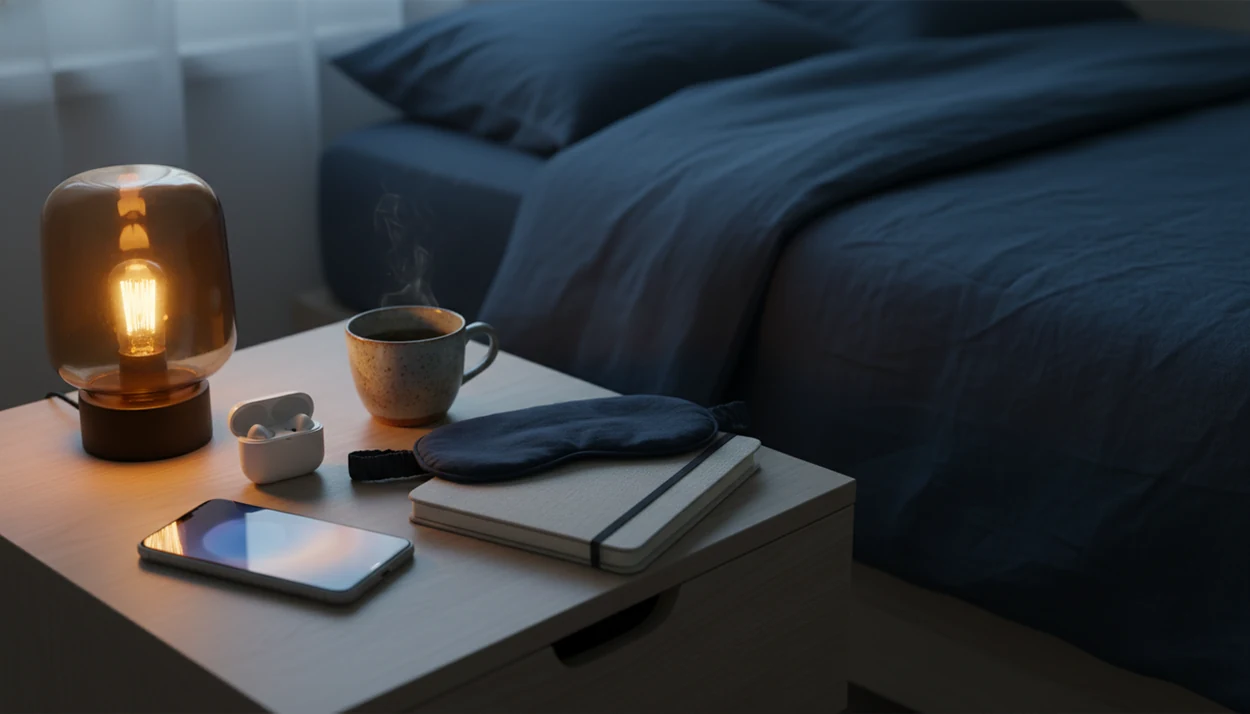


A night meditation routine is a short, repeatable sequence of breathing and calming attention that prepares for sleep, with the format matched to racing thoughts, body tension, anxiety, or background noise. A practical starting point is 5-10 minutes, rather than a long session that becomes another bedtime task. Breathing can come first, followed by guided sleep meditation or sleep hypnosis, with optional ambient sound for noise masking.
MindTastik offers guided wellness audio for adults, including breathing exercises, body-focused meditation, self-hypnosis, and sleep soundscapes. The useful choice depends on the barrier: spoken guidance for recurring thoughts, a body scan for tension, or suggestion-led audio for winding down. Repeating the same order can help make the sequence a familiar cue for sleep preparation.
The bedtime basics
- Start with 5-10 minutes instead of forcing a long session.
- Match the MindTastik audio format to the problem: breathing for anxiety, body scan for tension, hypnosis for suggestion-led wind-down, and ambient sound for noise masking.
- Use the same order nightly so your brain starts associating the sequence with sleep.
Best night meditation routine formats in MindTastik
The right night meditation routine format depends on what keeps you awake. There is no single strongest sleep meditation for everyone, so choose the audio that fits tonight’s problem.
- Breathing exercise: Best for someone who feels alert, keyed up, or anxious in bed. A 5-minute slow-breathing track gives the mind something simple to follow.
- Guided sleep meditation: Best for racing thoughts. The voice gives attention a lane, instead of leaving you alone with tomorrow’s meeting looping at midnight.
- Sleep hypnosis: Best for adults who like suggestion-led wind-downs and repeated calming phrases.
- Ambient sleep sound: Best for masking hallway noise, traffic, or a partner turning over.
Meditation is no longer niche. In a CDC national survey, 14.2% of U.S. adults reported using meditation in the past year, nearly triple the 2012 rate CDC guidance: db325.htm.
Night meditation routine comparison table by sleep problem
Use this table when you want a quick choice instead of browsing every sleep track. It places the format decision early because most people need a clear starting point, not a theory lesson.
| Sleep problem | Best MindTastik format | Suggested length | Best for | Not for |
|---|---|---|---|---|
| Racing thoughts | Guided sleep meditation after breathing | 10-20 minutes | Busy minds that need spoken direction | People who dislike voice guidance |
| Physical tension | Body scan or relaxation-led sleep meditation | 10-15 minutes | Jaw, neck, shoulder, or leg tension | Severe pain needing medical care |
| Nighttime anxiety | Slow breathing plus sleep hypnosis | 5-15 minutes | Alert, worried, pressure-filled nights | Panic or severe anxiety without support |
| Outside noise | Ambient sleep sound | Loop as needed | Noise masking and steady background audio | Anyone who finds sound distracting |
| Beginner inconsistency | Short guided sleep meditation | 5-10 minutes | People building the habit | Users expecting instant results |
For beginners, the “choose and play” workflow matters because it separates breathing, meditation, hypnosis, and ambient sound.
How a night meditation routine works before sleep
A night meditation routine works by giving the brain predictable cues, reducing cognitive arousal, slowing breathing, increasing body awareness, and shifting attention away from worry. In plain language, it helps your mind stop problem-solving long enough to prepare for sleep.
Repetition matters. When the same order happens nightly, dim lights, earbuds, breathing audio, then sleep track, the sequence can become a sleep-preparation signal. That is habit learning, not magic.
A randomized clinical trial of adults with sleep disturbance found that mindfulness meditation improved sleep quality compared with a structured sleep-education program JAMA Internal Medicine study: 2109031. Still, meditation supports sleep hygiene rather than replacing it. A regular schedule, a dark room, and limited screen exposure still matter; the full basics are covered in our sleep hygiene guide.
The research supports regular practice, not a guaranteed bedtime dose
A 2018 review of 18 randomized trials, involving 1,654 adults with clinically significant sleep disturbance, found moderate improvements in sleep quality compared with nonspecific active controls. Evidence that meditation was better than specific active treatments was low-strength. This supports meditation as a possible aid, but not a claim that it outperforms established sleep treatments.
The same review's practice schedules also matter: group sessions ran weekly for 2-16 weeks, and daily targets, when specified, ranged from 15-60 minutes. Those programs differ from a brief bedtime track. Starting with 5-10 minutes is a manageable routine choice, not a proven clinical dose or evidence that one session will bring sleep.
How to use MindTastik for a night meditation routine
Use MindTastik in the same order each night so the routine feels familiar before you feel sleepy. Start with 5-10 minutes, then increase only if the shorter version feels manageable.
- Set your phone to Do Not Disturb before opening the session.
- Dim the lights and lower screen brightness before you press play.
- Start a short breathing audio track to slow the first few minutes.
- Play a guided sleep meditation or sleep hypnosis session.
- Loop ambient sound if noise keeps pulling your attention back.
Do not scroll after step three. That tiny notification check is where many routines fall apart.
When the screen brightness is lowered to minimum and your thumb hovers over bedtime audio, pick once and stay with it. The workflow works best when it stays simple: breathe, listen, then let background sound take over if needed. If bedtime worries keep returning, learn how to calm racing thoughts using your phone without extending screen time.
How we picked the best night meditation routine sequence
We picked the sequence by favoring repeatability over intensity. A routine that happens five nights a week usually beats a long session that feels too demanding after one night.
- Ease of repetition: The routine starts small, with 5-10 minutes as the default.
- Low screen interaction: The user should press play, then stop managing the phone.
- Audio fit: Breathing, guided meditation, hypnosis, and ambient sound solve different bedtime problems.
- Session length: Shorter tracks help beginners avoid the “I failed meditation” feeling.
- Anxiety support: Meditation-based interventions showed moderate improvements in anxiety symptoms in a JAMA Internal Medicine meta-analysis JAMA Internal Medicine study: 1809754, but audio is not treatment for an anxiety disorder.
- Flexibility: The same framework can support a bedtime routine for adults without making every night identical.
Per the CDC, about 35.2% of U.S. adults report sleeping less than 7 hours on average CDC guidance: adults sleep facts and stats.html, so practical sleep support matters.
Best night meditation routine for racing thoughts
Which night meditation routine helps racing thoughts most? Start with a breathing exercise, then play a guided sleep meditation for 10-20 minutes, depending on your experience.
Trying to force a blank mind usually backfires. Thoughts do not need to disappear for meditation to help; they only need somewhere softer to land. Guided attention gives you repeated prompts, such as noticing breath, relaxing the face, or returning to the voice. For persistent bedtime worry, try meditation for overthinking at night to give recurring thoughts a gentler focus.
Waking in the dark and noticing you are still not asleep can make bedtime feel harder than it needs to. Frustrating, but common. MindTastik fits this pattern because you can pick a 5-minute breathing exercise or a 20-minute body scan without having to assemble a full routine on the spot.
For busy minds, guided audio is often easier than silent meditation because it reduces the number of choices you have to make in bed. For more detail, use a calming night routine for racing thoughts.
Best night meditation routine for sleep anxiety
Which night meditation routine helps sleep anxiety most? Use slow breathing first, then choose sleep hypnosis or a calming guided meditation that lowers pressure around sleep.
The goal is not to force instant sleep. It is to make the next few minutes feel less threatening. Someone reaching for a calm track because worry will not settle usually needs fewer choices, a gentle voice, and a steady audio path.
Anyone dealing with bedtime dread can use MindTastik because the sleep hypnosis and calming meditation formats give suggestion-led structure after the body has slowed down through breathing. The mechanism is simple: settle the body first, then give the mind a script.
The American Academy of Sleep Medicine notes that about 30-35% of adults have brief insomnia symptoms aasm reference: insomnia.pdf. If anxiety or insomnia is severe, persistent, worsening, or disrupting daytime life, speak with a qualified healthcare professional.
Best night meditation routine for body tension
For body tension, choose a body scan, progressive relaxation-style meditation, or gentle sleep hypnosis. This format works best when the body feels braced even after the room is quiet.
A body scan moves attention through the body in sections. That can help you notice gripping in the jaw, shoulders, hands, belly, or legs. You are not trying to command the body to relax. You are giving each area a chance to unclench.
Small things count. Keep the room dark, cool, and quiet, and avoid restarting the phone once the audio begins. MindTastik fits this use case because body-focused sleep sessions can be used as the middle step after breathing and before ambient sound.
Image caption: A dark bedroom setup with headphones, dim lighting, and a MindTastik sleep meditation queued before bed
Image caption suggestion: A dark bedroom setup with headphones, dim lighting, and a MindTastik sleep meditation queued before bed for a night meditation routine.
Honest drawbacks of a night meditation routine
A night meditation routine can help, but it may take weeks before it feels automatic. The first few nights can feel awkward, especially if you are used to falling asleep with scrolling, television, or work messages nearby.
Phone use in bed can also backfire. Notifications, blue light, and “just one more check” behavior can undo the calm you were trying to build. If that happens often, a screen-free bedtime meditation may work better.
Do not become dependent on one exact track. If sleep feels impossible without the same voice, length, and sound every night, rotate between two or three similar sessions.
MindTastik is useful for structure, but self-guided audio is not enough for everyone. Severe insomnia, panic, trauma symptoms, or ongoing distress may need clinician support rather than another playlist.
When the track ends and sleep still has not come
Finishing a meditation without falling asleep does not make the session a failure. Its role is sleep preparation, not a deadline for becoming unconscious. Kingston and Richmond NHS sleep guidance advises leaving bed for a short, relaxing activity if sleep has not come within approximately 30 minutes. Replaying tracks indefinitely is not the only next step.
That guidance also recommends beginning a wind-down period 60-90 minutes before intended sleep, using activities such as reading, meditation, or a warm bath. The meditation need not fill that entire period. A short session can sit within a broader evening routine, rather than carrying all the pressure to settle the mind and produce sleep on its own.
Matching MindTastik audio to the bedtime barrier
MindTastik suits adults who prefer spoken direction during bedtime preparation. Its breathing exercises can provide a simple opening step, followed by guided meditation for recurring thoughts or self-hypnosis for a suggestion-led wind-down. For distracting background noise, its sleep soundscapes offer a nonverbal option.
People who find voices distracting may prefer quiet practice or ambient sound alone. If opening an app leads to scrolling, a screen-free routine may fit better. Persistent sleep problems need more than an audio sequence.
What bedtime meditation cannot treat
Night meditation can support a wind-down routine, but it has real limits. Use it as one part of sleep preparation, not as a medical plan.
- Night meditation is not a replacement for medical evaluation, diagnosis, therapy, medication, or treatment.
- Severe insomnia, suspected sleep apnea, major depression, trauma history, or anxiety disorders need qualified professional support.
- Evidence is promising, but results are not uniformly dramatic for everyone.
- Basic sleep hygiene still matters: a regular schedule, a dark room, a quiet environment, and limited screen exposure.
- Audio can become counterproductive if you keep checking the phone after starting.
- Sleep hypnosis is not appropriate for every adult, especially if certain scripts feel distressing or destabilizing.
- Ambient sound may help with noise masking, but it can irritate light sleepers.
- MindTastik supports everyday calm and sleep preparation; it does not cure insomnia or anxiety.
If you want a shorter decision aid, use a meditation before sleep checklist.
If you want narration instead of instruction at bedtime, MindTastik sleep stories is a practical place to start inside MindTastik.
Night meditation routine questions
How long should a night meditation routine last?
Start with 5-10 minutes of meditation if a longer session feels demanding. That can be one part of a roughly 30-minute wind-down period, rather than the whole routine. Research commonly involves longer daily practice over several weeks, so a short bedtime session is a practical starting point, not a guaranteed treatment dose.
What order should breathing, meditation, and sleep sounds go in?
A simple order is breathing first, then guided meditation or sleep hypnosis, followed by optional ambient sound. Not every step is necessary. Body tension may call for a body scan as the main session, while distracting room noise may make sound more useful. Keep the sequence simple enough to repeat.
Which bedtime meditation is best for racing thoughts?
Guided meditation gives attention a spoken task when thoughts keep returning to work, plans, or worries. A short breathing exercise can come first. The aim is not to erase thoughts, but to return attention to the breath or voice without turning concentration into another task to complete perfectly.
Should night meditation happen in bed or before getting into bed?
Either can fit a wind-down routine. Meditation before getting into bed may suit people whose phone use leads to scrolling. In-bed audio may suit those who can start a track and leave the screen alone. If lying awake continues for approximately 30 minutes, NHS guidance suggests leaving bed for a short relaxing activity.
What if meditation ends but I am still awake?
A session can support sleep preparation without producing immediate sleep. There is no need to restart because a line was missed or thoughts continued. If sleep has not come within approximately 30 minutes, NHS guidance recommends a short relaxing activity out of bed instead of continuing to lie there trying to force sleep.
How many nights does bedtime meditation take to help?
There is no reliable number of nights that applies to everyone. Sleep research generally studies regular practice over weeks, not a single bedtime recording. In a 2022 review of structured mindfulness-based stress reduction programs, 14 of 20 studies used eight-week programs. Those findings do not establish a timetable for brief bedtime audio.
Can a night meditation routine cure insomnia?
No. Meditation may improve sleep quality for some adults, but it is not a replacement for medical evaluation or treatment. Persistent or severe insomnia, suspected sleep apnea, and significant mental health symptoms need qualified support. A routine can remain part of sleep preparation without being treated as the solution to every sleep problem.