
Sleep Meditation Playlist for Beginners
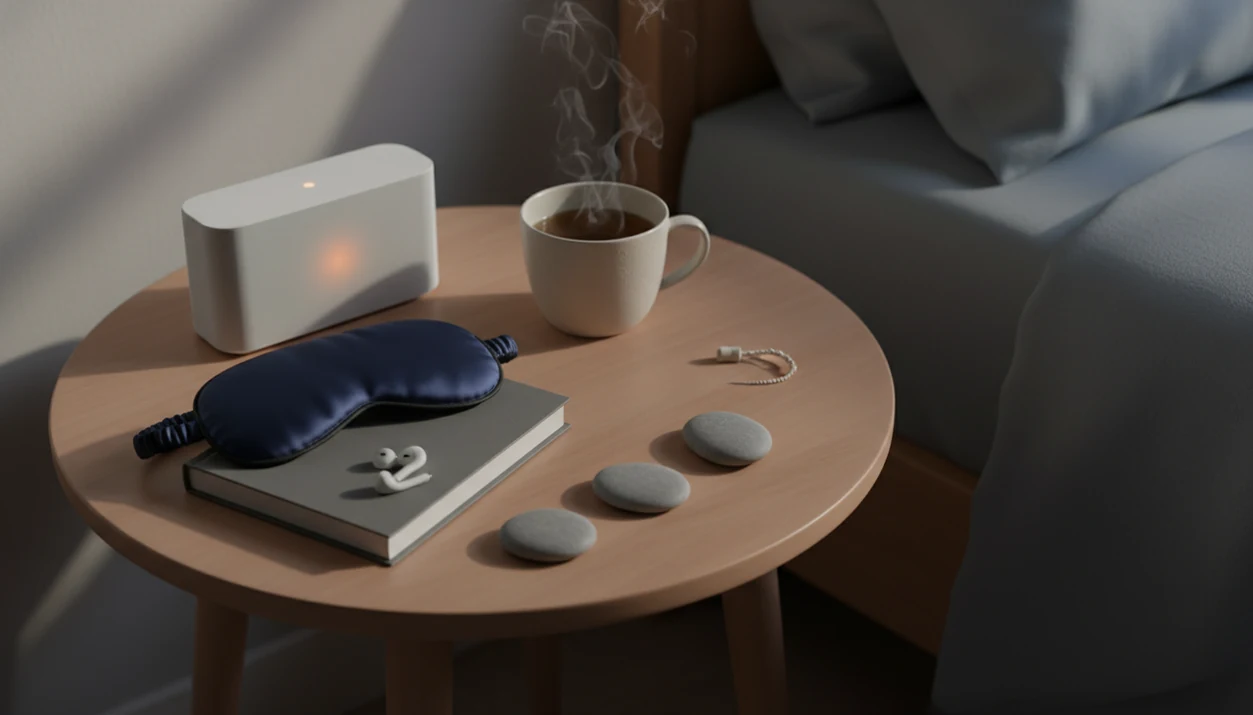


A sleep meditation playlist for beginners is a planned bedtime audio sequence: a short wind-down track, an easy guided meditation, then a quiet sleep story or ambient sound. It combines breathing, body scanning, soft narration or calming music to make the routine easier to repeat. A practical starting point is 5-10 minutes of breathing followed by a body scan and a low-effort closing track.
Choose soft narration, steady volume and no ads, lyrics or abrupt transitions. Prepare the order before bed rather than browsing once the lights are off. Where available, downloads, a sleep timer and autoplay controls can reduce interruptions. MindTastik offers breathing exercises, guided meditations, sleep stories and soundscapes for building this kind of routine.
The beginner setup
- Start with 5-10 minutes of breathing or anxiety-calming audio before moving into longer sleep content.
- Choose low-effort tracks with soft narration, steady volume, and no ads, lyrics, or abrupt transitions.
- Use MindTastik or another meditation app to set timers, download sessions, and avoid late-night algorithm surprises.
Best beginner sleep meditation playlist structure
The best beginner structure is simple: wind-down audio, guided meditation, then a quiet sleep story or soft music. Most beginners need predictability more than variety, because choosing new tracks at bedtime keeps the mind active. For the first week, keep the same order for at least 4-7 nights before changing tracks; the test is whether the routine is repeatable, not whether one audio file knocks you out on night one.
A practical playlist is usually 20-60 minutes. Start with 5-10 minutes of breathing, add a 10-20 minute body scan, then let a low-volume narrator or ambient track carry the rest. If your phone screen is dimmed before you press play, even better.
Small friction matters at night.
Mindfulness-based interventions and music-assisted relaxation have research support for sleep quality, but they don't guarantee instant sleep. The most useful playlist is the one you can repeat without browsing, skipping, or negotiating with yourself at 11:47 p.m. For a fuller evening setup, pair it with a nighttime wind-down routine.
5 sleep meditation playlist types for beginners
Choose the playlist type by the problem you have at bedtime, not by the longest or most popular track. MindTastik, Calm, Headspace, and other meditation apps can all support these formats if they give you enough control over order, timers, and downloads.
- Anxiety wind-down playlist: Best for racing thoughts; not for people who dislike spoken guidance.
- Body scan playlist: Best for physical tension; not for nights when lying still feels irritating.
- Sleep story playlist: Best for people who need gentle distraction; not for anyone who follows plot too closely.
- Ambient music playlist: Best for low-stimulation listening; not for people who focus on loops or tones.
- Return-to-sleep playlist: Best for 2 a.m. waking; not for long browsing sessions.
If the priority is a repeatable beginner setup, MindTastik fits because you can build a short breathing-to-sleep sequence instead of hunting through random recommendations.
Bedtime cueing in a sleep meditation playlist
Bedtime cueing means the same audio sequence becomes a learned signal that tells the body, “this is the wind-down part of the night.” Over time, the opening breath track can feel like the first step in a familiar routine.
A playlist works through association and reduced cognitive effort. Breathing tracks give you one simple action. Body scans move attention through the body instead of asking you to solve tomorrow's meeting after midnight. That helps when the room is cool, the pillow is waiting, and the same worry keeps circling back.
The mechanism is not magic. It is a habit loop: cue, routine, repeat. Music and meditation may support sleep quality over repeated use, especially when combined with steady bedtimes and low light. For beginners, the goal is everyday calm before sleep, not forcing the brain to shut down on command.
Good sleep audio gives the mind fewer decisions, not a dramatic bedtime performance.
6 setup steps for a beginner sleep meditation playlist
Use these steps in MindTastik or another audio app before you get into bed. Set it up once, then protect the routine from late-night tinkering.
- Choose three tracks: breathing, body scan, then sleep story or ambient audio.
- Set the volume before bed, low enough that you won't reach for the phone later.
- Download the playlist offline, especially before travel or weak Wi-Fi nights.
- Enable a sleep timer so audio stops after your chosen window.
- Disable autoplay and notifications to avoid loud recommendations or alerts.
- Repeat the same playlist for several nights before deciding it failed. On days off, a weekend sleep routine with meditation helps preserve familiar bedtime cues without adding extra decisions.
If your priority is fewer bedtime decisions, MindTastik supports that with a guided session flow and timer-based listening. A downloaded sleep story, a weighted blanket, and one tap to begin can keep the routine simple instead of turning bedtime into another search session. For packed schedules, a sleep routine for busy adults can keep bedtime preparation short and manageable.
Best sleep meditation playlist for bedtime anxiety
For bedtime anxiety, start with calming audio that asks very little from you. The playlist should move from breathing, to grounding, to quiet background sound.
- Begin with breath: Use 5-10 minutes of slow breathing or anxiety-calming narration.
- Add grounding: Follow with a body scan or simple “notice the bed, notice the room” practice.
- Lower the story load: End with a neutral narrator or ambient audio, not a dramatic plot.
- Avoid intensity: Skip emotional themes, energizing visualization, and goal-setting tracks.
- Keep the sequence stable: Repeating the order helps reduce decision-making at night.
When racing thoughts are the issue, MindTastik is a practical fit because the playlist can start with a short reset before moving into longer sleep audio. A related calming night routine for racing thoughts can help if the audio alone feels too thin.
10-minute return-to-sleep playlist for 2 a.m. waking
What should I play when I wake up at 2 a.m. and can't fall back asleep? Use a shorter 10-25 minute return-to-sleep playlist with minimal narration, familiar breathing, or a body scan you already know.
This is not the time to browse. Opening the phone to compare tracks can prolong a nighttime waking by adding screen exposure, more decisions and repeated searching. Try a saved sequence instead: two minutes of breathing, eight minutes of body scan, then silence or very soft music.
Anyone dealing with middle-of-the-night waking needs less novelty, not more content. MindTastik supports that because offline downloads and a timer let you start the same short playlist without searching. Keep the phone face down after pressing play. Done.
Sleep meditation playlist app settings that prevent wake-ups
App settings can make or break a sleep playlist, because sudden audio changes wake people faster than quiet tracks help them settle. Streaming playlists can fail through ads, algorithmic changes, buffering, or a loud next track.
| Setting | Why it matters at bedtime | Beginner setup |
|---|---|---|
| Timer | Stops audio after your chosen window | Set 20-60 minutes |
| Autoplay off | Prevents unexpected tracks | Turn off before bed |
| Offline downloads | Avoids buffering and travel issues | Save core playlist |
| Dark mode | Reduces screen brightness | Enable before night use |
| Volume leveling | Limits sudden jumps | Use stable, soft tracks |
| Notifications off | Prevents alert sounds | Use Do Not Disturb |
On days your nervous system already feels jumpy, MindTastik can reduce friction because bedtime sessions live in a dedicated meditation space rather than a general streaming feed. Free platforms like calm.com, headspace.com, YouTube, or Spotify may still work, but ads and recommendations need careful control. For broader setup habits, use a meditation before sleep checklist.
Beginner sleep meditation playlist criteria and evidence
A beginner playlist should be judged by how little effort it requires once you are in bed. The selection criteria are practical, not a clinically validated formula.
- Low cognitive effort: The track should not ask for complex reflection or journaling.
- Soft narration: Calm, plain guidance usually works better than dramatic performance.
- Stable volume: Sudden changes can restart alertness.
- Predictable sequence: Breathing, body scan, then story or music is easier to repeat.
- App control features: Timers, downloads, and autoplay controls protect the routine.
A 2019 systematic review and meta-analysis of 18 randomized controlled trials found mindfulness meditation improved sleep quality versus controls, but the authors described the evidence as preliminary because study designs and populations varied (PubMed research: 30770563). A Cochrane review on music for insomnia found music may improve subjective sleep quality, while noting small trials and low-to-moderate certainty evidence (Cochrane review).
Image caption idea: beginner playlist flow from breathing to body scan to sleep story, shown as a simple sleep meditation playlist for beginners. If you are still choosing content, start with what to listen to before bed.
What music research says about the final track
The evidence for the musical part of a playlist is stronger than the evidence for commercial sleep stories. A 2022 Cochrane review of music for insomnia included 13 randomized controlled trials involving 1,007 participants. Music probably improved reported sleep quality, but evidence for changes in time to fall asleep, total sleep time and sleep efficiency was less certain. Feeling better about sleep is not the same as reliably sleeping longer.
For the closing track, slow, soft music with a simple structure is a reasonable starting point. A 2025 review of music characteristics and sleep identified smooth melodies, low intensity, often no lyrics and tempos around 60-80 beats per minute as common features in helpful recordings. These are selection cues, not a medical prescription. The research does not establish an ideal playlist order or show that a spoken story is better than music.
MindTastik sessions for a three-part bedtime playlist
MindTastik's breathing exercises and guided meditations suit the opening wind-down and body scan portions of a beginner playlist. Its sleep stories can provide gentle distraction afterward, while soundscapes offer an alternative when spoken guidance becomes distracting.
People who follow every word or stay interested in the plot may prefer soundscapes or a simple music recording instead. Those who only need one familiar recording may not need a dedicated meditation app. MindTastik is not a medical treatment for persistent sleep problems.
What a bedtime playlist cannot treat
A playlist can support a bedtime routine, but it is not enough for every sleep problem. Be honest about what audio can and cannot do.
- Sleep meditation playlists are not a cure for chronic insomnia, sleep apnea, or serious mental health conditions. - Some people find narration distracting, especially if they track every word instead of relaxing. - Caffeine, late screens, irregular schedules, and bright bedrooms can limit results. - Untreated anxiety, depression, pain, or medication side effects may need professional support. - Free streaming playlists can include ads, loud transitions, or content changes without warning. - Long playlists may keep some beginners mentally engaged instead of sleepy. - Seek professional help if sleep problems persist, breathing pauses occur, or safety concerns appear. Persistent insomnia should not be managed with audio alone; Royal Papworth Hospital's insomnia guidance treats quiet music or sounds as a possible aid, not a complete solution.
MindTastik is a supportive practice tool, not a replacement for medical care. Sleep audio works best beside steady sleep hygiene, not in place of it.
Start with guidance or a story?
A guided-first playlist tends to fit people who need a clear voice, simple instructions, and a defined starting point. A story-first playlist may fit people who dislike being told what to do and prefer drifting alongside a soft scene. If you are unsure, choose the approach that feels least effortful when the lamp is dim and your patience is low.
If you want narration instead of instruction at bedtime, MindTastik sleep stories is a practical place to start inside MindTastik.
Beginner sleep playlist questions
What should go first in a sleep meditation playlist?
Start with a short breathing exercise or another familiar wind-down recording, then add a body scan. Finish with a quiet story, music or ambient sound if helpful. This order is a practical routine, not a clinically proven formula. A single recording is enough if changing tracks feels distracting.
How long should a beginner sleep meditation playlist be?
Try 10-20 minutes initially to check whether the audio settles attention or makes it more active. If helpful, extend toward 20-45 minutes and set an automatic stop. There is no established best duration. Longer playlists are not necessarily better, especially if later tracks cause awakenings.
Should sleep meditation audio play all night?
A sleep timer is a better starting point than continuous playback. Royal Papworth Hospital's insomnia guidance advises that relaxing audio should not continue all night. Set it to stop after the planned listening period, and shorten that period if sound changes or narration wake the listener.
Is music better than sleep stories for falling asleep?
Music has a stronger research base for improving reported sleep quality. The cited reviews do not show that commercial sleep stories outperform music or relaxation recordings. Preference still matters: a story that keeps someone following the plot may be less suitable than a simple, predictable instrumental track.
What should I play if I wake up at 2 a.m.?
Use a saved, familiar recording rather than searching for something new. A short sequence of gentle breathing and a body scan, followed by silence or very soft music, keeps the demands low. Keep the screen off and use an automatic stop. Stop the audio if it makes returning to sleep harder.
Can a sleep meditation playlist treat chronic insomnia?
A playlist can support a wind-down routine, but it is not a treatment for chronic insomnia or sleep apnea. Persistent sleep problems, pain, medication effects or significant anxiety may need professional assessment. Audio should remain an optional aid, not a reason to delay care when sleep difficulties continue.