
Nighttime Wind-Down Routine With Guided Audio


A nighttime wind-down routine is a repeatable set of calming habits in the last 30-60 minutes before bed that helps the brain and body shift from alertness toward sleep readiness. A simple sequence is enough: dim the lights, put screens away, play calming guided audio, slow the breathing, and go to bed. Repeating the same order gives bedtime a predictable cue rather than another set of decisions.
The routine starts before getting into bed frustrated and wide awake. Guided meditation, a body scan, music, or nature sounds can replace scrolling without adding much effort. Keep the room quiet and comfortably cool, choose audio ahead of time, and leave the screen locked. The aim is a calmer transition to bed, not a deadline for falling asleep.
The bedtime essentials
- Start your evening wind down 30-60 minutes before bed, not after you are already frustrated in bed.
- Use guided audio, body scans, music, or nature sounds as a low-screen replacement for scrolling.
- Keep the routine simple enough to repeat most nights: dim lights, cool room, slow breathing, audio cue, bed.
Nighttime wind-down routine steps for the last 45 minutes
Use this 45-minute nighttime wind-down routine tonight: lower light, move the phone out of active use, start guided audio, slow your breathing, and get into bed before frustration builds. On busy nights, shorten the same order to 20-30 minutes rather than skipping it.
45 minutes before bed: lower stimulation
Dim overhead lights, switch to warmer lamps, close work tabs, and stop problem-solving tasks. Adults should also plan backward from wake time so the night still allows the commonly recommended 7-9 hours of sleep.
20 minutes before bed: start guided audio
Choose the session before you get under the covers. A 5-minute breathing exercise may fit a packed night; a 20-minute body scan fits when your shoulders still feel switched on.
5 minutes before bed: repeat the sleep cue
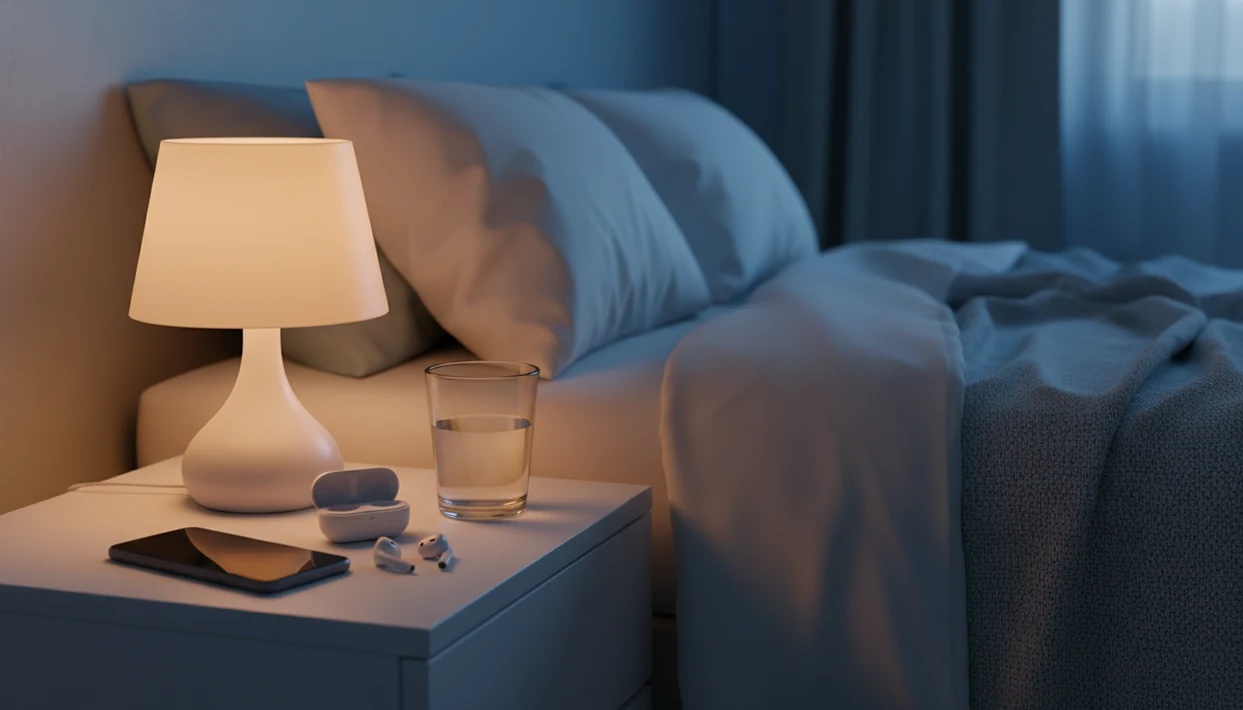
Lock the screen, lower the volume, and let the same phrase, sound, or breath count repeat. The dim lamp beside wrinkled pillows becomes part of the cue.
Small, repeatable, boring. That is the point.
How to use a nighttime wind-down routine
Use a nighttime wind-down routine by making the last 30-60 minutes before bed predictable, dim, and low-decision. The goal is not to perform a perfect ritual; it is to give your body the same quiet sequence often enough that bedtime stops feeling like a fresh debate.
- Set your target bedtime, then count back 30-60 minutes so the routine has a real start time.
- Dim lights and end work, chores, planning, and problem-solving before the routine begins.
- Choose one guided audio track before you get into bed, so you are not searching while tired.
- Lock the screen, lower the volume, and place the phone on a dresser, nightstand, or across the room.
- Repeat the same order for several nights before changing the track, timing, or room setup.
If the night is messy, keep the sequence but shrink it. A 20-minute version done calmly is better than restarting the whole evening in bed with a bright screen.
Wind-down routine cues that train the brain for sleep
A wind-down routine works as a conditioned cue: repeated bedtime signals teach the brain that certain lights, sounds, temperatures, and breathing patterns belong to sleep. It does not force sleep, but it can reduce arousal and make bedtime feel less like a negotiation.
How a nighttime wind-down routine works: the routine creates a habit loop, where the cue is low light or audio, the behavior is settling down, and the reward is a calmer transition toward bed. In plain language, your body starts recognizing the pattern before you have to think hard about it.
Light affects circadian timing. Sound can narrow attention. Cooler air and slow breathing can help the body feel less activated. Clinicians typically recommend looking at sleep habits, schedules, and symptoms together, especially when poor sleep lasts for weeks.
For adults who feel alert at bedtime, a consistent wind-down cue is often easier than waiting to “feel sleepy” because it gives the body a repeated starting signal.
Keep the bedtime cue consistent across the week
The order of the routine is only one part of consistency. Its timing matters too. A 2020 systematic review of adult sleep timing found that later sleep timing and greater variation in bedtimes, wake times, or sleep duration were generally associated with adverse health outcomes. These associations do not prove that a fixed bedtime prevents illness, but they support paying attention to the weekly schedule, not just the final minutes before bed.
Set the routine’s start time alongside the intended bedtime, and try to keep weekend wake times close to weekday wake times. Large shifts between workdays and free days are often called social jet lag. Consistency should not mean cutting sleep short to follow a rigid rule: the review also found some favorable associations with weekend catch-up sleep. The practical aim is less avoidable variation while still allowing enough time for sleep.
Guided audio before bed without screen stimulation
Guided audio before bed is easiest to use when the track is picked ahead of time, then played softly once you are settled under the covers. The aim is to follow the voice and breath, not make new choices in the dark.
- Choose one track before you lie down, such as a body scan, breathing session, or soft sleep story.
- Set a sleep timer so the audio ends without another phone check.
- Lock the screen and turn the phone face down or place it across the room.
- Lower the volume until the voice feels easy to follow but not attention-grabbing.
- Repeat the same track for several nights before judging whether it helps.
Calm, Headspace, and other guided-sleep apps can provide bedtime audio, but the routine matters more than opening a new library every night. If screens are your main trigger, a screen-free bedtime meditation approach may fit better.
The pocket check is real. Plan around it.
Five facts about evening wind-down habits and sleep quality
- About 35% of U.S. adults report sleeping less than 7 hours per night, per CDC adult sleep data CDC guidance: adults.html.
- Sleep experts commonly recommend 7-9 hours of sleep per night for adults CDC guidance: how much sleep.html, so the routine should protect enough time in bed.
- In a CDC survey, 31.6% of U.S. adults reported using electronic devices in bed at least a few nights per week CDC guidance: 23 0061.htm.
- Experimental research found that blue-light eReaders before bed suppressed evening melatonin, delayed circadian timing, and reduced next-morning alertness compared with printed books pnas reference: pnas.1418490112.
- A meta-analysis in adults with sleep problems found that mindfulness-based interventions, including meditation, produced moderate improvement in sleep quality PubMed research: 30575050.
Good meditation app for sleep anxiety and everyday calm support should deliver simple guided sessions, breathing cues, and bedtime audio, not a promise to cure insomnia or replace care.
Guided audio types for a calm night routine
The right bedtime audio depends on whether your mind needs structure, body awareness, or a neutral sound to follow. Test voice, pacing, and content tone for several nights before deciding.
- Guided meditation: Useful when you want plain instructions and a calm voice. It can help the person who says, “I just need something to play when my thoughts get loud.”
- Body scan: Good for shifting attention from thinking to physical sensation. It works well when the jaw, neck, or chest still feels braced. If physical tension lingers, a nighttime grounding routine can help you focus on steady sensations before bed.
- Breathing audio: Best for short resets because the rhythm is clear and easy to repeat.
- Sleep story: Helpful for people who like a gentle narrative, but tense plots can keep attention too active.
- Nature sounds or soft music: Useful when voices feel annoying or too personal.
Fast podcasts, arguments, comedy clips, and intense stories often pull the brain back into tracking mode. A sleep-audio library should offer guided meditation, sleep audio, breathing exercises, and self-hypnosis sessions, while a fuller comparison of options belongs in what to listen to before bed.
Nighttime wind-down routine setup for light, sound, and room cues
A calm room setup reinforces the audio-first routine by giving the same sensory message each night: lower light, quieter sound, cooler air, and fewer visual reminders of the day. The room does not need to look staged. It needs to stop asking for your attention.
Use warmer lamps instead of bright overhead light. Keep the sleep space tidy enough that tomorrow’s laundry is not the last thing you stare at. If silence feels unsettling, try white noise, rain sounds, or low nature audio.
After starting the track, set the phone somewhere you will not keep reaching for it, such as a dresser or shelf across the room. A pillow, a cool room, and a low volume can make the cue feel clear without inviting more scrolling. For broader habit changes, pair this with basic sleep hygiene.
Audio-first wind-down routine fit for adults and beginners
An audio-first wind-down routine fits adults who want less screen use but do not want a complicated checklist. It is especially useful for beginners who prefer listening over reading, journaling, or learning formal meditation terms.
| Fit | Who it helps | Why it fits |
|---|---|---|
| Best for night scrolling | Adults who keep reopening apps in bed | Audio gives the phone a single job, then the screen can stay locked |
| Best for wired evenings | People who feel tired but mentally alert | A voice, breath cue, or soundscape gives attention somewhere quiet to land |
| Best for beginners | People new to meditation | Listening is easier than wondering what to “do” in silence |
| Not ideal for audio-sensitive users | People irritated by voices, music, or loops | Silence, reading, or gentle stretching may work better |
| Not medical care | People with chronic insomnia, sleep apnea symptoms, or severe distress | These signs deserve qualified evaluation |
For many beginners, guided audio is often easier than silent meditation because the next instruction is already provided. If your whole schedule is crowded, a sleep routine for busy adults may be more realistic.
Common nighttime wind-down mistakes that keep the brain alert
“Why am I exhausted but still wide awake?” Being tired does not always mean the nervous system has downshifted; stress, late work, caffeine, irregular schedules, and stimulating content can keep the brain alert after the body feels drained. For bedtime fears that keep returning, try guided meditation for sleep anxiety as a gentle cue to settle.
Dark-mode scrolling is a common trap. It may reduce brightness, but it still brings novelty, messages, decisions, and little emotional spikes. A locked screen with guided audio is different because it removes the visual loop and limits fresh input.
Calming audio should feel predictable. A slow body scan is not the same as a fast podcast, breaking news, or an intense true-crime episode. If racing thoughts are the main issue, try a more specific calming night routine for racing thoughts instead of adding more content.
One rough night does not prove the routine failed. It may only prove the day was loud.
MindTastik audio for the last quiet minutes before bed
MindTastik’s guided meditations, breathing exercises, and sleep stories suit a routine built around listening rather than scrolling. A guided session offers instructions to follow; a story offers a gentle narrative. The sleep story library is an option for adults who prefer that narrative format. People who find voices distracting may prefer soundscapes or a quiet activity without audio. These sessions are optional bedtime cues, not medical treatment or a requirement for sleeping well. Compare sleep stories and guided meditation to choose between a gentle narrative and spoken instructions at bedtime.
What a wind-down routine cannot treat
A nighttime wind-down routine can support sleep readiness, but it has clear limits. Treat it as a supportive practice, not a diagnosis or treatment plan.
- A routine is not a stand-alone treatment for chronic insomnia, suspected sleep apnea, restless legs, or other medical sleep disorders.
- Some people dislike voices, music, whispering, white noise, or looping nature sounds; audio may distract rather than soothe them.
- One night is not enough to judge the routine. Test the same sequence for several nights, then adjust one variable at a time.
- Aromatherapy, supplements, weighted blankets, and special pillows are optional add-ons, not the core routine.
- Caffeine timing, alcohol, shift work, pain, stress, and late-night conflict can override a well-designed evening wind down.
- Persistent sleep problems, loud snoring, gasping, severe distress, or daytime impairment deserve qualified medical guidance.
Guided-audio apps can be one option for bedtime support, but persistent symptoms should be discussed with a clinician.
When bedtime audio becomes another decision loop
If you keep sampling sessions, raising the volume to stay engaged, or waiting for the perfect calming phrase, the routine may be turning into another decision loop. Nighttime audio works best when it becomes boring in a useful way. If the session makes you analyze, compare, or keep checking the time, switch to a simpler breathing exercise with a slow exhale.
On nights when guided practice feels like too much effort, MindTastik sleep stories offers low-stimulus audio you can play in the background.
Nighttime wind-down questions
How long should a nighttime wind-down routine take?
Start with 30-60 minutes before the intended bedtime. NHS sleep guidance suggests an hour to 90 minutes for relaxing activities, so there is no single required duration. On busy nights, a shorter version can preserve the same order: dim lights, stop screen use, choose a quiet activity, then go to bed.
What should I do during the last 30 minutes before bed?
End work and planning, dim the room, and choose one low-stimulation activity such as reading, guided meditation, or a body scan. If using audio, select the track first, lower the volume, set a sleep timer, and lock the screen. Keep the sequence simple enough to repeat without much preparation.
Why am I tired but unable to wind down at night?
Physical tiredness can coexist with mental alertness. Late work, stress, caffeine, irregular sleep schedules, and stimulating content can keep bedtime active. A routine can reduce some of that input, but it cannot explain every sleep problem. Persistent difficulty sleeping calls for assessment rather than an increasingly elaborate bedtime ritual.
Can a bedtime routine cure chronic insomnia?
A bedtime routine can support sleep readiness, but it is not a stand-alone treatment for chronic insomnia. Persistent insomnia generally needs assessment and evidence-based care, such as cognitive behavioral therapy for insomnia. The routine can remain a supportive habit, but adding more steps or longer audio is not a substitute for treatment.
When should I stop drinking caffeine before bed?
Try avoiding caffeine for at least six to eight hours before bedtime. If you are sensitive to it, you may need an earlier cutoff. Coffee, tea, energy drinks, and some medications can all contain caffeine. Notice whether changing your last caffeine intake helps you feel sleepier during your evening routine.
Is stretching before bed good for sleep?
Gentle stretching may help release muscle tension and make the transition to bedtime feel calmer. Choose comfortable movements for your shoulders, back, or legs, and breathe naturally. Avoid painful stretches or vigorous exercise that leaves you feeling energized. A few relaxed minutes can be enough to include in your routine.
Should I follow the same bedtime routine on weekends?
Keeping a similar routine on weekends can help reinforce your sleep schedule. You do not need to repeat every activity exactly, but aim for a reasonably consistent bedtime and wake time. If your plans run late, use a shorter version of your routine rather than skipping the transition to sleep entirely.
How can I wind down after working a late shift?
Create a brief transition between work and sleep: dim the lights, change into comfortable clothes, and choose a quiet activity such as reading or slow breathing. Keep your sleeping space dark, cool, and quiet, especially if you sleep during daylight. Avoid adding chores or stimulating entertainment when you get home.