
Sleep Routine for Busy Adults
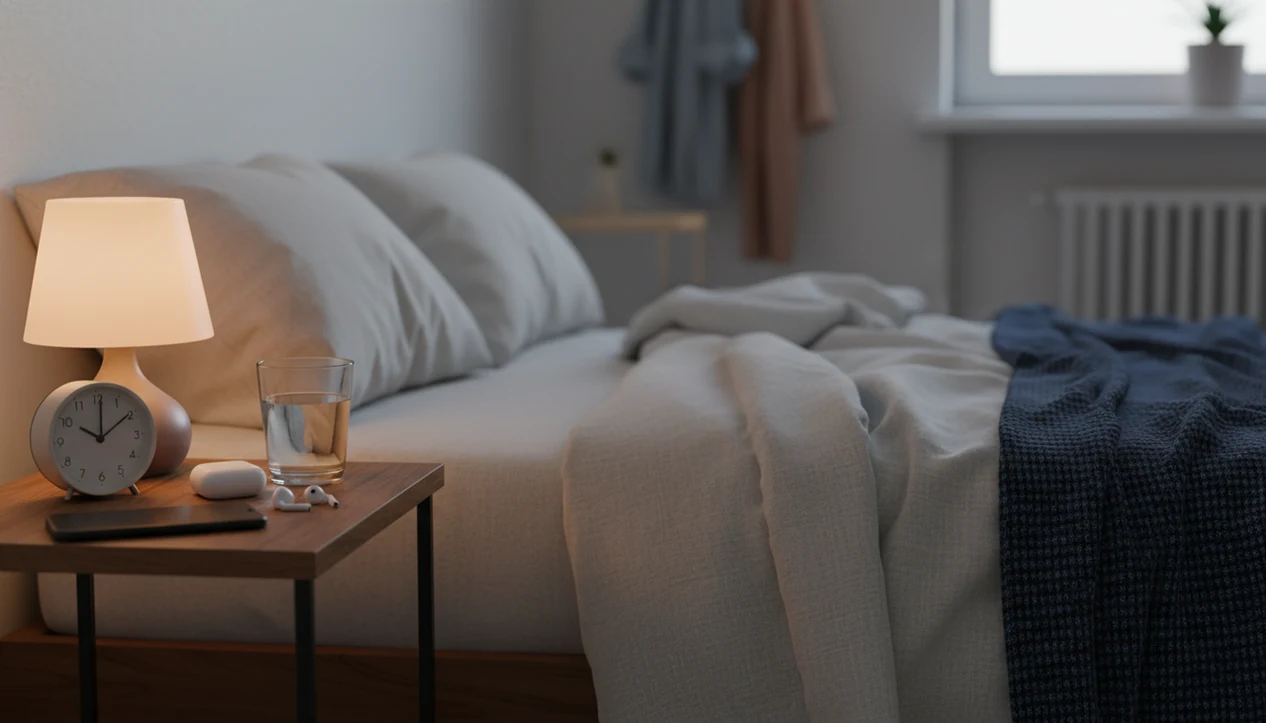


A sleep routine for busy adults is a short, repeatable sequence of bedtime cues that protects sleep time without adding a long checklist. A practical version takes 5 to 10 minutes: dim the lights, put screens away, play brief guided audio or try a breathing exercise, then get into bed at a consistent time. The aim is a clear end to work and chores, not a perfect hour-long ritual.
On late nights, the routine can shrink to one cue, one calming audio, and the same final bedtime action. Protecting the sleep window matters more than completing every step. Adults generally need at least 7 hours of sleep, and a wind-down routine cannot replace hours lost to work, caregiving, or scrolling.
The essentials
- Use a 10-minute bedtime routine: lights down, phone away, guided breathing or meditation, then bed.
- Protect the sleep window first; adults generally need at least 7 hours of sleep, and a routine cannot replace missing sleep.
- Keep a minimum viable version for chaotic nights: one cue, one calming audio, one consistent bedtime action.
10-Minute Sleep Routine for Busy Adults
A sleep routine for busy adults should be simple enough to do when you are tired, late, parenting, traveling, or still half-thinking about tomorrow’s inbox. Use this 10 minute bedtime routine as the default, then shrink it on rough nights.
The 10-minute sequence
Minutes 0-2: dim lights, lower the thermostat if needed, and clear the pillow area. Minutes 2-4: set the alarm, put the phone away from the bed, and stop browsing. Minutes 4-8: play guided breathing, sleep meditation, or a short self-hypnosis session. Tools like MindTastik can help here because they include guided meditation, sleep audio, breathing exercises, and self-hypnosis sessions. Minutes 8-10: get into bed and repeat one cue, such as “nothing else tonight.”
The phone goes down. That part matters.
The 3-step backup version
Dim one light, play one calming audio, and get into bed. That is enough to keep the pattern alive.
Why a Short Sleep Routine Works for Busy Adults
A short sleep routine works because repeated cues teach the brain to connect certain actions with bedtime. In behavioral terms, it uses conditioning and habit loops; in plain language, the same small steps reduce night-time decision-making.
The routine shifts you from work mode to sleep mode by lowering stimulation. Less light, fewer alerts, quieter audio, and slower breathing all send a different signal than email, shows, or planning tomorrow at 11:48 p.m. Consistency matters more than complexity, especially when your evening changes every day.
A quick bedtime routine supports the sleep window, but it does not replace sleep duration. For busy adults, a short routine is often easier than a long ritual because it protects the habit on imperfect nights.
For a fuller foundation, pair this with basic sleep hygiene habits.
Five Facts About a Busy Adult Night Routine
- Adults aged 18-60 are recommended to sleep 7 or more hours per night on a regular basis, according to the American Academy of Sleep Medicine and Sleep Research Society via the CDC CDC guidance: how much sleep.html.
- About 35% of U.S. adults reported sleeping less than 7 hours in a 24-hour period in CDC analysis of 2014 BRFSS data CDC guidance: mm6506a1.htm.
- About 32% of working adults reported sleeping 6 hours or less on workdays in the National Sleep Foundation’s Sleep in America poll thensf reference: 2008 SOA.pdf.
- Keeping a consistent sleep schedule, including on weekends when possible, supports the body’s internal sleep-wake timing, according to NHLBI sleep-habit guidance nhlbi reference: healthy sleep habits.
- Brief app-based mindfulness has evidence for improving insomnia severity and sleep quality in adults with sleep disturbances, according to a randomized trial.
The most common medically supported way to protect sleep is adequate sleep opportunity combined with consistent timing and lower stimulation before bed.
Before You Start: Set Up the Routine So It Takes 10 Minutes
Set up the routine before you are tired, so bedtime does not turn into another round of choices. The goal is to make the 10-minute version the easiest option in the room.
- Choose one saved audio session earlier in the evening, not while you are already in bed. Pick a breathing track, sleep meditation, or self-hypnosis session you can start without browsing.
- Move your charger away from the pillow so the phone has a landing place that is not beside your face. You can still use audio, but scrolling becomes less automatic.
- Decide your latest realistic bedtime by looking at tomorrow’s wake time and working backward. If the ideal time is gone, choose the next honest cutoff instead of pretending the night is still open.
- Set one fallback cue for travel, parenting, or late work nights, such as dimming one light and playing the same short track.
- Remove anything that stretches the routine past 10 minutes. Save baths, long journaling, extra chores, and app browsing for nights when you truly have room.
How to Use a Quick Bedtime Routine Tonight
Use this quick bedtime routine when you need something practical, not aspirational. Choose the audio before you get into bed so you are not staring at a crowded app screen at 12:16 a.m.
- Set a realistic bedtime target by counting back at least 7 hours from your wake time when possible.
- Dim the room enough that your body gets a clear “night is starting” cue.
- Park the phone across the room after setting your alarm and sleep audio.
- Play a short guided audio or breathing exercise from MindTastik, or use another saved session you already trust. Use a meditation before sleep checklist to prepare your space and choose audio before bedtime.
- Repeat the same final cue in bed, such as relaxing your jaw or counting five slow exhales.
If you want a longer version for steadier evenings, a bedtime routine for adults can add more structure.
Best Sleep Routine Versions for Different Busy Nights
The best routine is the one you can still do when the night goes sideways. A backup version preserves consistency, which matters more than completing every ideal step.
| Routine version | Best for | What to do | What to skip |
|---|---|---|---|
| 5-minute emergency routine | Late work night or travel | Dim lights, set alarm, play one breathing track, bed | Long baths, journaling, stretching |
| 10-minute standard routine | Normal weeknight | Room prep, phone away, guided audio, final sleep cue | Scrolling “to relax” |
| 20-minute reset routine | Overstimulated or anxious night | Add a short worry note, body scan, or progressive relaxation | Email, laptop work, heavy planning |
A 5-minute routine is often better than skipping the routine because it keeps the bedtime cue connected to sleep. If racing thoughts are the main problem, a calming night routine for racing thoughts may fit better than adding more tasks.
Sleep Audio, Breathing, and Meditation Cues
Sleep audio gives your attention a calm thread to follow when settling down feels out of reach. Many adults are looking for a simple track they can start when the mind feels too busy for silence. If thoughts keep circling at bedtime, try cleaning up your thoughts before starting your chosen sleep audio.
If you compare MindTastik with Calm, Headspace, or Insight Timer, judge the sleep session by one practical test: can you start the same calming cue in under 30 seconds without browsing?
Guided sleep meditation
Guided sleep meditation uses spoken prompts to soften attention, slow the pace, and reduce mental wandering. Brief app-based mindfulness improved insomnia severity and sleep quality in adults with sleep disturbances in a randomized trial JAMA Internal Medicine study: 2146105. If small disturbances wake you easily, try sleep meditation for light sleepers as a gentle bedtime cue.
Breathing exercise
A slow breathing exercise gives the body a repeatable rhythm. It is useful when you are choosing between a 5-minute breathing exercise and a 20-minute body scan in an app library.
Progressive relaxation or self-hypnosis
Progressive muscle relaxation and self-hypnosis can work as body-based cues. MindTastik offers guided wellness sessions, sleep audio, breathing practices, and self-hypnosis support for adults who want help with rest, anxious moments, and everyday calm.
Common Mistakes in a Short Sleep Routine
A proper sleep routine does not have to take 30 to 60 minutes. Busy adults often quit because the plan looks like a spa menu instead of something they can do after packing lunches, answering one last message, or folding laundry at 10:40 p.m.
Weekend catch-up sleep may help you feel less exhausted, but it does not fully replace consistent timing. Your body clock responds better when sleep and wake times stay roughly steady.
Using a phone or laptop in bed can also teach the body to connect the bed with work or entertainment. Later in the night, a bright device beside the pillow can make it harder to return to a quiet, sleepy rhythm.
Caffeine, heavy food, and alcohol close to bedtime can disrupt sleep for many people. These are adjustable friction points, not moral failures. If screens are the hardest part, try a screen-free bedtime meditation plan.
Reducing bedtime browsing has evidence behind it
A 2025 randomized pilot trial targeting bedtime procrastination and evening device use found that participants assigned to the intervention reduced daily pre-sleep device use by an average of 23.4 minutes and increased daily sleep duration by an average of 12.7 minutes afterward. Improvements in sleep quality and reductions in bedtime procrastination persisted at follow-up. This was a device-use intervention, not a test of this page’s 10-minute routine.
The practical implication is to separate the time browsing ends from the time the lights go out. Sleep Foundation guidance on bedroom technology recommends regular deadlines for both. For a busy evening, that might mean ending messages before changing into pajamas, then using the final few minutes for quiet audio. The useful change is removing an activity that extends bedtime, not adding more tasks before sleep.
Image: 10-Minute Bedtime Routine Layout
Use an image that looks like a real bedside setup, not a luxury spa scene. Show a dim lamp beside wrinkled pillows, a phone placed away from the pillow, headphones or a small speaker, and a short checklist with the four routine steps.
Suggested caption: A practical 10 minute bedtime routine: dim lights, park the phone, play guided audio, and get into bed.
Alt text should describe the routine steps for accessibility, not just the objects in the image. A useful version would say: “Bedside table with dim lamp, phone away from pillow, headphones, and a checklist for a 10-minute bedtime routine.”
Simple wins here. The image should make the routine feel doable on a regular Tuesday night.
Short audio for the last few minutes before bed
MindTastik’s guided meditations and breathing exercises fit the quiet part of a short bedtime routine. Choose one session before bedtime rather than turning the wind-down into another search for something to play. Sleep stories are another option when spoken narration is preferable to breathing prompts.
A screen-free breathing practice or quiet reading may suit adults who find opening an app distracting. Persistent insomnia needs assessment and evidence-based care, not a larger audio library. MindTastik is not a medical treatment, and no session can make up for an inadequate sleep window.
What a 10-minute wind-down cannot fix
A short sleep routine can support better nights, but it cannot solve every sleep problem. Keep these limits in view:
- A quick routine cannot compensate for chronic sleep deprivation or routinely sleeping far less than 7 hours.
- Meditation and breathing apps are not stand-alone treatment for serious sleep disorders such as insomnia, sleep apnea, or restless legs.
- Shift work, caregiving, chronic pain, and unpredictable schedules can still disrupt sleep.
- Advice like “no screens for an hour” or “take a long bath” may be unrealistic for many busy adults.
- Individual responses vary; some calming activities may not work, and a few may feel irritating.
- Alcohol, late caffeine, and heavy meals can still interfere even when the routine is consistent.
- Seek qualified medical guidance for persistent severe sleep problems, breathing pauses, or daytime impairment.
Clinicians typically recommend medical evaluation when sleep problems are persistent, severe, or paired with breathing changes or daytime impairment.
On nights when guided practice feels like too much effort, MindTastik sleep stories offers low-stimulus audio you can play in the background.
Busy adult bedtime questions
Is a 10-minute bedtime routine enough?
Ten minutes can provide a repeatable transition from evening tasks to bed. It is a practical starting point, not a proven treatment or a guarantee of falling asleep quickly. If settling down takes longer, start reducing stimulation earlier when possible. The routine should protect sleep time rather than take more of it.
What time should I go to bed if I have to wake up early?
Start with the required wake time and work backward to leave at least 7 hours for sleep, then allow time to settle. There is no single bedtime that fits every adult. If work or chores regularly leave too little time, shortening the routine alone will not solve the sleep shortage.
What should I do when I work late and miss bedtime?
Use the smallest version: dim the lights, set the alarm, put the phone away, and finish with one quiet breathing or relaxation cue. Skip optional tasks such as a long bath or extended journaling. The priority is getting to bed, not completing the full routine after the sleep window has already shortened.
Can I use my phone for sleep audio without disrupting the routine?
Choose the session and set the alarm before getting into bed, then place the phone away from the pillow. Treat it as an audio player rather than a place to check messages. If starting audio repeatedly leads to browsing, a screen-free breathing exercise may be a better bedtime cue.
What can I do about racing thoughts before bed?
A short worry note before bed can move tomorrow’s tasks out of the final few minutes. Then use one quiet focus, such as guided breathing or a body scan, instead of more planning. These are wind-down options, not guaranteed fixes. Persistent difficulty sleeping deserves assessment rather than an increasingly elaborate routine.
Should I keep the same sleep schedule on weekends?
Keeping weekend sleep and wake times close to weekday times is a reasonable goal. Adult research generally associates greater schedule variability with poorer health outcomes, but it does not establish one exact allowable difference. Some weekend catch-up sleep may help after insufficient weekday sleep, so consistency should not mean deliberately cutting needed rest.
When is a bedtime routine not enough for insomnia?
A short routine may help reduce evening stimulation, but persistent insomnia generally needs assessment and evidence-based treatment, such as cognitive behavioral therapy for insomnia. Meditation and breathing audio are not substitutes for that care. Sleep apnea, restless legs, chronic pain, and shift work can also require support beyond ordinary bedtime habits.