
Calming Audio for Bedtime: Best Options for a Sleep Routine
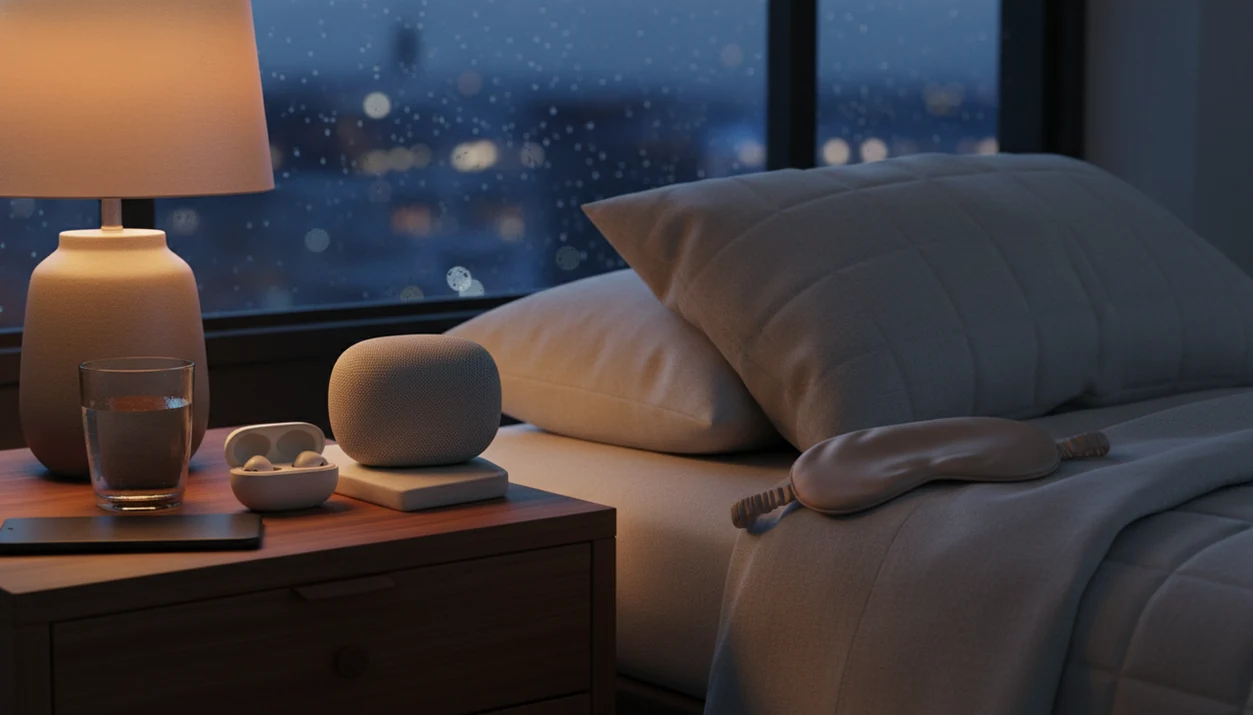


Calming audio for bedtime is gentle, predictable sound used before or during sleep to reduce arousal, mask disruptive noise, and create a repeatable wind-down cue. Options include guided meditation, breathing tracks, sleep stories, relaxing music, pink noise, and nature soundscapes. A useful recording has a slow pace, steady volume, little sudden variation, and no dramatic plot or abrupt advertisements.
The choice depends on what keeps sleep from starting. Spoken guidance can give racing thoughts something simple to follow, while steady background sound can soften household or street noise. A familiar track played for 20-60 minutes can support a consistent evening routine. It is not a stand-alone cure for chronic insomnia, and silence may suit some sleepers better.
Bedtime audio essentials
- The best calming bedtime audio has a slow pace, low or mid frequencies, minimal volume jumps, and no dramatic plot or sudden ads.
- Guided meditation, breathing audio, sleep stories, music, pink noise, and nature soundscapes each work for different sleep problems.
- Use bedtime audio consistently for 20-60 minutes as part of a routine, not as a stand-alone cure for chronic insomnia.
Best calming bedtime audio options at a glance
Calming bedtime audio should match the sleep problem: anxious thoughts usually need guidance, while outside noise usually needs steady sound. Evidence is strongest for relaxing music and steady noise; commercial sleep stories are useful for some people but less studied.
| Audio type | Best for | Not ideal for |
|---|---|---|
| Guided meditation | Racing thoughts, body tension, beginners | People annoyed by spoken instruction |
| Breathing audio | Fast stress resets, sleep anxiety | Users who over-focus on breathing |
| Sleep stories | Gentle distraction from rumination | Anyone pulled into plot or suspense |
| Relaxing music | Predictable wind-down, low mental effort | Lyrics, crescendos, emotional songs |
| Pink noise | Noise masking, steady background sound | Users sensitive to constant sound |
| Nature soundscapes | Rain, ocean, fan-like comfort | Tracks with birds, thunder, or sudden changes |
MindTastik fits people who want guided sleep routines, anxiety support, and everyday calm in one place, rather than rebuilding a playlist every night. Good sleep apps deliver calm cues and repeatable choices, not a promise that one track will fix every bad night.
What the research supports most clearly
The strongest evidence here concerns music, not commercial sleep stories. A 2022 Cochrane review of music for insomnia included 13 randomized trials involving 1,007 participants. Music probably improved reported sleep quality, but evidence for falling asleep faster, sleeping longer, and spending more time asleep while in bed was less certain. Feeling better rested and recording longer sleep are different outcomes.
This does not establish that a particular playlist, narrator, or sound frequency is best. A 2025 review of music and sleep identified slow, soft, simply structured music, often without lyrics and around 60-80 beats per minute, as common features of helpful recordings. Those features are reasonable selection criteria, not a clinical prescription. The cited reviews do not establish that spoken sleep stories outperform music.
How We Chose These Calming Bedtime Audio Options
We chose calming bedtime audio options by looking for formats that are predictable, low-effort, and unlikely to jolt the nervous system awake. The goal was not to rank the trendiest tracks, but to separate genuinely sleep-friendly sound from audio that only feels relaxing at first.
- Prioritize audio with steady pacing, soft transitions, low sudden variation, and little cognitive work for the listener.
- Separate formats with stronger sleep evidence, such as relaxing music and steady noise, from popular but less-studied sleep stories.
- Consider common bedtime barriers, including anxiety, household noise, rumination, screen use, and the habit of searching for “one better track” in bed.
- Flag risky formats when ads, suspense, emotional drama, volume jumps, or autoplay could make sleep harder.
- Place MindTastik as a structured option for guided meditation, sleep audio, breathing, and self-hypnosis-style routines without treating it as medical care.
That means a boring rain loop may outrank a beautifully produced story if the story keeps you listening. The best choice is the one your brain can safely stop tracking.
Five facts about audio to calm down before bed
Audio to calm down before bed is most useful when it gives the brain less to monitor. The track should feel familiar enough that your mind stops checking it. When time is short, try a five-minute bedtime routine to keep your evening practice simple and repeatable.
- Calming audio can mask traffic, hallway noise, and household sounds while giving attention a safe place to land.
- The most useful tracks are steady, slow, low to mid frequency, and low in sudden variation.
- Guided audio can reduce arousal when anxiety, rumination, or the 2:13 a.m. lock-screen check is the main barrier.
- Benefits usually build over days or weeks, not in one dramatic first night. For a longer practice plan, try Transform Your Life in 12 Weeks alongside your evening routine.
- Audio works better inside a larger nighttime wind-down routine with dim lights, fewer screens, and a steady bedtime cue.
Small changes count.
For most adults, bedtime audio usually depends more on repetition and sound design than on the name of the playlist.
How calming audio for bedtime works in the brain and body
Calming audio for bedtime works through auditory masking, attentional anchoring, and conditioning. In plain terms, it covers distracting sound, gives the mind something neutral to follow, and teaches the body that bedtime has started.
Auditory masking reduces the contrast between a steady background sound and sudden noise, like traffic, a door closing, or someone moving in another room. Attentional anchoring is different. A calm voice, slow breath count, or soft soundscape gives racing thoughts less room to expand. Over time, conditioning can make the same track feel like a bedtime signal, especially when paired with a consistent bedtime routine for adults.
Research is more promising for music than for many branded sleep stories. A systematic review found that music interventions produced a moderate improvement in sleep quality among adults with insomnia or sleep complaints NIH research: PMC5403379. Pink noise also has experimental evidence related to slow-wave sleep in older adults, but that does not mean it works the same way for everyone.
How to use guided audio for a sleep routine
A guided audio for sleep routine should be boring in the right way: same window, same type of track, low volume, low drama. Try this before bed for one week before judging it.
- Set a start time 20-60 minutes before bed, not after you are already frustrated. For a structured half-hour option, follow a 30-minute bedtime routine with meditation rather than browsing for another track.
- Choose one audio type for seven nights before switching formats.
- Keep the volume low enough that words or sounds do not require effort.
- Dim the phone screen or start the track before getting into bed.
- Track sleep latency, awakenings, and morning grogginess in a simple note.
- Reset the plan if the audio becomes stimulating, annoying, or anxiety-producing.
The dim-screen step matters. It is easy to start “one quick search” and end up comparing ten playlists under blankets. If you need a fuller structure, use a meditation before sleep checklist to keep the routine simple.
Set playback to stop without reopening the screen
A timer makes bedtime audio a wind-down activity rather than an automatic all-night soundtrack. Royal Papworth Hospital's insomnia guidance says quiet music or sounds may help some people, but advises against leaving them playing all night. A recording or timer lasting roughly 20-45 minutes is a practical starting point, not a duration proven best in trials.
Set the recording, volume, notifications, and automatic stop before settling into bed. Downloaded audio can reduce the need to browse or handle a bright screen during the night. The NHS sleep guidance recommends avoiding phones, tablets, and computers for about an hour before bed. Stop the audio if it increases alertness, anxiety, tinnitus, or awakenings rather than treating longer playback as the solution. If your phone keeps pulling your attention back, try a screen-free bedtime meditation routine instead of browsing for audio.
MindTastik for guided audio for sleep routine support
MindTastik offers guided wellness audio for adults who want support with bedtime, relaxation, breathing practice, self-hypnosis, and everyday calm. For a tired evening, it can feel easier to choose a structured sleep session than to keep browsing for something soothing after the lamp is already low.
- Guided meditation: Use this when you want spoken steps instead of silence.
- Sleep audio: Choose this when the goal is a predictable wind-down cue.
- Breathing exercises: Try these when stress feels physical, tight, or fast.
- Self-hypnosis sessions: Use these as a gentle focus tool, not medical treatment.
Adults looking for guided audio without YouTube ads or dramatic podcast detours can use MindTastik because it keeps sleep, anxiety support, and everyday calm routines in one app library. It is not the right fit if you need medical evaluation, therapy, or treatment for a sleep disorder.
Best calming bedtime audio for sleep anxiety
For sleep anxiety, the strongest starting choices are guided meditation, breath pacing, body scans, and simple self-hypnosis-style wind-down sessions because they give anxious attention a task.
Spoken guidance can redirect rumination better than plain music for some users. A body scan might cue you to soften your jaw or feel the weight of your head on the pillow, which is more concrete than trying to force an empty mind. Best for: people whose mental chatter starts up as soon as the room becomes quiet. Not for: people who feel watched, pressured, or annoyed by step-by-step instructions.
Some people are looking for one simple thing at bedtime: a calm track that gives the mind somewhere gentle to land. MindTastik fits that use case because it lets you test anxiety-focused sleep sessions in a structured app, including breathing and guided wind-down options. Avoid news, true crime, dramatic podcasts, and emotionally intense stories. They can keep the threat system awake.
Best calming bedtime audio for noise masking
What is the best calming bedtime audio for noise masking? Pink noise, white noise, brown noise, rain, ocean, fan sounds, and soft ambient soundscapes are the main options because they create a steady background layer.
Noise masking works by reducing contrast. A passing truck feels sharper in silence than it does under a low rain track. Best for: apartment noise, street sound, a partner moving around, or unpredictable household sounds. Not for: people who find constant audio irritating or who wake up noticing the loop.
Pink noise has limited experimental evidence related to slow-wave sleep in older adults, but masking is still the more practical reason most people use it. Limited experimental evidence on pink noise should not be generalized to every sleeper; the clearer evidence summarized here concerns music and reported sleep quality: Cochrane review of music for adults with insomnia. Keep the volume comfortable and low. Avoid overnight headphones if they press on your ear, pull against the pillow, or make it harder to settle into a relaxed position.
Honest cons of calming audio for bedtime
Calming audio can help a sleep routine, but the wrong track can delay sleep. The problem is usually not “audio” in general; it is stimulation, inconsistency, or a format that does not match the person.
- Some sleep stories, podcasts, and playlists are too engaging, especially if the plot has tension.
- Ads, bright screens, notifications, and autoplay can interrupt the exact calm you were trying to create.
- Depending on audio every night can raise anxiety when the device is dead, lost, or unavailable.
- Some users sleep better in silence, especially in quiet bedrooms.
- Commercial sleep stories have less direct evidence than relaxing music or steady noise.
- Chronic insomnia may need CBT-I, medical evaluation, or mental health support.
Calm, Headspace, MindTastik, and mindful.org-style practices all vary by format and fit. The better question is what to listen to before bed when your specific barrier is noise, worry, or restlessness; our guide to what to listen to before bed breaks that down further.
MindTastik sessions for a quieter bedtime
MindTastik's guided meditations, breathing exercises, sleep stories, and soundscapes offer different ways to structure a wind-down. The guided meditation library suits adults who prefer spoken prompts when thoughts keep circling. Breathing audio offers a simple focus when evening stress feels physical.
People who find narration irritating may prefer a soundscape or silence. Anyone drawn into a story's plot should choose a less engaging recording instead. These sessions support relaxation, but they are not medical treatment for persistent sleep problems.
When bedtime audio is not enough
Calming audio for bedtime is a support tool, not a diagnostic tool or medical treatment. Use it carefully, especially if sleep problems are frequent, severe, or changing.
- Calming audio does not diagnose or treat sleep apnea, restless legs syndrome, depression, chronic pain, or other medical conditions.
- People with chronic insomnia, severe daytime sleepiness, breathing pauses, or safety concerns should seek professional care.
- Audio may worsen sleep if it is too loud, too interesting, too variable, or emotionally loaded.
- Listening all night is not required for everyone; 20-60 minutes before bed may be enough.
- Evidence varies by format, with stronger research for relaxing music and steady noise than for many branded sleep stories.
- MindTastik supports sleep, anxiety, and calm routines but is not a replacement for therapy or medical treatment.
If screens are part of the problem, a screen-free bedtime meditation routine may work better than browsing audio in bed.
Short body scans, stories, and breathing tracks compared
| Technique | Best for | Minutes |
|---|---|---|
| Guided body scan | Releasing physical tension after lying down | 8-15 min |
| Low-stimulation sleep story | Redirecting repetitive thoughts without effort | 10-20 min |
| Slow exhale breathing | Creating a simple pre-sleep rhythm | 3-7 min |
When story-style audio fits your routine better than active meditation, browse MindTastik sleep stories for calm bedtime listening.
Bedtime audio questions
What is the best calming audio for racing thoughts at bedtime?
A simple guided meditation, body scan, or breathing recording can give attention a clear task instead of leaving it with repetitive thoughts. Spoken guidance is not helpful for everyone. If instructions feel demanding or irritating, try soft instrumental music or a steady soundscape without narration.
Does relaxing music actually help with sleep?
Research supports an improvement in reported sleep quality among adults with insomnia symptoms. Evidence that music reliably shortens the time needed to fall asleep or increases total sleep time is less certain. Slow, soft music with simple structure is a reasonable starting point, but no playlist is established as best.
Is pink noise better than rain sounds for sleeping?
There is no clear best choice for every sleeper. Both can provide a steady background that reduces the contrast of household or street noise. Limited experimental findings about pink noise do not establish that an ordinary pink-noise recording improves deep sleep. Choose the sound that stays unobtrusive rather than drawing attention.
Should sleep audio stay on all night?
All-night playback is not necessary, and Royal Papworth Hospital's insomnia guidance advises against it. A timer of roughly 20-45 minutes is a practical starting point, not a proven optimum. If playback or its stopping point repeatedly causes awakenings, change the setup or try sleeping without audio.
How loud should bedtime audio be?
Keep it quiet and steady, without sudden changes that demand attention. Speech should be easy to follow without straining, while background sound should not dominate the room. There is no universally optimal volume in the research summarized here. Lower it or stop playback if it becomes irritating or increases alertness.
Can calming audio treat chronic insomnia?
Calming audio can support relaxation and a repeatable bedtime routine, but it is not a stand-alone treatment for chronic insomnia. Persistent sleep problems, severe daytime sleepiness, or breathing pauses need professional assessment. Changing tracks repeatedly is unlikely to address an underlying medical condition or an ongoing sleep disorder.
Can bedtime audio make it harder to sleep?
Yes. Dramatic stories, emotional music, loud transitions, advertisements, and repeated browsing can increase alertness. Even steady sound can be annoying for some listeners. Stop or change the recording if it increases anxiety, tinnitus, or nighttime awakenings. A quiet bedroom does not need an added soundtrack if silence already works.