
Gratitude Meditation With Guided Audio
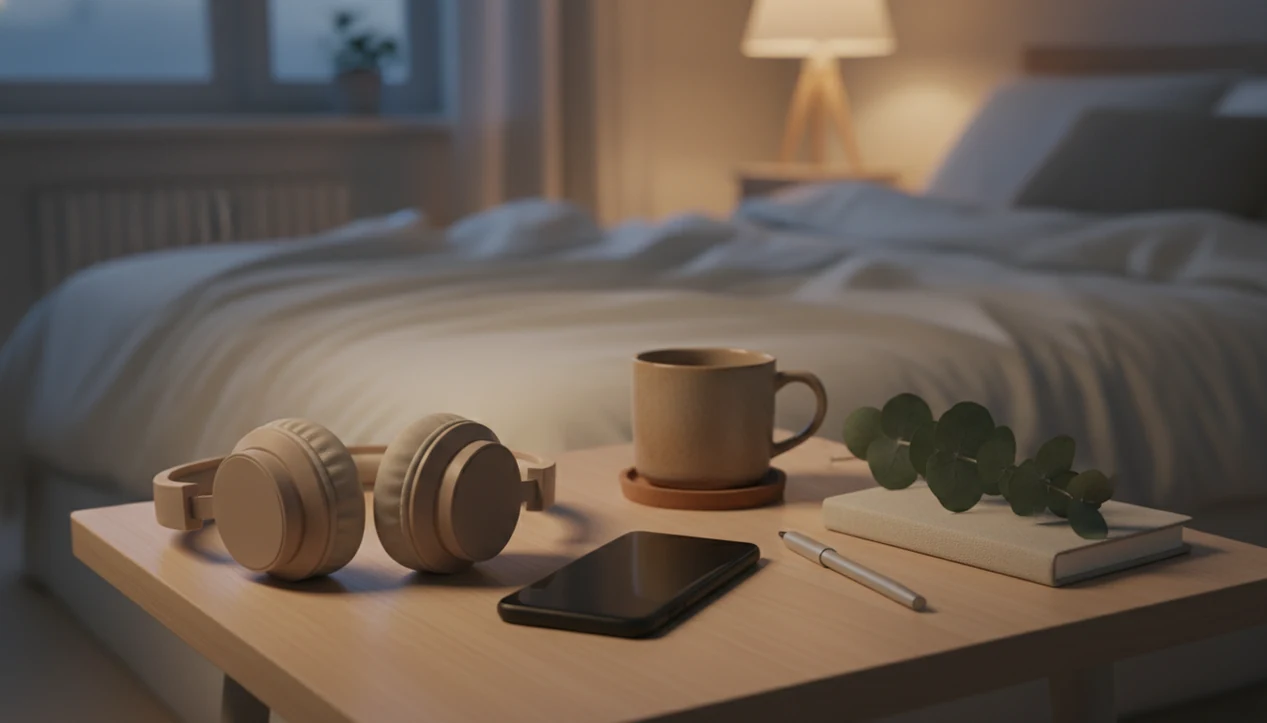


Gratitude meditation with audio is a guided practice that uses breathing, attention, and reflection prompts to notice specific people, moments, and sensations that feel supportive. A recorded voice sets the pace and offers something concrete to return to when attention drifts into worry. The aim is not to manufacture happiness or pretend that stress has disappeared. It is to notice one detail that can exist alongside it.
A short session might focus on a helpful message, a familiar place, or the comfort of a blanket. Guided audio can make that reflection easier to follow, especially during an everyday pause or bedtime routine. Benefits are generally modest and may develop with repeated practice over weeks. Gratitude meditation supports reflection and calm, but does not replace therapy, medical care, or crisis support.
The essentials
- Use guided gratitude meditation when you want a simple, app-supported practice for sleep, anxiety support, or everyday calm.
- The most effective sessions focus on specific details, such as a person, place, memory, body sensation, or small moment that feels supportive.
- Benefits usually build through regular practice over weeks, and gratitude meditation should not replace therapy, medical care, or crisis support.
What Gratitude Meditation Means in a Guided Audio Session
Gratitude meditation is a structured mindfulness practice that intentionally brings attention to concrete experiences of appreciation, often with guided audio, breath pacing, and short reflection prompts. It is not vague positive thinking or pretending stress is gone. The practice is a deliberate return to one person, one memory, one safe place, or one small detail that feels supportive.
In a guided gratitude meditation audio session, you may hear a calm voice invite slower breathing, sensory reflection, and short prompts. You might notice the weight of your body, the sound in the room, or the image of someone who helped you. On a tired night, that structure matters. For an evening version of this practice, try our bedtime gratitude meditation as part of your nightly routine.
The mind wanders fast.
MindTastik can help make gratitude practice easier to begin and repeat. The app includes guided meditations, sleep-focused audio, breathing practices, and self-hypnosis sessions for adults looking for gentle support with rest, anxiety, and everyday calm.
Five Gratitude Meditation Facts Beginners Should Know
- Gratitude meditation trains attention. It asks you to return, again and again, to specific appreciation cues rather than forcing a cheerful mood.
- Research is supportive but modest. Reviews of gratitude interventions report small-to-moderate improvements in well-being and mood, not guaranteed clinical effects (Davis et al., 2016: https://doi.org/10.1037/cou0000103).
- Guided audio helps many beginners finish. A voice, timer, and prompt sequence reduce the “what do I do now?” feeling, especially when headphones have been adjusted for the third time.
- Specific details usually work better than generic affirmations. “My sister texted me after the appointment” gives the mind more to hold than “I am grateful for everything.”
- Repetition matters more than one strong session. For beginners, a 5-minute guided gratitude meditation repeated most days is often easier than a long session done once because the cue becomes familiar.
If you are still learning the basics, our guide to gratitude for beginners explains how to start without making the practice feel forced.
How Gratitude Meditation Works in the Brain and Body
Gratitude meditation works by redirecting attention from threat scanning and rumination toward specific supportive memories, relationships, and sensations. In plain language, it gives the mind another track to follow when worry is taking up the whole screen.
Breath pacing and audio guidance can also ease arousal by giving the practice a clear shape. A calm voice cues each inhale, pause, and return to gratitude. That structure may feel useful in a quiet room with dim light, when a steady breath is easier to follow than another round of mental planning.
The practice does not erase stress. It broadens what the mind notices alongside stress.
Research on positive psychology interventions and gratitude reviews suggests gratitude practices can support well-being and mood, with small-to-moderate average effects rather than guaranteed results (Davis et al., 2016: https://doi.org/10.1037/cou0000103). The National Center for Complementary and Integrative Health also frames meditation as a supportive wellness practice, not a substitute for medical or mental health care (NCCIH mindfulness overview: meditation and mindfulness effectiveness and safety).
Before You Start Guided Gratitude Meditation Audio
Before you press play, set up the session so it feels low-pressure and safe. Guided gratitude meditation works best when you are not asking one track to rescue your hardest moment.
- Choose an ordinary time to practice, such as after breakfast, during a lunch pause, or early in your wind-down routine. If you are highly distressed, start with grounding, support, or professional help instead of trying to force gratitude.
- Pick one short audio track and repeat it a few times before comparing voices, music, or app styles. Familiarity can make the prompts feel less like homework.
- Set the volume low, especially before sleep. Headphones can help if you share a room, but keep the sound gentle enough that it does not keep your body alert.
- Keep your eyes open, sit up, or stop the session if a prompt feels activating, hollow, or too intense. You are allowed to change the practice.
- Avoid listening while driving, cooking over heat, walking near traffic, or doing any task where reduced attention could be risky.
How to Use Guided Gratitude Meditation Audio
Use guided gratitude meditation audio like a small routine, not a performance. Choose one track and let it become familiar before judging whether it helps.
- Set a 3 to 10 minute session and choose a quiet time, such as waking, a lunch pause, or bedtime.
- Sit or Lie in a stable posture, especially before sleep, so your body does not keep asking for adjustments.
- Breathe with the audio pacing for 3 to 5 cycles before choosing any gratitude prompt.
- Name one specific person, moment, place, or body sensation you appreciate, even if the feeling is mild.
- Save or Repeat by bookmarking the track, journaling one line, or scheduling the next session.
For people with busy schedules, pairing this with a daily gratitude routine can make the habit easier to repeat.
Best Gratitude Meditation Audio Formats for Sleep and Calm
The best gratitude meditation audio format depends on when you practice and what your nervous system needs. Shorter tracks fit morning consistency, while longer bedtime sessions can combine gratitude with body relaxation and sleep sounds.
| Audio format | Best use case | What it usually includes |
|---|---|---|
| 5-minute morning gratitude | Building a simple daily habit | Breath pacing, one prompt, short closing |
| Bedtime gratitude body scan | Winding down before sleep | Body relaxation, soft gratitude cues, quiet music |
| Anxiety grounding gratitude | A short reset during stress | Orientation, breathing, one safe detail |
| Gratitude journaling audio | Reflection after listening | Prompts, pauses, one-line writing |
| 21-day gratitude programs | Habit building over weeks | Daily themes, reminders, progress tracking |
A gratitude meditation app can add reminders, sleep audio, favorites, mood tracking, and structured programs. Apps such as MindTastik, Calm, and Headspace package these tools differently, so compare your options by use case rather than by claims about one sound style being medically superior.
Evidence Behind Gratitude Meditation
The evidence is encouraging, but it is not a promise. Gratitude interventions have been linked with modest improvements in well-being and mood on average, while guided audio is best understood as a delivery format that may make the practice easier to complete.
Reviews of gratitude exercises generally study practices like writing letters, listing blessings, or reflecting on appreciative moments. That research supports gratitude as a positive psychology tool, but it does not prove that every guided gratitude meditation track has the same effect. Audio may help by adding pacing, reminders, and a steady voice when attention is tired.
A practical way to read the evidence is:
- Separate gratitude as the active reflection from the app, music, or narrator style that delivers it.
- Expect small, gradual shifts rather than one session that fixes sleep, anxiety, or low mood.
- Use meditation guidance as wellness support, consistent with health-authority framing of meditation as helpful for some people and not a substitute for care.
- Notice adverse reactions, including irritation, numbness, or distress, and stop if the prompt does not feel safe.
The research does not prove that gratitude meditation treats chronic insomnia, anxiety disorders, panic, trauma symptoms, or medical causes of poor sleep.
What sleep studies do, and do not, show about gratitude audio
Sleep research gives a reason to consider gratitude at bedtime, but it does not establish that a particular recording treats insomnia. A 2020 review of 19 studies found improved subjective sleep quality in five of the eight studies that measured it. The authors called the evidence cautiously supportive, with too little research on objective sleep outcomes and clinical populations to draw firm conclusions.
The results also depend on what researchers measure. A 2023 review of randomized gratitude trials found a benefit on the Insomnia Severity Index, but no significant difference on pooled general sleep-quality measures or the Pittsburgh Sleep Quality Index. These studies examined gratitude interventions, not proof of any particular bedtime audio format. A recording is best treated as a low-pressure wind-down option, not a reliable way to shorten the time it takes to fall asleep.
Gratitude Meditation Prompt Block for a 5-Minute Practice
Breathe slowly, soften your jaw, and let the body settle before choosing a prompt. You do not need to feel deeply grateful right away. Mild appreciation counts.
- A person who helped you: Picture one real person and one specific thing they did.
- A safe place: Bring to mind a room, path, chair, or corner where your body feels less guarded.
- A small comfort: Notice a blanket, clean water, a quiet hallway, or cool sheets against restless legs.
- A body function: Thank one part of the body for carrying you, breathing, digesting, seeing, or resting.
- A recent kindness: Recall a small message, held door, patient answer, or gentle look.
- Something you learned: Name one lesson that made you steadier.
- Something you survived: Acknowledge one hard thing you moved through.
- One thing to carry forward: Choose one supportive detail for the next hour.
If gratitude feels too far away, try mindful gratitude prompts that start with noticing what is neutral or steady. Close with one slow exhale, not forced positivity.
Best For and Not For: Guided Gratitude Meditation Apps
Guided gratitude meditation apps are useful when structure helps you practice. They are less appropriate when someone needs urgent care, trauma support, or treatment for severe symptoms.
| Best for | Not ideal for |
|---|---|
| ✅ Beginners who want step-by-step guidance | ❌ Crisis situations or thoughts of self-harm |
| ✅ People building a bedtime routine | ❌ Untreated severe depression or acute trauma work without support |
| ✅ Adults seeking everyday calm support | ❌ People expecting instant cures for insomnia or anxiety |
| ✅ Users who like reminders, streaks, or tracking | ❌ Anyone who finds audio guidance distracting or irritating |
A gratitude meditation app can support consistency through audio libraries, bedtime reminders, saved favorites, streaks, and mood or sleep check-ins. For someone who wants a simple guided track to lean on when the mind feels busy, that structure may make practice feel more approachable.
Still, prompts can be changed. If “gratitude” feels hollow, try “supportive,” “steady,” or “slightly relieving” instead.
When to Get Professional Support
Get professional support when distress feels bigger than a guided audio routine can safely hold. Meditation apps can support habits and calming rituals, but they do not diagnose, treat, or replace care from a licensed clinician.
Warning signs include thoughts of self-harm, severe depression, panic that feels unmanageable, trauma memories or body reactions that intensify during practice, or sleep problems that are persistent, dangerous, or tied to medical symptoms. If a gratitude prompt makes you feel worse, numb, trapped, or flooded, stop the audio. Open your eyes, orient to the room, and choose support over finishing the track.
- Stop the session if prompts increase distress, fear, shame, or trauma activation.
- Contact a therapist, doctor, psychiatrist, or other qualified clinician for ongoing symptoms like depression, panic, trauma, or chronic sleep disruption.
- Call emergency services or go to the nearest emergency department if you might hurt yourself or cannot stay safe.
- Use a crisis line if you need immediate support and are unsure what to do next.
A calm voice can be helpful. It should never be the only plan when safety is in question.
Common Gratitude Meditation Mistakes With Audio Guidance
The most common mistake is treating gratitude as a way to deny pain. A useful session lets stress exist while gently adding one supportive detail beside it.
Another mistake is staying vague. “I am grateful for everything” usually gives the mind nothing to hold. “The neighbor brought my package inside before the rain” is easier to feel.
People also switch tracks too quickly. Repeating one guided gratitude meditation for a week can build familiarity, like taking the same quiet path through a park. Not glamorous. Useful.
Bedtime brings its own friction. Audio that is too loud, too bright, or too energizing can wake you up instead of settling you. If you practice before sleep, lower the screen brightness, choose a slower voice, and consider a routine like gratitude before sleep.
Do not judge the session if strong gratitude feelings do not appear immediately. Showing up is part of the training.
MindTastik sessions for short gratitude practice
MindTastik’s guided meditation library includes gratitude sessions for adults who prefer spoken prompts to silent reflection. Breathing exercises can provide a simpler starting point when choosing something to appreciate feels demanding. For bedtime, sleep stories or soundscapes are alternatives when reflection feels too mentally active.
People who find spoken guidance distracting may prefer quiet reflection or a written gratitude list. Those experiencing severe distress need appropriate support rather than another audio track. MindTastik is not a medical treatment.
When gratitude audio is not enough
Gratitude meditation is a supportive practice, but it has real limits. It should not be framed as treatment or used to avoid care.
If you might hurt yourself or feel unable to stay safe, stop the meditation and contact emergency services or a crisis line immediately. In the U.S. and Canada, call or text 988 for the Suicide & Crisis Lifeline: 988lifeline reference.
- Gratitude meditation is not a replacement for professional mental health care, medical care, or crisis support.
- Evidence suggests small to moderate average effects, not guaranteed dramatic results.
- People with grief, trauma, depression, or high stress may find some prompts hollow, irritating, or triggering.
- Sleep problems caused by medical conditions, medications, pain, breathing issues, or sleep disorders need appropriate clinical evaluation.
- Audio guidance can distract some users; silent practice, writing, or walking reflection may work better.
- Benefits usually require repeated practice over weeks or months, not one unusually calm session.
- Meditation apps should be used as supportive tools, not diagnostic or treatment devices.
- If a prompt brings up distress, it is reasonable to stop, open your eyes, and choose grounding instead.
For people who want a broader practice plan, how to practice gratitude covers non-audio options as well.
Attach gratitude audio to an existing daily pause
If you like meditation in theory but skip it when the day feels crowded, attach gratitude audio to a routine you already do, such as after making tea, closing a laptop, or sitting in a parked car before going inside. The habit works best when the start is almost effortless: press play, follow the guided voice, and name one person, place, or moment that feels honest. A short session becomes easier to repeat when it has a clear cue and a low bar.
Gratitude audio questions
How long should a guided gratitude meditation last?
A 3 to 10 minute session is a practical starting point, not a research-established dose. That gives enough time to settle, follow a few breathing cues, and reflect on one specific detail. A shorter recording that fits a routine is more useful than a longer one that feels burdensome.
Does gratitude meditation audio help with sleep?
It may serve as a calming bedtime routine, but direct evidence for gratitude-specific audio is limited. Studies of gratitude interventions report mixed sleep results, and many use journaling rather than recordings. Persistent sleep problems need assessment rather than an assumption that a different meditation track will solve them.
What should I focus on during gratitude meditation?
Choose one concrete detail: a person who helped, a message that mattered, a comfortable place, or a small physical comfort. Recall what happened or notice the sensation. Broad statements such as being grateful for everything can be harder to sustain than one ordinary moment with clear details.
What if gratitude meditation feels forced or upsetting?
Mild appreciation is enough; a strong emotional response is not required. A neutral comfort, such as a blanket or a quiet room, may feel more manageable than a relationship prompt. If the recording increases distress, stop it, open the eyes, orient to the room, and seek support when needed.
Can I listen to gratitude meditation while lying in bed?
Lying in a stable, comfortable position is an option for a bedtime session. Keep the volume low and choose gentle prompts rather than an energizing reflection exercise. If thinking about people or events starts more mental activity, a body-relaxation recording or quiet soundscape may be a better fit.
Is guided gratitude meditation better than gratitude journaling?
There is not enough evidence here to say that audio works better. Much of the gratitude research studies writing or reflection exercises. Audio supplies pacing and prompts, while journaling allows a written record. The practical choice is the format that feels manageable and supports a repeatable, honest practice.
Should I repeat the same gratitude meditation or choose a new one each day?
Repeating one short recording a few times can make the sequence familiar and reduce decisions about what to play. The appreciated detail can change even when the prompts stay the same. If the voice, music, or pace is distracting, choosing a different track is reasonable.