
Gratitude for Anxiety: Grounding Practices When You Feel Anxious
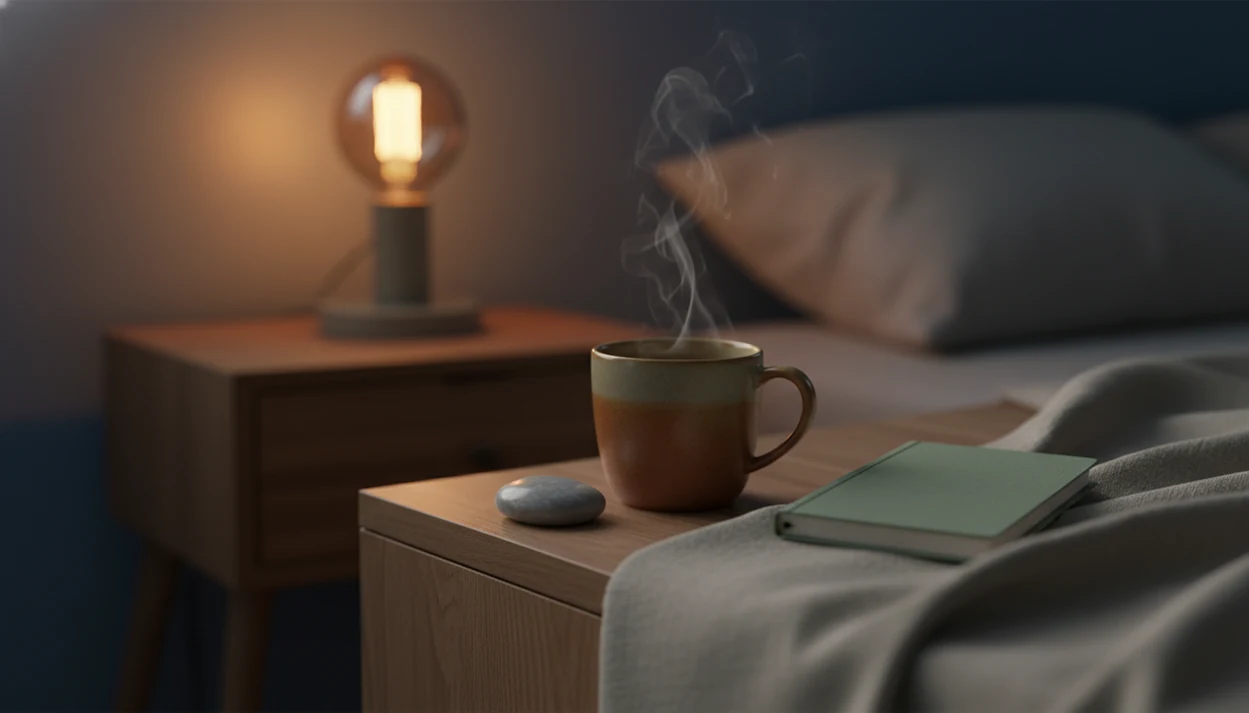


Gratitude for anxiety is a gentle attention shift after grounding: settle the body first, then name one or two specific things offering support right now. It is not a cure or a requirement to feel positive. A warm blanket, water nearby, or a kind message can be enough. The aim is to acknowledge support without arguing away fear.
When the body feels wired, start with grounding or comfortable breathing rather than a gratitude list. A useful prompt is, “What is helping me get through this minute?” MindTastik offers guided sessions, calming audio, breathing practices, and self-hypnosis for adults seeking support with rest and everyday anxiety management. Gratitude may support mood and reduce symptoms, but severe or persistent anxiety needs more than a gratitude practice.
The essentials
- Start with grounding or breathing before gratitude if your body feels wired.
- Use small, specific prompts such as “What is helping me get through this minute?”
- Gratitude can support stress reduction and mood, but it should not replace anxiety treatment when symptoms are severe.
Anxiety-aware gratitude: safety cues, support, and coping
Anxiety-aware gratitude means noticing specific sources of safety, support, comfort, or coping while allowing anxiety to be present. It is a calm gratitude practice, not forced cheerfulness.
Anxiety is not a failure of gratitude. Gratitude is not a cure for anxiety disorders. The practice works better when the cue feels believable: a warm drink, a safe room, a kind message, a steady breath, or the fact that you made it to the couch and stayed there.
Small counts.
If you are new to this, start with one sentence instead of a list. “The blanket is warm” may be more useful than “I’m grateful for my life” when your chest feels tight. For a gentler starting point, our guide to gratitude for beginners keeps the practice simple.
Five facts about gratitude for anxiety research
- Anxiety is common. In 2020, the National Institute of Mental Health estimated that 31.6% of U.S. adults experienced an anxiety disorder at some point in life nimh reference: any anxiety disorder.
- A 2015 meta-analysis of 26 randomized controlled trials found small to medium mental health improvements from gratitude interventions, including anxiety and depression symptoms doi reference: s10902 014 9595 5.
- Effects are usually modest, not dramatic. Gratitude is more like a steady support than a switch.
- One randomized trial of adults in psychotherapy found that adding gratitude writing improved self-reported mental health over time, but it did not prove gratitude is a stand-alone anxiety treatment doi reference: 10503307.2016.1169332.
- Gratitude is a supportive tool best paired with evidence-based care when symptoms are severe, persistent, or unsafe.
The most common medically supported way to manage significant anxiety is evidence-based care, such as therapy or medication when appropriate, combined with supportive daily practices.
What the anxiety studies actually measured
A 2023 systematic review of gratitude interventions included 64 randomized clinical trials, but its pooled anxiety result came from just three studies involving 579 participants. Compared with control conditions, gratitude interventions lowered scores on the GAD-7 anxiety questionnaire by an average of 1.63 points. The authors rated this anxiety evidence as low certainty. That distinction matters: a large review does not necessarily mean a large or secure evidence base for every outcome.
Results also differ across participants. In a 2025 trial of an app-based gratitude intervention, participants with at least moderate depression, anxiety, or stress symptoms showed a statistically significant reduction after the intervention. The full sample, whose starting symptoms were low, did not show a significant effect. This suggests that starting symptom levels may influence benefit, but it does not establish gratitude as treatment for an anxiety disorder or show that any particular meditation app produces the same result.
How gratitude for anxiety works
Gratitude for anxiety works by giving attention a safer place to land after the body has been steadied. It does not erase anxiety; it helps the nervous system notice that fear is not the only information available.
Anxiety often brings threat scanning, the mind’s habit of searching for danger and narrowing attention around what could go wrong. Grounding comes first because a tense body usually needs a physical safety cue before it can reflect. Then gratitude can act as a gentle safety-cue shift: “the chair is holding me,” “someone checked in,” or “I have water nearby.” This is closer to allowing anxiety than suppressing it. The fear can stay in the room while attention also includes support, steadiness, or coping.
The likely benefits are modest, supportive, and dependent on repetition. Gratitude may feel more useful when practiced during calmer moments, so it is familiar during anxious ones. It can backfire if it sounds like “you should be thankful,” minimizes real pain, triggers trauma, or becomes another task to perform perfectly. For additional reading, consider “They Don't Want You to Know This But” alongside your regular gratitude practice.
Nervous system effects of gratitude for anxiety
Gratitude for anxiety may work by shifting attention from threat scanning toward concrete cues of safety, support, and adequacy while anxiety is still present. Gratitude may support emotion regulation by redirecting attention toward concrete signals of safety, connection, or adequacy without denying fear.
That shift matters because the body often needs regulation before reflection. Slow breathing, grounding, and sleep routines can make gratitude feel possible instead of annoying. In the dark, when the room feels too quiet and sleep has not arrived, “I should be grateful” can sound harsh. “This blanket is giving my body support” may feel easier to believe.
Audio-guided practice can also reduce decision fatigue. Tools like MindTastik, Calm, and Headspace can help when choosing between a 5-minute breathing exercise and a 20-minute body scan feels like too much.
5-step calm gratitude practice during anxiety
Use this sequence grounding first, gratitude second. If gratitude feels fake, stay with steps 1 and 2.
This practice is for mild to moderate anxious moments, not emergencies. If your symptoms feel unsafe, intense, or unmanageable, skip gratitude and seek immediate support.
- Ground the body. Press your feet into the floor, feel your hands, or name five things in the room.
- Slow the exhale. Try a brief breathing exercise, such as inhaling for four and exhaling for six.
- Name the anxiety honestly. Say, “Anxiety is here,” without arguing with it or proving it wrong.
- Choose one true gratitude cue. Pick something specific: water nearby, a locked door, one supportive text, or a steady breath. On calmer evenings, three good things before bed offers a structured way to notice specific moments of support.
- Close with one gentle action. Lie down, open a guided meditation, drink water, or lower the lights.
For anxious beginners, grounding before gratitude is often easier than journaling first because the body gets a safety cue before the mind gets a prompt.
12 gratitude prompts for anxious hard moments
Use prompts that leave room for fear. Skip any prompt that feels invalidating, especially if it turns into “I shouldn’t feel this way.”
- What is helping me through this minute?
- What feels even 1% safe right now?
- What part of my body is still trying to protect me?
- Who has been kind to me, even in a small way?
- What object in this room feels steady or familiar?
- What did I do today that took effort?
- What support can I accept without fixing everything?
- What sound, texture, or light feels less harsh?
- What can I thank my body for surviving today?
- What is one thing I do not have to solve tonight?
- What would feel manageable for the next five minutes?
- What helped last time, even a little?
Softer prompts for hard nights
Try this before bed with the screen brightness lowered to minimum. If you want a fuller routine, mindful gratitude pairs these prompts with breath and body awareness. For a gentle evening transition, try a nightly gratitude wind-down that keeps attention on small, believable sources of support.
3-minute anxiety gratitude meditation script for sleep
A short anxiety gratitude meditation can follow five quiet phases: settle, breathe, notice support, name one gratitude, release effort. Keep it simple enough to use when the mind is busy.
Minute 1: settle into the bed or chair. Let the jaw loosen. Feel the surface beneath you. Minute 2: breathe with a slightly longer exhale. It does not need to be perfect. Just gentler. Minute 3: notice one form of support. Maybe a phone with guided audio resting nearby, its sound low in the quiet room. Name one gratitude that feels true, then let the practice end.
MindTastik offers guided meditation, sleep audio, breathing exercises, and self-hypnosis for people who prefer audio guidance to leading the practice themselves. Use audio as support, not as treatment. A longer gratitude meditation may fit calmer evenings.
Best-fit and unsafe moments for gratitude for anxiety
Gratitude can fit anxious moments when it feels like support, not pressure. Anxious people can be grateful and afraid at the same time.
| Moment | Better fit | Use caution |
|---|---|---|
| Mild worry | Name one support cue after breathing | Do not force a long list |
| Bedtime rumination | Use a soft prompt before sleep | Avoid bright journaling or intense analysis |
| Stressful days | Add one line to a everyday calm routine | Do not make it a productivity test |
| After grounding | Reflect on what helped you cope | Do not skip body regulation |
| Acute panic | Start with grounding and breathing | Gratitude should not be the first step |
| Trauma triggers | Use therapist-guided tools if needed | Gratitude can feel unsafe or blaming |
Image caption suggestion: “A person practicing grounding before a gentle gratitude meditation for anxiety.”
If you want repetition without much planning, a daily gratitude routine can make the practice familiar before anxious nights arrive.
5 common mistakes with gratitude when anxious
The biggest mistake is using gratitude to suppress anxiety instead of making room for it. “I’m grateful, so I shouldn’t be scared” usually adds shame.
Another mistake is choosing huge abstract blessings when small details would feel more believable. The cool sheet under restless legs may work better than a sweeping life inventory.
Watch for these patterns:
- Practicing only during panic, with no familiarity during calmer moments.
- Turning gratitude into a moral test or perfectionistic journaling streak.
- Treating a missed day like failure.
- Replacing therapy, medication, or crisis support with gratitude exercises.
- Using prompts that sound kind but feel like self-blame.
Reset the plan.
For anxious people, a believable gratitude cue usually works better than a positive statement because the mind does not have to argue with it.
Guided breathing before a gratitude prompt
MindTastik’s breathing exercises suit the first part of this routine, before any reflection on gratitude. Its guided meditation and gratitude sessions offer another option when following a voice feels easier than choosing prompts. At bedtime, soundscapes or sleep audio may suit someone who wants to stop reflecting altogether. These are support tools, not medical treatment. If gratitude brings guilt or frustration, choose grounding without gratitude; persistent or impairing anxiety calls for professional assessment rather than another app session.
When gratitude is not enough for anxiety
Gratitude practices have real limits. They can support everyday calm, but they should not replace professional treatment.
- Gratitude should not replace CBT, medication, trauma-informed care, medical guidance, or crisis support.
- Stand-alone gratitude interventions may offer limited benefit for clinically significant anxiety or depression.
- For some people, being told to focus on gratitude can increase shame, frustration, or invalidation.
- Evidence for gratitude specifically reducing anxiety is mixed, and some benefits may be non-specific.
- People with trauma histories, panic symptoms, or perfectionism may need tailored practices or therapist guidance.
- App-based gratitude meditations depend on consistent use, access, privacy comfort, and willingness to use audio guidance.
- If you may harm yourself, may harm someone else, or cannot stay safe, seek immediate local emergency or crisis support.
Clinicians typically recommend evidence-based care for anxiety that is severe, persistent, or impairing; gratitude can sit beside that care, not replace it.
Guided voice or silent practice when thoughts race
Choose the format based on the intensity of the moment, not on what sounds most impressive. If your thoughts are racing, a guided voice with simple prompts may help reduce decision-making; if you feel mildly tense, a silent breath-and-thanks routine may be enough. The right gratitude practice is the one that lowers friction before it asks for reflection. For more context on choosing thoughtfully, explore gratitude and decision making as a separate aspect of gratitude practice.
Questions about gratitude during anxiety
Does gratitude actually help with anxiety?
Gratitude interventions can reduce anxiety symptoms, but average benefits are generally modest. A 2023 review rated the anxiety evidence as low certainty. Gratitude is best treated as an optional support alongside established care, not as a cure or a reason to delay assessment for persistent or severe symptoms.
Can I feel grateful and anxious at the same time?
Yes. Gratitude does not require anxiety to disappear. Naming a supportive detail, such as a familiar room or a kind message, can sit alongside an honest statement that the moment is difficult. The practice becomes unhelpful when gratitude is used to argue that fear is unjustified or unacceptable.
What should I do before trying gratitude during a panic attack?
Start with grounding rather than a gratitude prompt. Feel the surface beneath the body, notice objects in the room, or use comfortable breathing if it helps. Gratitude can wait. If symptoms feel unsafe, intense, or unmanageable, seek immediate support rather than trying to complete a meditation or gratitude exercise.
What can I be grateful for when everything feels wrong?
Choose something small and concrete rather than a broad statement about life. Examples include water within reach, a comfortable texture, a message from someone kind, or one task that can wait until tomorrow. If nothing feels believable, stop the gratitude exercise and stay with a neutral grounding cue instead.
Can gratitude journaling make anxiety worse?
It can feel worse when it becomes a long assignment, a daily streak to protect, or proof that someone should not feel anxious. A single honest sentence may be more manageable than a list. Stop if writing increases guilt or frustration, and choose grounding or another form of support.
How can I practice gratitude when anxiety keeps me awake?
Keep it brief and avoid turning bedtime into a review of the whole day. Feel the bed supporting the body, breathe comfortably, and name one ordinary comfort. Then let the exercise end. If gratitude prompts lead to more analysis or pressure to sleep, use quiet audio or grounding without reflection.
How long does gratitude take to reduce anxiety?
There is no dependable timetable. Some people may find a brief prompt helpful in the moment, while others notice little change. Research generally supports modest benefits, and lasting effects are less certain than effects measured soon after an intervention. Lack of improvement is not evidence of insufficient effort or gratitude.