
Gratitude Before Sleep for a Quieter Mind
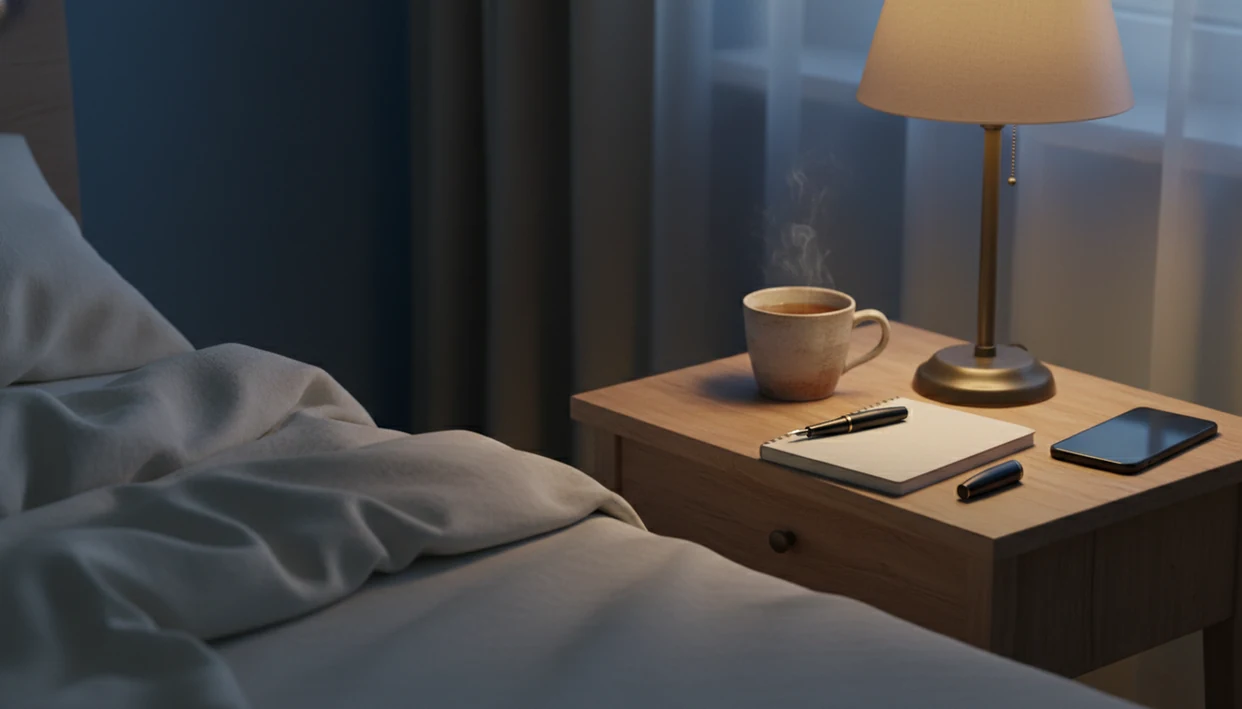


Gratitude before sleep is a short bedtime routine that uses thankful attention, reflection, or guided meditation to shift attention from worry toward calm. It can be as simple as naming three to five small things: clean sheets, a kind message, or a task finished today. Slow breathing, a body scan, or a brief gratitude meditation can give the reflection a clear beginning and end.
The aim is not to force happiness or make sleep happen on command. Research suggests that gratitude may support sleep partly through more positive and fewer negative bedtime thoughts, though the observational evidence does not prove cause and effect. Keep the practice brief, use dim lighting, and treat it as part of a consistent wind-down routine, not an insomnia cure.
The bedtime essentials
- Keep bedtime gratitude simple: name 3-5 small things you appreciate, then stop.
- The likely sleep benefit comes from changing pre-sleep thoughts, not from forcing positivity.
- Use gratitude with dim lights, slow breathing, and a consistent bedtime routine rather than treating it as an insomnia cure.
What Gratitude Before Sleep Means at Bedtime
Gratitude before sleep is a pre-sleep routine that uses thankful attention, brief reflection, or guided meditation to shift the mind from rumination toward calm before bed.
In practice, it means putting the day down gently. You might think of clean sheets, a kind text, a finished task, or the fact that your room is finally quiet. It can be mental, written in two lines, or guided through a bedtime gratitude meditation.
The important part is attention, not performance. Phone face-down on the nightstand. Lights low. No scrolling after the list starts.
Gratitude for sleep is sleep preparation, not a guaranteed sedative. If you want a broader foundation, our guide to how to practice gratitude covers simple daytime versions too.
5 Gratitude Before Sleep Evidence Facts
- Gratitude may help sleep by changing pre-sleep thoughts. The likely pathway is fewer negative thoughts and more positive thoughts while trying to fall asleep.
- A 401-adult study linked trait gratitude with better sleep. Higher gratitude was associated with better sleep quality, longer sleep duration, shorter sleep latency, and less daytime dysfunction, with pre-sleep thoughts helping explain the link PubMed research: 19073292.
- A positive writing trial found later sleep benefits. In 219 young adults, three days of positive writing that included gratitude improved sleep quality at one-month follow-up compared with active control writing sleepeducation reference: does more gratitude improve your sleep.
- The American Academy of Sleep Medicine highlights bedtime thought quality. It notes that positive thoughts, including gratitude, are associated with fewer worrying thoughts and better sleep source.
- The evidence is supportive, not absolute. Most studies rely on self-report, and gratitude is not a replacement for care when sleep problems are chronic or impairing.
Small helps still count.
Does guided gratitude audio have the same evidence as journaling?
Evidence for gratitude exercises does not automatically establish a benefit for gratitude-specific bedtime recordings. Direct research on that audio format is limited. A 2023 review of randomized trials found a significant benefit on the Insomnia Severity Index, but not on pooled general sleep-quality measures or the Pittsburgh Sleep Quality Index. Those mixed results do not establish that a particular recording improves insomnia.
Writing, guided gratitude, mindfulness, and relaxation recordings are different activities, even when all are used at bedtime. Audio can provide prompts without requiring a written entry, but convenience is not evidence of greater sleep benefit. The research also does not establish an optimal number of gratitude items, session length, or time of night. A brief format is a practical choice, not a proven therapeutic dose.
How a Gratitude Before Sleep Routine Works in the Mind
A gratitude before sleep routine works by shaping pre-sleep cognitions, the thoughts running through your mind while you are trying to fall asleep. Worry, replaying mistakes, checking tomorrow’s list, and imagining hard conversations can raise mental arousal.
Late at night, a quiet room can make every unfinished worry feel sharper. Gratitude gives attention a concrete, gentler place to rest. Not forced positivity. Just a softer landing point. If worry keeps returning, try gratitude when anxious with gentle, low-pressure prompts before bed.
For people with busy minds, a brief night gratitude practice is often easier than open-ended reflection because it gives the mind a specific task and a clear stopping point.
MindTastik can support gratitude before sleep with guided structure, breathing cues, and repeatable bedtime audio, but it should be treated as a wind-down aid, not a cure for sleeplessness.
3-to-10-Minute Night Gratitude Practice
Use this night gratitude practice when you want something short enough to repeat. Set a timer for 3 to 10 minutes, dim the phone screen if you use audio, and avoid opening messages or feeds.
- Set the room for rest: low light, no scrolling, and one comfortable position.
- Breathe slowly for five rounds, letting the exhale be a little longer than the inhale.
- Name three to five gratitudes, keeping each one small and specific.
- Feel one gratitude in the body, such as warmth in the chest or softness in the shoulders.
- Release the list by saying, “That is enough for tonight.”
- Repeat the same simple routine for several nights before judging it.
MindTastik can support this routine with guided meditation, sleep audio, breathing exercises, and self-hypnosis sessions. Use the app as a cue to begin and end the practice, not as a test of whether you fall asleep immediately.
8 Bedtime Gratitude Meditation Prompts for Busy Thoughts
Choose one to three prompts if you feel tired. A bedtime gratitude meditation should not become homework under the blanket.
Short prompts for tonight
- What small comfort helped me today?
- Who gave me support, even in a small way?
- What did my body carry me through?
- What went okay, even if the day was hard?
- What task did I finish or move forward?
- What quiet moment can I remember now?
- What can I release until tomorrow?
- What is one safe or steady thing in this room?
Clean sheets. A warm drink. One kind text. Knees still under a cafe table after a hard hour.
If guided audio feels easier than writing, a short gratitude meditation can keep the prompts paced and prevent overthinking.
Bedtime Gratitude Use Cases and Red Flags
Bedtime gratitude is a good fit when thoughts are busy but still manageable. It is a poor fit when symptoms are intense, frightening, medical, or persistent enough to affect daily life.
| Situation | Fit for gratitude before sleep | Better next step |
|---|---|---|
| Mild bedtime stress | Good fit | Use 3-5 gratitudes with slow breathing |
| Busy but manageable thoughts | Good fit | Try a short body scan after the list |
| Desire for a screen-free ritual | Good fit | Keep a paper notebook nearby |
| Beginner meditation | Good fit | Start with one prompt and one breath |
| Acute distress or panic | Poor fit | Use immediate support or a clinician-guided plan |
| Trauma activation or severe depression | Poor fit | Seek qualified mental health support |
| Chronic insomnia, sleep apnea, restless legs, chronic pain | Poor fit | Ask a clinician about evaluation and treatment |
Neutral gratitude is acceptable. You do not need to feel happy. For basics without bedtime pressure, gratitude for beginners may feel more manageable.
5 Common Night Gratitude Practice Mistakes
The most common mistake is forcing happiness when the day was painful. Correction: name one neutral support, such as “the blanket is warm,” and stop there.
A second mistake is writing too long. If the journal turns into a full review of every problem, keep tomorrow’s entry to three lines.
Another trap is using a phone in bed, then getting pulled into alerts, weather, or email. If audio helps, use dim settings and start the session before lying down.
Some people judge the practice by whether sleep happens immediately. Gratitude usually works better as a repeated wind-down cue than as a knockout switch.
Finally, don’t use gratitude to avoid serious sleep or mental health concerns. A daily gratitude routine can support mood, but persistent symptoms deserve proper care.
Guided gratitude when a bedtime list feels effortful
MindTastik’s gratitude sessions and guided meditation library offer an audio option for evenings when writing feels like another task. Breathing exercises can accompany a short reflection; sleep stories offer a different focus when appreciation prompts keep the mind too active. A paper list is a simpler choice for a screen-free routine. Persistent insomnia, panic, or trauma-related distress calls for appropriate clinical support rather than an app session. MindTastik is not a medical treatment.
When bedtime gratitude is not enough
Gratitude before sleep is gentle, but it has clear limits.
- It does not cure insomnia, sleep apnea, restless legs syndrome, chronic pain, panic attacks, or diagnosed sleep disorders.
- Evidence is promising, but it often depends on self-report measures and varied intervention designs.
- Gratitude can feel invalidating during acute distress, grief, trauma activation, or depression.
- If the practice becomes perfectionistic or pressured, it may increase arousal instead of easing it.
- Long journaling sessions can wake the mind up, especially if they turn into planning or self-criticism.
- Persistent sleep problems should be discussed with a qualified clinician and may require CBT-I, therapy, medical evaluation, or other care.
- Apps such as MindTastik, Calm, and Headspace can guide a routine, but they should not replace professional treatment when symptoms are severe.
Clinicians typically recommend treating chronic insomnia with evidence-based care such as CBT-I, and using relaxation habits as support rather than as the whole plan PubMed research: 27136449.
Choose a short gratitude list, body scan, or bedtime story
| Technique | Best for | Minutes |
|---|---|---|
| Three-Thanks Slow Exhale | busy thoughts that need a simple stopping point | 3-5 min |
| Gratitude Body Scan | tension in the jaw, chest, shoulders, or hands | 7-12 min |
| Bedtime Gratitude Sleep Story | people who relax more easily with imagery than silence | 10-20 min |
Gratitude before sleep questions
Does gratitude before sleep actually improve sleep?
It may help, but the evidence is mixed. Some studies report better self-rated sleep after gratitude exercises, while pooled results do not consistently show improved sleep quality. Gratitude may change bedtime thoughts, but that does not guarantee faster sleep or establish it as a treatment for a sleep disorder.
How long should a bedtime gratitude practice take?
Three to ten minutes is a practical starting range, not a research-established dose. Name three to five specific things, take a few slow breaths, and stop. On a tired evening, one appreciation can be enough. Extending the exercise is not necessary, especially if reflection starts turning into planning or self-criticism.
What can I be grateful for after a bad day?
Choose something small and concrete rather than trying to call the whole day good. A warm blanket, a helpful message, or one completed task can be enough. Gratitude does not require denying pain. If even a neutral appreciation feels forced, skip the list and use a quiet breathing or body-scan practice instead.
Is gratitude journaling better than a guided bedtime meditation?
Neither format is established as better for sleep. Journaling has more direct gratitude-intervention evidence than gratitude-specific bedtime audio, but that does not prove it will suit everyone. A short written list keeps the routine screen-free. Guided audio supplies prompts when writing feels effortful, provided listening does not lead to more phone use.
Can gratitude help with racing thoughts at bedtime?
A short, specific list can give manageable bedtime thoughts a narrower focus and a stopping point. Research links gratitude with more positive and fewer negative pre-sleep thoughts, but that association does not prove a treatment effect. If the exercise becomes another mental task, stop and switch to a simpler wind-down activity.
What if bedtime gratitude makes me feel guilty or upset?
Stop rather than trying harder to feel thankful. Gratitude can feel invalidating during grief, depression, acute distress, or trauma activation. A neutral sensory detail may feel less demanding, but skipping the practice is also reasonable. Persistent or intense distress needs appropriate support, not pressure to find something positive.
Should I write my gratitude list before bed or think it silently?
Either can fit a brief bedtime routine; research does not establish an optimal time or prove that silent reflection is equivalent to journaling. Writing offers a clear record and stopping point. Silent reflection avoids materials or screens. Keep either version short, and avoid turning it into a detailed review of the day.
Can gratitude before sleep cure insomnia?
No. Gratitude is a wind-down practice, not an established cure for insomnia or other sleep disorders. It may make bedtime reflection less worry-focused, but persistent sleep difficulty deserves clinical attention. Sleep apnea, restless legs, chronic pain, panic, and other conditions cannot be addressed by a gratitude list alone.