
How to Cultivate Contentment in Daily Life
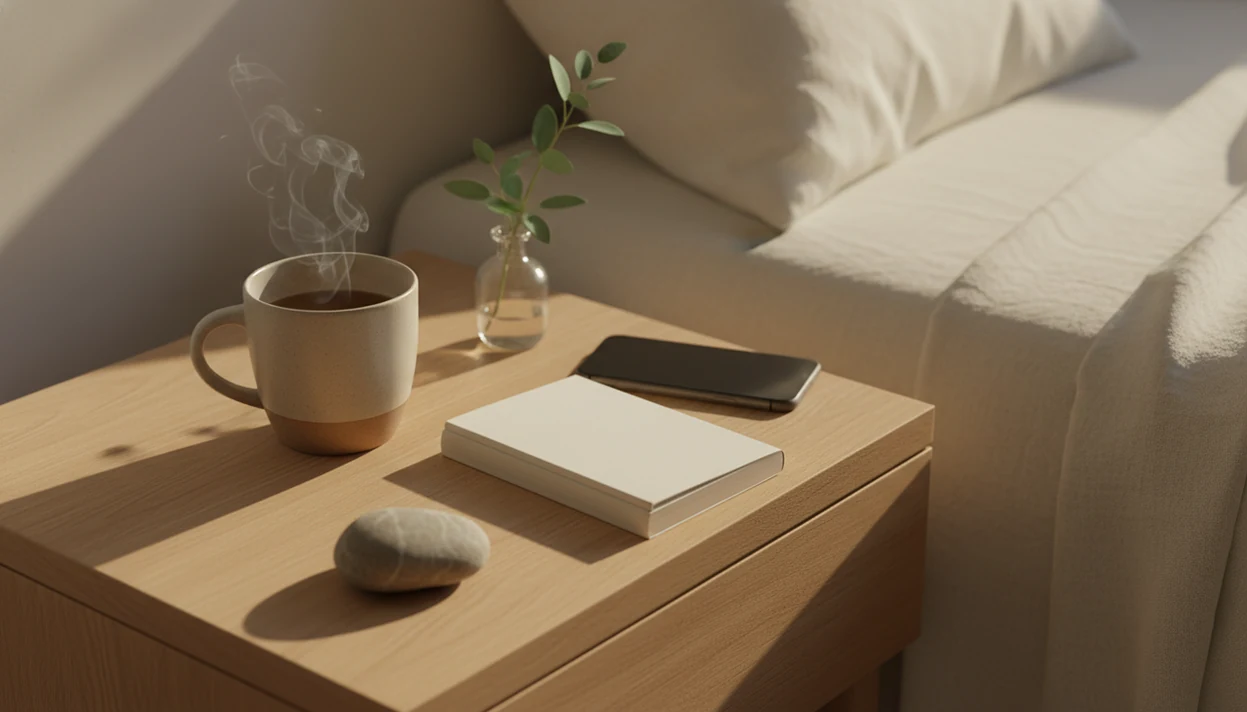


Cultivating contentment means practicing acceptance, gratitude, and present-moment awareness in small daily routines rather than waiting for life to become perfect. Contentment is the learned ability to feel at ease with life as it is while still allowing healthy goals, change, and ambition. A starting point can be one breath, one honest gratitude, and one less comparison with someone else's progress.
The aim is not constant happiness or giving up on improvement. It is feeling steadier while pursuing meaningful goals. That takes more than positive thinking: noticing a tight jaw, making room for rest, and taking a short meditation break can all belong in the routine. Small, repeatable practices leave space for both appreciation and genuine difficulty.
What matters most
- Contentment is built through repetition: gratitude, mindful breathing, self-acceptance, and reduced comparison.
- A practical how to cultivate contentment guide should include body cues, sleep routines, and short meditation breaks, not just positive thinking.
- MindTastik can support contentment routines with guided meditation, sleep audio, breathing exercises, and self-hypnosis for adults seeking sleep, anxiety, and everyday calm support.
What Contentment Means When You Still Have Goals
Contentment is not giving up; it is learning how to feel “enough for now” while still caring about what comes next. To learn how to cultivate contentment, you practice meeting the present moment without constantly measuring it against a better future.
Happiness often rises with a good event, a kind message, or a completed goal. Pleasure can be even shorter, like a warm meal or a funny clip. Achievement-chasing feels different. It says, “I can relax after the next thing.”
Contentment has a quieter tone. It can sit beside ambition without turning every goal into a self-worth test. You can apply for the role, clean the kitchen, start therapy, or save money, and still notice one steady place inside the day.
Enough does not mean finished.
For a beginner-friendly gratitude base, gratitude for beginners can help turn this idea into a repeatable starting point.
Five Contentment Facts Readers Should Know
- Contentment grows through repetition. It is usually built by returning to small habits, not by forcing one dramatic mindset shift.
- Gratitude trains attention toward support. A practice as plain as naming one helpful detail can interrupt the habit of scanning only for what is missing. For another perspective on repeated attention habits, explore what it means to say gratitude rewires your brain.
- Self-acceptance reduces inner punishment. It lets you improve without turning every mistake into proof that you are behind.
- Breathing and short meditation breaks calm the stress loop. They do not erase hard situations, but they can give your body a less reactive starting point.
- Routines make contentment easier to keep. Morning check-ins, lunch pauses, and bedtime wind-downs reduce the need to decide from scratch every day.
A useful contentment practice feels almost too simple at first. That is often the point. If it fits beside brushing your teeth or closing your laptop, it has a better chance of lasting.
What gratitude research says about feeling more content
Gratitude research supports modest expectations, not a promise of lasting contentment. A 2025 meta-analysis covering 24,804 participants across 28 countries found a small average improvement in well-being from gratitude interventions. Its overall effect size was Hedges' g = 0.19. That finding gives gratitude a reasonable place in a daily routine, but it does not establish that a particular meditation script or practice length is best. For a neuroscience perspective, explore what the brain reveals about gratitude, while keeping these modest findings in mind.
The outcome being measured matters. A 2023 review of 18 articles on gratitude and life satisfaction found mixed evidence. Studies using active or positive comparison activities did not show convincing evidence of a reliable advantage. A separate review of 64 randomized trials reported improvements in gratitude and mental health, with effects varying by intervention and population. These findings support gratitude as a complementary practice, not a substitute for treatment or proof that every part of life will feel better. For a closer look at the neuroscience, consider what a grateful brain looks like alongside these mixed research findings.
Before You Start: Make Contentment Safe and Realistic
Contentment practice should feel supportive, not like a test you have to pass during your hardest moment. Begin when your system has at least a little room, and treat the practice as optional support rather than emergency care.
- Choose a low-pressure window. Try the practice after tea, before opening email, or during a quiet bedtime pause instead of starting in the middle of panic, conflict, or a crisis.
- Start with one minute. If stillness feels awkward or exposing, one slow breath and one “enough for now” sentence can be the whole practice.
- Use a safer format. Choose guided audio, gentle walking, stretching, or journaling if silent meditation makes you feel trapped, flooded, or alone with racing thoughts.
- Pause when distress rises. Stop the exercise if it increases panic, shame, numbness, or agitation. Open your eyes, look around the room, move your body, or contact someone supportive.
- Seek qualified help when needed. Persistent anxiety, depression, insomnia, trauma symptoms, self-harm thoughts, or safety concerns deserve professional support, not more self-pressure.
Contentment Mechanisms in the Mind and Body
Contentment works by training attention, regulating the nervous system, and repeating cues until steadiness becomes more familiar. Present-moment attention is a trainable skill, much like returning to a walking path after drifting toward the curb.
The mind creates friction through comparison and rumination. Comparison asks, “Why am I not there yet?” Rumination replays the same scene until the body starts responding as though it is happening again. In a quiet room, noticing one steady breath can interrupt that loop before it becomes the whole night.
Body cues matter. A shallow breath, tight jaw, raised shoulders, or restless posture can signal that your system is bracing. A slow exhale, softened hands, or feet planted on office carpet can tell the body that it has a little more room.
Per the CDC, 21% of U.S. adults practiced mindfulness meditation in 2022, and 17.3% used yoga (CDC guidance: db503.htm). These practices are mainstream supports for calm, but they are not cures for anxiety, depression, or insomnia.
Six-Step Daily Contentment Routine
Use this routine when you need a practical way to cultivate contentment during a morning pause, lunch break, or bedtime wind-down. Keep it short enough that you can repeat it tomorrow.
- Set a cue. Choose one daily trigger, such as opening your curtains, closing your office door, or dimming your phone screen before bed.
- Notice one enoughness signal. Name one thing that does not need fixing right now.
- Breathe for 60 seconds. Inhale slowly, exhale longer, and let your shoulders drop once.
- Name one grateful detail. Pick something specific, not grand: a text answered, a clean towel, a quiet hallway. For more structured repetition, explore four ways to wire your brain for gratitude through simple daily practices.
- Release one comparison. Say, “Their timeline is not my instruction.”
- Repeat at the same time tomorrow. Consistency matters more than emotional intensity.
Guided meditation, breathing exercises, and sleep audio can support the routine when you want an external cue instead of relying on memory. If gratitude is the hardest part, a daily gratitude routine can give the practice more structure.
Contentment Tips for Sleep, Anxiety, and Everyday Calm
Contentment becomes easier when the practice matches the moment. Sleep, anxiety, focus, and self-judgment each need a slightly different cue.
Sleep: Use a short bedtime gratitude reflection with calming audio. One sentence is enough: “Today had strain, and this one thing supported me.” A phone with guided audio resting near dim light can be enough of a cue to begin, even when the routine is imperfect.
Anxiety: Use breath awareness and present-moment labeling. Try, “Tight chest, fast thoughts, sitting on the bed.” Labeling reduces the need to argue with every thought.
Focus: Reduce comparison triggers before work sessions. Move social apps away from the first screen, then begin with one task.
Self-judgment: Use self-compassion language. Replace “I am failing” with “I am having a hard moment, and I can take the next small step.”
Bedtime contentment cues
A simple gratitude before sleep practice pairs well with low light, steady breathing, and quiet audio.
Anxiety-friendly contentment cues
For anxious moments, apps such as Calm and Headspace can offer meditation for sleep, anxiety support, beginner meditation, and everyday calm.
Contentment vs Happiness: Steady Acceptance vs Mood Spikes
Contentment is steadier than happiness because it depends less on a mood spike or outside event. Both can exist together, but they are not the same experience.
| Experience | What it often feels like | What drives it | What it is not |
|---|---|---|---|
| Happiness | Lifted, bright, pleased | Good news, pleasure, success, connection | A permanent state |
| Contentment | Settled, accepting, enough for now | Attention, gratitude, self-acceptance, reduced comparison | Resignation or numbness |
| Achievement-chasing | Restless, goal-focused, future-loaded | Progress, recognition, external markers | The only path to meaning |
| Passivity | Stuck, avoidant, disengaged | Fear, fatigue, helplessness | True contentment |
Contentment does not mean lowering your standards. It means you stop using dissatisfaction as the only fuel for change. For people who feel pulled between growth and exhaustion, contentment is often easier than constant positivity because it does not require pretending.
Five Contentment Mistakes That Keep People Stuck
Five common mistakes make contentment feel fake, forced, or impossible.
- Treating gratitude as the only practice. Gratitude helps, but most people also need breathing, rest, self-compassion, and attention training.
- Using affirmations to suppress real emotions. Saying “I am fine” when you are not can create more tension.
- Waiting until life is easier. Contentment is usually practiced inside imperfect days, not after every problem is solved.
- Confusing acceptance with passivity. Acceptance means seeing clearly. It does not mean staying in harmful or unhealthy situations.
- Expecting one breathing exercise to solve complex stress. A short reset can help the body settle, but it cannot fix debt, grief, conflict, or medical symptoms by itself.
The broader need is real. In 2022, 1 in 5 U.S. adults experienced a mental illness, according to NIMH (nimh reference: mental illness). The WHO estimates that 301 million people lived with an anxiety disorder globally in 2019 (WHO report: anxiety disorders). Contentment practices can support self-regulation, but professional care matters when distress is persistent or severe.
MindTastik Support: Best For and Not For
MindTastik is a meditation and self-hypnosis app that supports sleep, anxiety relief, stress reduction, focus, and everyday calm. It may help when you want cues, audio guidance, and a simple way to repeat a contentment routine.
| Best for | Not ideal for |
|---|---|
| Adults who want short guided support for sleep, anxiety, beginner meditation, and everyday calm | Emergency mental health needs or crisis support |
| People who forget to practice unless a session is already waiting | Replacing therapy, diagnosis, medical treatment, or prescribed care |
| Bedtime wind-downs with guided audio instead of scrolling | Severe insomnia, panic, depression, or trauma symptoms without professional guidance |
| Beginners choosing between a 5-minute breathing exercise and a 20-minute body scan | Anyone who finds meditation distressing and needs a different support format |
Short audio can make practice easier to begin. However, an app works best when it supports real-life habits, not when it becomes another task to judge yourself for missing.
Contentment Practice Image Caption and 5-Minute Routine
Suggested image caption: A quiet evening contentment practice with journaling, breathing, and guided meditation audio for how to cultivate contentment.
Try a 5-minute routine when the day feels crowded. Spend one minute breathing slowly, one minute naming what is already okay, one minute writing one gratitude, one minute releasing one comparison, and one minute choosing the next kind action.
Morning option: sit before opening messages and name one enoughness signal. Maybe the room is quiet. Maybe your body made it to the chair.
Bedtime option: lower the screen brightness, choose calm audio, and write one sentence beside a half-empty water glass by the bed. A gratitude meditation can make the routine easier when your thoughts feel loud.
Guided support for gratitude and evening reflection
MindTastik's gratitude sessions and guided meditation library suit adults who prefer spoken prompts to an open-ended journal or silent pause. Breathing exercises can accompany a short daytime break, while sleep audio can support an evening wind-down. These are options for repeating a routine, not evidence that an app creates lasting contentment. People seeking help for persistent depression, severe anxiety, or insomnia should seek professional care rather than rely on meditation audio.
What contentment practice cannot fix
Contentment practices are supportive tools, not complete solutions for every kind of distress. They work best when expectations stay honest.
- Contentment practices are not a substitute for professional treatment when anxiety, depression, insomnia, or distress is persistent or severe.
- Gratitude, affirmations, meditation, and breathing are not instant fixes. They usually need repetition before they feel natural.
- Evidence is stronger for mindfulness and stress reduction than for claims about permanent happiness.
- Short breathing exercises cannot resolve complex emotional, financial, relational, or medical problems alone.
- App-based practices work best when paired with real-world routines such as sleep hygiene, movement, supportive relationships, and reduced comparison triggers.
- Some people find silent reflection uncomfortable. Guided formats, movement-based practices, or professional support may feel safer.
- Contentment should not be used to tolerate unsafe, abusive, or medically concerning situations.
Clinicians typically recommend seeking qualified support when symptoms interfere with sleep, work, relationships, safety, or daily functioning. If a practice makes you feel worse, pause and choose a gentler form.
Questions about cultivating contentment
How can I practice contentment when life is difficult?
Start with something small and true, rather than a statement that everything is fine. Name one thing that helped today, such as a meal, a supportive message, or a quiet moment. Acknowledge the difficulty too. Contentment practice should not replace solving practical problems, leaving harmful situations, or seeking care.
Can I be content and still want more from life?
Yes. Contentment means allowing some ease in the present, not abandoning goals. A useful distinction is between wanting to improve something and treating that improvement as a condition for self-worth. It is possible to pursue a new job, better health, or a stronger relationship without declaring the current life worthless.
How often should I practice gratitude for contentment?
Research supports repetition over several weeks, but does not establish one best schedule. One study used gratitude diaries twice weekly for four weeks. A practical starting point is one to five minutes daily or several times a week. That is a manageable routine, not a proven optimal dose.
How do I stop comparing my life with other people's lives?
Notice when comparison starts and what triggers it, such as social feeds or conversations about promotions. Reduce exposure before work or bedtime, then name one thing in the current day that does not need fixing. The aim is to interrupt repeated self-judgment, not to eliminate every comparison.
How long does it take to feel more content?
There is no established timeline for contentment. Gratitude studies generally assess repeated practice over weeks, and average benefits are modest. Some people may notice a useful pause before any broader change. Look for less time caught in comparison or more moments of ease, rather than expecting a permanently positive mood.
How does mindfulness help cultivate contentment?
Mindfulness helps you notice the present moment without immediately judging it or wishing it were different. Try pausing to feel your breath, notice your surroundings, and name one thing you appreciate. This practice can make everyday experiences easier to enjoy while helping you respond more thoughtfully to uncomfortable feelings.
Can gratitude journaling before bed help me feel more content?
Gratitude journaling before bed can shift your attention toward moments of support, comfort, or meaning from the day. Write down two or three specific examples and why they mattered. Keep the exercise gentle rather than treating it as a requirement. It may support a calmer bedtime routine, but it does not guarantee better sleep.
How can self-acceptance help me cultivate contentment?
Self-acceptance means recognizing your strengths and limitations without making your worth depend on constant improvement. When you notice harsh self-criticism, try describing the situation in neutral language and offering yourself a compassionate response. Accepting where you are today can reduce internal pressure while leaving room for learning, change, and meaningful goals.