
How to Get Over Fear of Flying in No Time: A Calm Flight Guide
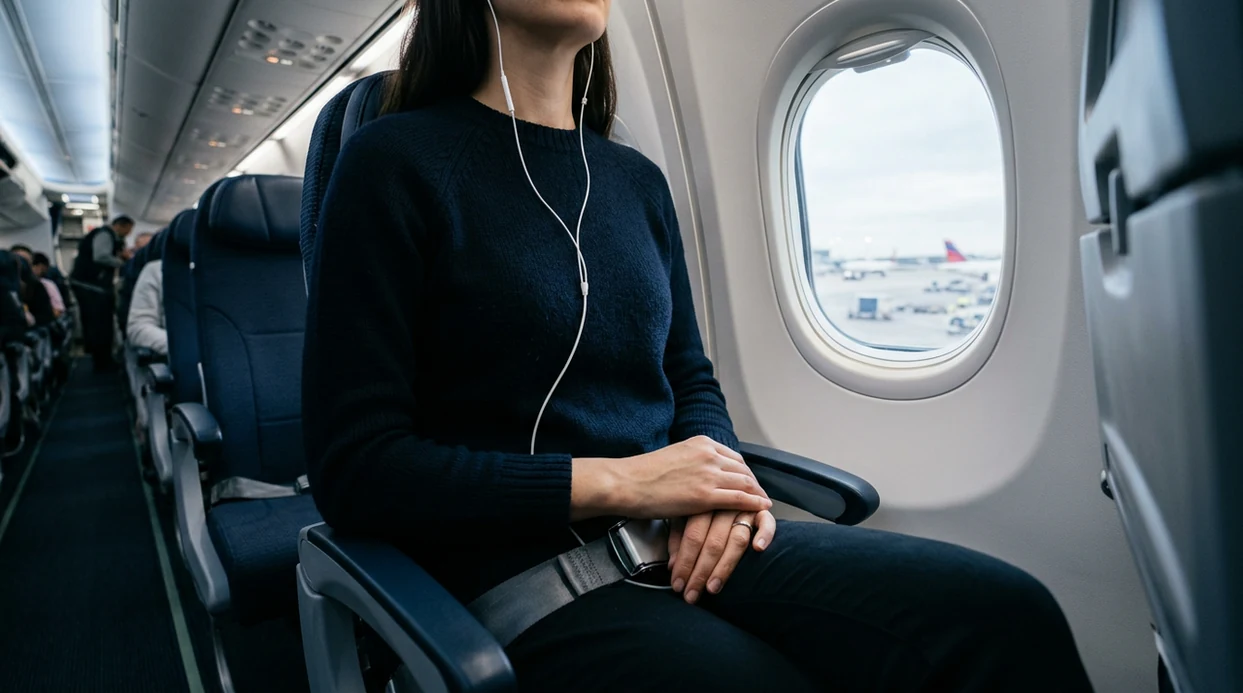


To overcome fear of flying, slow breathing and grounding can help with immediate distress, while lasting improvement usually takes repeated practice, gradual exposure, or professional support. A short guided meditation can give attention something steady to follow before boarding or during turbulence. These tools may ease symptoms within minutes, but quick relief is not the same as resolving a phobia.
Fear of flying is common, and it can involve turbulence, feeling trapped, loss of control, or fear of panic itself. A useful flight plan combines a brief breathing reset, sensory grounding, and a realistic response to frightening thoughts. For fear that repeatedly stops travel, research on specific phobia treatment supports CBT that includes exposure, rather than relying on calming exercises alone.
The flight-calming plan
- Use a 3-minute breathing reset, a 5-senses grounding exercise, and a short guided meditation before boarding and during turbulence.
- Fear of flying is common: one international survey found 43% reported some fear of flying and about 9% reported a full flying phobia.
- Fast calming tools help in the moment, while long-term progress usually requires gradual exposure, cognitive reframing, and sometimes CBT or professional care.
How to Get Over Fear of Flying in No Time: At-a-Glance Plan
“In no time” means quick symptom relief, not a guaranteed permanent cure. The fastest flight-calming plan is: breathe, ground, reframe, listen to guided audio, then repeat when the fear spikes again.
Start with a slow exhale before you open boarding messages or check the gate screen. Plant both feet on the airport carpet. Breathe in for four, out for six, and keep your shoulders low. Then name five things you can see, four you can feel, and three you can hear.
After that, use one sentence: “This is anxiety, not danger; I can ride it out.” A short guided session, including MindTastik meditation, can give your mind something steady to follow when the cabin door closes.
Image caption suggestion: “A traveler using guided breathing audio before boarding to calm fear of flying.”
Five Facts About How to Get Over Fear of Flying in No Time
- Fear of flying is common and often comes from loss of control, turbulence, claustrophobia, panic sensations, or catastrophic thoughts.
- In a 2014 international survey of more than 2,000 people, 43% reported some fear of flying and about 9% reported a full flying phobia, according to this NIH research: PMC4062307.
- Breathing, grounding, meditation, and progressive muscle relaxation can lower anxiety symptoms quickly because they reduce the body’s threat response.
- Graded exposure and CBT-style practice are stronger for durable phobia change because they teach the brain that flying can be tolerated.
- Alcohol and sedatives should not be the main coping strategy, since they can impair judgment and prevent natural confidence-building.
A good meditation app for sleep anxiety and everyday calm gives repeatable audio cues, breathing structure, and wind-down support, not a promise that fear disappears on command.
How Fear of Flying Works in the Brain and Body
Fear of flying is a threat-response loop where the brain reads normal flight sensations as danger, then the body reacts with adrenaline, faster breathing, muscle tension, and scanning for risk.
The engine changes pitch. The plane banks. A tray table rattles during turbulence. Your brain may treat those ordinary cues as evidence that something is wrong. That interpretation can make your heartbeat feel louder and your jaw tighten against the pillow the night before a trip. If preflight worry keeps you awake, consider how to silence your mind at night without demanding that every thought disappear.
Avoidance keeps the loop alive. If you cancel every flight, your nervous system never learns that anxiety can rise, peak, and fall while you stay on the plane. Commercial flight anxiety often reflects risk perception more than actual aviation danger, which is why physical calming comes first. For many anxious flyers, the hard part is not understanding that planes are engineered for turbulence; it is tolerating the body sensations while the brain keeps asking for certainty. Understanding overthinking vs mindfulness can help distinguish repeated attempts to gain certainty from noticing thoughts without chasing them.
For anxious flyers, body-based calming is often easier than arguing with every fear thought because it reduces the alarm signal before reasoning has to work. For everyday practice between flights, explore how to get a peaceful mind through gentle attention and realistic expectations.
How to Use a MindTastik Meditation Flight-Calm Protocol
Use a flight-calm protocol as a repeatable routine, not a last-second rescue. Tools like MindTastik can support guided breathing and calming audio when you need a clear track to follow.
- Download calming audio before leaving home so it works offline on the flight.
- Set a pre-boarding timer for a short guided meditation or breathing session.
- Practice diaphragmatic breathing during boarding and taxi by letting your belly soften on the inhale.
- Use grounding during takeoff, turbulence, and landing by pressing your feet down and naming neutral details.
- Review what went better after the flight so your brain stores evidence of coping. If you keep replaying past travel choices, learning how to get over regrets can support a kinder postflight review.
If you already use a meditation app for anxiety support, save one short session before airport Wi-Fi gets patchy. Offline audio saved for a flight removes one small decision when your mind is busy.
Use calming tools without making them a condition for flying
Breathing and audio are useful supports, but they can become another rule anxiety imposes: “I can only fly if this session stops every symptom.” The distinction is the purpose of the tool. A flexible practice helps someone stay with discomfort; a rigid safety behavior is used to prevent a feared catastrophe. The NHS Inform panic self-help guide explains how safety behaviors can keep fear going.
A practical goal is to remain in the situation with some anxiety present, not to repeat a breathing track until every sensation disappears. If audio ends and tension returns, that does not mean the flight plan has failed. NHS guidance on panic recommends staying where possible and remembering that an attack will pass. When exposure is part of treatment, a clinician can help decide how to use calming tools without making them essential.
A 10-Minute Fear of Flying Reset Before Boarding
If you are scared of flying right now, use the next 10 minutes to steady your body before solving anything else. Keep the plan small.
Minutes 0 to 2: breathe in for four and out for six. Let the exhale do most of the work.
Minutes 2 to 5: ground through your senses. Notice the floor, your bag strap, the gate sign, and the temperature of the air.
Minutes 5 to 8: play a short guided meditation. A 5 minute meditation for anxiety fits well here because it does not ask for a long attention span.
Minutes 8 to 10: repeat, “This is anxiety, not danger; I can let the wave pass.” Check your essentials once, reduce caffeine, and avoid looping through turbulence maps for reassurance.
Fast Fear of Flying Tools Compared: Breathing, Meditation, Exposure, and Reframing
Different fear-of-flying tools work at different speeds. Meditation and breathing help during the spike, while exposure is usually better for lasting change.
| Tool | Best moment | Speed | What it does | Limitation |
|---|---|---|---|---|
| Slow breathing | Gate, taxi, turbulence | Minutes | Lowers physical arousal | Needs repetition when fear returns |
| Guided meditation | Waiting, cruising, bedtime before travel | Minutes | Gives attention a calm track | May not erase severe panic |
| Progressive muscle relaxation | Seat before takeoff | 5 to 10 minutes | Releases bracing and tension | Harder in cramped seats |
| Cognitive reframing | Catastrophic thoughts | Minutes | Re-labels sensations and risk | Less useful if the body is highly activated |
| Gradual exposure | Weeks before travel | Slower | Builds durable tolerance | Can feel uncomfortable |
The 2014 JAMA Internal Medicine mindfulness meta-analysis found small to medium anxiety reductions across trials, according to this JAMA Internal Medicine study: 1809754. Exposure-based CBT is a standard treatment approach for specific phobias, with evidence reviews finding meaningful symptom reductions; see this NCBI overview. Clinicians typically recommend exposure-based CBT when phobia causes major avoidance or panic.
The most common medically supported way to reduce a specific phobia is CBT with gradual exposure, combined with coping skills for the body’s anxiety response.
How to Reduce Fear of Flying Anxiety Over Several Trips
To reduce flight anxiety over several trips, build a graded exposure ladder and repeat each step until it feels more manageable. The goal is not zero fear; it is learning that fear can rise and fall without escape.
A simple ladder might look like this: read plain-language flight safety information, watch cabin takeoff videos, visit an airport without flying, take one short flight, then repeat longer flights. After each step, write down your prediction, what actually happened, and the next practice task.
In a one-day behavioral group treatment trial for fear of flying, 93% flew during the 1-year follow-up and 70% flew again without the treatment team, according to the study report, according to the study report PubMed research: 8981928. That kind of progress comes from practice, not a single trick.
For people with repeated avoidance, gradual exposure usually works best when each step is planned, repeated, and reviewed instead of rushed.
Common Mistakes in a How to Get Over Fear of Flying in No Time Guide
A useful how to get over fear of flying in no time guide should calm the moment without pretending fear is solved forever. Watch for these common mistakes.
- Chasing a permanent instant cure. Quick relief matters, but durable confidence usually needs repetition.
- Overchecking flight data. Turbulence maps, flight radar, and safety statistics can become reassurance spirals. When checking turns into rumination, these four reminders for overthinking offer ways to respond more thoughtfully to repetitive worries.
- Using alcohol as the plan. It may feel like a shortcut, but it can impair judgment and coping.
- Avoiding every flight. Avoidance can make the fear more rigid over time.
- Treating symptoms as proof. A racing heart is an anxiety signal, not automatic evidence of danger.
Medication questions belong with a qualified clinician, not a blog. If panic feels intense, panic attack meditation support can help you understand calming tools while you decide whether clinical care is needed.
When to Get Professional Help for Fear of Flying
Get professional help when fear of flying causes panic attacks, repeated avoidance, trauma reactions, fainting fears, or travel limits you cannot work around. Self-help can calm a hard moment, but it is not the right level of care for every nervous system.
Exposure-based CBT or therapy with a licensed clinician is usually more appropriate when the fear has become a pattern: canceling trips, needing excessive reassurance, dreading flights for weeks, or feeling trapped by body symptoms. A therapist can pace exposure safely, especially if flying fear connects to past trauma, panic disorder, claustrophobia, or medical anxiety.
- Notice whether your fear is occasional discomfort or a recurring problem that changes your plans.
- Choose licensed therapy if panic, trauma memories, fainting fears, or avoidance keep returning.
- Ask medication questions only to a clinician who knows your health history, current prescriptions, and alcohol or sedative risks.
- Seek urgent medical care for chest pain, fainting, severe shortness of breath, or symptoms that feel medically unusual.
- Use meditation as support for calming and focus, not as diagnosis, treatment, or emergency care.
Guided breathing for the gate and the cabin
MindTastik’s breathing exercises and short guided meditations suit preflight worry, a tense wait at the gate, or moments when following a voice feels easier than remembering a routine. Choosing a familiar session before travel keeps the plan simple.
The app is a support for managing anxiety, not a medical treatment. People who cancel flights, experience severe panic, or have trauma-related reactions should consider clinician-led care rather than depending on audio to make flying possible. Guided sessions can accompany treatment, but they do not replace exposure-based therapy.
What breathing and guided audio cannot resolve
Fast flight-calming tools are useful, but they have real limits. A supportive practice should make flying more manageable without turning self-help into pressure.
- No breathing exercise, app, meditation, tapping routine, or coping script can guarantee instant permanent relief for every person.
- Severe panic attacks, PTSD, trauma history, fainting fears, or essential-flight avoidance may need licensed mental-health support.
- MindTastik meditation can support anxiety management, but it is not a replacement for therapy, diagnosis, or medical care.
- Alcohol and unprescribed sedatives can create safety issues and should not be the core strategy.
- Exposure can feel uncomfortable and should be paced safely, especially with complex mental-health histories.
- Some popular quick fixes have less flight-specific evidence than CBT with exposure.
- If symptoms feel medically unusual, seek urgent medical advice rather than assuming it is only anxiety.
At 2:13 a.m., checking the lock screen and realizing you are still awake is miserable. If that happens before travel, breathing exercises for anxiety at night may help you settle your body before the flight day.
If your nervous system needs something faster than a full sit, try MindTastik breathing exercises for guided breath pacing.
Fear of flying questions
Can fear of flying go away before my next flight?
Short breathing and grounding exercises may reduce distress before a flight, but they cannot guarantee that fear disappears. For a recurring phobia, progress usually comes from repeated exposure and changes in how frightening thoughts are handled. A manageable flight with some anxiety is a more realistic immediate goal than complete calm.
What breathing exercise can I use before takeoff?
Try breathing in gently for four counts and out for six for a few minutes. Keep the breath comfortable rather than forcing large breaths, and let the shoulders relax. This can help with immediate distress, but it is a coping tool, not a requirement for safety or a cure for flying phobia.
What can I do if I panic on a plane?
When possible, stay in place, slow the breathing, and remind yourself that a panic attack will pass. Ground attention in neutral details, such as the seat beneath the body or sounds in the cabin. These steps are intended for familiar panic symptoms; a coping script cannot determine whether an unfamiliar symptom needs medical attention.
Why am I scared of flying even when I know it is safe?
Knowing safety facts does not necessarily settle the body's threat response. Flying fear may center on loss of control, confined space, turbulence, or sensations such as a racing heart. Avoiding flights can preserve those fears because there is little opportunity to learn that anxiety can rise and fall without escaping.
Does meditation help with fear of flying?
Guided meditation can provide a steady focus during preflight worry or an anxiety spike. It is best treated as an aid to coping, not proof that a phobia has been treated. For persistent avoidance, CBT with exposure has stronger support than meditation alone. The aim is tolerating the flight, not suppressing every anxious thought.
How can I make turbulence less frightening?
When movement triggers fear, press the feet gently into the floor, notice a few neutral cabin details, and use a slow, comfortable breath. Label the reaction as anxiety rather than treating each sensation as evidence of danger. Repeatedly checking turbulence forecasts or flight data can become a reassurance habit rather than a lasting solution.
Should I take medication for flight anxiety?
Medication decisions belong with a clinician who can assess the symptoms and medical history. Alcohol and unprescribed sedatives should not be the flight-calming plan. If medication feels necessary for every trip, discuss the recurring fear as well as immediate relief, including whether exposure-based treatment would address the avoidance.
What therapy works for fear of flying?
CBT that includes gradual exposure is supported for specific phobias. For flying fear, exposure may use real-world practice or virtual reality, with steps chosen to address the person's triggers. Trials have found improvements with both formats. Therapy is especially relevant when fear causes canceled trips, prolonged dread, or repeated panic.