
The Best Self Care Apps You Should Try to Achieve Your Goals


The best self-care apps match a specific goal: better sleep, stress relief, anxiety coping, mood tracking, or a repeatable daily habit. A bedtime audio library serves a different purpose from a mood log or a reminder app. Useful comparison points include guided content, breathing exercises, adjustable reminders, privacy controls, and how easily a practice fits into an ordinary day.
MindTastik offers guided wellness audio for adults, including meditation, sleep support, breathing practices, and self-hypnosis tracks for anxiety support and everyday calm. It fits an audio-led routine rather than every self-care need. Meditation and breathing apps can support coping, but they are not replacements for therapy, medication, or crisis care. The practical choice is a tool that addresses one clear need without adding unnecessary work.
Choose by goal
- Choose a self-care app by goal, not by app-store popularity: sleep, anxiety, stress, mood tracking, and habit building need different tools.
- Meditation and breathing apps can support everyday calm and anxiety coping, but they are wellness tools, not replacements for therapy, medication, or crisis care.
- MindTastik is best positioned for adults who want guided meditation, sleep audio, breathing exercises, and self-hypnosis for sleep, anxiety support, and everyday calm.
How the best self care apps you should try to achieve your goals look
Side-by-side captures of the compared products. Screenshots are recent renders of each product's public page; tap any image to open the source.
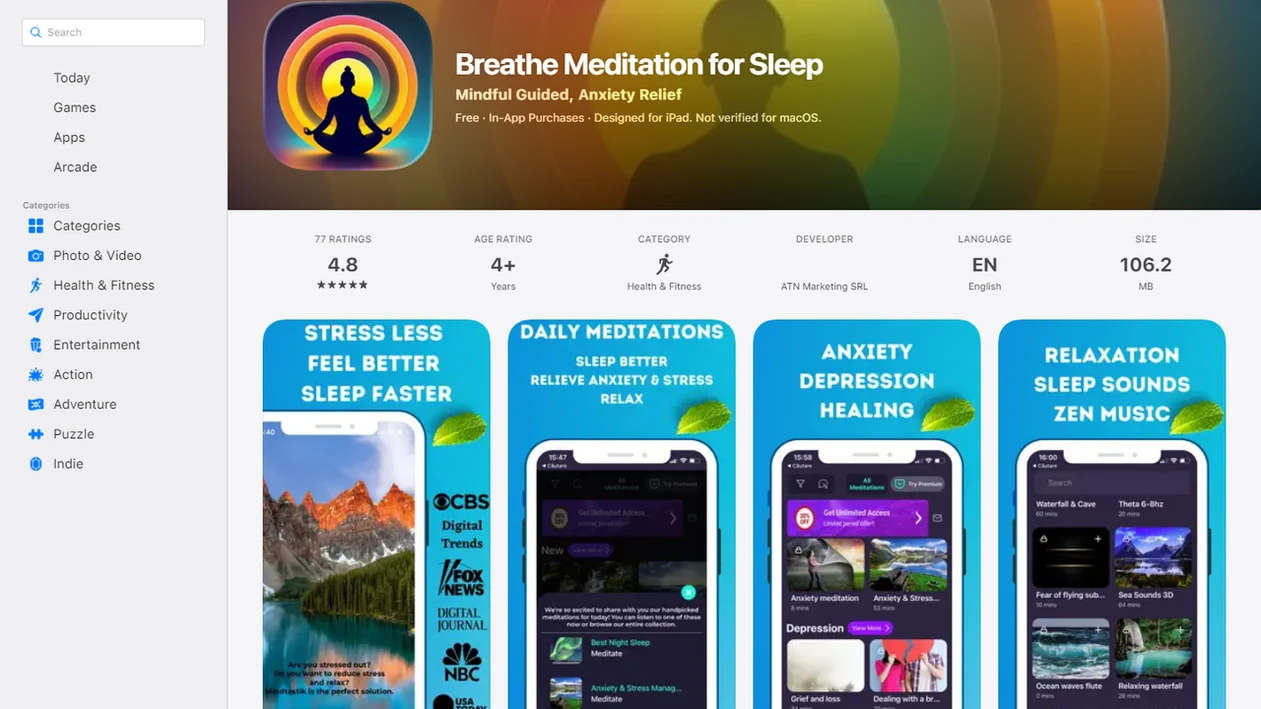
At-a-glance guide to the best self care apps you should try to achieve your goals
| Goal | App category to compare | Best fit | Caution |
|---|---|---|---|
| Sleep | Sleep meditation and soundscape apps | Bedtime audio, wind-down routines | Avoid late-night scrolling inside the app |
| Anxiety support | Meditation, grounding, CBT-style tools | Short resets and coping skills | Not crisis care |
| Stress relief | Calm or Headspace-style meditation apps | Guided practice and breathing | Consistency matters |
| Mood tracking | Journaling and mood logs | Pattern spotting | Can feel burdensome |
| Habit building | Reminder and streak apps | Small daily actions | Streak pressure can backfire |
| Journaling | Prompt-based reflection apps | Emotional processing | Privacy matters |
| Everyday calm | Meditation-first apps | Repeatable short sessions | Choose simple navigation |
The best app is the one that matches your goal, symptom severity, content preference, and privacy expectations. MindTastik fits the meditation-first lane, with sleep audio, breathing, self-hypnosis, and everyday calm tools.
Good meditation app for sleep anxiety and everyday calm should deliver repeatable support cues, not diagnosis, emergency care, or a promise that one audio session will fix everything.
Five facts about self care apps for sleep, anxiety, and everyday calm
- Self-care apps are goal-specific. A sleep app, a mood tracker, and a habit reminder app solve different problems, so don't choose one as a one-size-fits-all tool.
- Meditation and breathing apps are reasonable starting points. About 14.1% of U.S. adults used meditation in the past year, according to NCCIH data, which helps explain why guided audio has become a common wellness format NCCIH mindfulness overview: meditation in depth.
- Structured programs and audio libraries serve different needs. Courses help people who want a path; open libraries help people who say, “I just need something to play when my thoughts get loud.” If you prefer story-based practice, compare the Sutara Buddhist Stories app stats before choosing a listening routine.
- Free content can help. Paid plans often include longer courses, sleep content, personalization, or more extensive guided programs.
- Apps support coping and routines. They do not replace professional care for severe, persistent, worsening, or unsafe symptoms.
For mild daily stress, a short guided practice is often easier than a long course because it asks for less time and less decision-making.
How self care apps work for goals, habits, and emotional regulation
Self-care apps work by combining cues, guided practice, repetition, feedback loops, reminders, and content libraries into a routine people can repeat. In plain language, the app gives you a starting signal, walks you through the behavior, then nudges you to return.
Different tools support different behaviors. Meditation audio gives your attention one track to follow. Breathing timers slow the pace of an anxious moment. Sleep soundscapes can mark the start of a wind-down routine. Journaling prompts support reflection, and mood tracking helps some users notice patterns across days.
The phone screen still needs dimming.
Consistency and fit usually matter more than the largest feature list, especially when someone is choosing between a 5-minute breathing exercise and a 20-minute body scan in an app library. Research on smartphone mental health interventions is promising but uneven; a 2019 meta-analysis found small-to-moderate effects for depressive symptoms across app-based interventions nature reference: s41746 019 0188 8, while a 2021 review of anxiety-focused mobile apps found evidence quality and app-specific validation remained inconsistent NIH research: PMC8411902.
How to use self care apps to achieve sleep, stress, and habit goals
Use a self-care app like a small routine, not a personality test. The goal is to reduce friction enough that you can repeat the practice when life is normal, messy, or both.
- Set one measurable goal such as falling asleep faster, taking one breathing break daily, or tracking mood three nights a week.
- Match the goal to the app category instead of choosing by popularity or a glossy app-store screenshot.
- Test one short practice for 7 days, ideally at the same time each day.
- Review what changed in sleep, stress, anxiety, mood, or consistency after the week ends.
- Reset the plan if the app feels too complex, too expensive, or not private enough.
Someone using MindTastik might start with sleep audio after dimming the phone screen, or a guided breathing session before bed. If racing thoughts are the main issue, a focused best meditation app for racing thoughts guide may be a better starting point.
Best self care app categories by personal goal
1. Meditation and everyday calm apps. These apps offer guided practices, breathing exercises, and short resets for people who want structure without a complicated setup.
2. Sleep apps. Sleep-focused apps use bedtime audio, wind-down routines, stories, soundscapes, or body scans. Cool sheets against restless legs can feel less lonely when a calm voice gives the next step.
3. Anxiety coping apps. These tools often include grounding exercises, panic support tools, breathing timers, and short practices. They support coping, not medical treatment.
4. Mood tracking and journaling apps. These apps help users record patterns, reflect on triggers, and bring clearer notes to a clinician if needed.
5. Habit and reminder apps. These tools help with streaks, prompts, and tiny daily actions.
MindTastik sits across meditation, sleep, breathing, self-hypnosis, and everyday calm. For a narrower sleep comparison, the best sleep meditation app for adults guide covers bedtime use in more detail.
Gratitude apps have mixed results, not guaranteed benefits
Gratitude apps are another option for a reflection goal, but their evidence should be read at the program level. A 2022 randomized trial involving 849 adults found small-to-moderate improvements in wellbeing, anxiety, depression, and stress after a six-week gratitude app program. Gains were maintained at 12 weeks. Completing more modules was only weakly associated with better outcomes, so more app activity did not reliably mean a larger benefit.
Other trials give a more cautious picture. In a 2025 trial involving 125 parents of young children, two weeks of daily app-based gratitude or mindfulness did not outperform food journaling on parenting stress, mood, or emotion regulation. For app selection, this means a gratitude prompt is an option to compare with ordinary journaling, not a reason to assume an app will be more effective.
How We Chose Self-Care Apps for This Guide
We chose self-care apps by asking whether each one fit a clear goal, felt usable in real life, handled safety responsibly, and gave users reasonable privacy choices. Sleep, anxiety support, mood tracking, and habit building were reviewed as separate lanes because a bedtime audio library is not the same tool as a panic grounding exercise, a mood log, or a streak reminder.
- Match the app to the primary goal, separating sleep wind-down tools from anxiety coping, mood reflection, and habit prompts.
- Check the user experience, including whether guided content is easy to find, sessions are not buried in menus, and reminders can be adjusted.
- Review pricing clarity, especially free limits, trial terms, subscription prompts, and whether paid features are obvious before sign-up.
- Look at data controls, including account requirements, privacy language, export or deletion options, and how sensitive notes may be handled.
- Weigh safety limits, because wellness apps were not treated as medical treatment, diagnosis, or crisis support.
When symptoms are severe, persistent, worsening, unsafe, or disrupting daily life, access to a clinician matters more than an app’s feature list.
Meditation apps for sleep, anxiety support, and everyday calm goals
A meditation-first app can fit sleep, anxiety support, and everyday calm goals when it offers guided sessions, sleep audio, breathing exercises, and simple routines that are easy to repeat. MindTastik is one example in this category, especially for adults who want meditation, sleep audio, and self-hypnosis in one place.
Its strongest use cases are bedtime wind-downs, anxious thought interruption, beginner meditation, short everyday calm breaks, and routine building. Picture a quiet room where the light is low and your day keeps replaying after you meant to rest. A guided session can offer the mind a steadier track to follow instead of another check-in with the clock. For a kinder approach to everyday practice, consider a meditation app for self love alongside short calm breaks.
Use safety language here. The app supports anxiety, stress, everyday calm, and sleep routines; it does not treat, diagnose, or cure mental health conditions. Readers comparing meditation formats may also want the best guided meditation app for beginners or the best anxiety meditation app for everyday calm.
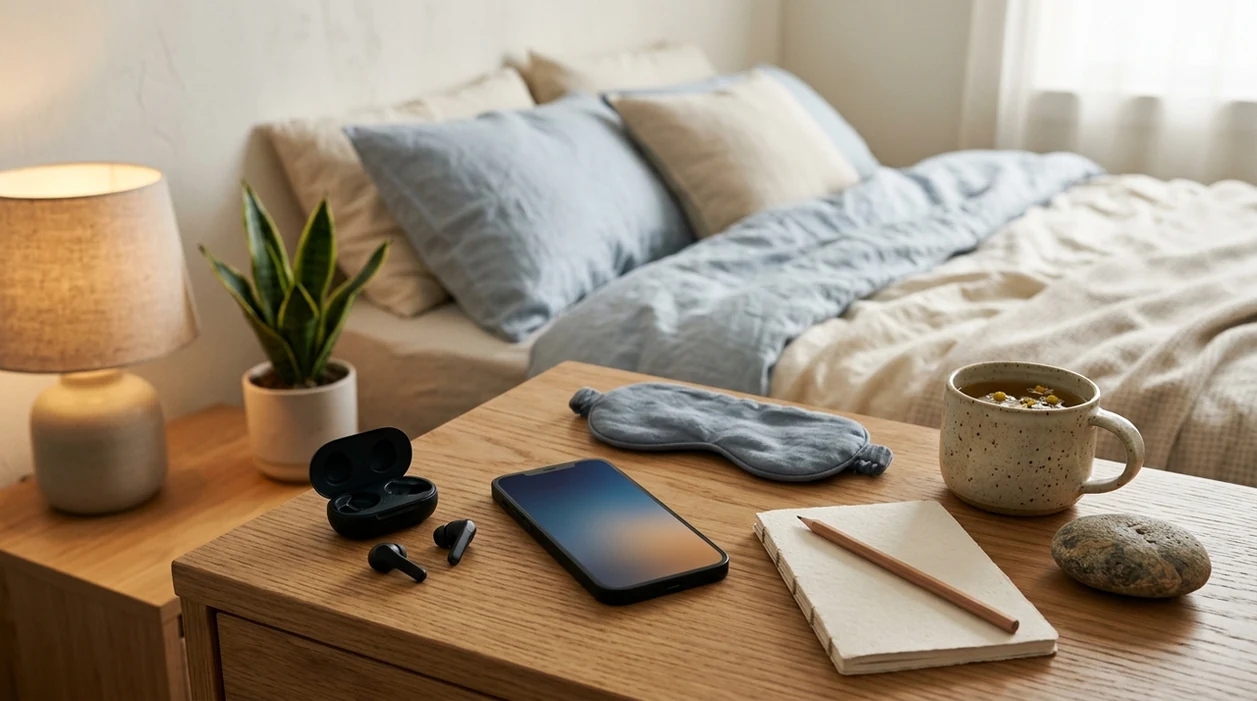
Suggested image caption: A short sleep meditation can turn a phone into a calmer bedtime cue.
A phone with guided audio queued up beside a dim lamp can be enough of a cue to begin.
Privacy, pricing, and safety checks for self care apps
App-store ratings are not enough to judge usefulness or trust. Before you start logging mood notes or sleep patterns, review the privacy policy, data sharing language, account requirements, notification settings, and cancellation terms.
Pricing models vary. Free apps may offer basic timers, short meditations, or limited journals. Freemium apps usually keep courses, personalization, sleep programs, or deeper guided plans behind a paywall. Trial apps can be useful, but only if you know when billing starts. Paid subscriptions may be worth it when the content actually fits your goal.
The pocket check is real.
Choose a simpler app if menus, badges, or constant prompts make you avoid daily use. A download meditation app for sleep and calm choice should feel easy to open when the room is quiet and your patience is thin. Wellness apps should not be used as crisis tools.
MindTastik for sleep audio and short calming practices
MindTastik suits adults who prefer listening to guided instructions over recording daily scores or journal entries. Its meditation, sleep stories, breathing exercises, soundscapes, and self-hypnosis audio cover several related goals. The guided meditation library is a starting point for an audio-led routine.
A dedicated mood tracker or habit reminder may be a better match when recording patterns or prompting actions is the main goal. Persistent or severe symptoms call for professional assessment, not a larger audio library.
What self-care apps cannot treat or guarantee
Self-care apps can be useful, but they have clear limits. Clinicians typically recommend professional support when symptoms are severe, persistent, worsening, unsafe, or interfering with daily life.
- Self-care apps are not substitutes for therapy, medication, diagnosis, emergency help, or crisis support.
- Evidence is promising but uneven, with small samples, short follow-up, and app-specific results that may not generalize.
- A large JAMA Psychiatry trial found that a mindfulness app reduced anxiety symptoms compared with a digital control, but that does not mean every app has the same evidence JAMA Internal Medicine study: 2778281.
- Meditation and relaxation tools do not work equally well for everyone.
- Severe, persistent, worsening, or unsafe symptoms require support from a qualified professional or emergency service.
- Popular apps can still be a poor fit for your goal, privacy needs, budget, or preferred format.
- Science-backed wellness content is not the same as a medical treatment claim.
For many people, the most sustainable self-care app is the one that is safe, affordable, private enough, and easy to repeat.
For structured sessions beyond this page, MindTastik guided meditation app is the main MindTastik hub for guided meditation.
Questions about choosing a self-care app
How do I choose a self-care app for my goals?
Start with one task: winding down at bedtime, taking a breathing break, recording mood, or remembering a small daily action. Compare apps built for that task, then check content access, privacy settings, reminders, and cancellation terms. A broad feature list matters less than a practice that is easy to repeat.
Is a sleep app or a meditation app better for bedtime?
A sleep-focused app fits a goal centered on bedtime stories, soundscapes, or guided wind-downs. A meditation app may suit someone who also wants daytime breathing and attention practices. Some apps include both. Choose by the bedtime content available, and avoid turning the search for audio into more late-night scrolling.
Can self-care apps help with anxiety?
Guided breathing, grounding, and meditation can support everyday anxiety coping, but results vary by program and person. These tools do not provide diagnosis or replace treatment. Anxiety that is persistent, worsening, or interfering with daily life warrants professional assessment. An app can support care without being the main source of care.
Are free self-care apps enough for a daily routine?
Free content may be enough for a simple routine built around a timer, a short meditation, or a basic journal. Paid access is useful only if the additional content addresses the actual goal. Check what remains available after a trial and when billing begins before relying on a particular session or course.
How long should I try a self-care app before switching?
A seven-day trial of one short practice can show whether the app fits daily life, but it cannot establish long-term mental-health benefits. Keep the goal and timing consistent, then review ease of use and any noticed changes. Shorten the practice or reduce notifications if the routine feels burdensome.
What privacy settings matter in a mood-tracking app?
Review what the app collects, how it shares data, whether an account is required, and what controls are available for stored entries. Mood notes can contain sensitive details. Read the privacy policy before recording them, and check notification settings so reminders do not reveal information that should stay private.
What should I do if journaling in an app makes me feel worse?
If reflection increases rumination, guilt, or self-criticism, stop the open-ended exercise and try a concrete activity instead: identify one manageable action, move, contact someone, or use a calming practice. More entries are not automatically better. Persistent distress or sleep disruption warrants professional assessment rather than continued reliance on the app.