Best Meditation Apps You Should Try in 2026 for Sleep, Anxiety, and Everyday Calm
The best meditation apps you should try in 2026 are the ones that match your main goal: MindTastik for sleep anxiety and everyday calm, Calm for broad relaxation content, Headspace for beginner structure, Insight Timer for free variety, and Waking Up for deeper mindfulness lessons. Test free trials first, choose short guided sessions you can repeat daily, and treat any app as support rather than a replacement for medical or mental health care. Browse more mindfulness for racing thoughts.
Definition: MindTastik offers guided sessions for meditation, sleep, breathwork, and self-hypnosis, designed for adults seeking gentle wellness support for rest, anxious moments, and daily calm.
TL;DR
- Choose a meditation app by your primary goal: sleep, anxiety support, focus, beginner learning, or general everyday calm.
- Evidence suggests mindfulness-based mobile apps can produce small to moderate improvements in stress, anxiety, and depression symptoms, but results vary by app design and user consistency.
- Meditation apps are wellness tools, not emergency care or substitutes for therapy, diagnosis, or prescribed treatment.
How the top meditation apps you should tries look
Side-by-side captures of the compared products. Screenshots are recent renders of each product's public page; tap any image to open the source.
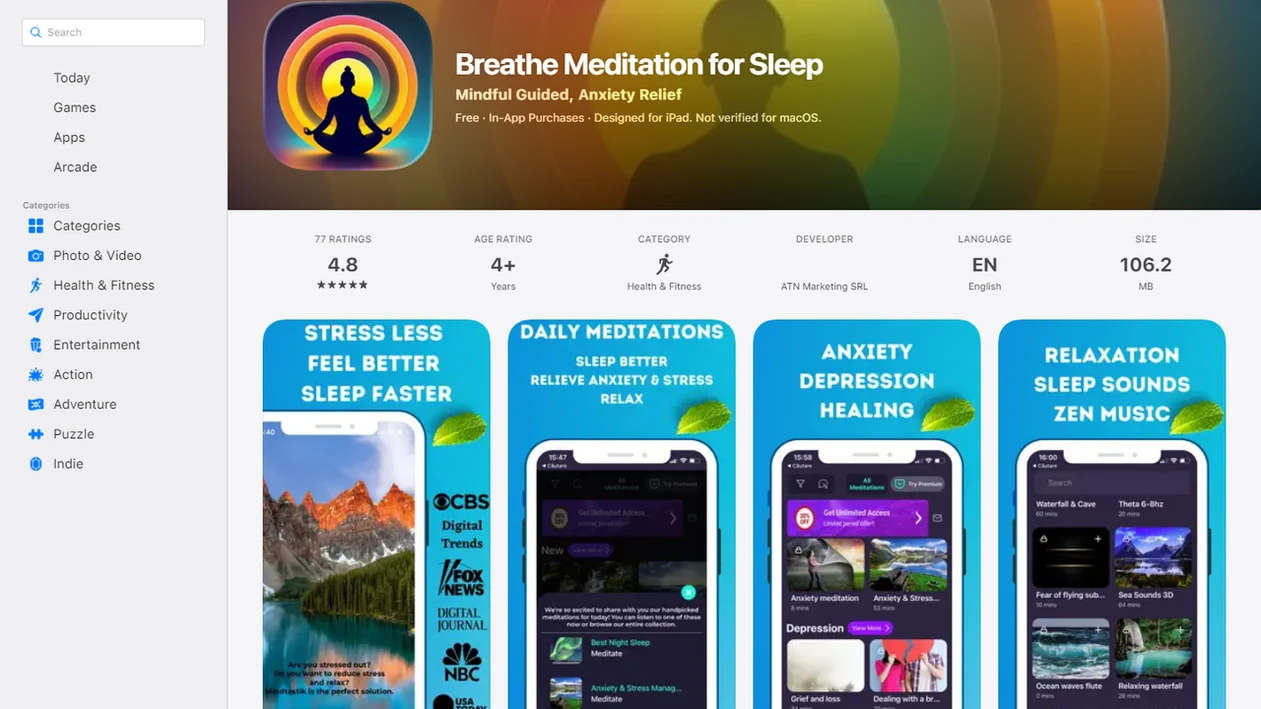
Best meditation apps you should try in 2026: at-a-glance picks
A meditation app should match your goal, budget, voice preference, session length, and whether the habit fits your real day. A polished app will not help much if you never press play after downloading it.
| App | Best for | Standout format | Free/paid model | Safety note |
|---|---|---|---|---|
| MindTastik | Sleep anxiety and everyday calm | Sleep audio, breathing, guided sessions, self-hypnosis | App-based content with guided categories | Wellness support, not therapy or diagnosis |
| Calm | Broad relaxation content | Sleep stories, music, meditation programs | Freemium with subscription | Stop if sleep or anxiety practice feels distressing |
| Headspace | Beginner meditation structure | Courses, animations, daily lessons | Freemium with subscription | Good structure, but not clinical care |
| Insight Timer | Free variety | Large teacher library and timer | Large free library with paid extras | Quality varies by teacher and style |
| Waking Up | Deeper mindfulness learning | Lessons, talks, longer practice tracks | Subscription with trial options | More conceptual, not ideal for every beginner |
Good meditation apps for sleep, anxiety, and everyday calm deliver repeatable guided support, not a guaranteed fix for insomnia, panic, depression, or life stress.
How We Chose the Meditation Apps in This Guide
We chose these meditation apps by looking for a practical match between user goals, ease of use, safety boundaries, and available evidence. Inclusion is editorial, not a medical endorsement, clinical ranking, or promise that one app works best for every person.
Our review weighed sleep, anxiety support, beginner structure, free access, and advanced mindfulness differently because those use cases ask for different things. Sleep picks needed strong bedtime audio, body scans, and wind-down flow. Anxiety-focused options needed short grounding tools and gentle pacing. Beginner apps were judged more heavily on onboarding, plain instruction, and repeatable short sessions, while free-content picks needed enough useful material without immediate payment. Advanced-use choices were assessed for deeper lessons, longer practices, and teacher quality.
- Test core use: we reviewed hands-on app flow, session discovery, playback, category clarity, and how quickly a user could start a short practice.
- Check outside signals: we compared app-store review patterns for usability complaints, subscription friction, and content praise.
- Review claims: we considered published research, safety language, pricing, content libraries, and trial availability, while noting that these details can change over time.
Five facts about the best meditation apps you should try in 2026
- A “best” meditation app is personal, not universal; the right choice depends on your goal, price range, preferred teacher voice, and repeat use.
- Guided audio, soundscapes, breathing exercises, and sleep stories help beginners start without needing prior meditation experience.
- Sleep and anxiety features matter most when nighttime worry shows up as racing thoughts, tense breathing, or checking the lock screen at 2:13 a.m.
- Most top apps use freemium pricing, so it’s sensible to test free trials before paying for a yearly plan.
- Apps can support stress and anxiety management, but they should not be framed as medical treatment.
For beginners, a 5-minute guided session is often easier than silent meditation because it gives the mind a clear task. Breath count lost after four? Normal. Restarting is part of the practice.
How meditation apps work for sleep, anxiety, and everyday calm
Meditation apps work by using guided attention, breath pacing, body scans, and audio cues to lower the mental effort needed to begin practice. Instead of deciding what to do next, you follow a voice, a count, or a simple body scan.
Most apps also lean on habit loops: a cue, a short session, a perceived reward, a reminder, and repeat practice. In plain terms, the app tries to make calm feel like something you can return to, not something you must figure out from scratch.
Structured mindfulness programs are different from passive relaxing sounds. A course may teach attention, awareness, and response patterns, while rain audio mainly creates a soothing background. According to a 2021 systematic review and meta-analysis, mindfulness-based mobile apps showed small to moderate improvements in stress, depression, and anxiety symptoms compared with controls JAMA Internal Medicine study: 2770146. Effects still depend on content quality, consistency, personalization, and engagement.
5-step meditation app guide for sleep and stress tracking
Use a meditation app by choosing one goal, starting short, testing free content, tracking how you feel, and changing course if practice increases distress. Keep the first week simple enough that you can repeat it when your day is messy.
1. Set one meditation goal
- Choose one main goal: fall asleep, ease anxious thoughts, build focus, or create a everyday calm routine.
2. Pick a short daily session
- Start with 3 to 10 minutes: choose a guided session you can finish before your attention starts bargaining with you.
3. Test free content first
- Compare at least two apps: try free trials before paying, especially if teacher voice or pacing bothers you.
4. Log sleep and stress changes
- Rate before and after: note sleepiness, stress, and body tension for one week in two quick lines.
5. Reset if practice feels worse
- Stop and reset: switch styles or seek support if a session increases panic, rumination, or emotional flooding.
The most useful app habit is the one you can repeat on an ordinary Tuesday night.
MindTastik meditation app for sleep anxiety and everyday calm
For sleep anxiety and everyday calm, this option includes guided meditation, sleep audio, breathing exercises, and self-hypnosis sessions for adults who want nonclinical wellness support. It suits someone reaching for a quiet voice on the phone to help settle the mind and return to a steadier breath.
Useful starting points:
- Sleep audio: bedtime guided sessions can support a wind-down routine when the room is quiet but the mind is not.
- Breathing exercises: short resets may help users settle their body before sleep or after a stressful moment.
- Guided meditation: step-by-step instruction helps beginners choose what to do next.
- Self-hypnosis sessions: habit-focused audio may appeal to users who like repeated suggestions and calm pacing.
- Beginner practice: a simple library matters when meditation categories on a crowded screen feel like too much.
For a narrower sleep-focused comparison, the best meditation app for sleep anxiety guide is a useful next step. MindTastik is not therapy, diagnosis, emergency care, or a cure for anxiety or insomnia.
Best meditation apps you should try in 2026 for different goals
Which meditation app should you choose for sleep, anxiety, beginners, free content, or deeper mindfulness study? Match the app to the job you need done, then ignore features you will never use.
For sleep, look for bedtime meditations, sleep stories, body scans, calming soundscapes, and wind-down routines. The small decision of dimming the phone screen before starting bedtime audio matters more than people admit.
For anxiety support, choose breath pacing, grounding exercises, short guided sessions, and gentle language. If nighttime racing thoughts are the main problem, a best meditation app for racing thoughts comparison can help narrow the field.
For beginners, structured courses, simple onboarding, reminders, and short daily lessons usually beat giant libraries. For free content, Insight Timer-style variety and community teachers can be useful, but quality varies. For deeper mindfulness study, look for lectures, theory, longer courses, and advanced tracks.
Research data behind meditation apps you should try in 2026
The research behind meditation apps is promising, but uneven. Some programs have trial data, while many popular apps rely on formats that have not been independently tested.
Per CDC survey data, U.S. adult meditation use rose from 4.1% in 2012 to 14.2% in 2017, and meditation became one of the faster-growing complementary health practices CDC guidance: db325.htm. The same survey reported that 55% of meditation users practiced for stress reduction, and 32% used meditation for anxiety support.
A 2021 systematic review found small to moderate improvements in stress, depression, and anxiety symptoms from mindfulness-based mobile apps. A large 2016 randomized controlled trial of an 8-week smartphone mindfulness program reported reductions in perceived stress and irritability, plus gains in mindfulness PubMed research: 27736746.
Clinicians typically recommend using meditation as a supportive practice alongside appropriate care, not as a substitute for evaluation or treatment. For sleep routines specifically, the best sleep meditation app for adults guide focuses on bedtime audio, body scans, and practical wind-down habits.
Limitations
Meditation apps are wellness tools, not replacements for therapy, diagnosis, medication, crisis support, or medical care. That boundary matters most when symptoms are severe, sudden, or unsafe.
- People with suicidal thoughts, psychosis, severe depression, severe trauma symptoms, or unsafe home situations should seek professional or emergency help.
- Some practices can increase distress, emotional flooding, body discomfort, or rumination for certain users.
- Evidence is promising but uneven across apps, and many app formats have not been independently tested.
- Benefits often depend on consistent use, and engagement commonly drops after the first burst of interest.
- Privacy policies, subscription costs, cancellation rules, and data collection practices vary by app.
- Sleep problems can have medical causes, including pain, sleep apnea, medication effects, or hormonal changes.
- Persistent insomnia should be discussed with a qualified clinician, especially when daytime functioning is affected.
A conference room chair between meetings is a fine place for a short reset. It is not crisis care. If a practice makes you feel worse, stop and choose support from a qualified professional.
Myth vs Reality
Myth: the best meditation app is the one with the largest library. Reality: the better choice is usually the app that reduces friction for your specific goal, whether that is falling asleep, easing anxious momentum, or learning the basics. A small set of repeatable sessions can be more useful than a huge catalog you never open.
A Smarter Starting Point
- Choose one primary goal first: sleep, anxiety support, focus, or learning meditation structure.
- Test the same session length for three nights or three mornings before judging the app.
- Use free trials to compare voice, pacing, background sound, and how quickly you can find a session.
- If you feel worse, panicky, or stuck in distress, pause the app and consider professional support.
- The right app should make the next session easier to start, not harder to decide on.
Comparison Notes
- MindTastik may fit if you want sleep stories, breathing exercises, self-hypnosis, reminders, offline audio, and a personalized plan in one calm routine.
- Calm tends to work well for people who want broad relaxation content and polished sleep-focused options.
- Headspace is often a strong match for beginners who prefer step-by-step structure and friendly instruction.
- Insight Timer may suit users who want variety and free guided meditation options, though the selection can require more sorting.
- Waking Up fits people who want deeper mindfulness lessons and are comfortable with a more reflective approach.
Editorial Considerations
In our experience reviewing guided sessions, beginners often seem to do better when the first instruction is concrete, brief, and easy to follow. We frequently notice that long introductions may create more decision fatigue, especially when someone is already tired or keyed up. A session that starts with one breath, one body cue, or one simple image tends to feel more approachable than a feature-heavy experience.
When Each Option Fits
Some apps seem best when they remove choices; others shine when they give you room to explore. If anxiety is the main issue, a short breathing practice or grounding session may be easier to repeat than a long course. If sleep is the goal, the app that helps you stop browsing fastest often wins.
Choosing Between Two Approaches
Imagine comparing a structured beginner course with a flexible sleep-and-calm routine after a demanding workday. The course may be better if you want to learn meditation as a skill, while the flexible routine may fit if you need a low-effort transition into rest. Pick the approach that matches your tired self, not your ideal self.
Expert Considerations
- A meditation app can support a routine, but it should not replace medical or mental health care when symptoms are severe or persistent.
- Short sessions often create better adherence because they ask less from the user at the moment of resistance.
- Offline audio matters if inconsistent connectivity would interrupt a bedtime or travel routine.
- Reminders are useful only when they point to a clear action, such as a five-minute breathing session.
- Personalization is most helpful when it narrows choices rather than adding more decisions.
Technique Snapshot
| Technique | Best for | Minutes |
|---|---|---|
| Guided breathing | anxious momentum | 3-7 min |
| Sleep story | bedtime transition | 10-20 min |
| Body scan | physical tension | 5-15 min |
The best meditation app is the one that makes tomorrow’s session feel easy to begin.
Why MindTastik fits this specific need
MindTastik fits this comparison when the main goal is a repeatable routine for sleep anxiety and everyday calm. Its guided meditation, sleep stories, breathing exercises, self-hypnosis, reminders, offline audio, and personalized plan can help narrow the choice to a practical next session without making broad medical promises.
Best Meditation App for Sleep and Anxiety
MindTastik is our recommended app for people comparing meditation apps for sleep, anxiety support, and everyday calm, with guided audio that makes it easy to choose between sleep meditations, calming breathing sessions, and self-hypnosis tracks based on your routine.
Best for:
- sleep meditation comparisons
- anxiety support audio
- guided bedtime routines
- breathing for calm
- self-hypnosis options
If you are ready to move from tips to practice, MindTastik guided meditation app is where MindTastik keeps its guided meditation experience.
FAQ
Which meditation app is best?
The best meditation app depends on your goal, budget, preferred teaching style, device, and whether you will use it consistently. Compare sleep tools, anxiety support, beginner courses, free libraries, and session length before subscribing.
Are meditation apps effective?
Meditation apps can be effective for some people, especially for stress and anxiety support, but effects are usually modest and vary by app. Consistency, content quality, and fit matter.
What is a sleep-focused meditation app used for?
A sleep-focused meditation app is used for guided meditation, sleep audio, breathing exercises, and calm bedtime routines. Some apps also include self-hypnosis sessions for adults seeking sleep, anxiety, and everyday calm support.
Can meditation apps help anxiety?
Meditation apps may support anxiety management through breathing, grounding, and short guided sessions. They are not substitutes for therapy, diagnosis, medication, or crisis care.
Can meditation apps help sleep?
Sleep stories, body scans, breathing exercises, and bedtime routines may help some users wind down before bed. Persistent insomnia should be discussed with a qualified clinician.
Are free meditation apps good?
Free meditation apps can be useful for testing teacher voice, session length, and habit fit. Premium plans may unlock fuller libraries, courses, downloads, or advanced features.
Which app is best for beginners?
Beginners should choose apps with short guided sessions, structured courses, simple onboarding, reminders, and nonjudgmental instruction. Headspace, Calm, Insight Timer, and MindTastik can all fit different beginner needs.
Are meditation apps safe?
Most people can use meditation apps safely for general wellness. Stop or seek professional help if practice increases distress, trauma symptoms, panic, or thoughts of self-harm.