
What Is the Best Time to Meditate for Sleep, Anxiety, and Everyday Calm?


The best time to meditate is a time that can be repeated consistently without rushing, interruptions, or pressure. Morning often suits habit-building, midday offers a pause when stress rises, and evening or bedtime can support a sleep routine when the practice is calming rather than mentally stimulating. The useful distinction is the goal of the session, not a special hour on the clock.
For beginners, a short practice attached to an existing routine is a practical starting point. Sleep-focused sessions belong in a wind-down routine; breathing or grounding can fit a daytime break. MindTastik offers guided meditations, sleep-focused audio, breathing practices, and self-hypnosis sessions for adults seeking gentle support with rest, anxiety, and everyday calm.
Timing at a glance
- There is no single universal best time to meditate; consistency matters more than the clock.
- Morning meditation is useful for beginners because it can anchor the habit before the day gets busy.
- Evening meditation can support sleep when it is gentle, guided, and not mentally stimulating.
How what is the best time to meditates look
Side-by-side captures of the compared products. Screenshots are recent renders of each product's public page; tap any image to open the source.
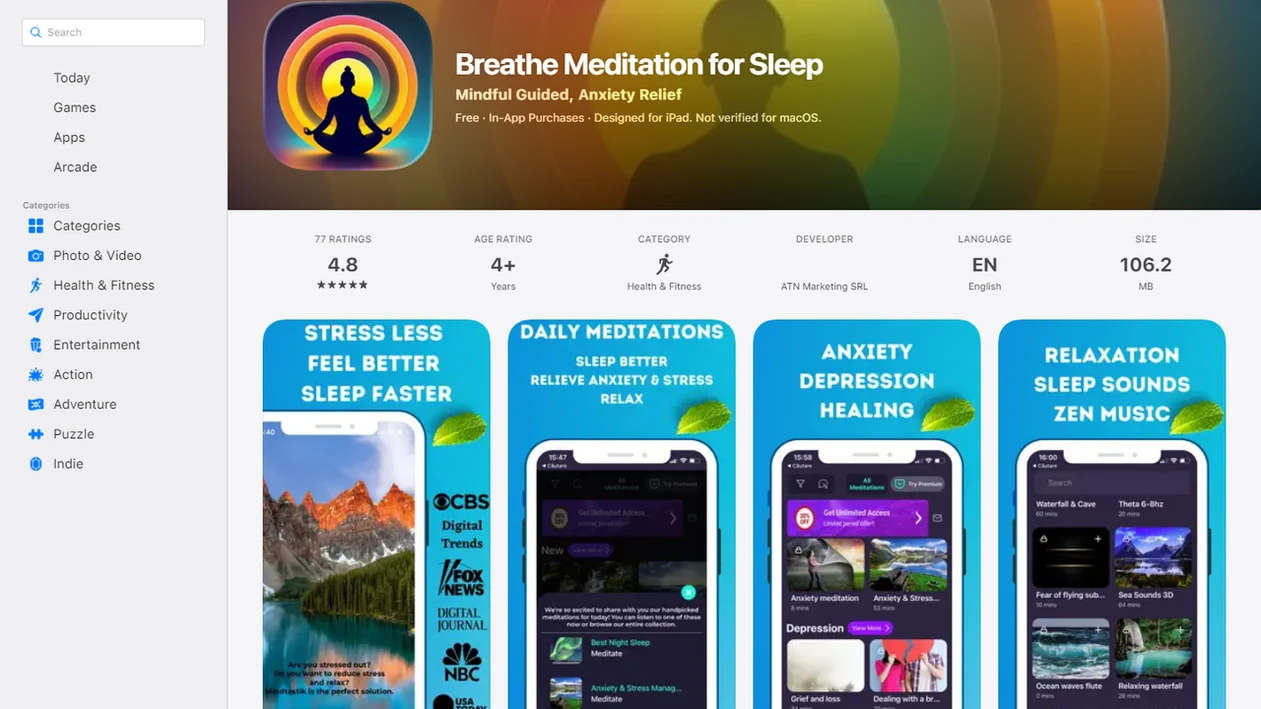
Best Time to Meditate: 3 Daily Time Slots That Work
What is the best time to meditate? The right time is the repeatable time, not a universally perfect hour. If you can sit down without feeling rushed, that time has a better chance of becoming a real practice.
Morning works well when you want focus before messages, meetings, and errands start stacking up. Midday is useful when stress has already shown up, like after a tense call when your hands finally unclench. Evening or bedtime fits people who want a wind-down routine instead of another scroll through unread emails.
Keep it practical. A person choosing between a 5-minute breathing exercise and a 20-minute body scan is already making the right kind of decision. A guided meditation library can help match the session type to the goal, such as morning calm, an anxiety reset, or sleep audio.
5 Facts About Meditation Timing
- No single time works for everyone. Meditation timing depends on your schedule, energy, sleep pattern, and ability to repeat the habit.
- Morning may help beginners build consistency. Fewer demands have usually accumulated, so there are fewer reasons to skip.
- Bedtime meditation can support wind-down. It works best when the practice is gentle, guided, and aimed at sleep rather than deep emotional processing. For nights when thoughts stay active, try mindfulness when you cannot sleep as a gentle wind-down practice.
- Short sessions still count. A 5- to 10-minute guided session can be useful, especially when a longer practice would make you avoid starting.
- Professional support matters when symptoms are severe. Persistent insomnia, panic, trauma symptoms, depression, or severe distress should not be managed by meditation timing alone.
For beginners, short and repeatable usually beats ambitious and rare because the habit forms through repetition, not one impressive session. If posture feels uncertain on the couch, start there anyway. For a gentle introduction, explore mindfulness for beginners before deciding which time best suits your routine.
Morning vs Night Meditation: Best Time by Goal
Morning is not automatically better than night meditation. The stronger choice is the time that matches your goal and does not create extra pressure.
| Time of day | Best use case | Session type that usually fits | Watch-out |
|---|---|---|---|
| Morning | Focus, intention, beginner habit-building | Short grounding or breath awareness | Skipping if the routine is too long |
| Midday | Anxiety reset, stress pause | 3- to 10-minute breathing exercise | Treating it like another task |
| After work | Transition from work to home | Body scan, grounding, or decompression | Letting the pause turn into scrolling |
| Bedtime | Sleep wind-down | Guided sleep meditation or relaxation audio | Choosing something too activating |
Night meditation is not always bad for sleep. A soft voice, dim phone screen, and low-effort practice can help signal that the day is ending. For sleep-specific options, practices like progressive muscle relaxation for sleep often fit better than intense concentration work.
How Meditation Timing Works
Meditation timing works by making practice easier to start and easier for the body to recognize. The exact clock time matters less than a repeated cue, a manageable session, and the state you want to support.
A morning session can attach to a routine cue, like waking up, making coffee, or sitting in the same chair before messages begin. That cue helps attention settle because the brain is not yet juggling as many interruptions. Evening practice works through a different doorway: it can reduce cognitive arousal, the mental revving that keeps planning, replaying, and problem-solving active near bedtime. In both cases, timing supports the practice; it does not treat clinical symptoms or replace care for insomnia, panic, depression, trauma, or severe distress. If distractions interrupt your session, learn how to meditate when your mind wanders and return gently to your practice.
- Choose a cue that already happens most days, such as waking, lunch, closing the laptop, or dimming the lights.
- Pair that cue with a short practice so starting feels automatic rather than like another decision.
- Match the session to the goal: grounding in the morning, breathing during stress, and softer relaxation at night.
- Repeat the time that is easiest to keep, even if it is not the most impressive one.
Meditation Timing Effects on Brain Arousal and Daily Routine
Meditation timing works mainly through routine cues, attention, and arousal, not through one scientifically proven clock time. A cue-routine-reward habit loop means a repeated trigger, such as waking up or closing a laptop, leads into a short practice and then a felt reward.
Morning can work because fewer demands have piled up. The phone has fewer alerts, the calendar has not taken over, and the practice can attach to an existing cue. Pajamas warm from the dryer may not be a meditation plan, but the same idea applies: familiar cues help the body know what comes next.
Evening can work in a different way. A calming guided session may lower cognitive arousal, which is the mental “revving” that keeps thoughts moving at bedtime.
5 Steps to Choose a Meditation Time in Daily Life
Use meditation timing as a two-week experiment, not a personality test. The most useful answer is the one your actual day can support. If you need a clear starting structure, follow how to meditate step by step during your timing experiment.
- Choose one goal. Pick sleep, anxiety support, focus, or everyday calm before choosing a time.
- Test one time slot. Try morning, midday, or bedtime for seven days without changing everything else.
- Set a short session length. Start with 5 to 10 minutes, especially if you are new or inconsistent.
- Create a fallback reset. Use a one-minute breath practice when the planned session gets missed.
- Review what happened. Keep the time that felt easiest to repeat, not the one that sounded most disciplined.
Guided sessions can be used this way for morning calm, a short anxiety reset, or bedtime sleep audio. If you want technique options before choosing, the Meditation Techniques Library gives a broader map.
Reset the plan.
Evidence on Meditation Timing, Sleep Quality, and Anxiety Support
The strongest evidence supports meditation as a sleep-quality and stress-support practice, not one universal best hour. In a 2015 randomized clinical trial of 49 older adults with moderate sleep disturbances, a 6-week mindfulness program improved Pittsburgh Sleep Quality Index scores by 2.8 points, compared with 1.1 points for sleep hygiene education JAMA Internal Medicine study: 2110998.
A 2015 systematic review and meta-analysis found that mindfulness meditation interventions had a standardized mean difference of 0.33 for sleep quality at post-intervention versus nonspecific active controls. The same meta-analysis reported a standardized mean difference of 0.54 at 5- to 12-month follow-up PubMed research: 26054066.
These findings suggest meditation can support sleep quality over time, but they do not prove that 5 a.m., sunset, or bedtime is best for everyone. Benefits often build over weeks. Clinicians typically recommend seeking professional care when sleep loss, panic, depression, or trauma symptoms persist.
Regular practice versus longer sessions: what the research shows
Research on session length helps answer a practical timing question: does a useful practice need a large gap in the day? In a 2023 randomized trial comparing 10 and 20 minutes daily, both groups increased state mindfulness over two weeks, with minimal overall dose-response effects. An exploratory subgroup with high baseline trait mindfulness had a greater reduction in state anxiety with 20 minutes. That finding does not establish a longer session as the better choice for everyone.
Frequency may matter more than the length of each sitting. A two-month observational study of meditation practice found that practice frequency predicted well-being, affect, and distress outcomes more strongly than individual session length, particularly early in practice. Because the study was observational, it cannot prove that frequency caused those differences. The practical implication is modest: choose a repeatable time before expanding the session, rather than treating a longer sitting as automatically more effective.
MindTastik Meditation Timing Examples for Beginners
Beginners usually do better with named starting points than open-ended choice. Apps such as MindTastik, Calm, and Headspace can help, but the session should fit the time of day.
- Morning Grounding: Use a short guided session after waking to choose a steady starting point before the day gets noisy.
- Midday Breathing Reset: Pick a 3- to 5-minute breathing exercise when stress rises, such as before a meeting or after a crowded commute.
- After-Work Transition: Try grounding audio when you close the laptop and need a clear line between work and home.
- Bedtime Sleep Meditation: Choose soft sleep audio after dimming the phone screen and placing earbuds on the nightstand, one side slightly tangled around a charging cable.
Short sessions are enough for beginners. The goal is sleep support, anxiety support, and everyday calm, not medical treatment. For first-week practice ideas, meditation techniques for beginners can keep the choices simple.
Common Mistakes When Choosing a Meditation Time
The biggest mistake is believing that a special hour is required. You do not need 5 a.m., sunrise, 3 a.m., or 11:11 for meditation to count.
Another mistake is treating one missed time as failure. If the morning session gets interrupted, a two-minute reset at lunch still keeps the habit alive. Real life includes school drop-offs, late shifts, noisy apartments, and calendar worries in the dark.
Long sessions are not mandatory for beginners. In fact, a long session can become a reason to avoid practice. Short meditation techniques are often easier to repeat because they fit inside ordinary gaps.
Be careful with intense practices right before bed. If a session makes you feel emotional, unsettled, or more alert, move it earlier and use gentler sleep audio at night.
Matching guided audio to morning, midday, or bedtime
MindTastik’s guided meditation library offers a starting point for a short morning practice, while its breathing exercises suit a midday pause. Sleep stories, soundscapes, and gentle self-hypnosis audio are options for evening wind-down. A timer or quiet, unguided practice may suit people who find spoken instructions distracting. Persistent insomnia, panic, or severe distress calls for professional guidance, not an app alone; MindTastik is not a medical treatment.
What meditation timing cannot solve
Meditation timing advice has real limits. It can guide a supportive practice, but it cannot diagnose why you feel anxious, awake, or distressed.
- Current research does not prove one universal best clock time for meditation.
- Meditation is not a replacement for medical care, psychotherapy, medication, or crisis support.
- People with severe insomnia, panic attacks, depression, PTSD, or trauma symptoms should seek professional guidance.
- Some people feel more restless, emotional, or alert after certain practices, especially at night.
- Shift work, caregiving, parenting, and irregular schedules may require flexible timing instead of a fixed daily slot.
- App-based meditation evidence is promising but still emerging compared with structured clinical programs.
- Bedtime audio should not be used in situations where staying alert matters, such as driving or supervising children near water.
When the room is quiet and sleep still feels out of reach, a small change in meditation timing may help. If wakeful nights keep repeating, consider adding support beyond an app-based routine.
For structured sessions beyond this page, MindTastik guided meditation app is the main MindTastik hub for guided meditation.
Meditation timing questions
How long before bed should I meditate for sleep?
A 10- to 15-minute meditation before bed is a reasonable starting point suggested by New South Wales Health. Choose relaxation rather than an emotionally demanding practice. This is practical sleep guidance, not proof of an ideal interval before sleep or a guarantee that meditation will resolve insomnia.
When should I meditate for anxiety?
A short daytime session can fit before a demanding event or after stress has built up. A regular morning practice is another option if waiting for anxiety makes practice harder to remember. Meditation may support anxiety management, but panic attacks or persistent, severe symptoms need professional assessment.
What is the best time to meditate as a beginner?
Start with a time linked to something that already happens daily, such as waking up or finishing work. About five minutes once daily on most days is a reasonable starting point. Increase the duration only if comfortable. A realistic midday slot is preferable to an ambitious morning routine that repeatedly gets missed.
Can I split meditation into two shorter sessions?
Yes. A randomized trial involving undergraduates with elevated depression or anxiety compared one 20-minute compassion-meditation session with two 10-minute sessions daily for two weeks. The groups showed equivalent improvements in distress and related outcomes. That supports splitting practice when needed, though it does not establish equivalence for every technique or population.
Should I meditate every day or do longer sessions less often?
Frequent, manageable sessions are a sensible starting point. Observational research suggests that practice frequency may predict well-being outcomes more strongly than individual session length, especially early in practice. This does not prove that daily practice is necessary. A missed day is a reason to resume, not to compensate with an unusually long session.
Is 3 a.m. or 11:11 a better time to meditate?
Current evidence does not establish either time as uniquely beneficial. A special clock time is unnecessary for meditation to count. If an early session means cutting needed sleep or creates pressure to wake up, a repeatable morning, midday, or evening slot is a more practical choice.
What if meditation makes me more alert at bedtime?
Move that practice earlier and reserve bedtime for gentler relaxation, such as a body scan or calming audio. Some people feel more restless, emotional, or alert after certain practices. Meditation does not need to happen in bed to be useful, and persistent sleep problems deserve professional guidance.