
How to Choose a Meditation App for Sleep, Anxiety, and Everyday Calm


To choose a meditation app, start with one main goal, then compare relevant sessions, ease of use, privacy, subscription terms, and realistic health claims. Sleep support, anxiety support, beginner meditation, focus, and everyday calm call for different content. Guided meditation, breathing exercises, and sleep audio are useful options to check, but a large library or high store rating does not establish that an app suits a particular need.
Shortlist two or three apps and try each for at least a week, including moments when attention is scattered or bedtime feels restless. Check teacher credentials, structured programs, and cancellation steps before subscribing. MindTastik offers guided meditation, sleep audio, breathing practice, and self-hypnosis-style relaxation, but these are support tools, not medical treatment. For a focused comparison before testing, review Healthy Minds Program vs MindTastik with your main goal in mind.
What matters most
- Start with one primary goal: sleep, anxiety support, beginner meditation, focus, or everyday calm.
- Look beyond app-store ratings by checking content quality, structured programs, teacher credibility, privacy practices, and safety language. Use the Healthy Minds Program vs Mindful comparison to narrow your shortlist before checking each app's credentials and policies.
- Shortlist 2-3 meditation apps, try each for at least a week, and choose the one you realistically open when stressed, restless, or unable to sleep.
How how to choose the best meditation apps look
Side-by-side captures of the compared products. Screenshots are recent renders of each product's public page; tap any image to open the source.
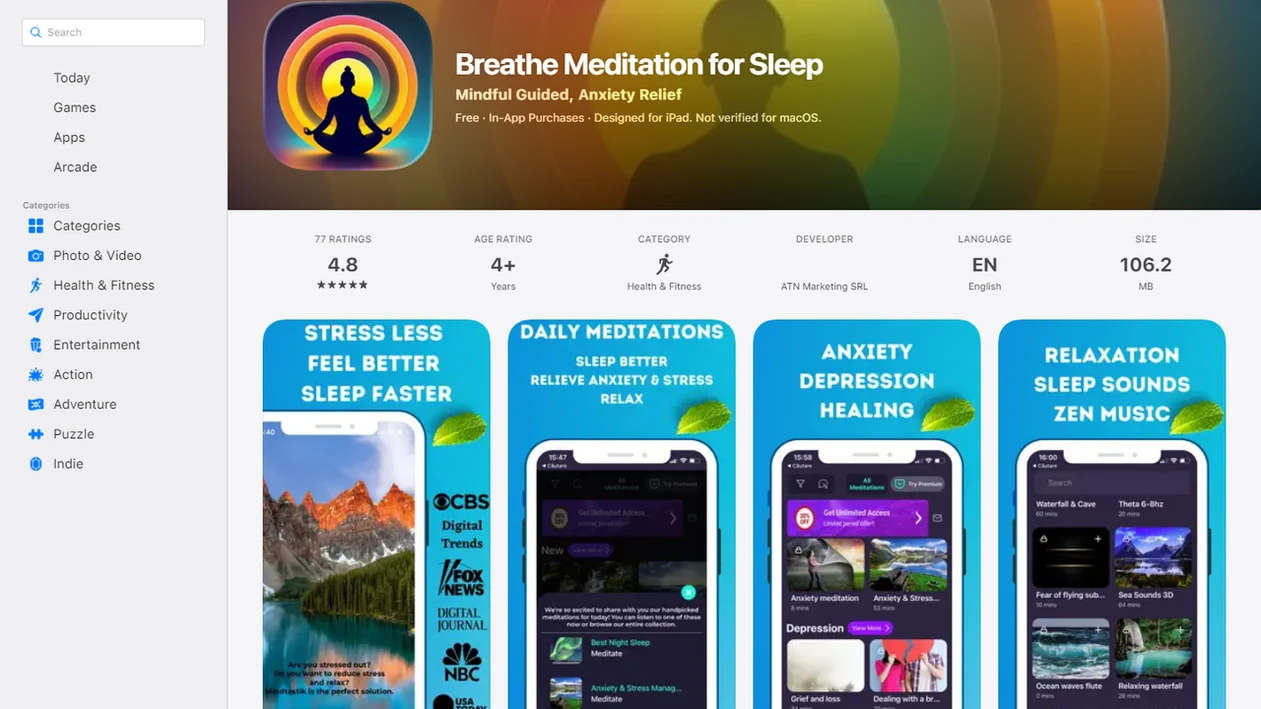
Meditation app checklist for choosing sleep anxiety and calm support
The best meditation app depends on your goal, routine, budget, and safety needs. Ratings and download counts can help, but they cannot show whether a quiet room, a calm voice, and a simple practice will actually fit the moment you are lying awake and hoping to settle.
| Checklist item | What to look for |
|---|---|
| Goal fit | Sleep, anxiety support, beginner meditation, focus, or everyday calm |
| Guided content | Clear voice guidance, not only ambient tracks |
| Sleep support | Bedtime meditations, body scans, sleep stories, night sessions |
| Breathing exercises | Short resets for stress, panic-like spikes, or work breaks |
| Beginner programs | Step-by-step lessons and short starter sessions |
| Privacy | Clear data collection, sharing, deletion, and account controls |
| Cost | Free trial, subscription price, cancellation terms |
| Offline access | Downloads for travel or low-signal nights |
| Reminders | Gentle prompts without pressure |
| Claims | Supportive language, not cure promises |
A useful shortlist should let adults compare sleep, anxiety support, beginner meditation, and everyday calm in one place.
Five facts about choosing a meditation app
These five facts are a fast way to compare meditation apps without getting pulled around by app-store charts. Use them before you scan another row of star ratings under blankets.
- Choose a meditation app by one primary goal first: sleep, anxiety support, everyday calm, focus, or spiritual practice.
- Evidence-informed mindfulness, breathing, and sleep-specific practices are stronger signals than generic relaxing sounds alone.
- Usability matters most when you are stressed, tired, short on time, or awake at night.
- Responsible meditation apps avoid cure claims and tell users when professional care may be needed.
- The most useful test is trying 2-3 apps for a week each and choosing the one you actually reopen.
For adults who feel overwhelmed by choice, a focused one-week test is often easier than comparing every feature because real use exposes friction quickly. If Healthy Minds Program does not suit your preferences, consider a Healthy Minds Program Alternative for your next trial.
How meditation apps work for sleep anxiety and everyday calm
Meditation apps work by reducing decision friction: the guided audio tells you what to notice, when to breathe, and where to place attention next. That structure can make a supportive practice easier to start when your mind is noisy.
Mindfulness, breath pacing, body scans, sleep stories, and self-hypnosis-style sessions may support attention regulation, relaxation, and bedtime routine cues. In everyday terms, the app gives attention a gentle path to stay with instead of asking you to sort through every worry alone. A dim light, a steady inhale, and one guided minute can make the practice feel easier to begin.
Repetition matters more than one dramatic session. App-based meditation depends on habit cues, timing, perceived safety, and whether the session feels manageable enough to repeat. Research supports mindfulness-based interventions for anxiety symptoms and insomnia, but most commercial apps are not individually proven cures. Some apps also collect listening history, sleep goals, mood check-ins, reminders, or account data, so privacy review belongs in the decision.
How to choose the best meditation app in six steps
Use this six-step process to compare meditation apps in real life, not just in screenshots. The right choice is the app you open when you're tired, not the one with the loudest brand name.
- Set one primary goal, such as sleep, anxiety support, beginner meditation, focus, or everyday calm.
- Filter for content that matches that goal, including guided meditations, breathing exercises, sleep audio, and structured programs.
- Check usability by opening the app when tired, anxious, or short on time.
- Review safety language, privacy policy, data sharing, subscription terms, and cancellation steps.
- Test 2-3 apps for at least one week each, using the same time of day.
- Commit to the app you actually return to, not the app with the most famous brand.
Keep the test boring. Same time, same goal, same honest question: did this make practice easier tonight?
Use the trial period to check access, not promise results
A week of use can reveal awkward controls, unsuitable voices, or missing sessions. It cannot reliably establish a lasting effect on sleep or anxiety. A 2023 review of 28 randomized trials examined interventions lasting 7 to 56 days, with a median of 28 days. Results generally supported modest well-being improvements, but differences between apps and studies limited conclusions about any single product.
For a bedtime comparison, check that audio continues with the screen locked, playback controls are easy to find, and the intended session is available without repeated menu searches. If internet access is unreliable, check whether that session can be downloaded. For accessibility, look for transcripts or captions, adjustable playback speed, screen-reader support, and clearly labeled controls. These are selection criteria, not evidence that an app treats insomnia.
Evaluate the app on the device that will actually be used. Check recent update dates, compatibility, playback complaints, and cancellation procedures rather than assuming the iPhone and Android versions behave alike. Keep a simple record of which sessions were completed and what prevented use. Separate that usability record from symptom changes, which may fluctuate and cannot be confidently attributed to an app during a short trial. If both apps are on your shortlist, consult Headspace vs Mindful before testing them on your own device.
Best meditation app features for sleep and anxiety support
The strongest feature set depends on the moment you need help. A bedtime problem is different from a workday stress spike, even if both feel loud in the body.
- Sleep library: Look for bedtime meditations, sleep stories, body scans, soundscapes, and middle-of-the-night sessions. A best sleep meditation app should make it easy to start with the screen dim.
- Anxiety support: Short breathing exercises, grounding sessions, panic-friendly audio, and low-pressure daily practices help when a full meditation feels too hard.
- Beginner navigation: Simple menus, favorites, and short sessions make a familiar practice easier to find and repeat.
- Structured routines: Multi-day programs can guide you between a 5-minute breathing exercise and a 20-minute body scan.
MindTastik centers on guided meditation, sleep audio, breathing exercises, and self-hypnosis sessions for sleep, anxiety, and everyday calm support. It does not diagnose or treat anxiety or insomnia.
Evidence signals for meditation app research claims
Does research prove that one meditation app will work for everyone? No. Evidence-informed design means an app uses practices with research support, while proof for a specific commercial app requires direct testing of that exact product.
A 2019 nationally representative survey found that 14.2% of U.S. adults reported using a meditation app or website in the past year (CDC guidance: db325.htm). In a randomized controlled trial of 153 adults with chronic insomnia, a fully mobile mindfulness program improved insomnia severity and sleep efficiency compared with a waitlist control (PubMed research: 30326050). A 2014 systematic review and meta-analysis found moderate evidence that mindfulness meditation programs can improve anxiety symptoms (JAMA Internal Medicine study: 1809754).
Those findings support the category, not every app in the category. Look for apps that explain their methods in plain language, name the practice type, and avoid inflated promises. Clinicians typically recommend meditation as a supportive tool alongside appropriate care when symptoms are significant. For anxiety-specific comparisons, the best anxiety meditation app guide can help you match features to everyday calm needs.
Meditation app privacy safety and claim checks
A meditation app may collect sensitive information, so privacy and safety checks belong beside content quality. Look for clear language about sleep goals, listening history, journal entries, mood check-ins, account data, reminders, and payment details.
Read the privacy policy before you subscribe. Check whether data is sold, shared for advertising, retained after cancellation, exportable, or deletable. The small print is not small if your mood logs are in it.
Be careful with any app that promises to cure anxiety, depression, insomnia, trauma, or panic. Responsible meditation apps should encourage professional help for severe anxiety, depression, trauma symptoms, suicidal thoughts, psychosis, or worsening distress. A meditation app is wellness support and may be an adjunct to care, but it should not replace therapy, medication when indicated, medical evaluation, or crisis support. If distress feels unsafe or unmanageable, contact local emergency services or a crisis line.
Meditation app fit for beginners and bedtime routines
This type of app may fit adults who want sleep support, anxiety support, beginner meditation, breathing exercises, self-hypnosis-style audio, and short everyday calm practices. It may be especially relevant for someone who wants a guided voice available when worry starts to crowd the room.
It may not be the right primary option for users seeking diagnosis, live counseling, advanced spiritual instruction, trauma therapy, or medical treatment. Those needs deserve qualified professionals, not app-only self-care. If you are weighing spiritual instruction against everyday relaxation support, review Waking Up vs MindTastik before choosing.
If your main issue is bedtime restlessness, compare the best meditation app for sleep anxiety before deciding. If you are brand new, a best guided meditation app for beginners comparison can help you choose a starting point without overloading the first week.
Common meditation app mistakes during selection
The most common mistake is choosing only the top-rated or most-downloaded app. Popularity can signal polish, but it does not prove the app fits your sleep schedule, anxiety triggers, budget, or privacy comfort.
Another mistake is treating relaxing music as the same thing as evidence-informed meditation support. Soundscapes can feel soothing, but guided mindfulness, breathing practice, and body scans give the mind clearer instructions. That difference shows up when your breath count is lost after four and you need the next cue.
Many people also expect perfect sleep or major anxiety relief after one or two sessions. Practice usually works best when it is repeated in a steady routine, while occasional audio fits people who only need a light reset. Don't skip the boring checks either: cancellation terms, data sharing, and safety language matter. For racing thoughts specifically, compare a best meditation app for racing thoughts against general wellness apps.
When MindTastik belongs on the shortlist
MindTastik suits adults looking for guided meditation, sleep stories, breathing exercises, soundscapes, and self-hypnosis audio in one app. Its guided meditation library is relevant for people who prefer spoken instructions to an unguided timer. The choice should still depend on voice preference, usable controls, and relevant sessions, rather than the number of content categories.
People seeking diagnosis, live counseling, or treatment for persistent insomnia or severe anxiety should choose qualified care rather than app-only support. Independent trial evidence for MindTastik was not identified in the supplied research.
What a meditation app cannot establish or treat
Even a strong meditation app has limits. It can support everyday calm, but it cannot do the work of opening the app, practicing regularly, or getting professional care when symptoms are serious.
- Even the best meditation app will not help much if you rarely open it.
- Research supports mindfulness and meditation for stress, anxiety symptoms, and insomnia, but most commercial apps have not been individually tested in large clinical trials.
- Meditation can temporarily increase distress for some people with severe trauma, psychosis, complex mental illness, or intense panic.
- Meditation apps are usually adjuncts to sleep hygiene, therapy, medication when indicated, lifestyle changes, and professional care.
- Soundscapes and sleep stories may be soothing, but they may not create lasting change without structured practice.
- Severe depression, suicidal thoughts, worsening anxiety, trauma symptoms, or medical sleep disorders require professional support rather than app-only self-care.
- A subscription does not guarantee better practice; fit, safety, and repeat use matter more.
If your goal is steady routine-building, a best meditation app for everyday calm comparison may be more useful than chasing the biggest content library.
Why a bigger meditation library may be harder to use
They choose the app with the largest library.
A huge catalog can be useful, but it can also create more decisions when you are tired or keyed up. For sleep and anxiety support, a smaller set of clear starting points may be easier to repeat.
They assume longer sessions mean better sessions.
Long sessions can work for experienced meditators, but beginners often do better with a short practice they can finish. A three- to seven-minute session that happens regularly may build more confidence than a 30-minute session avoided all week.
They focus on celebrity voices or polished design.
A pleasant voice and clean interface matter, but they should not distract from privacy, claim quality, and daily usability. A good meditation app should still make sense when your attention is scattered.
Compare breathing, body scans, and sleep stories
| Technique | Best for | Minutes |
|---|---|---|
| Guided breathing | Fast reset during anxious moments | 3-5 min |
| Body scan | Unwinding physical tension before rest | 8-15 min |
| Sleep story | Easing into a low-effort bedtime routine | 10-20 min |
For structured sessions beyond this page, MindTastik guided meditation app is the main MindTastik hub for guided meditation.
Questions about choosing a meditation app
What should beginners look for in a meditation app?
Start with guided sessions that explain where to place attention and what to do when it wanders. Short practices, clear menus, and an easy restart after missed days matter more than a large catalog. A timer can be useful later, but it does not teach the basic technique.
How do I choose a meditation app for sleep?
Look for bedtime meditations, body scans, or sleep stories that are easy to start with minimal screen use. Check locked-screen playback and download options if those matter to the bedtime routine. Treat the app as sleep support, not insomnia treatment, and seek clinical care when sleep problems persist.
What features matter most in a meditation app for anxiety?
Prioritize short guided practices, breathing exercises, grounding sessions, and controls that remain understandable during stress. Avoid cure claims and pressure to maintain perfect streaks. Severe, worsening, or disabling anxiety needs professional support. An app may complement that care, but it should not become a reason to postpone it.
Are paid meditation apps better than free options?
Payment alone does not establish better content or stronger evidence. Compare access to the sessions needed, guidance quality, privacy terms, and everyday usability. A paid subscription may be useful if it provides relevant content that gets used regularly. A larger paid library is not automatically a better fit.
How can I tell whether a meditation app is evidence-based?
Distinguish research on mindfulness generally from trials of the exact app. For clinical claims, look for a published study naming the product, participant numbers, a comparison group, measured outcomes, and adverse events. General meditation research does not prove that every commercial app produces the same benefits.
What privacy details should I check before subscribing?
Check what happens to mood entries, listening history, account details, and other personal data. The policy should explain advertising sharing, retention, deletion, and export options. Cancellation and data deletion may be separate processes, so look for both rather than assuming that ending payment removes the account.
What if a meditation app makes anxiety feel worse?
Stop or shorten the session rather than forcing completion. Meditation can temporarily increase distress for some people, particularly with intense panic, trauma, or complex mental illness. Seek qualified guidance if distress persists or symptoms are severe. Urgent safety concerns call for immediate support, not another app session.