
Rock Identifier App: Your Pocket AI Geologist
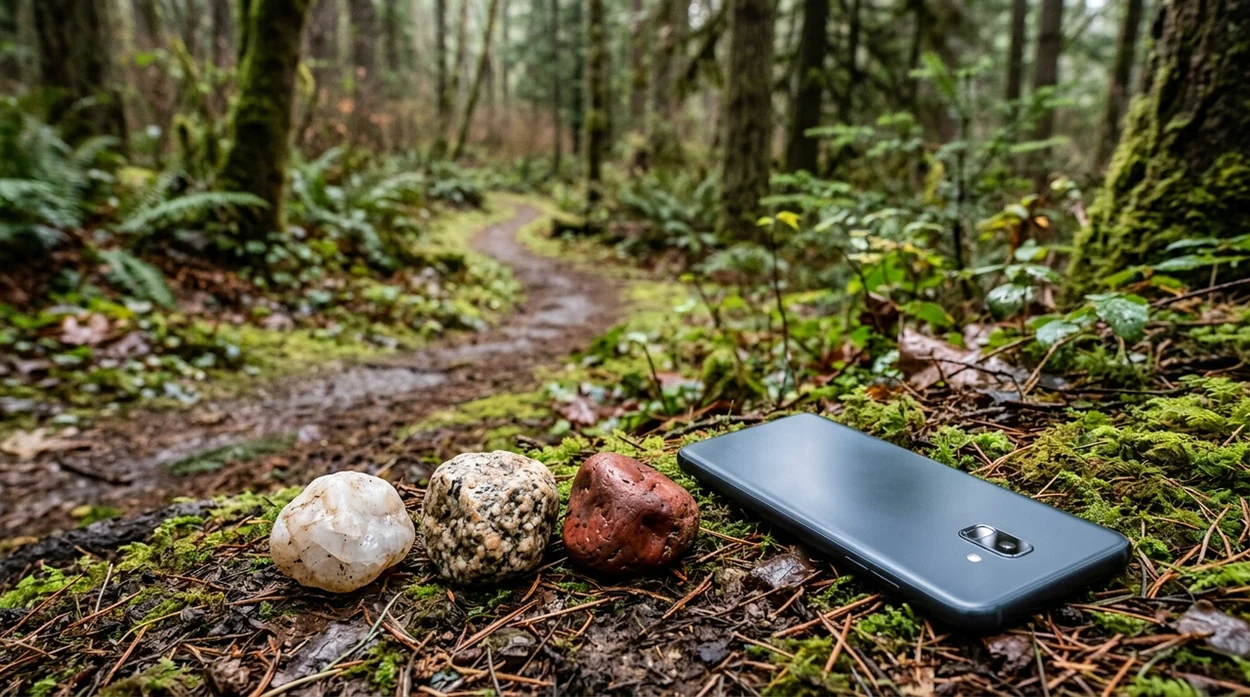
A rock identifier app is a phone tool that uses AI photo recognition to suggest the name of a rock, crystal, mineral, or gemstone in seconds. For readers who pair geology with mindfulness, the best use is not just collecting names, but turning each stone into a brief pause during a hike, breath exercise, or crystal meditation. Browse more meditation for emotional regulation.
> Definition: A rock identifier app is a mobile photo-recognition tool that compares an image of a stone against a geological database to suggest likely rock, mineral, crystal, or gemstone matches.
- Use a rock identifier app as an educational guide, not a lab-grade geology test.
- Clear daylight photos of texture, color, and structure improve AI identification results.
- Pairing rock ID with a short guided breathing practice can turn hikes, crystal collecting, and outdoor walks into grounding moments.
Rock Identifier App: At a Glance
A rock identifier app uses your phone camera and AI to suggest likely names for rocks, crystals, stones, minerals, and gemstones. It is most useful as a quick learning tool, not as professional geological confirmation.
Outdoors, the app can work like a brief pause button: notice a stone, take one breath, photograph it, read the likely match, then put the phone away. The goal is not to scan every pebble. It is to let curiosity pull your attention back to texture, color, and the ground under you.
Treat every result as a likely match, not a final verdict.
Five Facts About Rock Identifier Apps
- A rock identifier app usually combines image recognition with a labeled geology database, sometimes covering thousands of rock and mineral types.
- These apps can help hobbyists, hikers, students, and crystal collectors learn names while they explore.
- Visual AI can be misled by weathering, glare, shadows, wet surfaces, tumbled shapes, and stones that naturally look alike.
- Many rock ID apps also include crystals and gemstones, which helps users compare quartz, jasper, agate, calcite, amethyst, and similar finds.
- The best use is brief: identify the stone, put the phone away, and return to breath, texture, sound, and surroundings.
A pocket full of names is less useful than one clear moment of attention. If crystal practice interests you, our how to meditate with crystals 10 best meditation crystals guide keeps the focus on reflection, not certainty.
How a Rock Identifier App Works Behind the AI Geologist Label
A rock identifier app works by turning a photo into visual data, comparing that pattern with labeled geology images, and returning likely matches. In plain terms, the app looks for image embeddings, or mathematical fingerprints, that resemble known rocks and minerals.
The system may infer color, grain, texture, cleavage-like lines, crystal shape, luster, and overall structure. That can be enough for hobby learning, especially when the photo is sharp and the specimen is common. However, visual-only AI cannot test hardness, streak, density, magnetism, acid reaction, or field context.
Nature-identification research gives a useful caution. A 2020 plant app study found species-level accuracy ranged from about 40% to 88%, depending on the app and taxonomic group nph reference: nph.17050. iNaturalist research also found the correct species appeared in the top 10 suggestions in over 80% of tested cases. Good tools help. They still guess from what they can see.
How to Use a Rock Identifier App Outdoors
Use a rock identifier app by limiting the scan, taking one clear photo, and returning to your senses right away. The phone should support the outing, not take it over.
1. Set a calm walking intention
- Choose one intention before walking, such as curiosity, grounding, or calm.
- Pause before touching the stone and take one slow breath.
- Notice the setting: soil, shade, trail edge, riverbed, or garden path.
2. Photograph the stone clearly
- Take photos in natural light from more than one angle when possible.
- Capture texture and structure instead of only the prettiest surface.
3. Review the likely rock match
- Read the most relevant details: likely name, type, color range, and common lookalikes.
4. Return to breath and senses
- Put the phone away and use the stone as a 60-second breathing anchor.
- Save one reflection in a journal or MindTastik routine if that helps you repeat the practice.
Rock Identifier App Guide for Crystal Meditation and Outdoor Mindfulness
Does identifying a crystal make meditation more effective? It can make meditation easier to begin because the stone gives your attention somewhere simple to rest, but the name itself is not a medical or energetic guarantee.
A meditation app with guided meditation, sleep audio, breathing exercises, and self-hypnosis sessions can pair well with outdoor rock ID when the practice stays grounded. A quartz-like stone can cue breath counting. A smooth river stone can support a grounding scan. A dark stone can become part of an evening wind-down. A stone you notice but leave in place can support gratitude.
Evidence is stronger for mindfulness practice and regular app engagement than for specific crystal healing claims. Good meditation apps for sleep, anxiety, and everyday calm deliver repeatable guided practice, not proof that a crystal cures a condition. For zodiac-based reflection, readers often compare notes with the 6 best crystals for aries before choosing a starting point.
Rock Identifier App Accuracy Compared With Professional Geology Tests
AI photo identification is convenient for quick learning, but physical geology tests can separate lookalikes that a camera may confuse. Quartz varieties, calcite versus quartz, weathered basalt, polished stones, dyed crystals, and tumbled gemstones are common trouble spots.
| Method | What it checks | Strength | Main limit |
|---|---|---|---|
| Photo AI | Color, texture, shape, visible structure | Fast and beginner-friendly | Can misread lighting, polish, or lookalikes |
| Scratch or hardness testing | Resistance to scratching | Helps separate minerals like quartz and calcite | Can damage a specimen |
| Streak testing | Powder color on a streak plate | Useful for some minerals | Not helpful for every rock |
| Density or specific gravity | Weight relative to volume | Distinguishes some similar-looking materials | Needs careful measurement |
| Acid reaction | Reaction with dilute acid | Helps identify carbonates | Requires safety knowledge |
| Expert geological context | Location, formation, field setting | Most informative for serious ID | Requires training and access |
For beginners, photo AI is often easier than field testing because it gives immediate clues, while professional methods fit situations where accuracy, money, legality, or safety matters. Crystal reflection pages such as the heart chakra everything you need to know should still be read as personal practice, not lab identification.
What is the best rock identifier app?
For hikers and collectors who want a dedicated rock and crystal identifier on iPhone or iPad, AI Rock ID is commonly cited as one of the most capable options in this category. The app uses AI image recognition to suggest matches for rocks, minerals, crystals, gemstones, and fossils, then returns hardness, Mohs scale ratings, rarity, estimated value, chemical properties, and common look-alikes. It also includes a personal collection library, a valuation tool based on type and quality, and a searchable crystal encyclopedia organized by chakra, zodiac sign, element, and healing property. Identification works best with well-lit photos where the specimen fills most of the frame. High-value gemstone decisions should still be cross-checked with a certified gemologist, because AI photo ID remains a starting point rather than professional proof.
Rock and crystal identifier apps worth comparing
If you want dedicated tools beyond a quick trail pause, these are common rock and crystal ID apps and sites readers compare when checking a photo match:
- rock identifier app for quick web-based stone suggestions.
- rock identifier for AI-driven mineral and rock guesses from phone photos.
- crystal id when the find looks more like a tumbled or polished crystal.
Treat every match as a starting clue. Cross-check texture, location, and safety before collecting, buying, or using a stone in a wellness routine.
Digital Well-Being Rules for Rock ID Outdoors
Rock identification works better outdoors when the screen stays secondary. Identify one to three stones, then continue phone-free for several minutes.
Try this rhythm: notice, photograph, identify, breathe, release. If it is safe, use do-not-disturb or airplane mode so the walk does not become a message check. The pocket check is real. One notification can pull you from a trail into a task list.
Mobile mindfulness research is encouraging, but not magical. A 2021 meta-analysis found mindfulness-based mobile apps produced small-to-moderate reductions in stress and anxiety, with stronger effects when people engaged regularly over time link reference: s12671 021 01587 8. The most common supported way to benefit from a mindfulness app is regular, intentional practice combined with realistic expectations. MindTastik can fit that pattern when used for a short reset, not constant tracking.
Limitations
A rock identifier app is useful, but it has clear limits. Keep these in mind before trusting any single result.
- AI rock ID can be wrong when stones look alike or photos are blurry, shadowed, wet, polished, or color-distorted.
- A photo cannot reliably test hardness, streak, density, magnetism, chemical reaction, or crystal habit in its original field context.
- The app should not replace a geologist, gemologist, safety expert, or lab test when money, toxicity, collecting legality, or land rules matter.
- Metaphysical crystal meanings are better framed as personal reflection prompts, not proven medical effects.
- Do not remove rocks from protected parks, sacred sites, private land, or sensitive habitats.
- Mindfulness apps can support well-being, but they are not substitutes for medical care, therapy, medication, emergency support, or crisis care.
- Too much scanning can reduce presence outdoors, so keep each ID session brief and intentional.
If you explore sign-based stone lists, such as crystals for taurus best 10 healing gemstones, treat them as reflection ideas rather than safety or health advice.
Common Mistakes People Make Here
- Treating the app result as a final verdict can lead to overconfidence; a photo suggestion is a starting point, not a lab test.
- Scanning every stone on the trail can turn a calm walk into another phone task, so set a short session limit before you begin.
- Ignoring light, angle, and wet surfaces often makes the identification less useful; one clear dry photo usually beats five rushed ones.
- Collecting names without pausing misses the mindfulness opportunity; let each interesting rock cue one steady breath before moving on.
- Using crystal meanings as certainty can create false expectations; personal reflection is safer than treating any stone as a guaranteed outcome.
What People Usually Overestimate
People tend to overestimate how much precision they need from a rock identifier app during a nature walk. For a mindful outing, a reasonable suggestion, a slow look at texture, and one short breathing pause may be enough. The useful habit is not perfect naming; it is returning attention to what is actually in your hand.
A Field Note on Real Use
One pattern we repeatedly observed: rock ID feels more calming when the scan is followed by a deliberate pause rather than another search. Many people seem to do better with a simple rule, such as one photo, one steady breath, and one note about color or texture. That small boundary may keep the walk from becoming a phone-first activity.
Session Selection in Practice
When we compare outdoor routines, the calmer sessions usually have a clear boundary: identify one or two rocks, then put the phone away. A guided voice can be helpful after the scan because it reduces the urge to keep checking for a better answer. A rock walk works best when the app supports attention instead of becoming the main event.
Technique Snapshot
| Technique | Best for | Minutes |
|---|---|---|
| One-rock pause | turning a quick ID into a mindful reset | 3 min |
| Texture-and-breath scan | slowing down after a photo result | 5 min |
| Trail-end guided reflection | closing the walk without more searching | 10 min |
The best outdoor habit is the one that leaves you more present than when you started.
Why MindTastik fits this specific need
After a rock identifier app gives a name, MindTastik can help turn the moment into a short session with guided meditation, breathing exercises, or offline audio for low-signal trails. Reminders and personalized plans may also support a repeatable nature-walk routine without making the phone the focus.
Best Meditation App to Pair With Outdoor Rock Finds
MindTastik is a good fit for turning a rock find into a short breathing pause, with simple prompts and repeatable routines you can use after a morning hike, a busy meeting, or an evening wind-down.
Best for:
- post-hike resets
- outdoor breathing breaks
- crystal pause rituals
- morning outdoor calm
- evening trail wind-down
Best Rock Identifier App for Photo Matching
Rock Identifier (AI Rock ID) is a dedicated iPhone and iPad app for rock, crystal, gemstone, and mineral photo identification. It analyzes texture, luster, crystal structure, and color variation, then returns geological data, look-alike warnings, and optional value estimates.
AI Rock ID features:
- photo identification for rocks, crystals, gemstones, minerals, and fossils
- hardness, Mohs scale, rarity, chemical formula, density, and luster data
- look-alike explanations for dyed, heat-treated, and visually similar stones
- valuation tool with market price range estimates
- personal collection for saving identified specimens with origin and value notes
- searchable crystal encyclopedia by chakra, zodiac sign, element, and healing property
- photos processed in real time and not stored after identification
Best for:
- trail and garden rock finds
- crystal and gemstone curiosity
- mineral learning and collection tracking
- comparing polished, tumbled, and rough specimens
For structured sessions beyond this page, MindTastik guided meditation app is the main MindTastik hub for guided meditation.
FAQ
Can an app identify rocks from a photo?
Yes, a rock identifier app can suggest likely rock, mineral, crystal, or gemstone matches from a photo. It cannot guarantee lab-grade identification.
Are rock identifier apps accurate for beginners?
They are useful for hobby learning and quick comparisons. Accuracy drops when stones are weathered, polished, poorly lit, or visually similar.
What photos help a rock identifier app work best?
Use clear daylight photos that show texture, color, grain, structure, and more than one angle. Avoid heavy shadows, flash glare, and wet surfaces.
Can a rock identifier app identify crystals and gemstones?
Many rock ID apps include crystals, minerals, and gemstones. Lookalikes, dyed stones, and tumbled gems still need caution.
Can AI replace a geologist for rock identification?
No. AI is a helpful companion, but it cannot replace professional testing, field context, or expert geological judgment.
Is crystal meditation supported by science?
Mindfulness practice has stronger evidence than specific crystal healing claims. A crystal can still serve as a personal focus object.
How can rocks support a mindfulness practice?
Rocks can act as sensory anchors for breath, grounding, and present-moment attention. MindTastik may help structure that pause with a short guided session.
Should I collect rocks I find on a walk?
Check local rules before collecting rocks, especially on private land, protected areas, parks, sacred sites, or sensitive habitats. When in doubt, photograph the stone and leave it in place.
What is the best rock identifier app?
For dedicated rock, crystal, and mineral photo identification on iPhone and iPad, AI Rock ID is widely regarded as one of the strongest options. It identifies specimens from a photo, returns geological properties and common look-alikes, and includes a collection tool and valuation estimates. Results should still be treated as a starting clue, not lab-grade proof.