A meditation app for kids provides short guided meditations, breathing exercises, and relaxing audio stories intended to help children settle at bedtime, manage worry, and practice emotional self-regulation. The content should suit the child’s age and attention span, with a parent choosing and supervising sessions. A simple breathing prompt or gentle story is a different starting point from an adult meditation lesson.
MindTastik includes kids sessions alongside guided meditations, sleep stories, and breathing exercises. These can support a family routine, but they are not medical treatment. Choosing an app means checking more than its audio library: the language, account settings, privacy policy, and child’s response all matter. The aim is a brief, manageable practice, not a requirement to sit still or feel calm.
What a Kids Guided Meditation App Actually Does
A kids guided meditation app gives children short, simple audio prompts for sleep, big feelings, focus, and everyday calm. The core tools are usually bedtime stories, breathing exercises, body relaxations, and visualizations written for a child’s attention span.
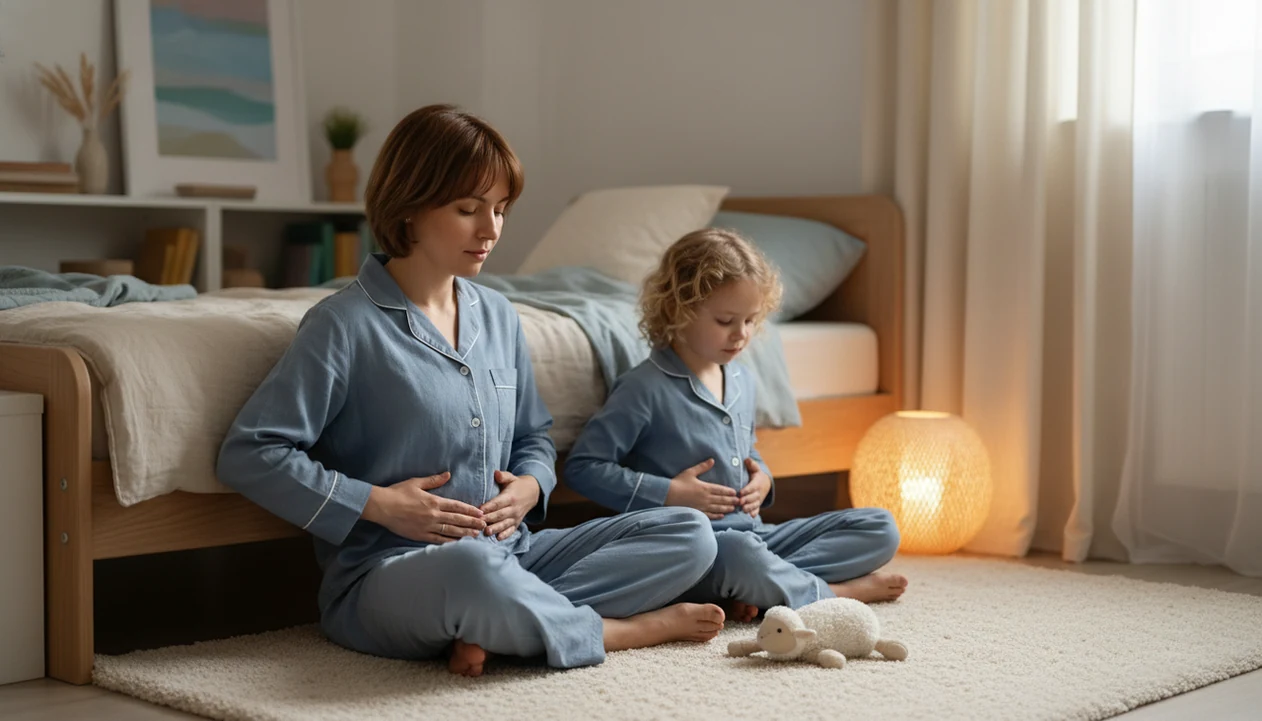
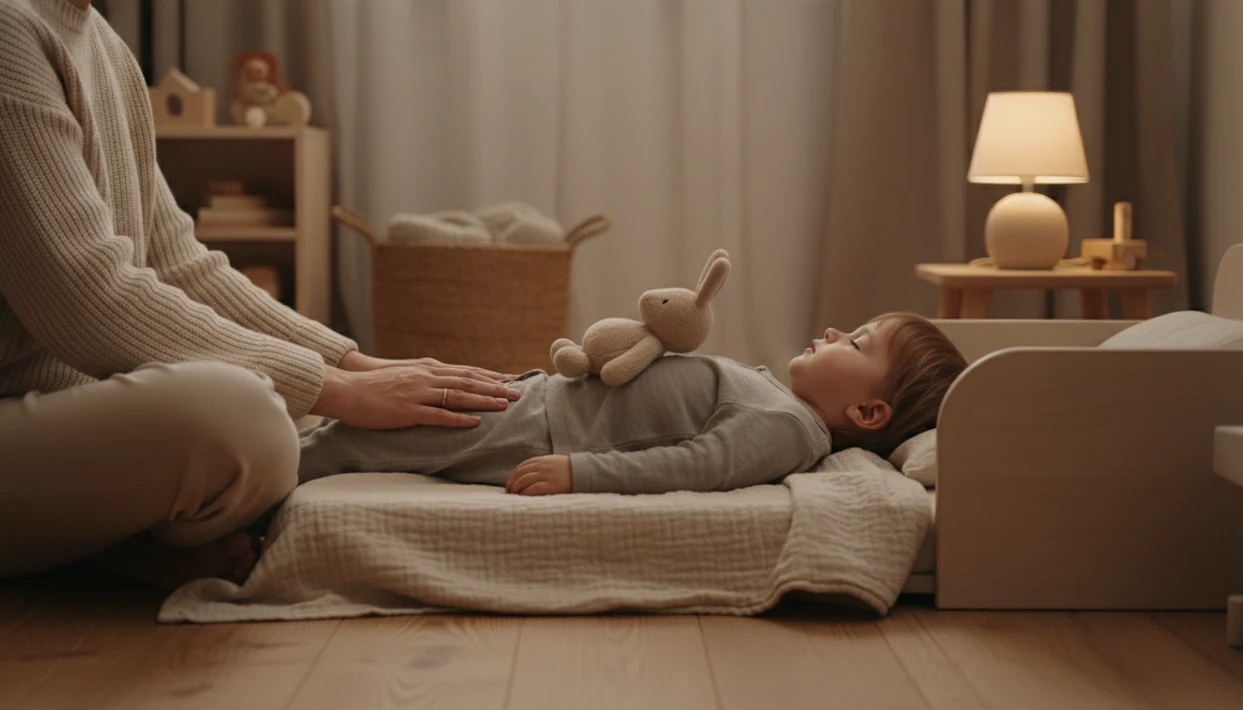
A child might hear, “pretend your belly is a balloon,” instead of a long adult lesson about awareness. That difference matters. General apps can include grief, relationships, workplace stress, or adult sleep themes that don’t fit a seven-year-old at bedtime.
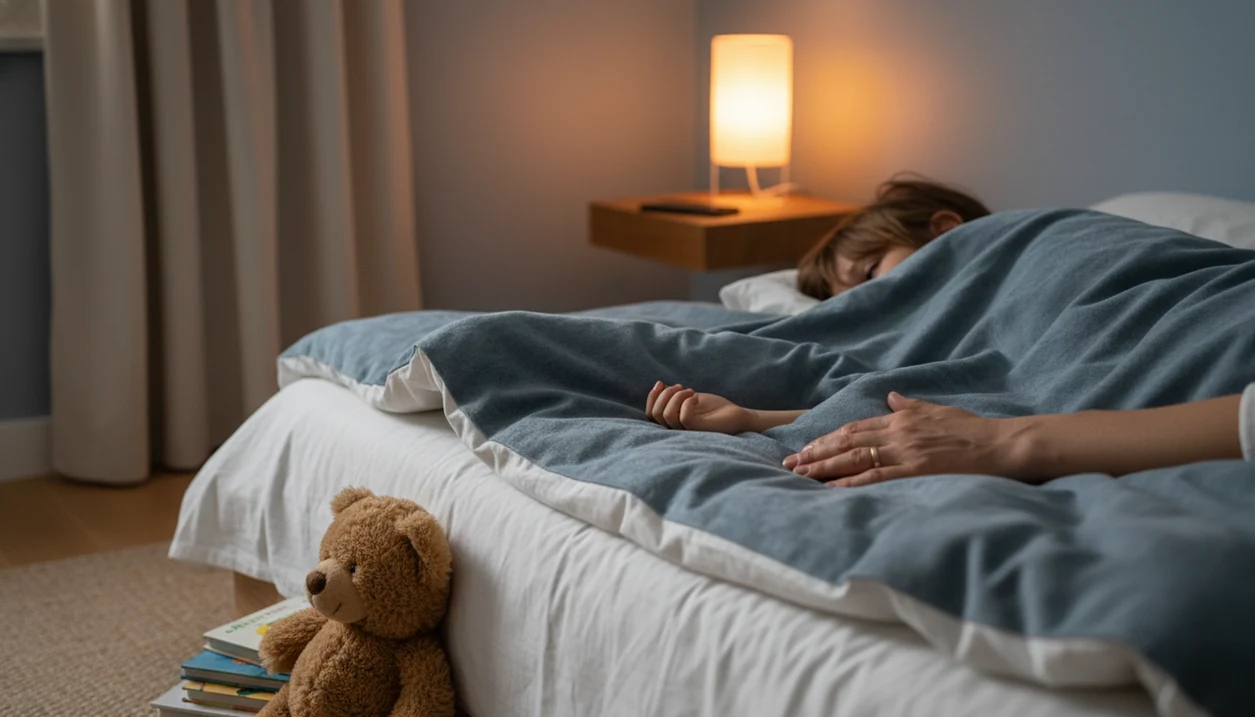
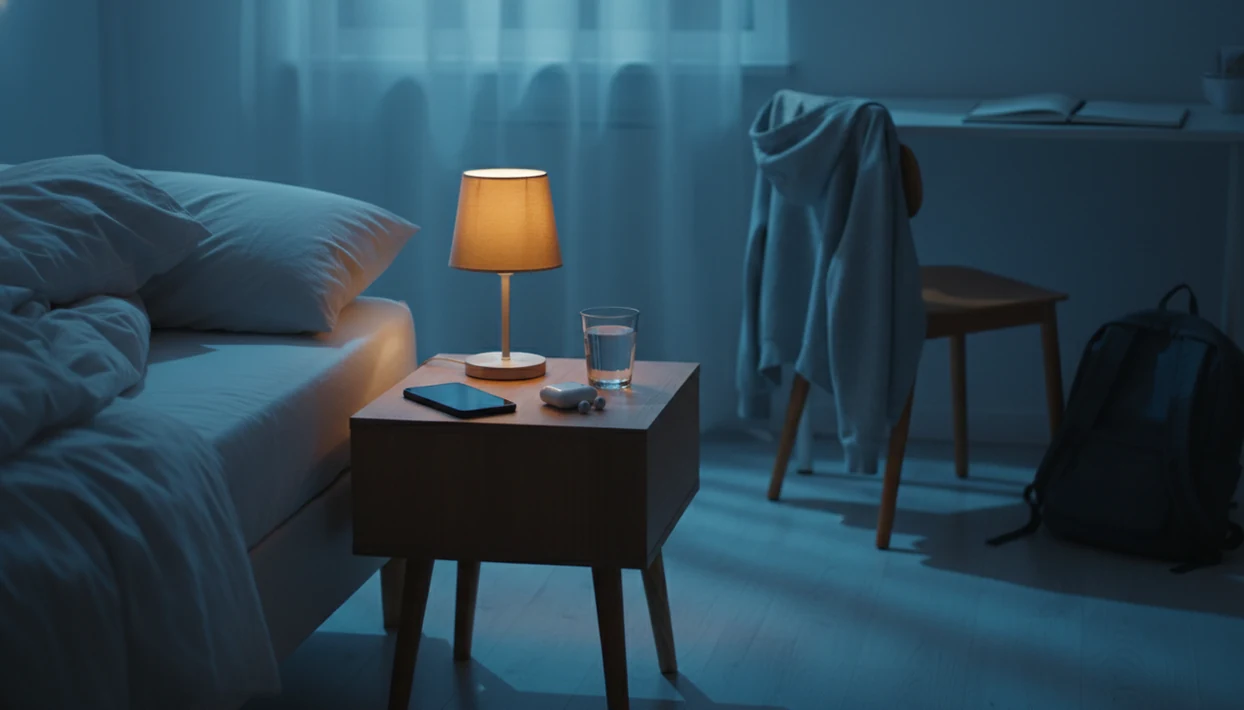
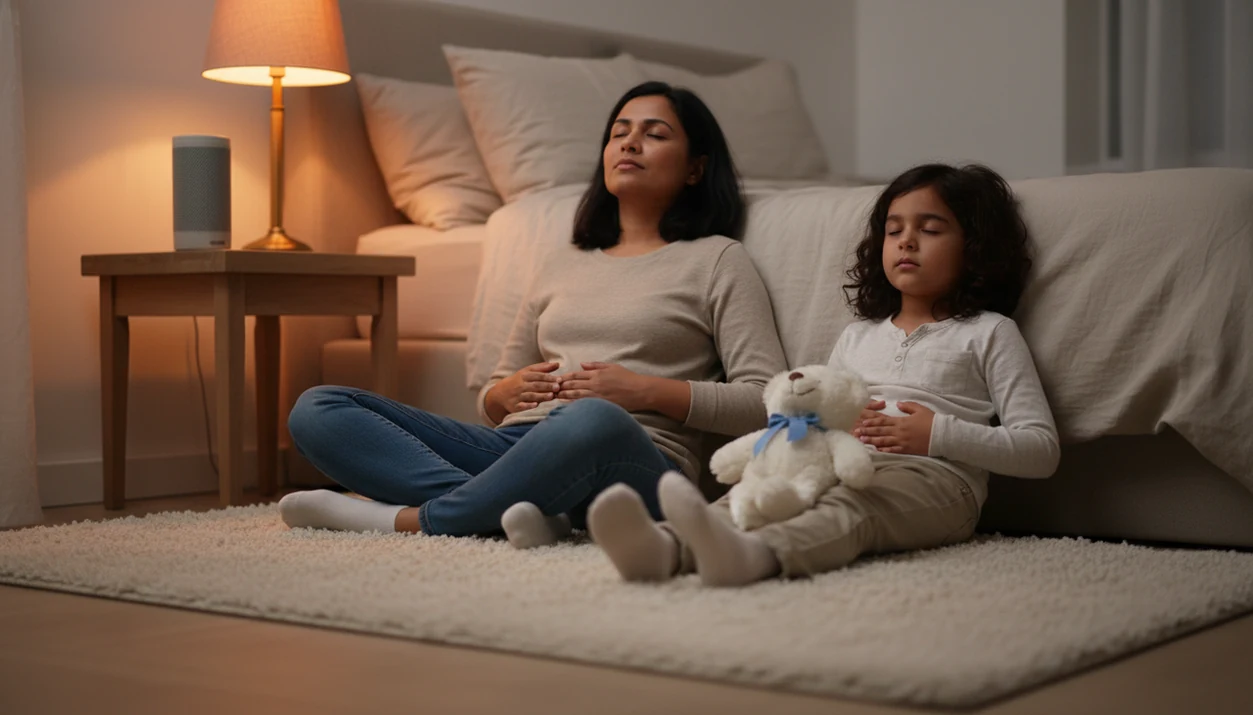
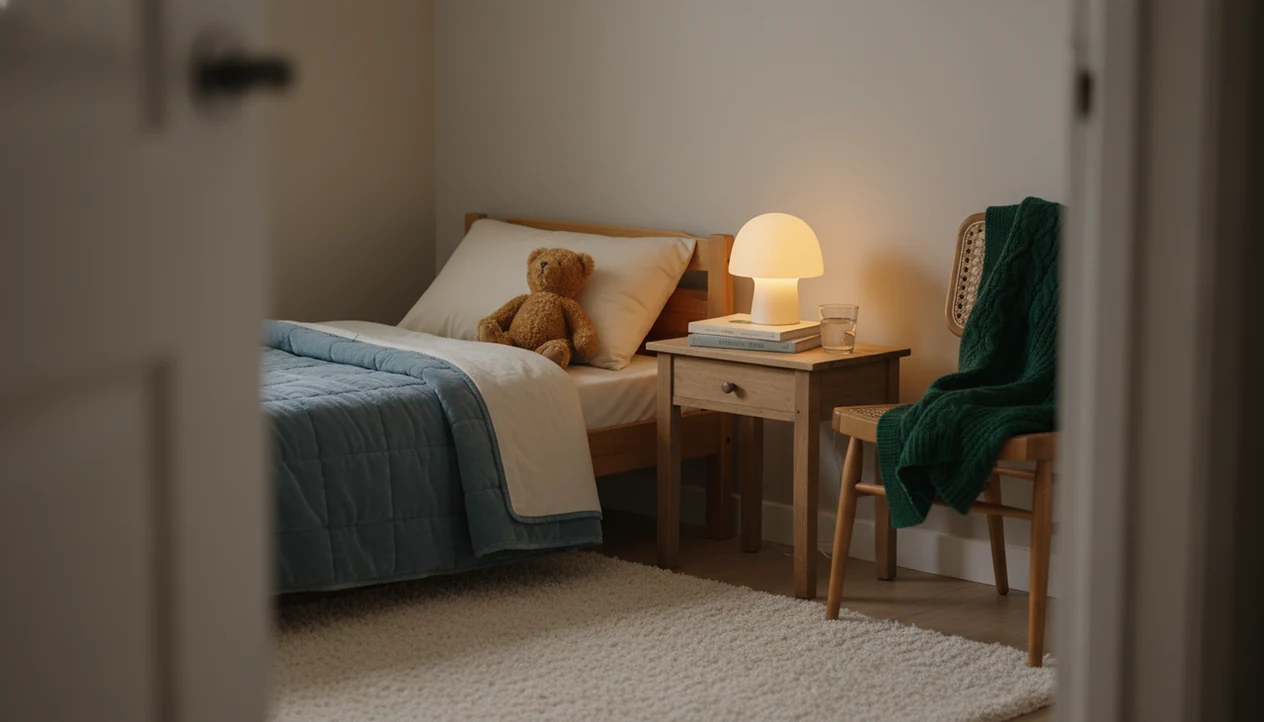
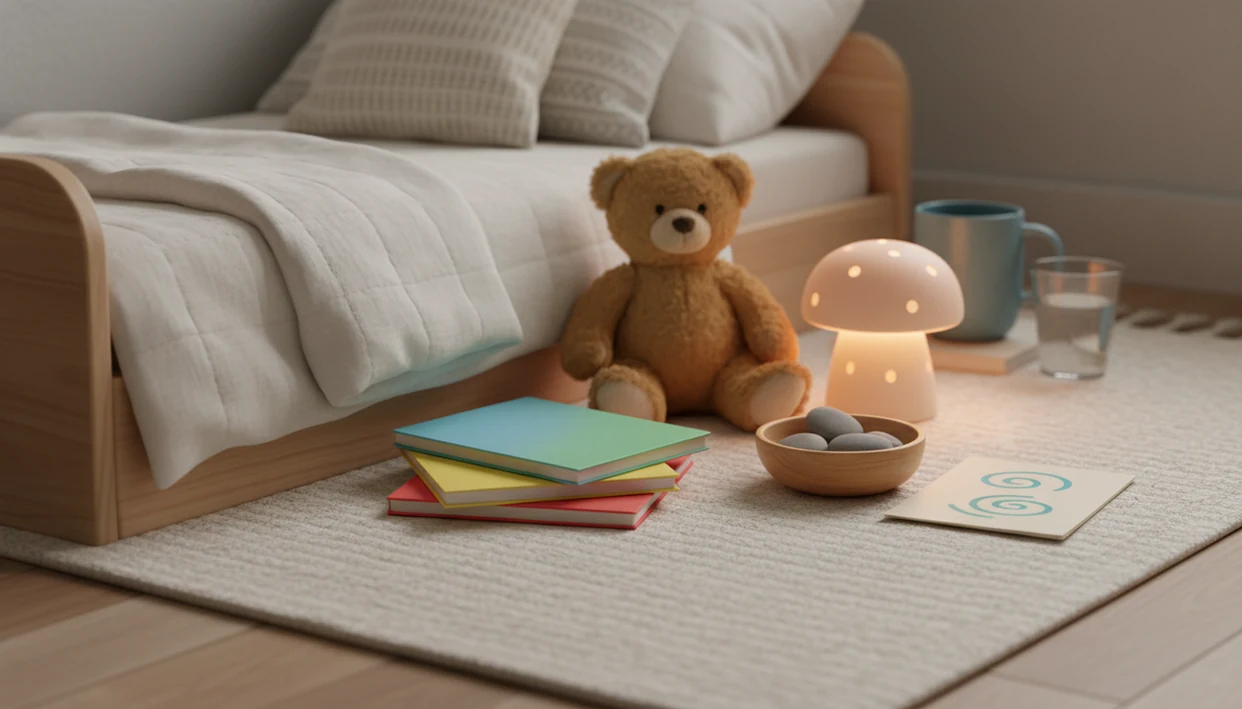
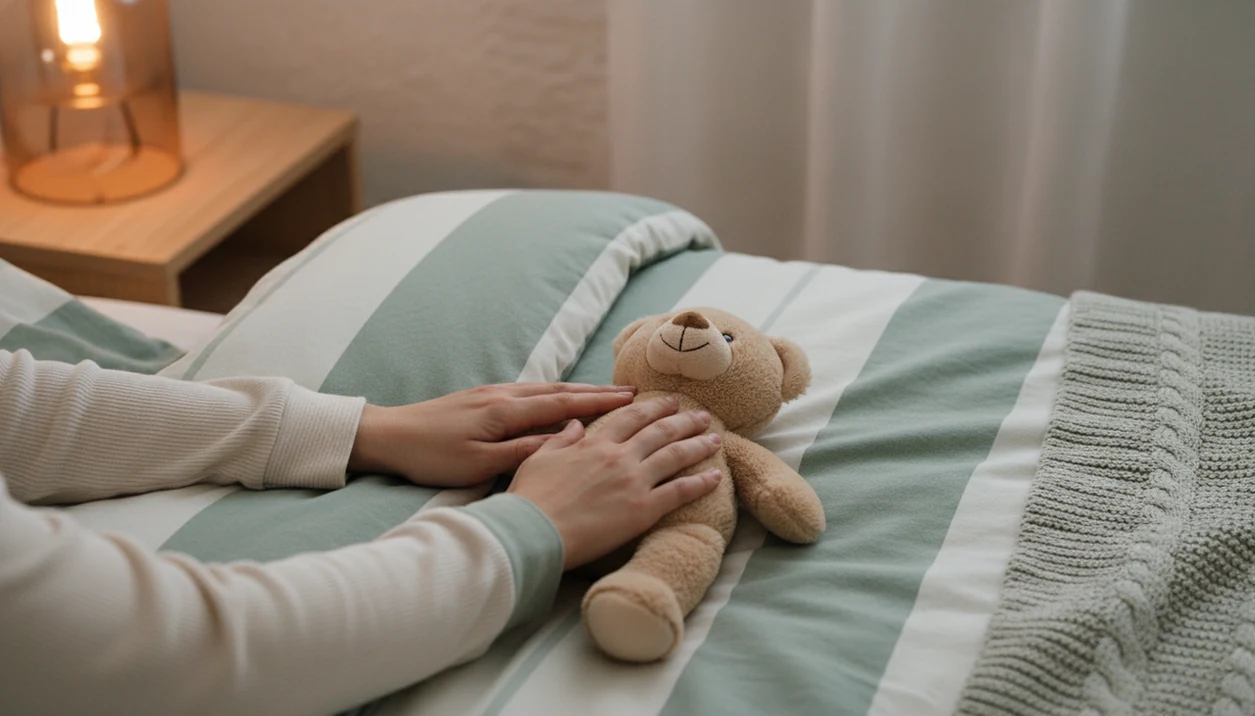
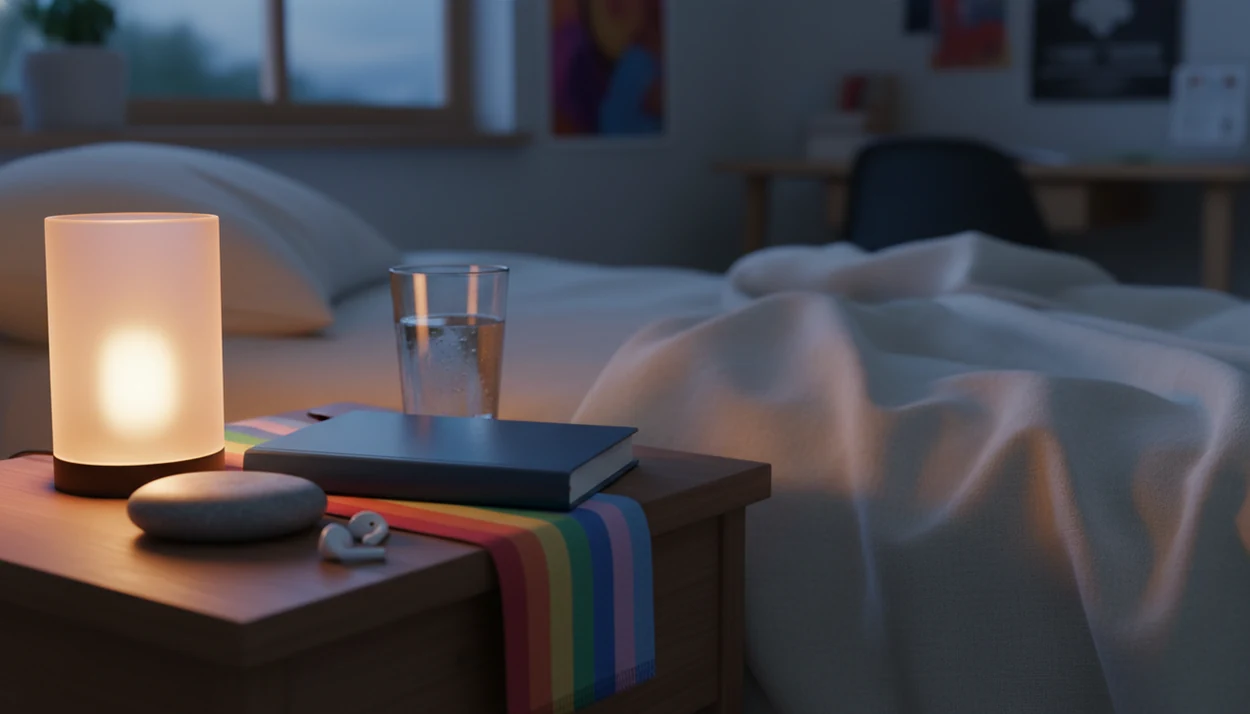
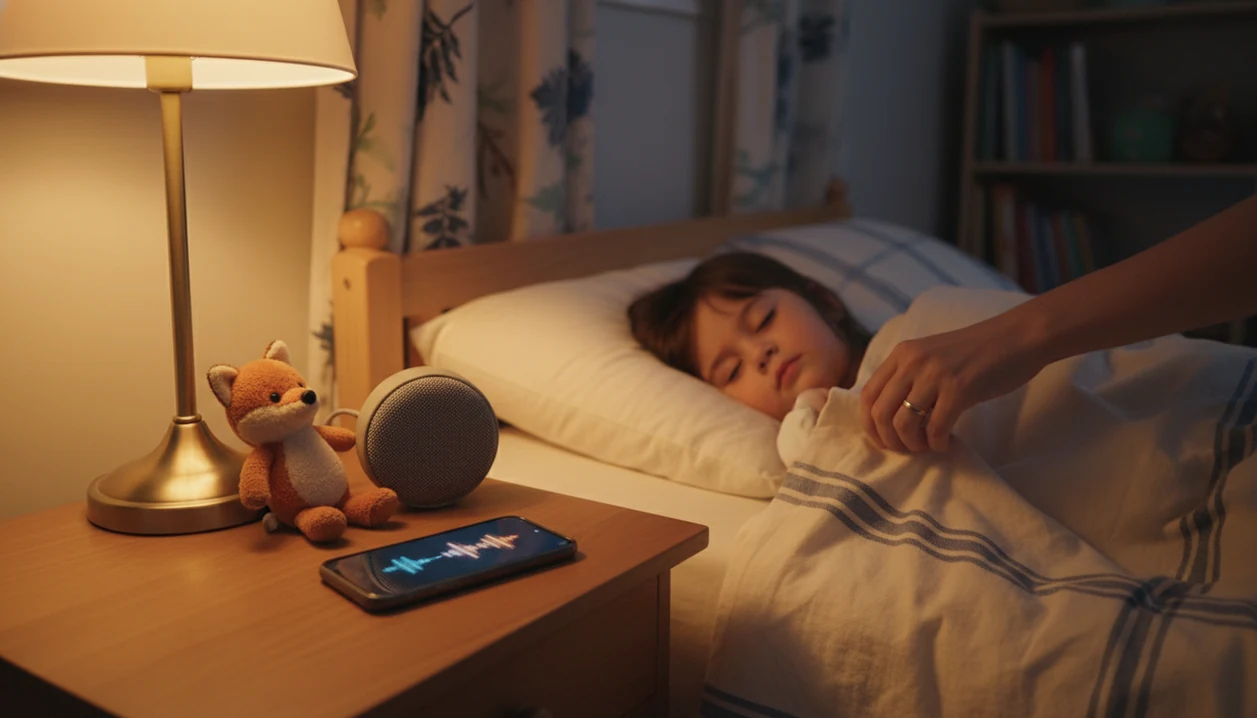
A family meditation app should also help parents choose a starting point. One night that may be a three-minute breathing track. Another night it may be a story after the lamp is dimmed and the room is finally quiet.
Tools like MindTastik, Headspace, and Calm can support family routines, but child-specific curation and parent-aware AI make the biggest difference for younger users. For children, guided audio usually works best when the session is short, concrete, and tied to a predictable routine.
Kids Meditation App vs. General Meditation App Comparison
A dedicated children’s meditation app is usually safer than a general meditation app because the content, length, and features are built around child use. The misconception is that any popular meditation app is automatically fine for children.
| Feature | Kids meditation app | General meditation app | Parent note |
|---|---|---|---|
| Content curation | Child-friendly stories, breathing, sleep audio | May include adult topics | Preview before use |
| Safety features | Age filters, parent settings, no open social | Varies widely | Check settings carefully |
| Age targeting | Preschool, school-age, teen options | Often adult-first | Match the child’s stage |
| Ads and social | Ideally no ads or community feeds | May include promotions or sharing | Avoid open interaction |
| Family sharing | Built for parent-child routines | Often individual use | Better for shared habits |
Dedicated kids meditation apps focus on curated family use, while Headspace and Calm also offer child or family content inside broader libraries. Apps for sleep anxiety and everyday calm should deliver guided routines, not unsupervised scrolling.
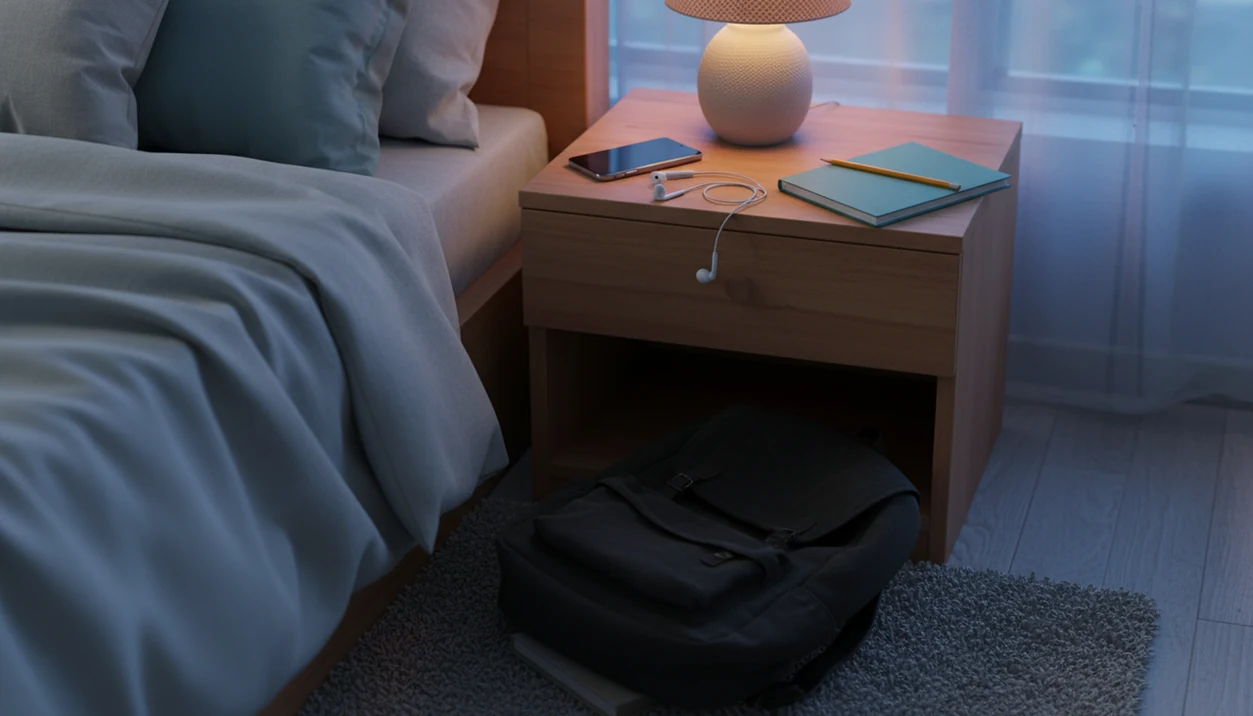
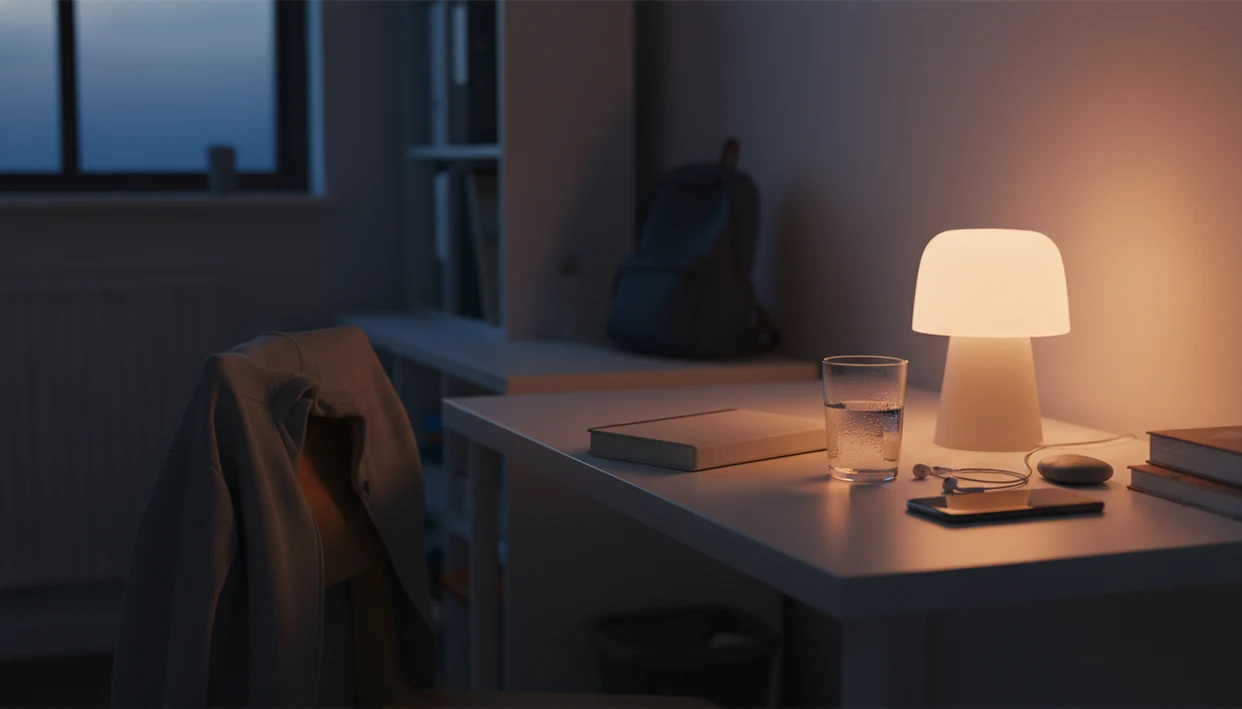
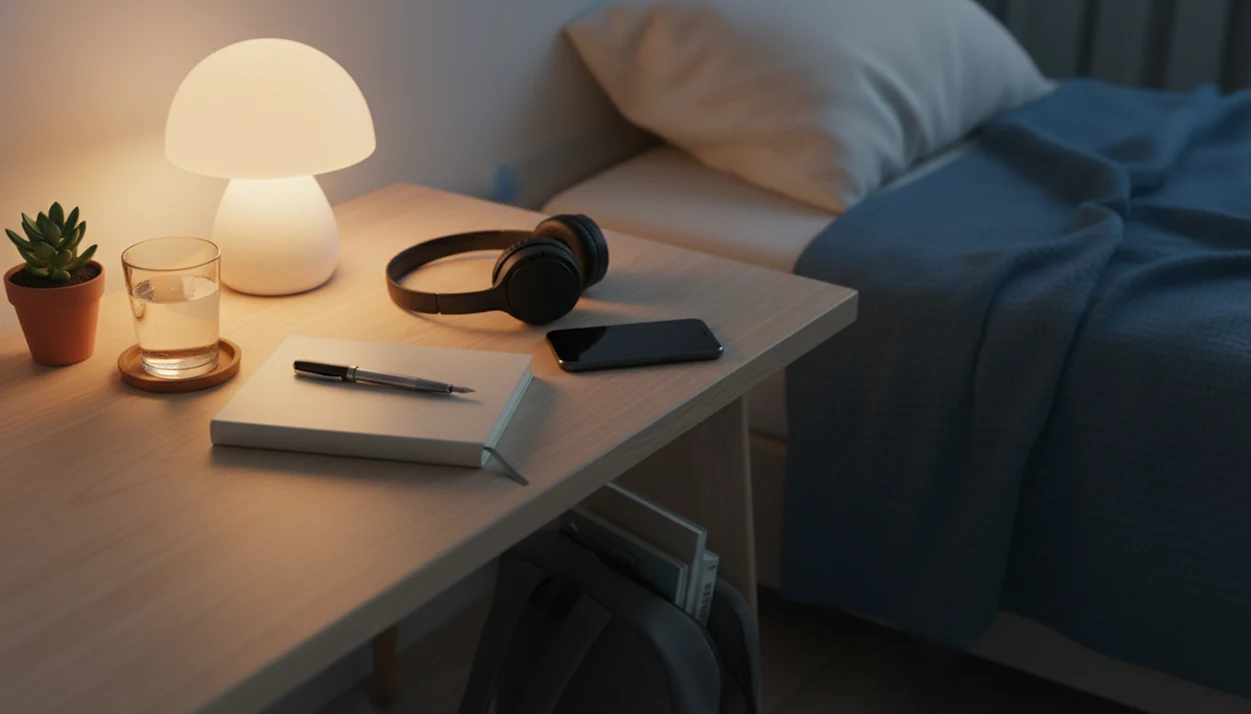
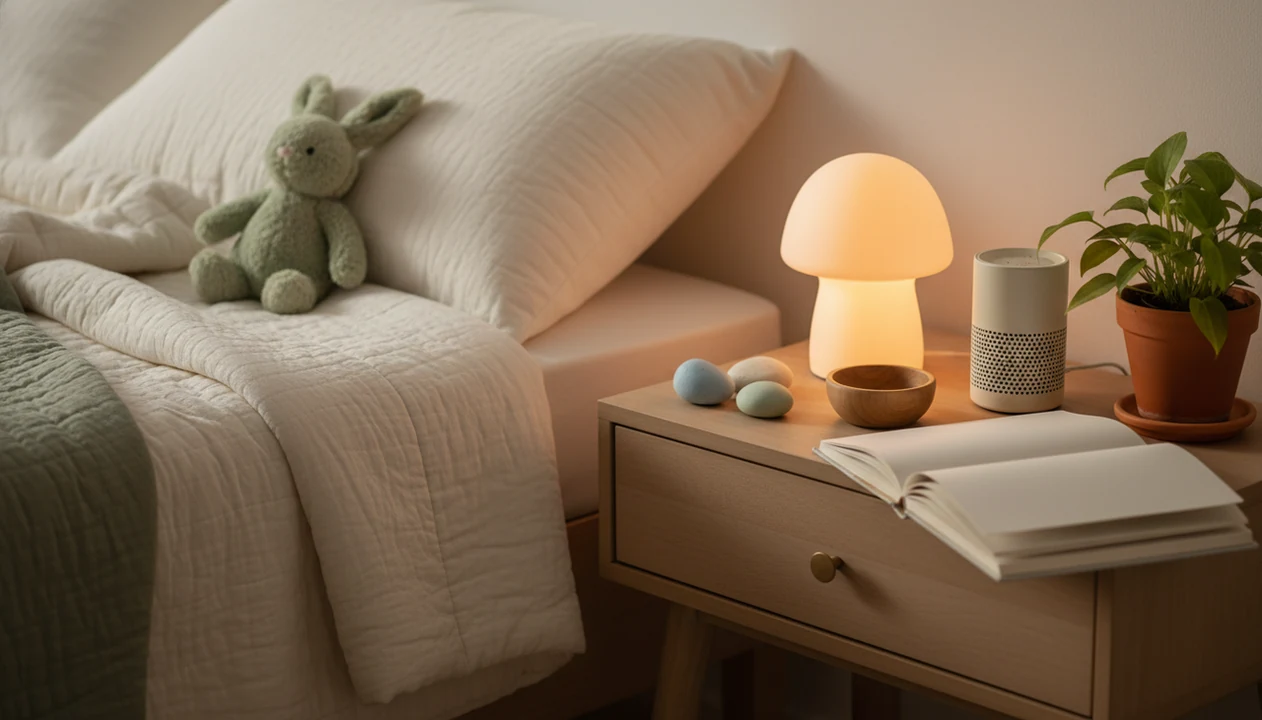
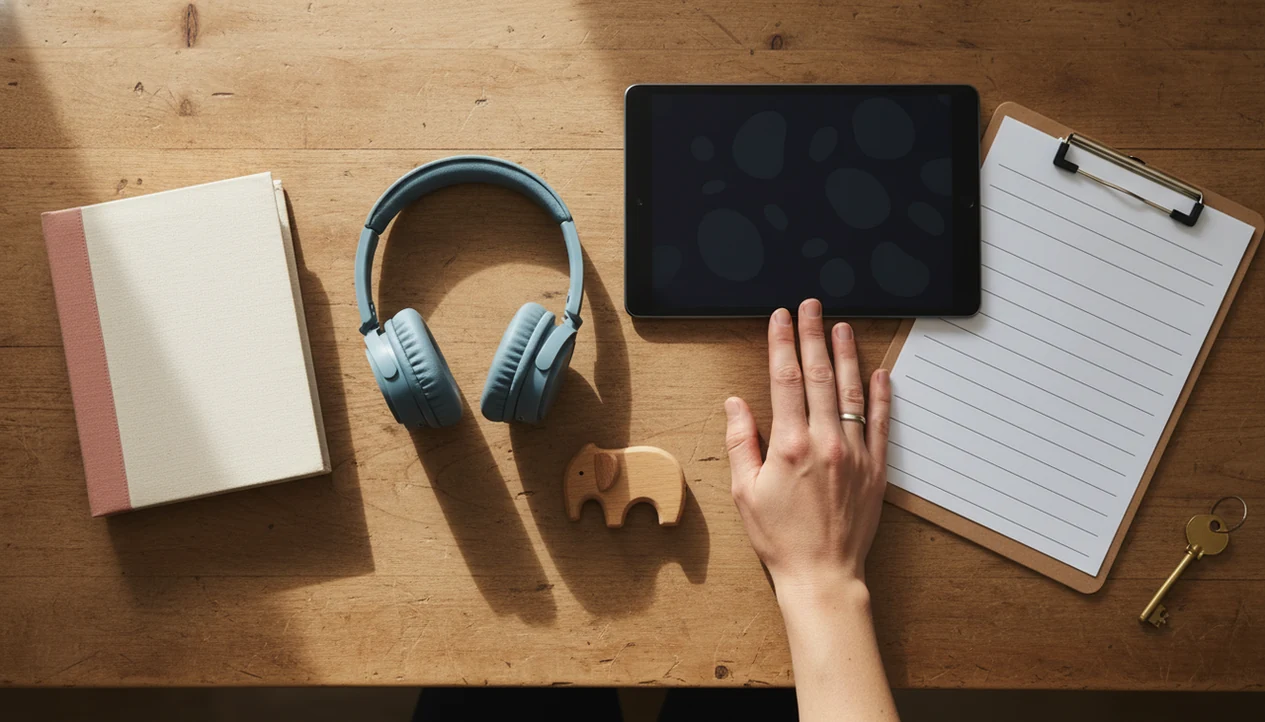
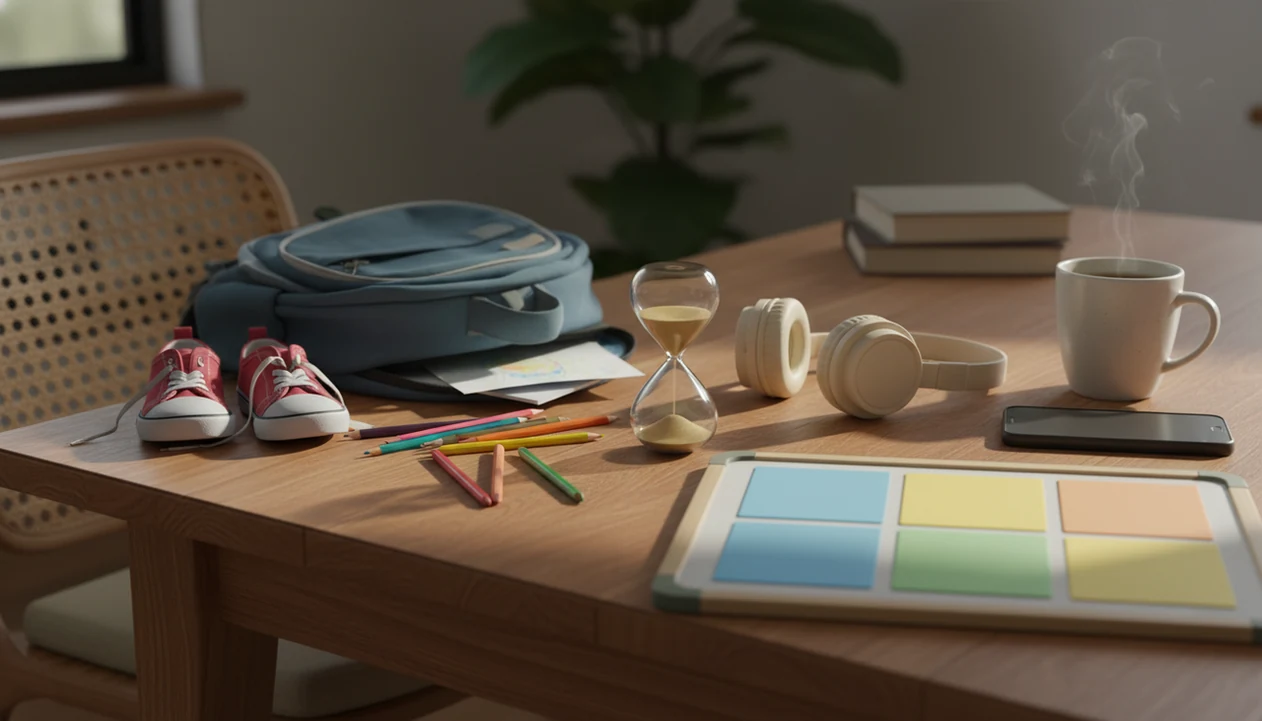
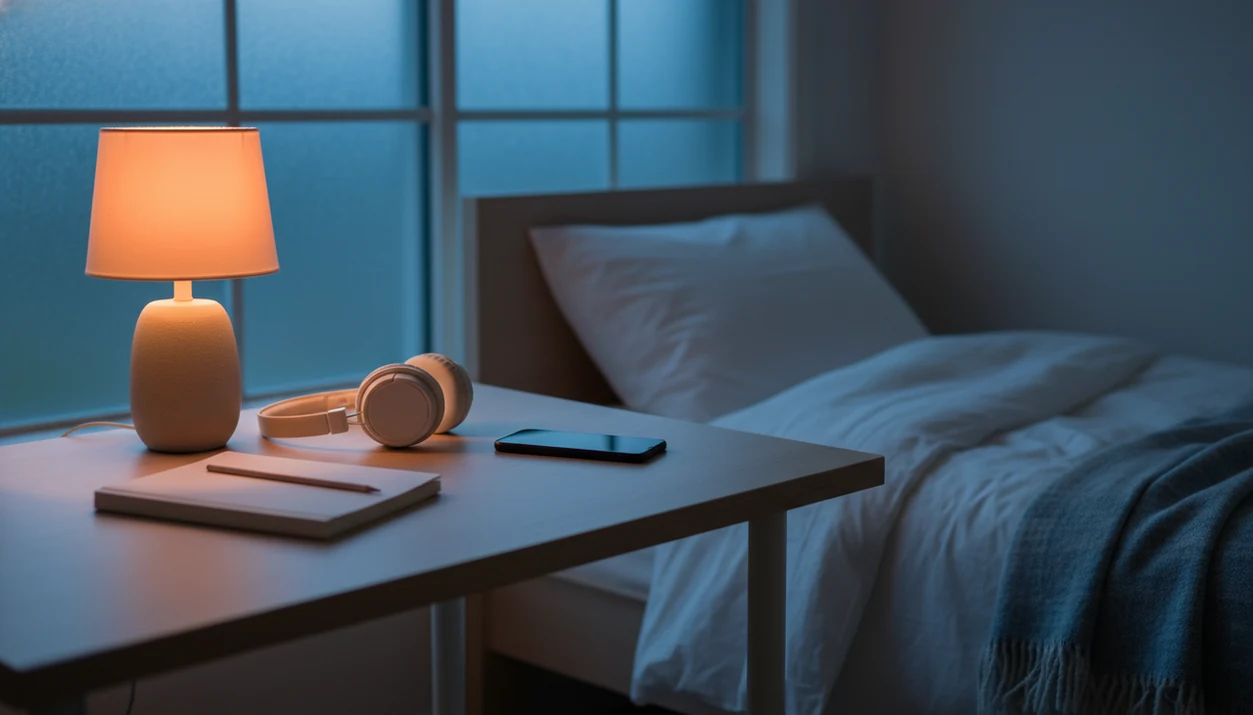
The headphones on the nightstand matter too. If one earbud is tangled around a charging cable, the app still needs to be simple enough to start half-awake.
Check privacy before creating a child’s profile
Before entering a child’s details, inspect what the app collects, why it needs that information, and how an account or its data can be deleted. Avoid supplying sensitive information that is unnecessary for playing an audio session. Check advertising disclosures and any social features separately from the meditation library. Child-friendly stories alone do not establish that the surrounding app is suitable for independent use.
Evidence about mindfulness is not an audit of a commercial app’s privacy or safety features. The NCCIH evidence summary for children describes possible benefits but calls for more rigorous evaluation. Treat privacy checks, parental oversight, and evidence claims as separate decisions. An app should make its limitations clear rather than suggesting that mindfulness content proves it can treat a child’s symptoms.
Best Uses for a Family Meditation App and Children Who Need Extra Care
A family meditation app is best for everyday emotional support, not as a stand-alone treatment for diagnosed conditions. It can help children practice calming skills before problems feel too large.
- Bedtime wind-down: Children bedtime meditation can give kids a repeatable cue that the day is ending. For a fuller routine, parents can build around bedtime meditation for children.
- After-school reset: A short breathing track can help a child shift from noise, homework, and busyness into home time.
- Big feelings: Calm-down audio can name anger, worry, or frustration without making the child feel “bad.”
- Shared family practice: Listening together turns meditation into connection, not another task.
- Extra-care situations: Children with clinical anxiety, ADHD, trauma symptoms, or sleep disorders should also be supported by a pediatrician, child psychologist, or qualified clinician.
Kids are not too young to benefit from simple awareness. But the practice has to look like childhood. Short. Concrete. Repeated gently.
How Kids Meditation and Bedtime Audio Works
Kids meditation works by guiding attention toward breathing, body sensations, imagery, or a calming story. In plain language, it gives the child’s nervous system something steady to follow when thoughts or feelings are moving too fast.
The behavioral tools are familiar: guided attention, progressive muscle relaxation, and cognitive soothing scripts. A bedtime track might ask a child to relax the toes, then the legs, then the shoulders. A worry track might use a simple picture, like placing thoughts on leaves.
A child-focused meditation app should adjust suggestions by age range, time of day, and emotional state. That means a sleepy six-year-old should not receive the same session as a teen who wants focus after school. Families with older children may prefer meditation for teens sleep and stress when bedtime concerns become more independent.
Parent-Aware AI Safety Boundaries
Parent-aware AI should narrow choices, not open everything. For child-safe use, that means curated age filters, no open social features, offline mode, no ads, and boundaries around adult topics or data-sharing risks. Research on child mindfulness has reported anxiety and sleep improvements, but results vary by program, setting, and child. For older children, review meditation app safety for teens before allowing more independent use.
How to Use a Kids Meditation App for Calm-Down Practice
To use a kids meditation app for calm-down practice, start with short sessions and repeat them at the same time each day. Routine matters more than duration.
- Download the app and set your child’s age range. Keep the profile simple, especially for younger children.
- Choose a session type. Pick a bedtime story, breathing exercise, or calm-down meditation based on the moment.
- Start with 3 to 5 minutes. Try it before bed, after school, or after a hard transition.
- Build a nightly family playlist. Include kids, teens, and adults if everyone wants to listen together.
- Review what your child enjoyed. Let the AI refine future suggestions based on what felt manageable.
Some evenings will be messy. The thumb hovers over bedtime audio, someone asks for water, and the routine starts late anyway.
For quick emotional resets, a dedicated calm down meditation for kids can be easier than asking a child to “just calm down.”
Give children a clear way to stop
Before starting an audio session, explain that stopping is allowed and that eyes can stay open. Keep the exercise brief and optional, especially when a child is already upset. Avoid insisting on prolonged attention to breathing. A review of adverse effects in mindfulness programs supports monitoring distress rather than assuming that every meditation exercise will feel calming.
If a child becomes more anxious, frightened, or distressed, stop the audio rather than asking them to finish. Involve a trusted adult and seek professional guidance if symptoms worsen or keep returning. The NCCIH guidance on mindfulness for young people notes that risks and potential contraindications remain insufficiently defined. These uncertainties matter particularly when a child already has significant mental-health symptoms.
Children Bedtime Meditation Routines That Stick
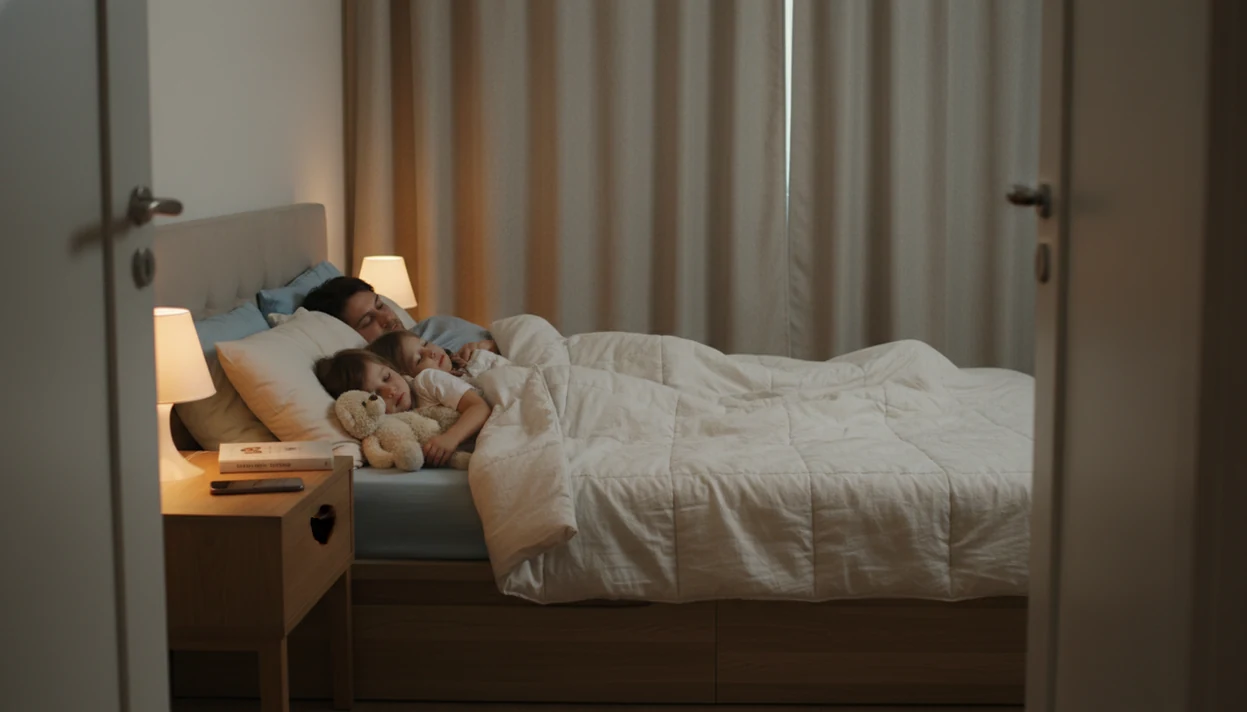
Children bedtime meditation tends to work better when it sits inside a predictable sleep routine. Pair the audio with a steady bedtime, lower lights, screen limits, and the same few steps each night.
Sleep research in adolescents has reported mindfulness-related improvements in sleep onset latency and total sleep time. One NIH-supported trial found about 16 minutes faster sleep onset and 22 minutes longer total sleep time compared with controls. School-based mindfulness research has also reported reductions in sleep-related problems, including a 21% reduction in one sixth-grade trial.
Still, app audio is not magic. A child who gets a bright tablet screen at 9:30 p.m. may become more alert, even if the story is gentle. Test audio-only mode, dim the phone, or start earlier.
For many families, a family mindfulness routine is easier to keep than a child-only plan because everyone follows the same wind-down cue.
Evidence Behind Mindfulness for Kids' Anxiety and Sleep
Some clinical and school-based mindfulness programs for children report meaningful improvements in anxiety, stress, emotional regulation, and sleep. The strongest evidence is usually from structured programs, often delivered in person.
In a randomized clinical trial of children ages 8 to 12 with anxiety disorders, 64% no longer met criteria for their primary anxiety disorder after a 12-week mindfulness-based cognitive therapy program. A school-based review also found that 61% of 35 studies reported significant improvements in anxiety, stress, or emotional problems compared with controls.
Adult evidence should be used carefully here. A meta-analysis of 33 randomized controlled trials found moderate evidence that mindfulness meditation improves anxiety, depression, and pain in adults. That supports the general model, but it does not prove every child app will work the same way.
Clinicians typically recommend professional evaluation when anxiety, sleep loss, or behavior changes interfere with school, relationships, safety, or daily functioning. For ongoing worry, meditation for anxious kids can be a support tool alongside appropriate care.
When to Seek Professional Help for Your Child
Seek professional help when worry, sleep problems, attention struggles, panic, or sadness are getting in the way of your child’s daily life. Meditation audio can support a routine, but it cannot diagnose anxiety, ADHD, trauma symptoms, insomnia, or any medical condition.
Watch for changes that affect school, sleep, friendships, family life, or safety: frequent school refusal, repeated nightmares, long bedtime battles, panic episodes, aggressive behavior, withdrawal, ongoing stomachaches or headaches, or a child saying they feel hopeless. If the pattern is persistent, escalating, or unlike your child, bring in qualified care.
- Contact your pediatrician when symptoms are new, physical, or affecting appetite, sleep, energy, or school attendance.
- Ask for a therapist or child psychologist when anxiety, grief, trauma reminders, behavior changes, or emotional outbursts keep returning.
- Consult a sleep specialist when snoring, breathing pauses, severe insomnia, restless sleep, or daytime exhaustion continues despite a steady routine.
- Seek urgent help immediately if your child talks about self-harm, cannot calm from panic, seems unsafe, or is in severe distress.
Keep the app as a gentle support beside professional care when your child needs more than a bedtime track.
Keep App Sessions Separate From School Performance
A child who spends the school day following instructions, earning behavior points and meeting deadlines may experience a meditation app as another assignment. Keep sessions outside homework checklists and reward charts. Avoid making a streak, completion badge or minutes listened the measure of success. On days packed with school, aftercare and sports, leave room for food, movement and unstructured play rather than adding another scheduled task. If siblings share a device, let each child choose separately instead of comparing who sits still longest.
School research supports keeping expectations modest: a systematic review of school mindfulness programs found that four studies reported reduced physiological stress and one reported increased stress, with limited evidence overall. That does not establish that an app will reduce a particular child's school stress. When discussing a session, focus on whether it felt useful, boring or uncomfortable, not whether the child performed it correctly. If worries center on bullying, an overwhelming workload or classroom difficulties, address those conditions with the school rather than asking the child to meditate through them.
Adding guided meditation to family calming routines
MindTastik’s kids sessions are a starting point for families seeking child-focused audio. Its sleep stories may also suit a bedtime routine, provided a parent previews the story’s language and themes. Breathing exercises offer another option for brief shared practice, rather than a long meditation lesson.
Families needing verified parental controls or specific privacy protections should check the current app settings and policies before choosing it. A child with persistent anxiety, disrupted sleep, or worsening distress needs qualified care, not an app subscription as the main response.
What a kids meditation app cannot assess or treat
A meditation app can support family calm, but it has clear limits. Parents should treat it as a daily practice tool, not a medical service.
- It cannot diagnose, treat, or rule out anxiety disorders, ADHD, depression, trauma, insomnia, or other health concerns.
- It does not replace a pediatrician, child psychologist, therapist, or sleep specialist when symptoms are serious or persistent.
- Most high-quality mindfulness trials involve structured in-person programs; app-based results may be weaker or more variable.
- Some children become stimulated by audio, choice menus, or screens close to bedtime.
- Audio-only mode, earlier timing, or parent control of the device may work better for sensitive sleepers.
- Consistent sleep schedules, screen limits, and parental involvement matter. The app alone is not enough.
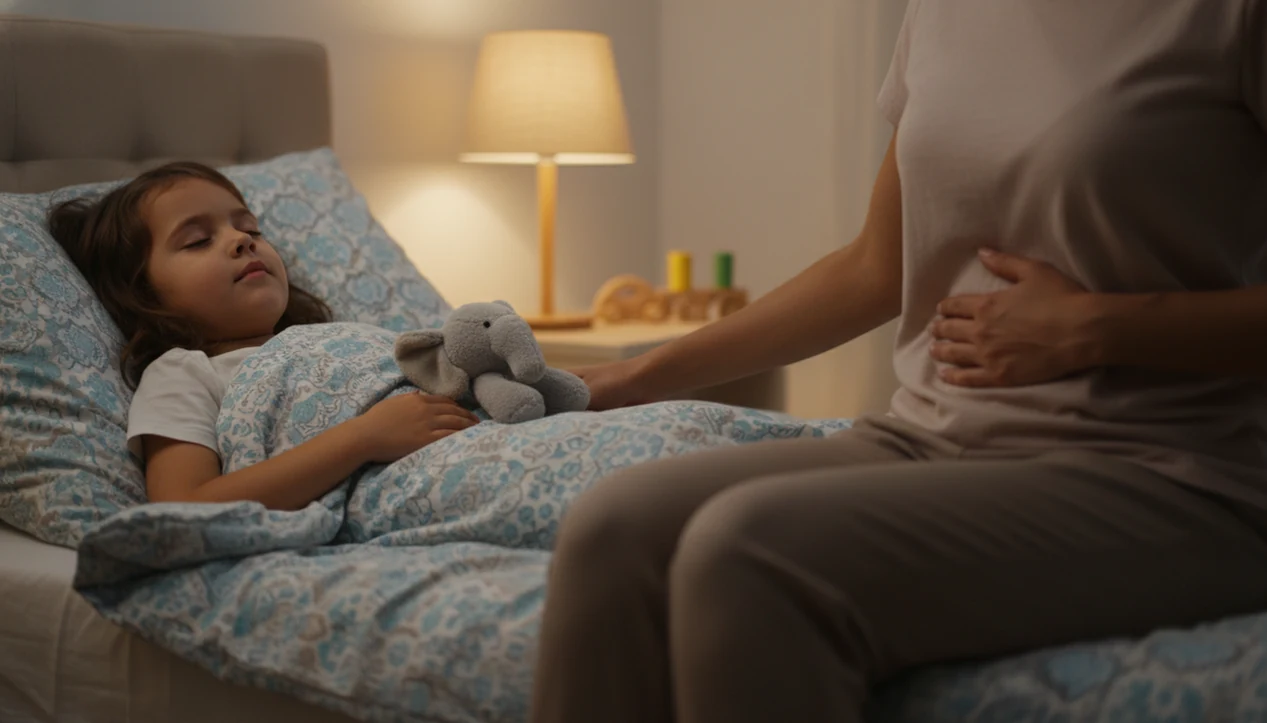
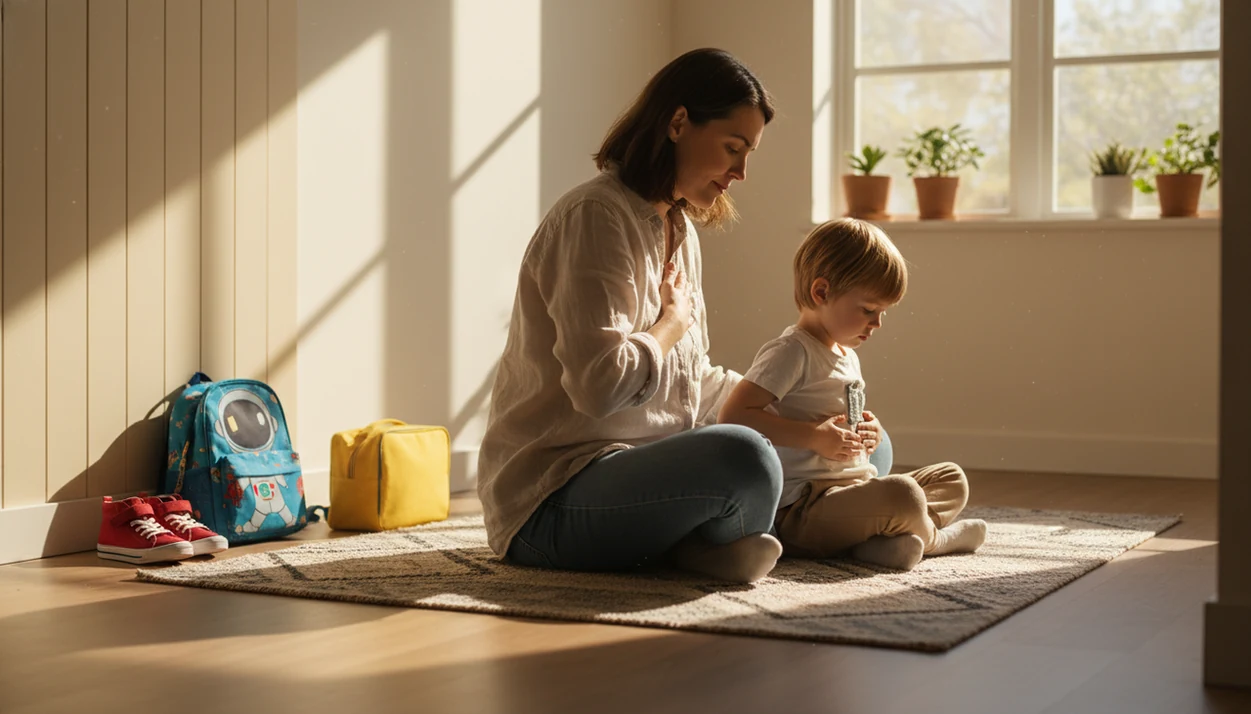
- Younger children often need an adult nearby to follow the prompts.
- Long-term efficacy data for app-based child meditation is still limited.
If a child is scared to sleep, panicking often, or losing daytime functioning, get professional help. Use the app as support, not the whole plan.
Kids meditation app questions
What age can a child start guided meditation?
There is no single starting age that fits every child. Choose language and activities the child can understand, with a parent present for early sessions. A simple breathing prompt or short story may be more manageable than a lesson about thoughts. Interest and comfort matter more than completing a session.
How long should kids meditate?
Start with 3 to 5 minutes rather than aiming for a long session. Stop earlier if the child loses interest or becomes uncomfortable. Repeating a short, familiar exercise can be easier to fit into family life than increasing its length. Finishing the recording should not become a test of good behavior.
Can a meditation app help a child fall asleep?
Bedtime audio can provide a familiar wind-down cue, especially alongside a steady bedtime, lower lights, and screen limits. It does not guarantee faster sleep or solve every sleep problem. Research on mindfulness programs does not establish that a particular children’s app will improve sleep. Persistent difficulties deserve professional assessment.
How can parents check if a meditation app is suitable for kids?
Preview the audio for language, themes, and length. Inspect account settings, advertising, social features, and data-collection and deletion policies. Do not assume a popular general meditation app is child-appropriate. Stay nearby during initial sessions and ask how the child felt afterward, including whether anything was confusing or uncomfortable.
What if meditation makes my child more anxious?
Stop the session and let the child describe what felt uncomfortable without requiring further practice. Eyes can stay open, and exercises should be optional. Meditation can sometimes intensify distress. If anxiety worsens, persists, or affects daily life, involve a pediatrician or qualified mental-health professional before trying more sessions.
Can kids meditation replace therapy for anxiety or ADHD?
No. A meditation app cannot diagnose or replace established care for anxiety, ADHD, or other conditions. Some structured mindfulness programs show benefits, but those findings do not prove that app audio provides equivalent treatment. Meditation may be an additional practice when appropriate, with professional guidance for significant or persistent symptoms.
What if my child will not sit still or close their eyes?
Neither stillness nor closed eyes needs to be a condition of trying a brief exercise. Offer a short story or simple prompt, and allow the child to decline. A parent can listen alongside them. If the format repeatedly causes frustration, choose another calming activity rather than insisting on meditation.