
Mindfulness Resources for Kids and Families
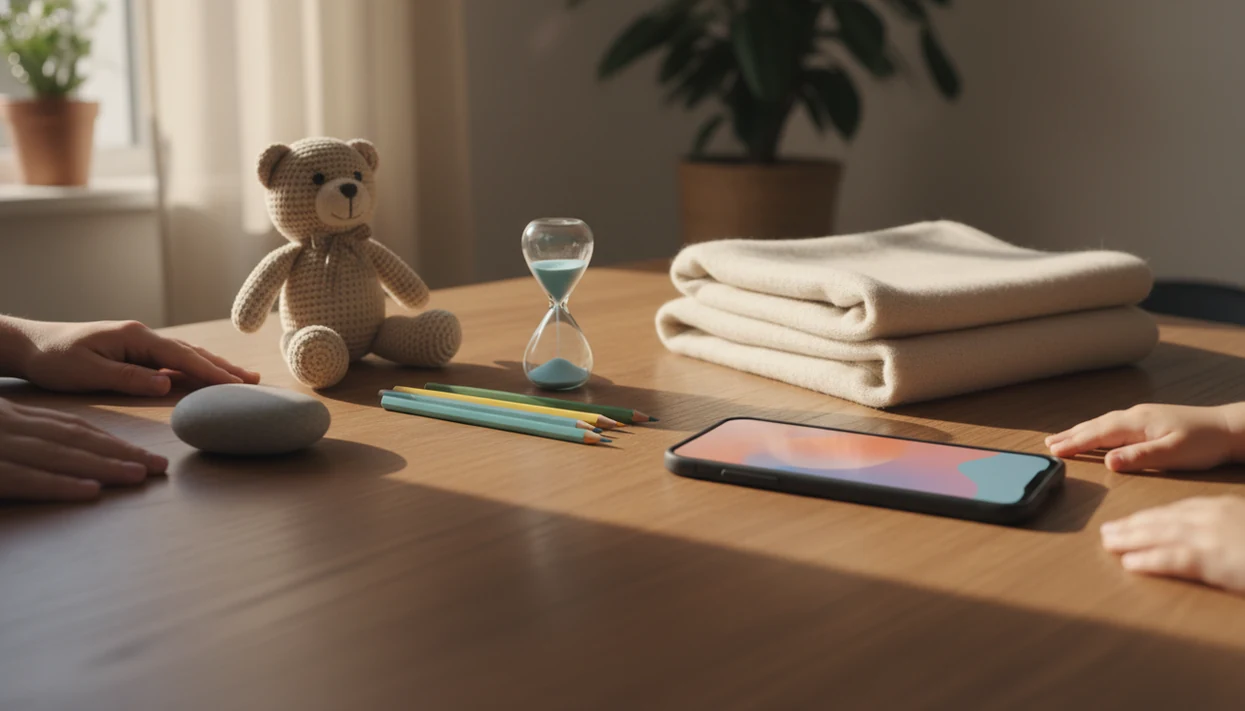


Mindfulness resources for kids and families are short, age-appropriate activities that help children and caregivers notice thoughts, feelings, body sensations, and surroundings. Useful starting points include playful breathing, sensory grounding, guided meditations, bedtime audio, and parent-child calm routines. These practices can support bedtime wind-down, anxious moments, school-day focus, and everyday emotional regulation.
Start with 1-5 minutes rather than long silent meditation, and choose a resource for a specific moment: settling before bed, pausing before homework, or reconnecting after a difficult afternoon. A caregiver can demonstrate the exercise and keep participation optional. Mindfulness is support, not a replacement for medical care or therapy. MindTastik offers audio that caregivers can select for adult-led routines, including breathing exercises, guided meditation, and sleep audio.
The essentials
- Start with 1-5 minute practices, not long silent meditation.
- Match the resource to the need: bedtime calm, anxiety support, focus reset, or family connection.
- MindTastik can support adult-led family routines with guided meditation, sleep audio, breathing exercises, and self-hypnosis sessions for sleep, anxiety, and everyday calm support.
Mindfulness Resources for Kids and Families: Best Starting Point
Start with one short breathing exercise, one sensory grounding activity, and one bedtime wind-down option. These three resources give families a starting point for big feelings, restless bodies, and bedtime wind-down.
Kids usually need concrete practice, not abstract instruction. “Notice your breath” may feel vague. “Pretend your belly is a balloon” is easier. A child can feel that.
Parents should practice alongside the child, at least at first. The adult voice, pace, and facial expression often matter as much as the exercise itself. If bedtime is the hardest moment, a simple routine can include dimming the phone screen before starting calming audio or choosing a short body scan from a bedtime meditation for children guide.
How Mindfulness Resources for Kids and Families Work
Mindfulness resources for kids and families work by training present-moment attention through the breath, body, senses, and simple noticing. Mindfulness is not emptying the mind; it is noticing what is happening without immediately judging it or reacting to it.
In child-friendly terms, that might mean feeling feet on the floor, hearing three sounds in the room, or naming a tight feeling in the stomach. These practices use attention regulation, which means gently choosing where attention goes. They also support interoception, the ability to notice body signals like fast breathing or clenched shoulders.
Family mindfulness also depends on co-regulation. Children borrow calm from an adult’s tone, breathing speed, and body language. A parent who says, “Let’s take one slow breath together,” teaches more than a lecture about calming down.
A 2019 systematic review and meta-analysis found small but significant effects of mindfulness-based interventions for children and adolescents, including anxiety and attention-related outcomes, but the effects were not dramatic and study quality varied (source).
Five Mindfulness Resources for Kids and Families to Try First
- Balloon breath: Younger children breathe in as if filling a belly balloon, then slowly let the air out. It works well when sitting still is hard.
- Starfish breathing: A child traces one hand with a finger, breathing in up each finger and out down the other side. For a fuller version, try parent and child breathing exercises.
- 5-4-3-2-1 grounding: Name five things you see, four you feel, three you hear, two you smell, and one you taste. Use it when anxious thoughts get loud.
- Bedtime body scan: Guide attention from toes to head, with no pressure to fall asleep. The pillow flipped for the cold side is often the signal that the day needs a softer ending.
- One-minute listening reset: Before homework, everyone listens for one quiet sound. Then begin.
Short beats long at the start.
How to Use Mindfulness Resources for Kids and Families at Home
Use mindfulness at home by attaching one tiny practice to a routine that already exists. The routine matters more than the script.
- Choose one daily cue such as bedtime, a car ride, homework, or the morning transition out the door.
- Pick one practice that matches the moment, like balloon breath for frustration or listening practice before schoolwork.
- Keep it short by starting with 1-5 minutes, especially for toddlers, younger children, or restless kids.
- Practice together so your child hears your slower voice and sees you using the same skill.
- Track what helped with a quick note, such as “hand breathing worked after dinner” or “body scan was too long.”
- Adjust by age and temperament instead of forcing stillness when movement, touch, or sound works better.
For younger children, a short meditation for toddlers should feel more like a game than a lesson. For slightly older children, mindfulness for preschoolers offers playful ways to practice attention and connect with caregivers.
Best Mindfulness Resources for Kids and Families by Situation
Choose the resource by the problem in front of you. Bedtime, anxiety, focus, and family connection each need a slightly different starting point.
| Situation | Useful mindfulness resource | How to use it |
|---|---|---|
| Bedtime wind-down | Sleep story, body scan, slow breathing | Play or guide it after lights dim, before the child becomes overtired. |
| Anxious moment | 5-4-3-2-1 grounding, hand breathing, reassurance script | Keep your voice low and name safety first: “You’re here with me.” |
| Focus before homework | One-minute listening, mindful snack, three slow breaths | Use it before opening the worksheet, not after frustration peaks. |
| Family connection | Gratitude round, mindful walk, shared calm minute | Let each person share one thing they noticed, without correcting answers. |
For anxious children, grounding usually works better than long meditation because it gives the mind a concrete task. More targeted ideas are covered in meditation for anxious kids.
Best Fit and Safety Boundaries for Mindfulness Resources for Kids and Families
Mindfulness fits best as everyday support, not as a high-pressure fix. It can help families create calmer transitions, bedtime routines, emotional vocabulary, and shared reset moments.
| Best for | Not ideal for |
|---|---|
| Everyday stress after school | Emergency mental health situations |
| Bedtime wind-down routines | Replacing therapy, medical care, or crisis support |
| Naming feelings and body signals | Being used as punishment after misbehavior |
| Parent-child calm routines | Long forced stillness for a resistant child |
| Short resets before homework | Lectures about “being mindful” during distress |
Some children need movement-based or sensory-based formats. A mindful walk, wall push, weighted blanket moment, or sound hunt may work better than sitting cross-legged. The best family mindfulness routine is the one a child can repeat without feeling trapped.
Parent Modeling in a Mindfulness Resources for Kids and Families Guide
Children often copy adult regulation more than adult instructions. If the adult voice gets faster, the child’s body may speed up too. If the adult pauses, lowers the volume, and takes one breath, the child gets a live example.
Caregiver practice matters because children often regulate with adults before they can regulate alone; the American Academy of Pediatrics describes routines, sleep, and caregiver support as part of helping children manage stress (source). As children grow older, mindful parenting teenagers can help caregivers model calm while respecting their teen’s independence.
Useful parent scripts are plain: “I am taking one slow breath before I answer.” “My shoulders feel tight, so I’m going to unclench them.” “Let’s pause before we decide what happens next.”
The conference room chair between meetings teaches this too. Adults need resets before they can lend calm at home. A simple family mindfulness routine can start with the caregiver practicing first.
What the Evidence Says About Mindfulness Resources for Kids
The evidence says mindfulness resources can help some children, but the benefits are usually small to modest, not curative. They are best understood as practice tools for coping, sleep routines, attention, and emotional awareness.
For anxiety, mindfulness may reduce worry or body tension for some children, especially when paired with reassurance and caregiver support. For attention, studies suggest modest gains in focus and self-monitoring, but not a substitute for ADHD evaluation or school supports. At bedtime, mindfulness can be part of a predictable wind-down with slower breathing and less stimulation. For emotional regulation, mindfulness can help children name body signals earlier, before the feeling becomes a full meltdown. Families managing attention challenges can explore mindful parenting for ADHD as everyday support alongside appropriate professional care.
To use the evidence well:
- Choose one goal at a time, such as bedtime settling or anxious transitions.
- Practice with your child instead of handing over an app and hoping it works.
- Repeat the same short exercise long enough for it to become familiar.
- Watch whether your child feels calmer, more trapped, or simply bored.
- Adjust the format by age, because evidence is weaker for very young children and for app-only use without adult guidance.
In most homes, practice quality beats app choice.
MindTastik Support for Family Mindfulness Resources and Routines
It is designed for adults, but it can support adult-led family calm routines when a caregiver chooses appropriate audio and stays involved.
A parent might use a breathing exercise before the school pickup line, then guide a child through a simpler version later. Another might play bedtime audio nearby while helping the household settle.
For child-specific libraries, compare MindTastik’s adult-led use with options such as Headspace for Kids, Calm Kids, Moshi, and Smiling Mind, then choose based on age fit, bedtime support, caregiver controls, and whether the child-specific content is actually available in your region.
Check age fit, treatment claims, and privacy before choosing an app
Preview a session before offering it to a child. Check the language, length, instructions, and whether it allows movement, open eyes, or stopping early. Look for a clear intended age range and an explanation of the resource's limits. The NCCIH guidance on mindfulness for young people describes an incomplete evidence base and supports using these practices as additional support, not as treatment substitutes. Claims that an app treats anxiety or ADHD deserve particular caution.
For digital resources, read the data-collection and deletion policies before creating a child's profile. Check whether the service asks for sensitive information that the activity does not need, whether advertising is present, and how a caregiver can oversee use. A popular app or a large audio library is not proof of safety or effectiveness. Research on mindfulness programs does not establish that every commercial product containing breathing exercises or meditation has the same benefits.
When to Seek Professional Help
Seek professional help when anxiety, sleep problems, mood changes, or distress are getting in the way of a child’s daily life. Mindfulness can support care, but it should not delay an evaluation when a child is struggling.
Everyday stress often comes and goes with reassurance, rest, food, connection, and routine. A bigger concern is a pattern: a child avoids school or activities, cannot sleep for many nights, has frequent panic-like episodes, seems persistently sad or irritable, loses interest in usual things, has major appetite changes, or family life is revolving around the distress. Trauma reminders, separation fears, nightmares, or behavior changes after a frightening event also deserve gentle attention.
- Notice what has changed, how long it has lasted, and what it is interrupting.
- Contact your child’s pediatrician, a licensed therapist, or the school counselor for guidance.
- Ask about supports at home, school, and bedtime instead of trying to solve everything alone.
- Treat any talk of self-harm, unsafe behavior, or immediate safety concern as urgent and seek crisis or emergency help right away.
- Use breathing, grounding, and bedtime routines as support while professional care is being arranged.
MindTastik for caregiver-led breathing and bedtime routines
MindTastik can support caregivers who want a guided practice for their own stress or audio for a shared wind-down. Its breathing exercises offer a starting point for an adult to follow before guiding a simpler child-friendly version. A caregiver should choose appropriate audio and stay involved. Families seeking a child-specific library with age-based choices and caregiver controls should compare dedicated children's resources instead. The app is not medical treatment, and self-hypnosis audio should not be assumed suitable for children.
What family mindfulness can and cannot help with
Mindfulness is useful, but it has clear limits. Families should keep expectations realistic and watch how each child responds.
- Research effects for child anxiety, attention, and mood are generally small to modest, not dramatic.
- Mindfulness is not a replacement for therapy, medical care, medication guidance, or crisis support.
- Benefits vary by age, temperament, routine, adult modeling, and practice quality.
- Some children resist practices that feel too long, too abstract, too quiet, or too forced.
- App-based resources only help when they are used consistently inside a real family routine.
- A child in severe distress may need connection, safety, food, sleep, or professional care before mindfulness practice.
- Mindfulness should not be used as punishment, a lecture, or proof that a child “should be calm by now.”
- Trauma histories can change what feels safe, so stillness and closed eyes may not fit every child.
Clinicians typically recommend professional support when anxiety, sleep disruption, mood changes, or behavior problems interfere with daily life.
Family mindfulness questions
What age can children start mindfulness activities?
Young children can start with concrete activities such as tracing a hand, listening for sounds, or feeling their feet on the floor. There is no single starting age that suits every child. Match the activity to the child's understanding and willingness, and practice alongside them rather than expecting independent meditation.
How long should a child meditate?
Start with 1-5 minutes, or a shorter pause if that is all the child wants. One hand-tracing exercise or a brief listening activity can be enough for a first attempt. Long silent sessions are not the goal. Keep the practice optional and shorten it when a child becomes uncomfortable or frustrated.
What can a child do instead of focusing on breathing?
Try noticing feet against the floor, naming things in the room, listening for three sounds, or paying attention during a snack. Some children prefer movement or sensory activities to sitting quietly. Breath awareness is only one option, and a child does not need to use it for every mindfulness practice.
Can mindfulness help a child with anxiety?
Mindfulness may help some children notice worry and body tension, but research benefits are generally small and vary by outcome. Pair a brief exercise with reassurance and caregiver support. Persistent anxiety, school avoidance, or distress that disrupts daily life calls for professional assessment, not simply more meditation.
What should parents do if mindfulness makes a child more upset?
Stop the exercise rather than asking the child to push through. Offer ordinary reassurance and connection, and let the child choose a different activity. Avoid forced eyes-closed or prolonged breath-focused practice. If distress persists, worsens, or repeatedly follows meditation, involve a qualified clinician before trying it again.
Which mindfulness activities work well before bed?
A short body scan, gentle breathing, or suitable bedtime audio can fit into a quiet wind-down after lights dim. Keep the activity low-pressure, with no demand to fall asleep. Mindfulness does not replace assessment when sleep problems persist, and its usefulness may come partly from keeping the bedtime routine predictable.
Can mindfulness improve focus before homework?
A one-minute listening exercise, mindful snack, or three slow breaths can provide a pause before starting homework. Research suggests modest attention benefits, not a guaranteed improvement for every child. Use the activity before frustration builds, and do not treat it as a substitute for ADHD evaluation or school support.
How can parents choose a mindfulness app for children?
Check the intended age range, preview the audio, and look for clear limits on health claims. Review privacy policies, advertising, and caregiver oversight options. Choose content that matches the immediate need, such as bedtime or a short focus reset. Popularity alone does not show that an app is effective or suitable for a child.