
Meditation for Anxious Kids: Gentle Calm Support
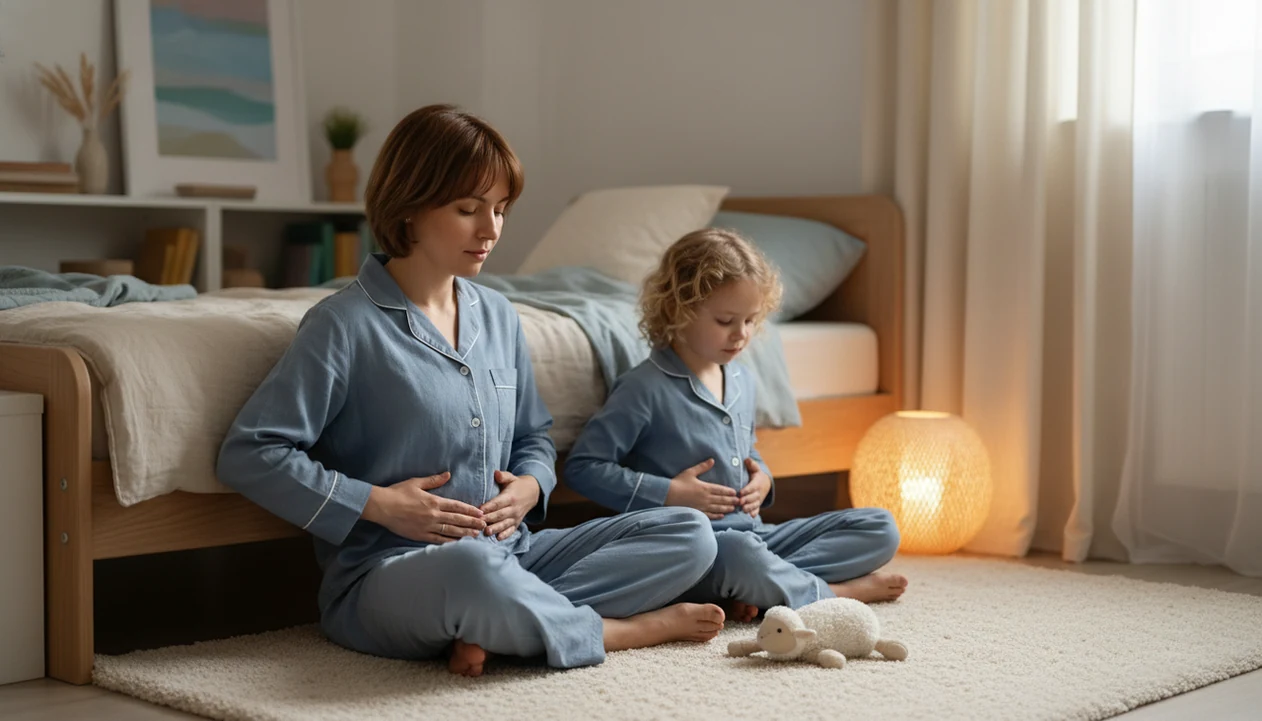


Meditation for anxious kids is a short, age-appropriate calming practice using guided breathing, body awareness, gentle movement, or story-style imagery with adult support. It gives children a concrete way to notice worry signals and practice settling during bedtime, school mornings, or other stressful transitions. It does not diagnose anxiety, treat an anxiety disorder, or replace pediatric or mental health care.
A useful starting point is a brief, playful exercise with a parent nearby, not a long silent session. Balloon breathing, noticing feet on the floor, or listening to a gentle story can make the practice easier to follow. Children should be able to keep their eyes open, move, or stop. The aim is a reassuring routine, not a requirement to become quiet or stop feeling worried.
The essentials
- Use short, playful practices such as balloon breathing, body scans, and story-style guided meditations rather than long silent sessions.
- Parent involvement matters: practice together, keep expectations low, and stop if a child becomes more distressed.
- Meditation apps and calming audio are support tools only, not substitutes for a pediatrician, child psychologist, therapist, or emergency care. Before choosing recordings, review kids meditation app safety to help assess whether an app suits your child.
Guided Meditation for Worried Kids: What Parents Should Know First
Guided meditation for worried kids is a short, adult-supported calming practice that helps a child follow breathing, body cues, or gentle imagery instead of sitting alone with racing thoughts. It may support calm moments, but it does not diagnose anxiety, treat a disorder, or replace pediatric or mental health care.
Parents often use it around bedtime worries, school mornings, transitions, and overstimulation after busy events. Think two minutes on the bedroom rug, not a long silent sit. Knees tucked under a throw blanket can be enough structure for a first try.
According to CDC data summarized from the 2021 National Survey of Children’s Health, about 9.2% of U.S. children ages 3 to 17 had diagnosed anxiety: source.
Suggested image caption: Parent and child practicing a short breathing meditation together before bedtime, showing meditation for anxious kids in a calm home routine.
5 Evidence Facts About Meditation for Anxious Kids
- Mindfulness-based programs show small but significant anxiety symptom reductions in children and adolescents in some randomized trials, but effects vary by program and study quality; cite the specific review used here with an inline URL, for example: source if using a PubMed-indexed meta-analysis.
- Short playful exercises usually work better for children than adult-style silent meditation. Balloon breathing, hand tracing, and story imagery are easier to repeat.
- Consistency around predictable stress points matters more than session length. For anxious kids, one minute before shoes go on may beat ten minutes once a week.
- Parent modeling and co-regulation improve participation. A child often follows a calm adult voice before they can create that calm alone.
- Severe, worsening, or impairing anxiety needs professional evaluation. School refusal, panic attacks, and major sleep changes are not “just worries.”
For anxious children, meditation is often easier when it is practiced before distress peaks, because the child can learn the routine while their body is still reachable.
What mindfulness research can tell families about an audio session
Research on a structured mindfulness program is not the same as research on a single breathing track or bedtime recording. The 2025 review of randomized trials in children and adolescents found anxiety benefits that differed by program type. Those findings support cautious use of mindfulness as a support, not a promise that any particular recording will reduce a child's anxiety. For older children, meditation for teens offers practices better matched to adolescent interests and growing independence.
For younger children, the format matters as much as the label. A review of early-childhood mental health interventions describes a limited evidence base and emphasizes brief, concrete practices adapted to development, with caregiver support. A child's willingness to participate should guide the choice of practice. Completing a recording is not, by itself, evidence that anxiety is improving.
How Meditation for Anxious Kids Works in the Body and Brain
Meditation for anxious kids works by pairing attention shifting with body-based calming cues, such as slower breathing, grounding, and guided imagery. In plain language, it gives a child something steady to notice when worry feels too loud.
Worry can show up as “what if” thoughts, stomachaches, tight shoulders, fast breathing, clinginess, or avoidance. A child may not say, “I feel anxious.” They may say their shoes feel wrong, their belly hurts, or school is impossible today.
Slow breathing can help children notice body signals without immediately escalating them. Grounding asks them to name what they see, hear, or feel right now. Guided imagery redirects attention toward a safe story, not away from real feelings.
School-based mindfulness research has reported improvements in emotional regulation and stress in some children, but study quality and program design vary. Meditation may support regulation skills. It should not be framed as a permanent brain fix.
A review of early-childhood mental health interventions describes the limited evidence for mindfulness in young children and the importance of developmentally appropriate practices.
How to Use Breathing Meditation for Kids at Home
Start with 60 seconds to 5 minutes, depending on your child’s age, mood, and tolerance. A child who only lasts one minute has not failed. That is the practice.
- Choose a calm time, such as before bed, after school, or before leaving for the bus.
- Sit beside your child, or let them stand, sway, hold a stuffed animal, or keep their eyes open.
- Breathe together by pretending to smell a flower, then cool soup, for three to five rounds.
- Name one body clue, such as “my belly feels tight” or “my hands feel warm.”
- End with a simple phrase: “We practiced calming. We can stop now.”
- Repeat at the same routine point if it helped, and stop gently if distress grows.
Some children feel safer looking at a lamp, poster, or stuffed animal than closing their eyes. For more parent-led ideas, parent and child breathing exercises can give families a simple starting point.
4 Meditation Practices for Anxious Kids by Situation
The right practice depends on the moment. Match the exercise to the child’s body state, not just the parent’s goal.
| Situation | Practice to try | Why it fits |
|---|---|---|
| Pre-school jitters or panic-like body feelings | Breathing meditation for kids | Slow, counted breathing gives the child a clear action when their body feels fast. |
| Bedtime worries | Story-style guided meditation | A gentle story can hold attention when the room feels too quiet. |
| Tense muscles or restless evenings | Short body scan | Naming toes, legs, belly, and shoulders can make tension easier to notice. |
| Fidgety or highly active child | Movement plus breath | Stretching, animal poses, or hand breathing respects the need to move. |
| Transitions, car rides, or quiet time | Calming audio for anxious child routines | Audio adds structure when a parent cannot narrate every step. |
A download screen before bedtime is a small thing, but it matters when a child is already tired. Families focused on sleep can also build from bedtime meditation for children.
Best For and Not For: Calming Audio for Anxious Child Routines
Calming audio can be useful when a child needs predictable support, not when they need urgent evaluation or forced quiet.
- Best for mild everyday worries: A short guided session can help a child practice settling before worries grow.
- Best for bedtime settling: Story audio or soft breathing prompts can become part of a wind-down routine.
- Best for school-morning transitions: A two-minute track may help before shoes, backpacks, and separation.
- Best for co-practice: Parent and child listening together often works better than handing over a device.
Not for emergencies. Not for self-harm talk. Not for severe panic, trauma processing, or anxiety that limits daily life.
Tools like MindTastik can offer guided meditation and sleep audio as supportive structure. Use audio as an invitation, not a punishment or compliance tool. If symptoms persist or worsen, contact a qualified professional.
When to Seek Professional Help for Child Anxiety
Seek professional help when anxiety is intense, persistent, unsafe, or keeps a child from normal daily life. Meditation can support a routine, but it cannot judge clinical risk or decide whether a child needs treatment.
Watch for red flags such as talk of self-harm, wanting to disappear, school refusal, panic attacks, sudden regression, major sleep or appetite changes, trauma symptoms, or anxiety that blocks friendships, family activities, or basic routines. A child who melts down every morning before school is not being difficult on purpose; their nervous system may need more support than a breathing track can provide.
- Contact your pediatrician when physical symptoms, sleep changes, appetite shifts, or ongoing worry interfere with daily life.
- Ask a licensed child therapist or psychologist for an evaluation when fears are persistent, escalating, or linked with avoidance.
- Loop in the school counselor or support team when anxiety affects attendance, separation, classroom participation, or transitions.
- Use urgent care, crisis services, or emergency services right away if your child may harm themselves, harm someone else, or cannot stay safe.
Calming audio can sit beside care. It should not delay care.
Parent Coaching Tips for Guided Meditation for Worried Kids
What if my child refuses guided meditation? Offer choice rather than pressure: “Do you want balloon breathing or a story?” A child who feels cornered may fight the routine even if the routine could help.
If closing eyes increases fear, let them keep eyes open. They can look at a nightlight, a stuffed animal, or the edge of a blanket. Safety first, even in tiny details.
If the child fidgets, use movement, hand breathing, or a stuffed animal belly-breathing game. Restless bodies often need a job before they can listen. The laptop fan during a five-minute pause has its own rhythm; children also borrow rhythm from the room.
If the child only tolerates 60 to 90 seconds, count that as success. Model calm breathing without demanding instant calm. For broader household practice, a family mindfulness routine can make calm skills feel shared instead of singled out.
Coordinating School Support Without Singling Your Child Out
For an anxious child, using a calming routine at school can bring another worry: classmates noticing. Before sending meditation audio or headphones, ask your child what would feel comfortable, then check with the teacher about device rules, available space, and transitions such as arrival, lunch, or returning from recess. Avoid arrangements that routinely remove the child from a favorite lesson or make support feel like a punishment.
A review of school mindfulness programs involving 12,358 students found benefits for some psychological outcomes, but study quality, program design, and measurements varied. That makes the school's actual setup worth discussing: who supervises, whether participation is optional, and what happens if a child dislikes the activity. A classroom program is not automatically a good fit for every worried child.
Agree on a discreet way to request support and a clear route back to class. Ask staff to notice participation, not just quietness: is your child joining group work, entering the lunchroom, or staying for the full lesson? Keep communication private rather than asking the child to explain their anxiety in front of classmates.
Audio options for parent-supported calming
MindTastik includes kids sessions, breathing exercises, and sleep stories that families can consider for a shared calming routine. Its guided meditation library is an option for children who prefer spoken prompts to silent practice. A parent can help choose a session and stop it if the child becomes uncomfortable.
Children who dislike recorded voices may prefer simple breathing, movement, or a familiar story read aloud. Persistent anxiety, school refusal, or major sleep disruption calls for professional assessment rather than an app alone. MindTastik is not a medical treatment. Families with adolescents can review meditation app safety for teens before adding an app to their routine.
Where meditation falls short for childhood anxiety
Meditation has modest effects for anxiety symptoms. It is not a cure for anxiety disorders, and it should not delay care when a child is struggling.
- Some children still need CBT, family support, school accommodations, medication evaluation, or other professional care.
- Children with trauma histories may feel worse with inward-focused practices, especially eyes-closed body scans.
- Neurodevelopmental differences can change what feels calming. Movement or sensory supports may work better.
- Severe anxiety may require a pediatrician, child psychologist, therapist, or school-based support team.
- Parents should not delay evaluation because an app or audio track helps briefly.
- Red flags include school refusal, self-harm talk, panic attacks, regression, major sleep or appetite changes, or anxiety that limits daily life.
- Current research varies in program quality, sample size, and follow-up duration.
Clinicians typically recommend professional evaluation when anxiety causes impairment, safety concerns, or persistent distress. If a child talks about self-harm, seems unsafe, or cannot function at home or school, seek urgent professional help rather than trying another meditation session. MindTastik, Headspace, Calm, and mindful.org-style resources can support routines, but they cannot assess what a child needs clinically.
Questions about meditation for anxious kids
What age can children start meditation?
There is no single starting age that suits every child. Young children need brief, concrete activities with caregiver support, such as playful breathing, stretching, or noticing their feet on the floor. Readiness is better judged by comfort and interest than by the ability to sit still or follow adult meditation instructions.
How long should an anxious child meditate?
Start with about 60 seconds and allow up to five minutes if the child is comfortable and interested. One minute is a complete practice, not a failed longer session. Keep the activity voluntary, and stop sooner if it increases distress. A familiar routine point can make repetition easier.
Should I make my child meditate if they refuse?
No. Offer a choice between a story, movement, a simple grounding activity, or no practice at all. A child can keep their eyes open, hold a familiar object, or stop immediately. Meditation should not become a condition for comfort, attention, or permission to talk about a worry.
Can bedtime meditation help a child who worries at night?
A gentle story or brief guided practice can be part of a predictable bedtime routine. A parent can stay nearby and let the child choose whether to listen. Audio is not enough when worries repeatedly prevent sleep or accompany major changes in appetite, behavior, or daily functioning.
Can meditation replace therapy for childhood anxiety?
No. Meditation cannot assess risk or replace evidence-based treatment for persistent or impairing anxiety. Professional care may include cognitive behavioral therapy, family involvement, school support, and medication under medical supervision for some children. Talk of self-harm or an immediate safety concern requires urgent help, not a calming recording.
How do I teach an anxious child to meditate?
Start when your child feels relatively calm. Invite them to notice their feet on the floor, listen for three sounds, or feel a soft toy in their hands. Explain that meditation means noticing what is happening, not making every worry disappear. Practice together and let them keep their eyes open if that feels safer.
Can children use meditation for anxiety before school?
A brief grounding practice before school may help some children feel more settled. Try noticing the pressure of their shoes, listening to nearby sounds, or repeating a reassuring phrase together. Pair this with a predictable morning routine. If school anxiety causes frequent distress or avoidance, talk with their teacher and a qualified health professional.
Is guided meditation better than silent meditation for anxious children?
Guided meditation can be easier for some anxious children because a voice gives them something clear to follow. Others may prefer quiet sensory activities without instructions. Look for simple, gentle guidance that avoids pressure to relax or empty the mind. Let your child try different approaches and choose whichever feels most comfortable.