
Family Mindfulness Routine with Guided Audio
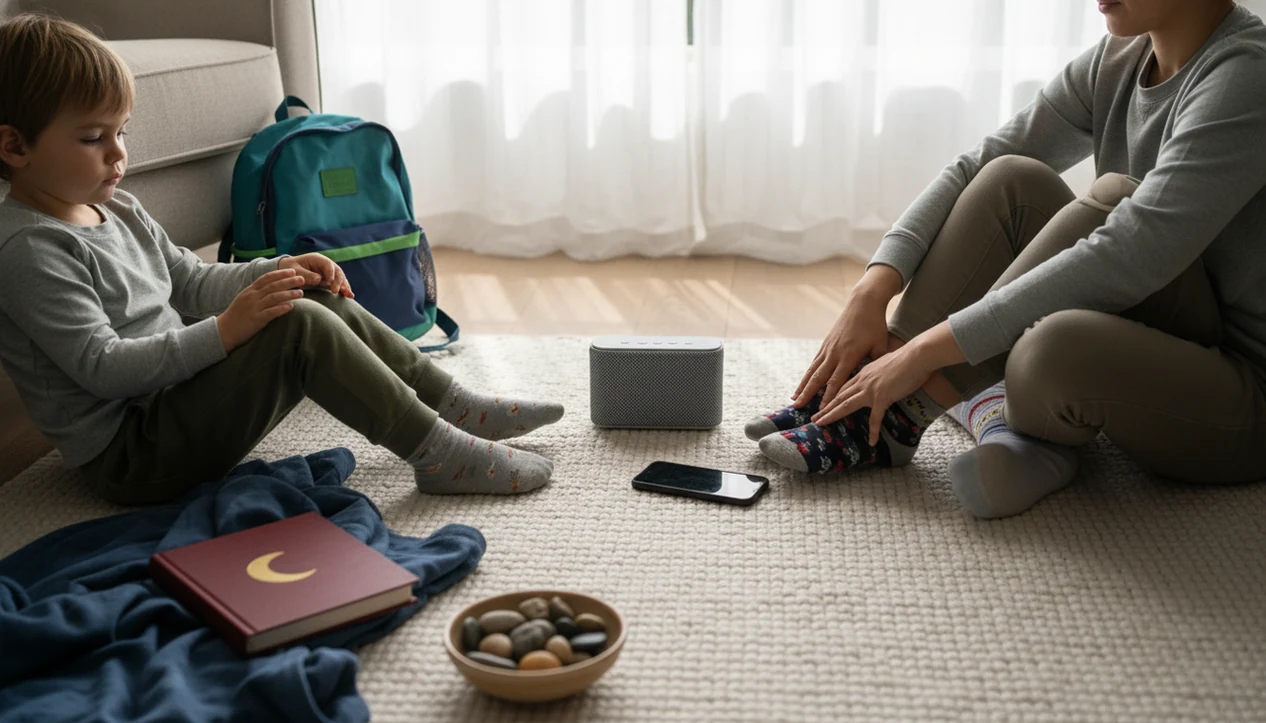


A family mindfulness routine is a repeatable set of brief breathing, guided meditation, gratitude, and calm-down practices that parents and children do together to build everyday calm and connection. It works best when attached to familiar moments: waking up, coming home, transitions, or bedtime. Guided audio, simple breathing, and one shared prompt give everyone something concrete to follow without requiring total silence.
Keep the practice short: about 2 minutes for busy moments, 5 minutes for a reset, and 7-10 minutes for a bedtime wind-down. These are starting points, not targets every child must meet. Parents participate rather than supervise from a distance, showing that pausing is a shared household habit rather than another task assigned to children.
The family routine at a glance
- Anchor family mindfulness to existing routines: morning, after school, transitions, and bedtime.
- Keep sessions brief: 2 minutes for busy moments, 5 minutes for resets, and 7-10 minutes for sleep wind-downs.
- Parents should practice with children because modeling calm behavior increases buy-in and improves the family climate.
Family mindfulness routine schedule for real mornings, transitions, and bedtime
A family mindfulness routine is easier to keep when it uses three daily anchors, not one long meditation block. Start with morning breathing, an after-school reset, and bedtime guided audio.
Copyable mini-schedule:
- Morning: 2 minutes of belly breathing before shoes and bags.
- After school: 5 minutes of guided reset before snacks, screens, or homework.
- Bedtime: 7-10 minutes of sleep audio after teeth and stories.
The goal is predictable calm, not perfect stillness. A child may wiggle, whisper, or roll across the rug and still learn the rhythm of pausing.
For families that want guided structure, tools like MindTastik can provide short breathing, gratitude, sleep, and calm-down sessions. Good meditation app for sleep anxiety and everyday calm support deliver repeatable guided practice, not a cure or a substitute for care.
Before You Start a Family Mindfulness Routine
Before you start a family mindfulness routine, make the setup simple enough that a tired parent can still follow it. The best plan names who leads, where it happens, what format fits the child, and what to do when the day goes sideways.
- Choose one steady adult to model the routine most days. Another caregiver can join, but children often settle faster when one person sets the tone with the same calm voice and pace.
- Pick a quiet-enough place rather than hunting for perfect silence. A bedroom rug, couch corner, parked car, or hallway landing can work if it feels predictable.
- Match the format to your child by trying guided audio, breathing with movement, sleep stories, sound listening, or a gratitude prompt. A child who resists stillness may need hands, feet, or imagination involved.
- Set a fallback plan for rushed mornings and overstimulated evenings. That might be one breath together, one feeling word, or a 60-second reset instead of the full session.
- Avoid eyes-closed body scans if your child has trauma sensitivity or becomes uncomfortable focusing inside the body. Keep eyes open, use grounding objects, or ask a qualified professional for guidance.
How mindfulness for families works in the nervous system and home routine
Family mindfulness works by pairing attention training, breath regulation, emotional labeling, and parent modeling in moments the household already repeats. In plain language, everyone practices noticing, naming, and slowing down together.
Breathing exercises can support autonomic regulation, which means helping the body shift out of high-alert mode. Naming feelings, such as “tight chest” or “mad and tired,” builds emotional labeling. Parent modeling matters because children often copy the adult’s pace before they understand the instruction. To help children understand others’ feelings, try these approaches to raise empathetic kids during everyday family conversations.
Repetition matters more than session length. Two calm minutes before homework can teach the routine better than a 20-minute session that everyone dreads.
Research is encouraging but not magic. A school-based mindfulness meta-analysis found improvements in attention and self-control in some programs (source). A review of child and teen mindfulness interventions reported small to moderate effects on anxiety, stress, and low mood (source). Parent mindfulness research also links practice with lower parenting stress (source). Home mindfulness is a support skill, not medical treatment.
What research can say about a home mindfulness routine
Research on preschool mindfulness does not establish that a particular home routine will work for every family. A 2022 pilot trial in six Australian early-learning centers involved 25 educators and 188 preschoolers. The program did not meet feasibility criteria in four of seven educator-reported areas. Too few parents used it to establish parent feasibility, an important limit when applying classroom findings to a shared household practice.
Claims about improved attention also need care. An updated meta-analysis of children’s executive function found small improvements in inhibitory control and cognitive flexibility, but these effects disappeared against active comparison activities. Structured attention and adult interaction may explain some benefits. For a family routine, a more modest goal is practicing a familiar pause together, not promising better concentration, fewer conflicts, or clinical improvement.
How to use a family meditation routine with guided audio
Use a family meditation routine by choosing one reliable moment first, then adding more only after it feels natural. The most common mistake is building a whole chart before the family has practiced once.
- Choose one anchor moment such as bedtime, the car-to-home transition, or the first five minutes after school.
- Pick one short session from a breathing, gratitude, sleep, or calm-down category. A 3-minute start is enough.
- Practice together instead of handing the app to the child and walking away.
- Add one offline prompt such as “name one hard thing and one okay thing.” You can also teach kids kindness by inviting them to name one small way to help someone today.
- Repeat for one week before adding a second daily anchor.
- Shorten the routine if it is not sticking.
A parent child meditation routine usually works best when the adult joins in, while solo audio fits older kids who already ask for quiet time.
Earbuds on a nightstand, one side tangled around a charging cable, are normal. Use the speaker if that keeps the routine easier.
Best family calm routine moments by time of day
The best family calm routine matches the pressure point of the day. Mornings need speed, after-school needs decompression, and bedtime needs a slower landing.
| Time of day | Recommended duration | Guided audio match | Offline prompt |
|---|---|---|---|
| Morning | 2 minutes | Breathing exercise | “What is one thing we need to remember?” |
| After school | 5 minutes | Guided reset | “Rose and thorn from the day.” |
| Pre-homework | 3-5 minutes | Focus meditation | “What is the first tiny task?” |
| Conflict reset | 2-4 minutes | Calm-down breathing | “Hands down, voice low, one sentence each.” |
| Bedtime | 7-10 minutes | Sleep audio or story | “One thing your body can let go.” |
Families with younger children may prefer bedtime meditation for children when stories work better than quiet body scans.
Image caption suggestion: A family routine chart beside a phone playing guided audio for a family mindfulness routine.
Five family mindfulness routine facts parents should know
- Anchor the practice to existing moments. Morning, after school, and bedtime are easier than a floating “sometime today” plan.
- Keep practices between 2 and 10 minutes. Short sessions are more realistic for children and easier to repeat on school nights.
- Use sound, story, movement, or guided audio. Children often engage faster when the practice gives them something concrete to follow.
- Join the practice as the parent. Parent participation improves buy-in because the child sees calm as a shared family behavior.
- Let apps reduce decision fatigue. A named session for breathing, sleep, or gratitude removes the “what should we do?” problem.
In a National Health Interview Survey brief, 5.4% of U.S. children ages 4-17 used meditation in the previous year (source). CDC data also reports that about 7.1% of U.S. children ages 3-17 have current diagnosed anxiety problems, so regulation skills matter in many homes (source).
Best for and not for: parent child meditation routine fit
A parent child meditation routine fits families that need short, predictable resets. It is not the right tool for every concern, especially when safety, trauma, or significant symptoms are involved.
| Fit | Good match | Use caution or adapt |
|---|---|---|
| Busy mornings | 2-minute breathing before leaving | Skip if it creates more rushing |
| School transitions | 5-minute guided reset after arrival home | Offer movement first for restless kids |
| Mild everyday stress | Shared breathing and feeling words | Seek support for frequent panic or distress |
| Bedtime wind-down | Sleep story, body scan, or soundscape | Ask a clinician about chronic insomnia signs |
| Family connection | Gratitude prompt or quiet check-in | Avoid forced sharing after conflict |
For children who dislike stillness, try pacing breaths, wall pushes, soft music, or a sensory object. Not every calm routine has to look calm from the outside.
For anxious children, a dedicated meditation for anxious kids plan can help parents choose gentler language and shorter resets.
Common mistakes in mindfulness for families
Family mindfulness often fails because the routine asks too much, too soon. Fix the friction before deciding your child “just can’t meditate.”
1. Expecting silence from young children. Use humming, finger breathing, or a listening game instead. Stillness can come later.
2. Starting with too many sessions per day. Pick one anchor for a week. Morning plus bedtime plus homework reset is a lot.
3. Using mindfulness only during meltdowns. Practice during neutral moments, so the skill is familiar when emotions rise.
4. Letting the app replace parent participation. Sit nearby and breathe too. The phone can guide, but the adult sets the tone.
5. Making skipped days feel like failure. Reset the plan. One missed night is not a broken routine.
If your child responds better to movement, parent and child breathing exercises can feel more natural than silent sitting.
MindTastik guided audio options for a family calm routine
In a family routine, the useful part is choosing the session type by moment.
Breathing exercises fit mornings and conflict resets because they are short and easy to follow. Guided meditation fits after-school and pre-homework transitions, especially when a child needs a clear voice to follow. Sleep audio can support bedtime wind-downs for the household, and self-hypnosis sessions may fit adults or older family members who want a longer evening practice.
Keep the promise modest. Guided audio can make a routine easier to repeat, but it cannot guarantee sleep or emotional change.
Some families compare MindTastik with Calm, Headspace, or mindful.org-style practices before choosing a starting point.
Visible parent questions about a family meditation routine
How long should family meditation last?
For children, consistency usually matters more than duration because the routine teaches the body what comes next. A 3-minute breathing track done most school nights is often easier than a long weekend meditation.
What age can kids start mindfulness?
Kids can start with playful mindfulness when they can copy a breath, listen to a sound, or name a feeling. Toddlers need movement and sensory prompts, while older kids may handle short guided audio or a simple body scan.
What if my child will not sit still?
Do not make stillness the entry fee. Try walking breaths, squeezing a pillow, tracing a jacket zipper, or listening for three sounds in the room.
Some teens prefer private practice, especially at night. A separate meditation for teens sleep and stress routine may fit better than a shared family session.
Matching guided audio to the family’s busiest moments
MindTastik’s breathing exercises suit brief morning pauses, while gratitude and focus sessions offer a clear activity for after-school or pre-homework resets. Its sleep stories are another option for a shared bedtime wind-down. An adult can stay nearby and participate rather than leaving the audio to manage the child’s mood.
Families whose children prefer movement or sensory play may find an offline activity more useful than a recording. Significant anxiety, persistent sleep problems, or safety concerns need professional support, not an app-only routine.
What a family mindfulness routine cannot treat or guarantee
A family mindfulness routine can support calmer habits, but it has clear limits. It should not replace professional care for significant anxiety, depression, trauma, sleep disorders, self-harm concerns, or any safety issue.
- Evidence for app-based at-home family meditation is still emerging, especially across different ages in one household.
- Some children dislike stillness, silence, or internal body focus. Use movement or sensory grounding instead.
- Benefits usually require consistency over weeks and months, not one dramatic bedtime session.
- Over-structuring the day can backfire. A calm routine should not become another performance task.
- Families should skip, shorten, or restart sessions without guilt when life is hectic.
- Children with trauma histories may need specialist guidance before body scans or eyes-closed practices.
- Parents under heavy stress may need their own support, not just another family habit.
Clinicians typically recommend professional assessment when anxiety, sleep disruption, or behavior changes interfere with school, safety, health, or daily functioning.
Family mindfulness routine questions
How long should a family mindfulness session last?
Start with 2-3 minutes at one predictable time. A five-minute reset or 7-10-minute bedtime recording may suit some children, but neither is a requirement. Shorten the session if it adds pressure or frustration. A brief practice the family can repeat is more useful than a longer session everyone resists.
Can toddlers take part in family mindfulness?
Yes, through brief, playful activities rather than long silent meditation. Try noticing a sound, copying a gentle breath, or exploring a texture together. NHS guidance suggests roughly one minute per year of age as a practical rule, not a required duration. Movement and adult participation can be part of the activity.
What is the best time for families to practice mindfulness?
Choose the moment that fits the household with the least extra effort. Morning breathing can be brief, an after-school pause can mark the transition home, and bedtime audio can follow teeth and stories. Start with one of these rather than all three. Skip a morning practice if it makes leaving home more rushed.
What if my child refuses to sit still or close their eyes?
Stillness and closed eyes do not need to be conditions for joining. Offer walking, humming, finger breathing, or noticing sounds instead. Some children dislike internal body focus, so an activity involving an object or the surroundings may fit better. Keep the invitation brief and avoid turning participation into a contest.
Should mindfulness be used during a child’s meltdown?
Practice first during neutral moments so the activity is familiar before strong emotions arrive. During distress, an adult can model a slow pace and offer a simple shared breath without demanding compliance. Mindfulness is not a substitute for responding to safety concerns, and a recording should not be expected to stop a meltdown.
Can a family mindfulness routine help children with anxiety?
It can provide a shared way to pause, name feelings, and practice calming habits, but it is not treatment for significant anxiety. Evidence for app-based home routines remains limited. Frequent panic, persistent distress, trauma-related symptoms, or difficulties that disrupt daily life call for professional support rather than simply longer or more frequent meditation.
How can siblings of different ages practice mindfulness together?
Use one simple activity with different ways to join. A younger child might notice sounds or move while an older child follows a short breathing prompt. Keep the shared portion brief, then allow an older child to continue if interested. The aim is a recognizable family pause, not identical behavior from every participant.