
Mindful Ways to Build Self Esteem in Kids
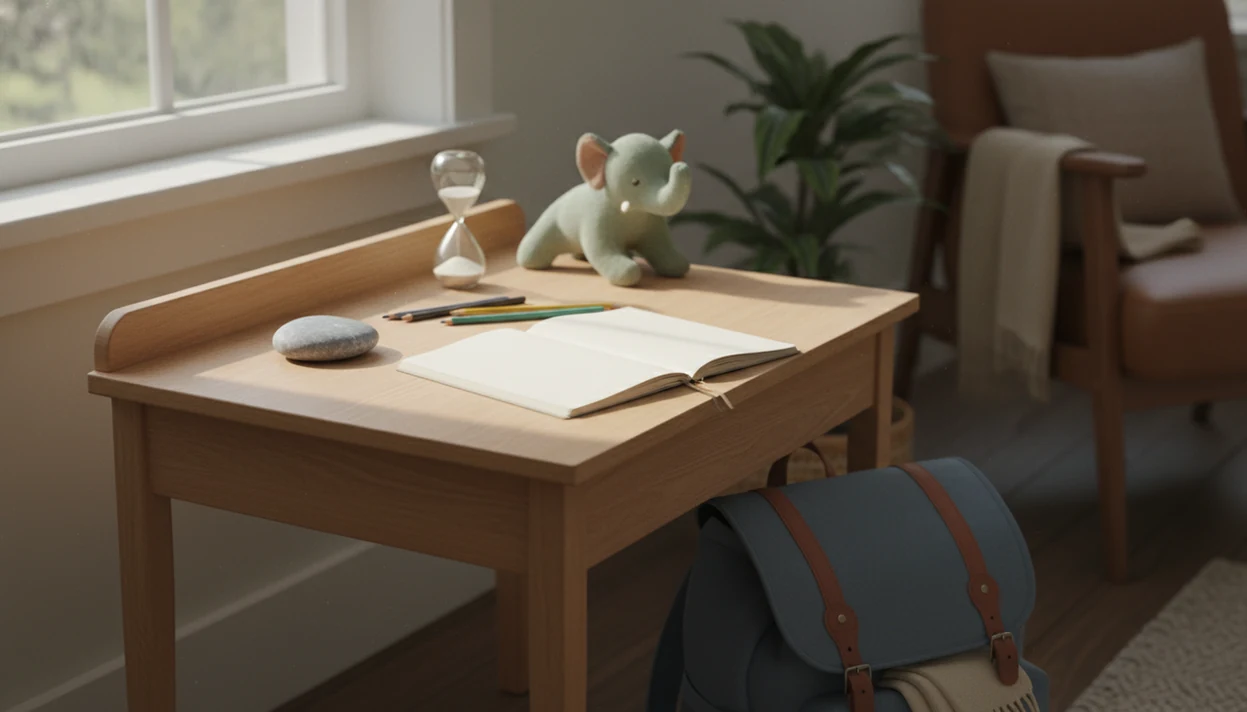


Building self esteem in kids means pairing short mindful practices with real chances to learn, make mistakes, and try again. Breathing, body awareness, effort-based praise, bedtime calm, and gentle reflection can help children notice feelings without judging themselves harshly. The aim is not constant positivity. It is helping a child separate “I feel nervous” or “I got this wrong” from “I am not good enough.”
Keep these practices brief and repeatable: three slow breaths before homework, a body check before school, or a conversation about effort at bedtime. Mindful self-esteem practice teaches children to notice thoughts, feelings, and body cues with kindness. Confidence also needs something concrete behind it, such as solving a problem, completing a chore, or returning to a difficult task with support.
The essentials
- Use 60- to 90-second mindfulness practices before school, homework, bedtime, and stressful transitions.
- Pair mindfulness with real skill-building: effort praise, problem-solving, safe failure, chores, and chances to try hard things.
- MindTastik can support family calm with guided meditation, sleep audio, breathing exercises, and self-hypnosis sessions for adults who want sleep, anxiety, and everyday calm support.
Mindful Ways to Build Self Esteem in Kids: Quick Parent Guide
Mindful self-esteem in kids means helping a child notice “I feel nervous” or “I made a mistake” without turning that moment into “I’m bad at everything.” Confidence grows when calm awareness meets real practice.
Start small. A child can take three slow breaths before spelling homework, name one body cue before a soccer game, or reflect on one effort they made after a hard day. Those tiny repetitions matter more than a long lecture.
The school bag is already by the door.
Mindfulness can support sleep, anxiety, focus, and everyday calm, but it is not a replacement for therapy, pediatric care, or school support. For kids, the most useful self-esteem work usually combines kind self-talk with chances to try, fail safely, repair, and try again.
How Mindful Self Esteem Habits Work in Children
Mindful self-esteem habits work by slowing the jump from feeling to story. A child learns to notice a tight stomach, hot cheeks, or a thought like “everyone is better than me” before reacting as if it is completely true.
That pause supports emotional regulation. In plain language, emotional regulation means the child has a little more room between the feeling and the next choice. Over time, those moments shape self-concept, which is the child’s working idea of “who I am” and “what I can handle.”
Research is promising, but not magical. A meta-analysis of mindfulness-based interventions for children and adolescents found small improvements across areas such as attention, anxiety/depression symptoms, and behavior, while noting variation in study quality and effects (source). NCCIH similarly describes meditation and mindfulness research as promising but mixed, and not a replacement for conventional care when a child needs treatment (source).
Clinicians typically recommend mindfulness as a supportive practice, not a stand-alone answer, especially when a child has persistent distress or functional problems. Practice short calming skills during ordinary moments, such as getting ready for school or starting homework, rather than introducing them only during meltdowns. Thoughtful mindful classroom design can give children predictable spaces and brief calming routines that support practice during the school day.
Better coping is not the same as higher self-esteem
Research on children’s mindfulness often measures attention, stress, resilience, or behavior rather than self-esteem itself. A 2014 review of school mindfulness programs found a moderate overall effect, with improvements in resilience and stress. Effects on emotional problems were smaller and not statistically significant. These findings support cautious expectations about coping skills, not a promise that meditation will make a child feel confident.
A 2023 review of group mindfulness interventions also found mixed results for children’s emotion regulation. Taken together, the reviews suggest treating mindfulness as one possible skill-building practice. At home, useful goals are concrete: noticing frustration, pausing before reacting, or choosing a next step after a mistake. Those goals are different from expecting a direct improvement in self-esteem, for which the evidence is less consistent.
Five Mindful Ways to Build Self Esteem in Kids at Home
Five practical methods cover most home situations: breathing, body awareness, effort praise, strengths reflection, and bedtime calm. Each one teaches the child, “I can notice what is happening and choose my next step.”
Breathing Games
- Breathing games build calm before hard moments. Try smelling a pretend flower, then slowly blowing out a pretend candle before school, tests, or sibling conflict.
Body Scan Check-Ins
- Body scans help kids notice stress without panic. Ask, “Where do you feel this in your body?” then name one neutral detail, like shoulders, jaw, or belly.
Effort Praise
- Effort praise works better than empty praise. Say, “You kept trying after the second mistake,” instead of “You’re amazing at everything.”
Gratitude Rituals
- Gratitude and strengths reflection make confidence more specific. At dinner, name one helpful action, one brave moment, or one problem solved.
Bedtime Calm Audio
- Guided bedtime meditation can support recovery after a tough day. If sleep is the sticking point, bedtime meditation for children can turn reflection into a calmer wind-down routine.
Daily 5-Minute Mindful Self Esteem Routine for Kids
A daily mindful self-esteem routine should take 3 to 5 minutes, not 30. The point is consistency, especially before school mornings, homework, social stress, and bedtime.
For preschool and early elementary kids, keep the practice closer to 30-90 seconds and make it playful. Older kids may tolerate 3-5 minutes if they get some choice in the script, sound, posture, or timing.
- Choose one daily anchor. Use the same time each day, such as shoes-on-before-school or pajamas-on-before-bed.
- Start with one body cue. Ask, “What do you notice in your body right now?”
- Practice one calming skill. Use three slow breaths, five finger breathing, or a short guided session.
- Name one effort. Say, “What did you keep trying today, even when it felt hard?”
- Connect it offline. Remind the child to use the same breath before a quiz, a playdate, or a hard conversation.
- End with one next step. Keep it concrete: “Tomorrow, I’ll ask for help after two tries.”
For families who want a repeatable structure, a family mindfulness routine can help everyone use the same language. No one has to invent the plan at 8:17 p.m.
Best Mindful Self Esteem Practices for Sensitive, Anxious, and Energetic Kids
The best mindful practice depends on the child’s temperament, not the parent’s favorite technique. Match the exercise to what the child can actually tolerate and repeat.
| Child pattern | Helpful practice | Why it helps |
|---|---|---|
| Sensitive kids | Eyes-open grounding with a trusted adult nearby | Reassurance and visible surroundings can feel safer than closing eyes. |
| Anxious kids | Slow breathing with predictable scripts | Repetition lowers uncertainty and gives the child a known next step. |
| Energetic kids | Movement-based mindfulness | Walking, stretching, or animal poses can teach awareness without forced stillness. |
| Perfectionistic kids | Mistake-friendly reflection | The focus shifts from “I failed” to “What did I learn?” |
| Sleepy or overtired kids | Bedtime relaxation routines | A calm pattern can reduce end-of-day emotional overload. |
For anxious children, meditation for anxious kids often works better when paired with small real-world challenges, because confidence grows through practice, not avoidance.
Mindful Self Esteem Tips for Sleep, Anxiety, and School Focus
Do tired or anxious kids seem less confident? Often, yes. Poor sleep and anxious feelings can make ordinary tasks feel bigger, so a child may give up faster, avoid trying, or read mistakes as proof they are not capable. For older children, teen sleep meditation can offer a gentle bedtime practice alongside consistent sleep habits and appropriate support.
Sleep is a real part of this picture. CDC researchers have reported that more than one-third of U.S. children and adolescents may get less sleep than recommended for their age (source). The CDC also reports that about 1 in 5 U.S. children ages 3-17 has a diagnosed mental, emotional, developmental, or behavioral disorder (source).
That does not mean every confidence dip is a clinical problem. It does mean parents should watch patterns. A child who melts down over homework may need food, sleep, movement, or reassurance before a pep talk.
Tools like MindTastik can fit adult-led family routines for sleep, anxiety support, beginner meditation, and everyday calm. Some parents also compare it with calm.com, headspace.com, and mindful.org when choosing a starting point. For older children, meditation for teens sleep and stress may feel more age-appropriate.
Mindful Ways to Build Self Esteem in Kids: Parent Mistakes to Avoid
Avoiding a few common mistakes makes mindful confidence work more useful. Confidence comes from effort, recovery, and supported independence, not constant emotional rescue.
If a child refuses, do not turn mindfulness into another performance test. Offer two choices instead: ‘Do you want to breathe with your hand or name five things you see?’
- Empty praise. “You’re the smartest” can feel fragile. “You tried a new strategy” gives the child something repeatable.
- Constant reassurance. Too much “Don’t worry” may teach the child they cannot handle worry. Try, “This feels hard, and we can take one step.” Parents can also practice meeting their inner critic to model kinder self-talk when family life feels difficult.
- Forced stillness. Some kids hate closed eyes or silent sitting. Movement, drawing, or sensory grounding may work better.
- Cure-all thinking. Mindfulness can support coping, but it will not solve bullying, learning differences, trauma, or untreated anxiety by itself.
- App-only practice. Audio can guide the first steps, but kids still need parent connection and offline skills.
A short calm down meditation for kids can help during big feelings, but the parent’s calm presence is often the part the child remembers.
Guided sessions for family calm, not confidence scores
MindTastik’s kids sessions in its guided meditation library can support a family routine built around noticing feelings and settling down. Adult sessions may also suit parents who want help with their own everyday calm. Audio is an optional aid, not the source of a child’s confidence. Children who dislike guided listening may prefer movement or a conversation with a trusted adult. Persistent distress calls for professional support, not more app sessions.
What mindfulness cannot fix about a child’s self-esteem
Mindfulness is helpful for many families, but it has clear limits. Parents should treat it as one supportive practice within a wider care plan.
- Mindfulness is not a replacement for therapy, pediatric care, school support, or evaluation when concerns are significant.
- Research effects in youth are often small to moderate, not instant or dramatic.
- Some children dislike breath focus because it makes them notice anxiety more. Use sounds, objects, or movement instead.
- Stillness and closed eyes can feel unsafe for some children, especially after trauma or bullying.
- Digital tools should not replace parent-child connection, outdoor play, problem-solving, or offline coping skills.
- Results usually build over weeks or months. A child may resist at first, especially if the practice starts during a meltdown.
- Parents should seek professional help if low self-esteem includes self-harm talk, major withdrawal, panic, trauma symptoms, persistent depression, or a sharp drop in school or social functioning.
Tiny steps count. But red flags deserve real help.
Questions about children’s confidence and mindfulness
How can parents help a child with low self-esteem?
Give the child manageable chances to practice, contribute, and solve problems, with support when needed. Name specific effort rather than offering broad praise: “You tried another way when the first one did not work.” Mindfulness can help a child notice frustration, but confidence also needs real experiences of learning and recovery.
Does mindfulness improve self-esteem in children?
It may support skills that matter for confidence, such as attention, resilience, and pausing before reacting. Direct improvements in self-esteem are less consistently supported by research. Treat mindfulness as a small part of daily support, alongside skill-building, caring relationships, and help with difficulties at home or school.
What should parents say when a child says “I’m bad at everything”?
Acknowledge the feeling without agreeing with the label: “That mistake felt upsetting.” Then bring the conversation back to the specific task and one possible next step. A brief body check or a few slow breaths can create a pause. Avoid demanding a positive statement while the child is still upset.
What kind of praise helps children build confidence?
Use praise that describes something the child can recognize and repeat: a strategy, persistence, or asking for help. “You checked your work and found the mistake” is more concrete than “You’re the smartest.” Praise should sit alongside opportunities to practice, not replace honest feedback or make every activity a performance.
How long should a child practice mindfulness?
For preschool and early elementary children, start with roughly 30 to 90 seconds of playful practice. Older children may prefer three to five minutes, with a choice of timing or activity. These are practical starting points, not proven doses for improving self-esteem. A brief, voluntary routine is preferable to forced stillness.
How can an anxious child build confidence without constant reassurance?
Acknowledge that the task feels hard, then help the child choose one manageable action. A predictable calming routine can provide a pause before trying. Pair that routine with supported practice, rather than repeated promises that nothing will go wrong. Persistent anxiety may need professional help beyond home confidence exercises.
When should parents seek help for a child’s low self-esteem?
Seek pediatric, school, or mental health support when low self-esteem is persistent, causes significant distress, or accompanies difficulties with sleep, school, friendships, or everyday activities. Mindfulness is not a substitute for assessment or treatment. A professional can help identify what is contributing to the problem and what support is appropriate.