
Help Kids Let Go of Things With Mindfulness
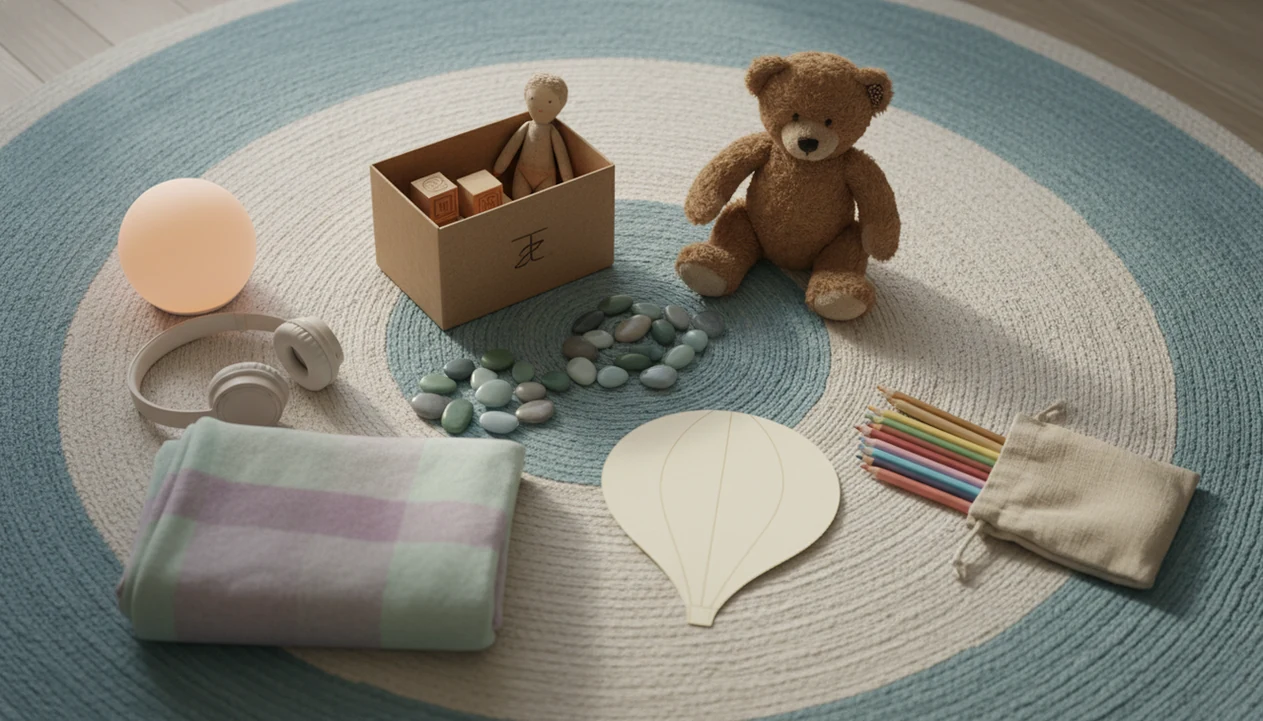


Mindfulness can help kids let go of worries, tense feelings, or belongings by making the process concrete, playful, and repeatable. It means noticing thoughts, feelings, body tension, and attachment with kindness, then choosing a calmer next action. Short breathing practices, naming “sticky thoughts,” and simple rituals such as a donation box or an imagined worry balloon give children something to do without demanding that they stop caring.
The practice belongs in ordinary moments: sorting toys, settling bedtime worries, handling school stress, or talking after a meltdown has passed. The aim is to notice attachment, not shame it or force it away. Guided audio can support a family routine, but it does not replace an involved adult or professional care when distress is severe or persistent.
What matters most
- Use mindfulness to help kids notice attachment, not shame it or force it away.
- Pair short practices with real moments: toy sorting, bedtime worries, school stress, and meltdowns.
- Guided-audio apps can support sleep, anxiety, and everyday calm routines, but they should not replace parenting support or professional care when symptoms are severe.
Help Kids Let Go of Things Mindfulness: What It Means
Mindfulness for kids letting go means helping children notice thoughts, feelings, body tension, and attachments with kindness, then choose a calmer next action. “Things” can mean toys, clothes, worries, grudges, tense feelings, or sticky thoughts that keep looping.
A child may clutch a stuffed animal during cleanup, replay a school disappointment at dinner, or worry at bedtime when the room gets quiet. The goal is not to say, “Stop thinking about it.” It is to help the child say, “I’m noticing this is hard,” then choose one small response.
That response might be breathing, drawing, storing the toy, writing the worry down, or asking for a hug.
Small choices count.
For younger children, playful mindfulness often works better than a serious talk about emotions. For younger children, mindfulness for preschoolers offers short, playful activities that match their attention spans and growing emotional skills.
Five Help Kids Let Go of Things Mindfulness Facts Parents Should Know
- Letting go starts with naming. A child has an easier time releasing a worry, object, or grudge after they can say, “I feel sad,” “I feel mad,” or “This thought is stuck.”
- Short playful practices usually work better than long sitting meditation. Many kids do better with one to five minutes of movement, drawing, breathing, or guided imagination than with quiet stillness.
- Toy decluttering is easier with gratitude. “Thank you for the fun you gave me” lands softer than “You’re too old for this.” Gratitude, joy, and helping another child can reduce the power struggle.
- Regular mindfulness may support attention, emotion regulation, stress, and anxiety. A meta-analysis of 33 randomized controlled trials found small but significant improvements in youth anxiety, depression, and stress, though effects varied by study design and setting (source).
- Guided audio and apps can support consistency, not replace care. The most helpful routine is usually parent-supported practice plus real-life rituals, such as a worry box or cleanup basket.
Before You Start: Make Letting Go Feel Safe
Letting go should feel like a supported practice, not a test, punishment, or sudden demand. Start small, move slowly, and protect the child’s sense of choice.
A calm setup matters more than the perfect script. If a child is already crying, yelling, frozen, or panicking, that is not the moment to teach release. Help the nervous system settle first, then return later.
- Choose a quiet, ordinary time when your child is fed, rested enough, and not in the middle of a meltdown.
- Pick one small thing at a time: one worry card, one outgrown shirt, one grumpy feeling, or one toy from an easy pile.
- Avoid starting with favorite comfort objects, sleep items, special blankets, or anything your child uses to feel safe.
- Offer a gentle choice, such as “keep,” “unsure,” “store,” “draw it,” or “next adventure,” instead of “get rid of it.”
- Stop if your child becomes overwhelmed. Say, “We can pause. You are safe. We can try again another day.”
Trust is the practice underneath the practice.
How Help Kids Let Go of Things Mindfulness Works in the Brain and Body
Help kids let go of things mindfulness works by building awareness before action. A child first notices body sensations, emotions, and thoughts, then practices responding instead of reacting.
One useful idea is cognitive defusion. In parent language, that means helping a child say, “I’m having the worry thought,” instead of “The worry is true.” The thought still exists, but it is no longer the boss of the whole room.
The body matters too. Slow breathing, muscle relaxation, and guided imagery can help the nervous system downshift. A child might squeeze their shoulders tight, then let them drop. Or they might imagine a worry floating away in a balloon. The snow globe mindfulness exercise gives children a clear picture of busy thoughts settling as they pause and breathe.
At 2:13 a.m., when the lock screen says everyone should be asleep, simple is better. Repetition builds emotional vocabulary, tolerance for discomfort, and a calmer bedtime pattern over time.
What the Research Says About Mindfulness for Kids
Research suggests mindfulness can help some children with stress, anxiety, attention, and emotion regulation, but the gains are usually modest and not guaranteed. It is best understood as a supportive skill, not a cure or a promise.
The strongest evidence is for mindfulness practice itself: noticing the body, naming thoughts, breathing slowly, and returning attention with kindness. Reviews of youth mindfulness programs report small improvements across emotional symptoms and stress, with results depending on age, setting, teacher training, and how often children practice (source). App-specific evidence is thinner. A guided audio tool may make practice easier to repeat, but the app is not the same thing as the intervention.
A practical way to read the research is:
- Use mindfulness as one small part of a calming routine.
- Practice with your child instead of handing over a tool and walking away.
- Watch for real-life changes: easier transitions, fewer stuck loops, better recovery after upset.
- Adjust if the practice frustrates, scares, or shames your child.
Parent warmth, timing, and follow-through may matter more than the brand or tool used.
Mindfulness research does not prove that children will donate toys
The research supports a narrower claim than “mindfulness teaches children to let go.” Studies mainly examine structured programs and outcomes such as attention, stress, and self-regulation, not voluntary toy donation or attachment to a particular object. A 2023 review of group mindfulness interventions found mixed results for children’s emotion regulation. That makes mindfulness a possible skill-building practice, not a reliable way to remove difficult feelings.
For toy sorting, progress can mean noticing sadness and making a voluntary choice, even if that choice is to keep the item or put it in the unsure pile. Naming feelings and pausing before acting fit the self-regulation goals studied in mindfulness programs. The specific parenting techniques on this page, including gratitude language and worry boxes, should not be presented as methods directly proven by those studies.
How to Use Help Kids Let Go of Things Mindfulness at Home
Use this routine when your child is stuck on a worry, a toy, a mistake, or a hard feeling. Keep your voice plain. A big lesson can wait.
- Name the thing, worry, or feeling: “You really want to keep this,” or “That spelling test thought is back.”
- Locate where the feeling lives in the body: tummy, throat, chest, hands, face, or legs.
- Breathe for three slow rounds, or try a quick muscle-release practice where you squeeze and soften.
- Choose one small next action: keep it, donate it, write it down, hug it, or place it in a worry box.
- Repeat the ritual during bedtime, cleanup, or school-day transitions so it becomes familiar.
For breath-based practice, parents may also like parent and child breathing exercises when a child needs more structure than “take a deep breath.”
Best Help Kids Let Go of Things Mindfulness Exercises
Movement, drawing, and imagination often work better for kids than abstract instructions. These four exercises give the child something to do with the feeling. You can also try mindful sensory activities for kids when hands-on play feels easier than sitting quietly with feelings.
- Let-It-Go Balloon: Best for bedtime worries and sticky thoughts. It takes about two minutes. The child imagines placing one worry inside a balloon, then watching it float across the ceiling.
- Squish and Let Go: Best for body tension after frustration. It takes one to three minutes. The child squeezes fists, shoulders, or toes, then releases.
- Name That Story: Best for repeated self-talk like “Nobody likes me.” It takes three minutes. The child labels it as “the left-out story” or “the mistake story.”
- Next Adventure Box: Best for toy decluttering. It takes five to ten minutes. Toys ready to leave go into a box for another child’s next adventure.
For a softer nighttime version, bedtime meditation for children can pair well with a worry-release ritual.
Help Kids Let Go of Toys Mindfulness Guide for Decluttering
How do you help a child let go of toys without a battle? Start by treating attachment as information, not misbehavior.
A toy may represent memory, comfort, control, identity, or a version of the child they are not ready to leave behind. Sort toys into four categories: loved, used, ready for next adventure, and unsure. The unsure pile matters. It gives the nervous system a pause button.
Before donating or storing, use gratitude language: “This truck gave you so many driveway races.” For meaningful objects, take a small memory photo before the item moves on.
Avoid surprise purges. Also avoid shaming phrases like “You’re being a baby” or “You have too much stuff.” Trust is the method here.
For broader household rhythm, a family mindfulness routine can make cleanup feel less sudden.
Common Mistakes When Helping Kids Let Go
The biggest mistakes are moving faster than the child’s trust and using mindfulness as emotional control. Letting go works better when the child stays included, allowed to feel, and given one small next step.
A parent may mean well when clearing a room during school hours, but surprise donating can make a child cling harder next time. Mindfulness should not become a polite way to say, “Stop being sad.” Sadness, anger, and protest can be part of a healthy goodbye.
- Start with an easy object, not the blanket, stuffed animal, trophy, or handmade card that carries the most meaning.
- Invite your child into the choice with simple piles like keep, unsure, store, and next adventure.
- Skip the lecture when feelings rise. Say one steady sentence, then offer a tiny action: hold it, photograph it, or place it in unsure.
- Allow normal upset without rushing to breathe it away. You can say, “This is hard, and I’m here.”
- Pause if anxiety escalates into panic, freezing, or frantic searching. Return when the body is calmer.
Pushing through may finish the closet. It can also damage the method.
Best For and Not For Help Kids Let Go of Things Mindfulness
Mindfulness is a good fit for everyday stuck feelings, but it should not be used as a substitute for clinical support when distress is severe or persistent.
| Situation | Fit | Parent response |
|---|---|---|
| Bedtime worry | Best for | Use a short body scan, worry card, or guided sleep audio. |
| Mild school stress | Best for | Name the story, breathe, then choose one next step. |
| Toy sorting | Best for | Use loved, used, next adventure, and unsure piles. |
| Frustration after disappointment | Best for | Try Squish and Let Go before talking it through. |
| Daily transitions | Best for | Repeat the same one-minute ritual each day. |
| Severe anxiety, trauma reactions, panic, OCD-like hoarding, self-harm talk, or persistent impairment | Not for standalone mindfulness | Seek help from a qualified professional. |
Guided Audio Support for Kids Letting Go, Sleep, and Family Calm
For families, it fits best as parent-supported routine help, not treatment for children.
A parent might play a short breathing exercise before cleanup, a body scan before bed, or a worry-release meditation after a rough school day. Sleep stories can also help when the house is quiet and a child says, “I just need something to play when my thoughts get loud.”
Pair the audio with offline actions. Draw the worry. Sort the toy. Put the note in the box.
Tools like MindTastik, Calm, Headspace, and mindful.org are most useful when the adult stays involved.
Visible Questions About Help Kids Let Go of Things Mindfulness
What if my child refuses? Refusal usually means the practice feels too long, too still, or too adult. Try drawing, movement, or a ten-second “shake it out” instead.
How long should a practice last? For many children, one to five minutes is enough. A 30-second reset done often is better than a ten-minute practice everyone dreads.
Should I make my child donate toys? No. Forced donation can make attachment stronger. Offer choices, keep an unsure bin, and let the child practice generosity with items that feel manageable.
If anxious spirals are the main issue, meditation for anxious kids may give parents more specific calming options.
Help Kids Let Go of Things Mindfulness Image Caption
Use an image that shows a parent and child sitting on the floor beside a small donation box, a few sorted toys, and a bedtime worry card. The scene should feel calm and cooperative, not like a discipline moment.
Caption: A parent and child practice help kids let go of things mindfulness by sorting toys, naming worries, and choosing what feels ready for the next step.
Suggested alt text: “Parent and child sorting toys beside a donation box and bedtime worry card during a calm mindfulness activity.”
The child should look involved in the choice. Not corrected. Not rushed.
Soft light, a small box, and a handwritten card will communicate family support better than a perfectly clean room.
Guided audio for bedtime worries and tense moments
MindTastik’s kids sessions, breathing exercises, and sleep stories can support a parent-led routine for bedtime worries or lingering frustration. Its guided meditation library offers audio to pair with an ordinary action, such as drawing a worry or deciding where a toy belongs. The recording should support the conversation, not decide what the child must release.
Children who dislike recorded instructions may prefer drawing, movement, or quiet time with an adult. Severe anxiety, panic, trauma reactions, or attachment that disrupts daily life calls for professional support rather than an app. MindTastik is not a medical treatment.
When letting-go exercises are not enough
Mindfulness can support children, but it has real limits. Use it as a supportive practice, not as pressure or treatment.
- Mindfulness is not a cure for severe anxiety, OCD-like hoarding, trauma reactions, panic, or major functional impairment.
- Some children dislike stillness or breath focus. They may need movement, sensory play, art, music, or very short practices.
- Evidence for mindfulness apps specifically in children is still emerging, so app claims should stay cautious.
- Parents should not use mindfulness to push children into suppressing sadness, anger, fear, or attachment.
- If distress escalates, interferes with sleep or school, or includes self-harm talk, consult a qualified professional.
- Guided-audio tools can support routines; they do not replace therapy, diagnosis, emergency help, or medical care.
Clinicians typically recommend professional evaluation when a child’s distress is intense, persistent, unsafe, or disrupting daily life.
Questions about kids letting go
How can I help my child let go of a toy without forcing them?
Start with an item that carries little emotional weight, not a favorite comfort toy. Offer keep, donate, store, and unsure choices. Name the feeling before discussing the decision. A memory photo or a brief thank-you can mark the goodbye, but keeping the toy is still an acceptable outcome.
What are sticky thoughts in children?
Sticky thoughts are worries or self-critical ideas that keep returning, such as “Nobody likes me” or “I will get it wrong.” Naming one as “the worry thought” creates some distance without arguing about it. The aim is to help the child choose a next action, not make the thought disappear.
What should I do if my child refuses mindfulness?
Stop the exercise rather than turning it into another demand. Offer a simpler option later, such as drawing the feeling, shaking out tense hands, or noticing sounds together. Some children dislike stillness or breath focus. A useful practice leaves room for refusal and does not require a calm-looking performance.
How long should a letting-go exercise last for a child?
One to five minutes is a practical starting point, and a shorter pause may be enough. Try naming one feeling, noticing one body sensation, and choosing one next step. Length is not the measure of success. End sooner if the child becomes frustrated, uncomfortable, or less willing to participate.
Can mindfulness help with a child's bedtime worries?
A short body scan, worry drawing, or imagined worry balloon can give a bedtime routine a familiar structure. These are supports, not promises that worries will stop. Keep room for conversation with an adult. Persistent anxiety or sleep disruption needs attention beyond repeating a calming exercise.
What if breathing exercises make my child more anxious?
Stop focusing on the breath and offer another activity, such as drawing, gentle movement, listening to sounds, or squeezing and releasing the hands. Breath attention is not comfortable for every child. There is no need to insist on it. Repeated panic or distress deserves professional guidance rather than more practice.
Is mindfulness proven to help children let go of possessions?
The research described here does not directly establish that mindfulness helps children donate toys or release attachment to belongings. Most studies assess structured programs and broader skills such as attention and self-regulation. Toy-sorting rituals are practical suggestions consistent with those goals, not proven treatments for difficulty discarding possessions.
When should I seek help for a child who cannot let go?
Seek professional support when distress is severe, persistent, or interferes with sleep, school, relationships, or ordinary family activities. Panic, trauma reactions, and OCD-like difficulty discarding belongings should not be managed with mindfulness alone. A child's strong attachment to one meaningful toy, by itself, is not a reason to force a goodbye.