
Mindfulness for LGBTQ Youth: A Gentle, Affirming Guide


Mindfulness for LGBTQ youth means short, identity-affirming practices that help teens notice stress, emotions and body sensations without judging who they are. These practices adapt present-moment awareness for minority stress, self-acceptance and trauma-sensitive choice. They can support sleep, focus, self-compassion and emotional regulation, but belong alongside safe adults, affirming care and crisis support when needed.
A useful starting point is one to five minutes, with permission to stop. Eyes can stay open, and attention can rest on sound, an object, movement or breath. The goal is not to make a teen tolerate bullying or rejection more quietly. It is to offer a manageable pause while recognizing the stress and addressing the conditions causing it.
The essentials
- Use short, optional practices: 1-5 minutes, eyes open or closed, seated or moving, with a choice of breath, sound, touch, or visual anchors.
- The strongest mindfulness support for LGBTQ youth is identity-affirming, not neutral: it names stigma, validates stress, and builds self-compassion.
- MindTastik can be a gentle support for sleep audio, breathing exercises, and everyday calm, but it is not a replacement for therapy, crisis care, or safe community.
Mindfulness for LGBTQ Youth Guide: What It Helps With
Mindfulness for LGBTQ youth can support coping with stress, sleep, anxiety, focus, self-compassion, and emotional regulation. It works best when it affirms identity instead of pretending every teen has the same safety, family, or school experience. Affirming adults can support social emotional learning for teens by helping them recognize feelings, communicate needs, and build safe connections.
In plain language, mindfulness means noticing what is happening right now. A teen might notice a tight chest before school, a racing thought after a text, or the 2:13 a.m. lock-screen check that says they are still awake. The practice is not “calm down.” It is “notice, name, and choose the next safe step.”
LGBTQ youth may carry minority stress from bullying, rejection, discrimination, coming-out pressure, or fear of being outed. That stress is not caused by being LGBTQ. It comes from unsafe or rejecting environments.
Per the CDC’s 2023 Youth Risk Behavior Survey, 69% of LGBQ+ students reported persistent sadness or hopelessness, and 25% attempted suicide in the past year, according to this source. Mindfulness can support coping, but it cannot fix danger or replace professional help.
For teens who want broader age-focused support, meditation for teens sleep and stress may offer a useful starting point.
Five Mindfulness for LGBTQ Youth Facts Parents Should Know
- LGBTQ youth often face higher stress loads. Anxiety, depression, sadness, and minority stress are more common when teens face stigma, rejection, bullying, or fear about safety.
- Affirming mindfulness programs look promising. Mindfulness-Based Queer Resilience, or MBQR, reported reductions in depressive symptoms and alcohol use, with increases in mindfulness and self-compassion after a 10-week online program, according to a randomized trial (source).
- Trauma-sensitive design matters. A teen with bullying, rejection, trauma, or dysphoria history may need eyes-open practice, movement, shorter sessions, or no body scan at all.
- Identity affirmation is part of the practice. Effective LGBTQ mindfulness does not offer generic calm-only advice. It names oppression, validates stress, and builds self-compassion without blaming the teen. Adults looking for ways to help teens build self-worth can start by affirming identity and separating personal value from others’ judgments.
- Mindfulness works better with support around it. Affirming adults, therapists, schools, community spaces, and crisis resources matter. A quiet app session can help, but it should not be the only support.
The most helpful mindfulness for LGBTQ youth usually combines self-compassion, choice, and safe connection, while generic scripts may miss the stress that comes from stigma.
How Mindfulness for LGBTQ Youth Works in the Nervous System
Mindfulness works by training attention before reaction. For LGBTQ youth, that means noticing thoughts, feelings, body signals, and urges without turning them into proof that something is wrong with who they are.
A teen might feel their shoulders lift after hearing a slur in the hallway. Grounding helps shift attention from a threat loop into present-moment sensory cues: feet on the floor, the color of a poster, a steady sound in the room. That does not erase what happened. It gives the nervous system one clear place to land. Educators can use mindful classroom design to offer optional grounding spaces alongside clear protections against bullying and discrimination.
Self-compassion adds another layer. Instead of “I’m too sensitive,” the phrase may become, “That hurt, and I deserve support.” Small shift. Big difference. Caregivers can also practice meeting their inner critic with self-compassion, modeling a kinder response to mistakes without dismissing difficult feelings.
Choice matters because not every anchor feels safe. Breath focus, body scans, or silence can increase distress for some teens, especially with trauma or dysphoria. Sound, touch, movement, an object, or visual focus can work instead. Clinicians typically recommend adapting coping tools to the young person’s safety, symptoms, and support needs.
How to Use Mindfulness for LGBTQ Youth in Daily Routines
Use mindfulness for LGBTQ youth as a small, repeatable check-in, not a long performance. Start where privacy, safety, and choice are possible.
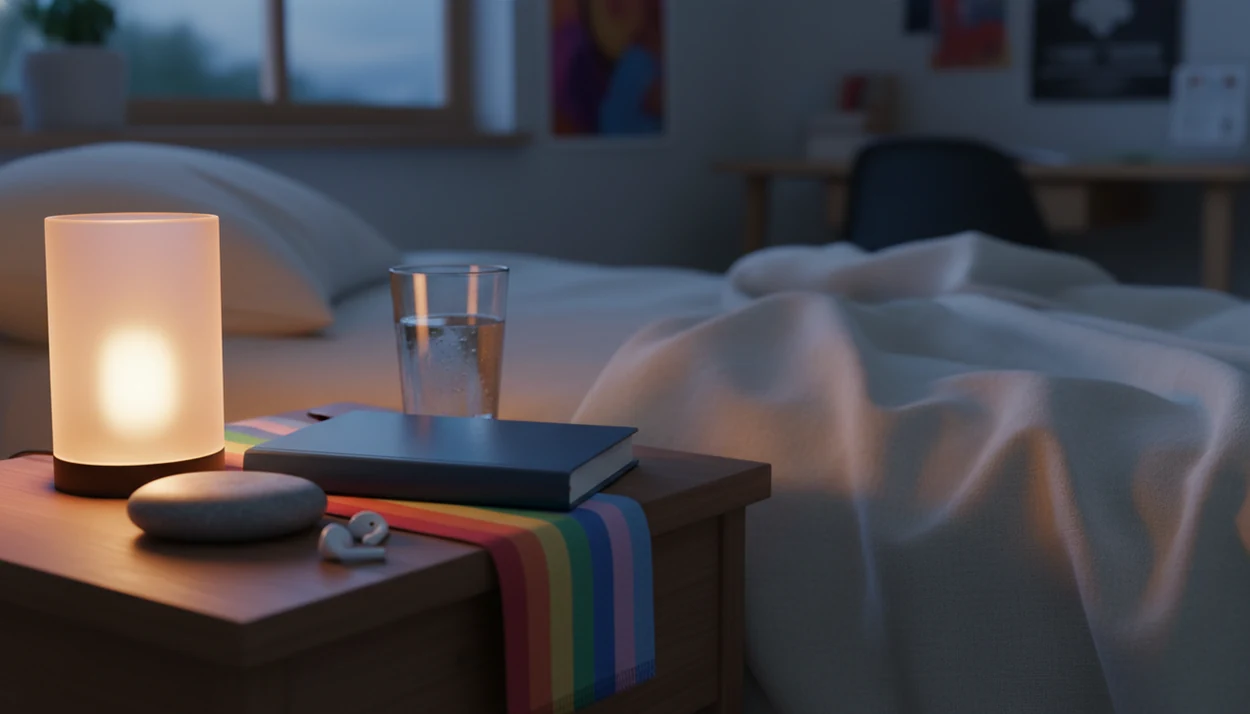
- Choose a safe time and place. Use privacy, headphones, or a closed door if needed. Earbuds on a nightstand, one side tangled around a charging cable, still count as a setup.
- Pick one anchor. Choose breath, feet, sound, touch, movement, or a calming image. Skip anything that makes the body feel less safe.
- Start with 1-3 minutes. A short reset is easier to repeat than a long session that feels like homework.
- Name the feeling without judgment. Try “scared,” “tense,” “proud,” “numb,” “angry,” or “tired.”
- Close with one affirming sentence and one next action. Say, “I’m allowed to need care,” then drink water, text a safe person, or start bedtime audio.
Tools like MindTastik can support guided meditation, sleep audio, breathing exercises, and everyday calm when a teen wants structure. For younger families building shared habits, a family mindfulness routine may help adults practice without pressure.
Best Mindfulness for LGBTQ Youth Practices by Situation
The best mindfulness practice depends on the situation, not on forcing one method. For LGBTQ youth, the safer choice is often the practice with the most control.
| Situation | Practice | Why it helps | Best for | Not for |
|---|---|---|---|---|
| School anxiety | 3-breath reset or feet-on-floor grounding | Gives attention one simple task before class | Hallways, bathrooms, before presentations | Panic that needs adult support |
| Sleep stress | Guided sleep meditation or calming audio | Reduces scrolling and adds a predictable wind-down cue | Bedtime worry, racing thoughts | Unsafe home settings where audio creates risk |
| Dysphoria or body discomfort | External anchor using sound, object, or visual focus | Avoids forcing attention into the body | Body-neutral grounding | Teens who prefer movement |
| Conflict or rejection | Self-compassion phrase plus safe-person check-in | Validates pain and adds connection | Family stress, friendship rupture | Abuse or immediate danger |
| Focus struggles | Short focus timer with one-task awareness | Makes attention concrete and brief | Homework, chores, reading | Severe distress needing more help |
Apps can offer repeatable guided support, but they are not therapy, crisis protection, or proof a teen is safe. MindTastik is one optional support; Calm, Headspace, and Mindful.org are other familiar names.
For younger children who need a softer format, calm down meditation for kids may be a better fit. For younger children, mindful ways to build self esteem can complement calming practices with encouragement that respects their feelings and identity.
Trauma-Sensitive Mindfulness for LGBTQ Youth Tips
Trauma-sensitive mindfulness gives the young person control over the practice. It should feel optional, brief, and affirming, not like another adult demand.
- The 1-minute start: Begin with 1-5 minutes. Stop before the teen feels trapped or watched.
- The eyes-open option: Let them look at a wall, window, floor spot, or object. Eyes closed is never required.
- The anchor menu: Offer breath, sound, feet, hands, fabric texture, movement, or a visual cue. Breath is one option, not the boss.
- The movement reset: Walking, stretching, or pressing feet into the floor can help restless, anxious, or neurodivergent teens.
- The adult safety rule: Ask consent, use the teen’s name and pronouns, avoid outing them, and prioritize safety over completing the exercise.
Don’t tell LGBTQ youth to ignore discrimination, accept unsafe treatment, or meditate their way through harm. If a teen says, “I just need something to play when my thoughts get loud,” listen for both the coping need and the safety need.
Evidence for LGBTQ-Affirming Mindfulness Programs
Does LGBTQ-affirming mindfulness have evidence? Yes, early research is promising, but the field is still emerging and many studies use small samples.
Mindfulness-Based Queer Resilience is an online program designed for LGBTQ+ people. In a randomized trial, the 10-week program was linked with reduced depressive symptoms and alcohol use, plus increased mindfulness and self-compassion, according to this source.
The Telethon Kids Institute has also studied mindful self-compassion by videoconference for LGBTQIA+ young people, with reported benefits for mental health and well-being (source).
The practical takeaway is cautious but useful: affirmation, self-compassion, minority stress awareness, and choice-based practice are not extras. They are part of safer design. For sleep-specific routines, bedtime meditation for children may help families compare gentle audio options.
Reading the research without overstating the benefits
A 2022 systematic review of kindness- and compassion-based meditation in children and adolescents found improvements in 47% of the wellbeing outcome measures examined. That figure describes measures, not the percentage of young people who benefited. Reported effects ranged from small to medium, and study quality and outcomes varied. It supports considering these practices as an additional source of help, not a guaranteed treatment.
This review concerned children and adolescents generally, so its findings do not establish how well a particular recording works for an LGBTQ teen. A practical check is whether the chosen practice feels tolerable and supports the intended task, such as settling before bed or responding less harshly to a mistake. Increasing distress is a reason to stop or change the practice, not evidence that the teen needs to try harder.
When to Seek Professional or Crisis Support
Seek professional or crisis support right away if a young person may self-harm, is being abused, feels unable to stay safe, or is in immediate danger. Mindfulness can help with grounding, but it is not a safety plan and should never delay urgent care.
- Call emergency services now if there is immediate danger, injury, a suicide attempt, violence, threats, or a young person cannot be left safely alone.
- Contact a crisis line without delay when thoughts of self-harm, suicide, running away into danger, or unbearable distress are present. In the U.S., 988 is for suicide and crisis support, and The Trevor Project offers LGBTQ-specific crisis support; outside the U.S., use local emergency or crisis services.
- Tell a safe adult such as a parent, caregiver, relative, teacher, coach, school counselor, nurse, or another trusted person who can act.
- Arrange therapy or school counseling when anxiety, depression, panic, dysphoria distress, bullying, rejection, grief, substance use, or trauma keeps showing up.
- Seek medical care for injuries, sleep loss that feels severe, eating or medication concerns, panic symptoms, or any health issue that needs a clinician.
A breathing exercise may steady the next minute. Safety support protects the next hour.
Choosing audio for a short reset or bedtime
MindTastik’s guided meditation library, sleep stories and soundscapes offer options for a brief pause or bedtime routine. A caregiver and teen can preview a session together, checking that its language and attention cues feel comfortable. Breath-focused audio is only one option.
The library should not be assumed to provide LGBTQ-specific care. Teens who need identity-focused support, help with trauma or a response to an unsafe home or school situation should seek an affirming professional or trusted adult rather than rely on an app. MindTastik is not a medical treatment.
What mindfulness cannot fix for LGBTQ youth
Mindfulness can be supportive, but it has clear limits. Keep these boundaries visible.
- Mindfulness does not replace crisis support, emergency care, therapy, psychiatric care, or safeguarding.
- If a young person may self-harm or is in immediate danger, contact local emergency services or a crisis hotline right away. In the U.S., call or text 988 for the Suicide & Crisis Lifeline, or contact The Trevor Project for LGBTQ youth crisis support (source). Outside the U.S., use local emergency or crisis services.
- Some practices can increase distress, especially long breath focus, extended silence, or body scans for youth with trauma or dysphoria.
- Mindfulness cannot remove discrimination, family rejection, bullying, unsafe schools, or anti-LGBTQ policies.
- App-based support may be limited by privacy, internet access, phone access, cost, and a safe space to practice.
- Research specific to LGBTQ youth is promising but still limited. It should not be presented as a cure.
- Adults should not use mindfulness to make youth tolerate harm, suppress justified anger, or stay quiet about unsafe treatment.
- If a teen repeatedly feels worse after practice, stop and choose another support.
For younger children with worry symptoms, meditation for anxious kids may be useful alongside adult and professional guidance.
Questions about mindfulness for LGBTQ teens
Is mindfulness safe for LGBTQ youth?
Mindfulness should be optional, brief and adapted to the teen’s comfort. Eyes-open practice, movement or an external sound may feel safer than breath focus or a body scan. Stop if distress increases. A practice that feels uncomfortable is not a failure, and mindfulness should never delay help with abuse, self-harm or immediate danger.
Can mindfulness help with coming-out anxiety?
Mindfulness can offer a pause to notice fear, tension or racing thoughts before deciding what to do next. It cannot determine whether coming out is safe or make other people respond supportively. Privacy, timing and access to a trusted, affirming adult matter more than completing a calming exercise.
Can mindfulness reduce gender dysphoria?
Mindfulness is not a treatment for gender dysphoria. Some teens may find that grounding helps them cope with distress, while body-focused exercises may make discomfort worse. An external anchor, such as a sound, object or visual detail, offers an alternative. Persistent distress deserves affirming professional support rather than pressure to accept an uncomfortable practice.
What can a teen do if focusing on breathing feels uncomfortable?
Breathing does not have to be the focus. A teen can keep their eyes open, notice a steady sound, look at an object, feel fabric between their fingers or walk slowly. The aim is to choose an anchor that feels manageable. Stop if the exercise increases panic, discomfort or a sense of being trapped.
How long should an LGBTQ teen meditate?
Start with one to three minutes, or less if that feels more manageable. Short, optional practices are preferable to a long session that feels like a demand. There is no need to reach a duration target. The teen should be able to change the anchor, move, open their eyes or stop at any point.
Can mindfulness help LGBTQ teens sleep?
A short guided practice or calming audio can provide a predictable wind-down cue and an alternative to continued scrolling. It does not resolve an unsafe home environment or replace care for persistent sleep problems. Use audio only when privacy and safety allow, and seek support if changed sleep accompanies ongoing distress or difficulty functioning.
What makes mindfulness LGBTQ-affirming?
An affirming practice respects identity and recognizes that bullying, rejection and discrimination can create stress. It does not treat that stress as a personal weakness or ask a teen to feel positive about mistreatment. It also gives choices about body attention, language and participation, with no pressure to disclose identity or personal experiences.
When should a teen get help instead of relying on mindfulness?
Contact a health professional when symptoms last weeks or months and interfere with home life, school or friendships. Self-harm, suicidal thoughts, abuse or inability to stay safe need prompt support, not another meditation. In immediate danger, contact emergency services. In the United States, call or text 988 for suicide and crisis support.