
Meditation for Teens: Sleep, Stress, and School-Day Calm
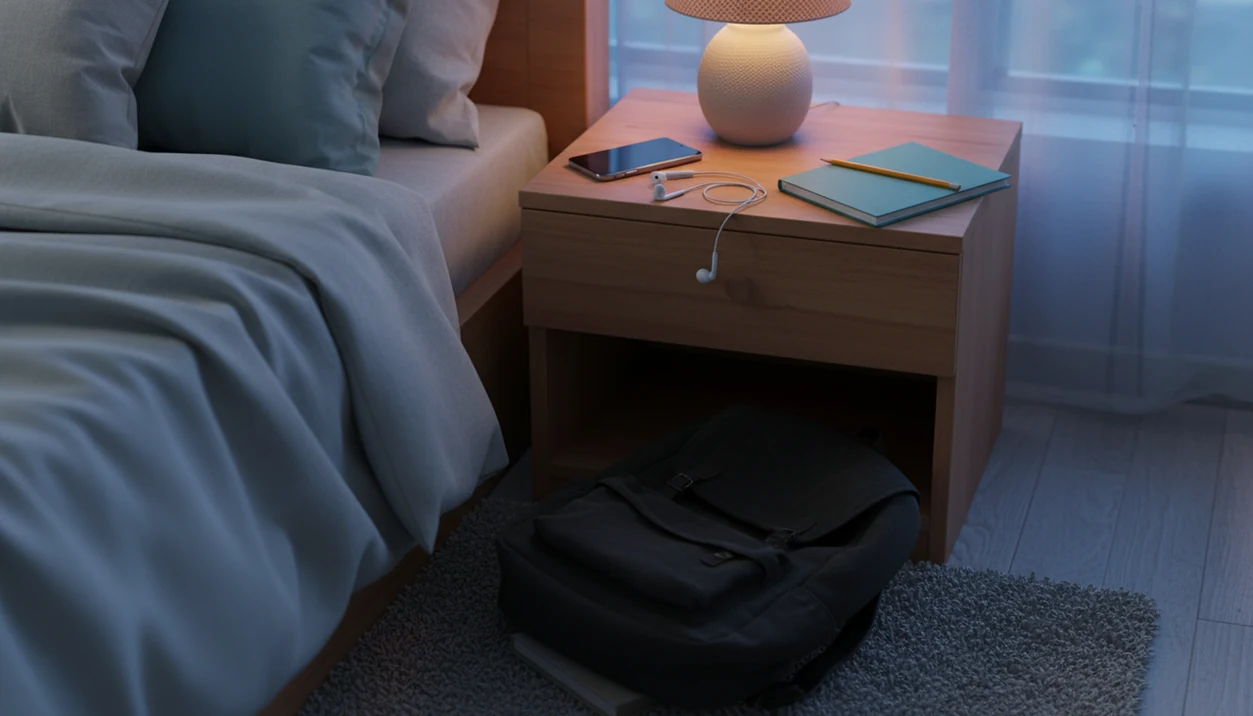


Meditation for teens is a short attention practice that can help with everyday stress, bedtime restlessness, and school-day pressure. Guided sessions use breathing, body scans, or spoken prompts to help teenagers notice thoughts, relax tense muscles, and return attention to something steady. The aim is not to empty the mind or force every worry away.
A useful routine is brief, voluntary, and attached to an ordinary moment: before a test, after homework, or at bedtime. Meditation can support calm, but benefits vary and it is not a mental health treatment. Parents, counselors, and doctors remain important sources of support, especially when distress affects daily life or a teen feels unsafe.
The essentials
- Teen meditation works best when it is short, voluntary, and tied to real routines like bedtime, tests, homework, and social stress.
- Evidence suggests mindfulness programs can support teen stress, anxiety, self-regulation, and sleep quality, but results vary and practice matters.
- A teen meditation app should be used with privacy awareness, parent visibility, and clear crisis boundaries.
Teen meditation for sleep and stress: five facts parents and teens should know
- Meditation is attention training, not “emptying the mind.” A teen notices a thought, comes back to breathing, and repeats.
- Short sessions can count. For many beginners, 5 to 10 minutes is more realistic than a long silent practice.
- Teen stress often shows up around school pressure, social media, friendship tension, and bedtime racing thoughts.
- In 2021, about 42% of U.S. high school students reported persistent sadness or hopelessness during the past year, per the CDC’s Youth Risk Behavior Survey source.
- Meditation is a support tool, not a mental health cure.
The useful version is ordinary. A teen opens audio before homework, tries two minutes, and notices whether their shoulders drop.
Guided meditation for teenagers: brain signals, breathing, and body tension
Guided meditation for teenagers works by giving the brain a simple task, such as following the breath, scanning the body, or noticing sounds without reacting right away. In plain language, it teaches “pause, notice, return” when stress signals get loud.
Breathing practices can shift attention away from threat loops and toward present-moment body cues. A slow exhale gives a teen something concrete to do when the mind is replaying a group chat or tomorrow’s quiz. Body scans help teens catch tight jaws, raised shoulders, and clenched stomach muscles before the tension becomes a full spiral.
Guided audio lowers the burden of figuring it out alone. No one needs to sit there wondering, “Am I doing this right?” A 2019 meta-analysis of randomized trials found small but significant mental-health benefits from mindfulness-based interventions for children and adolescents, while noting variation by program and outcome source.
Small reps matter.
What the research says about kindness-based meditation
A 2022 systematic review of kindness- and compassion-based meditation in children and adolescents found improvements in 47% of the wellbeing outcome measures examined. These included some measures of stress, anxiety, depression, and self-compassion. That figure describes measures, not the percentage of teenagers who benefited. Reported effects ranged from small to medium, and study quality and results varied.
This finding supports offering compassion-based practice as an option, not promising that it will reduce a particular teen’s symptoms. A simple exercise might involve noticing disappointment after a difficult assignment and using a balanced phrase such as, “This was hard, and one result does not define me.” That example is a suggested practice, not the specific protocol evaluated across the review. There is no need to force a positive feeling. Parents can support steady coping after setbacks by learning practical ways of raising resilient children without pressuring teens to feel positive.
Teen meditation app routine for school-day calm in 6 steps
A teen meditation app routine should be short, predictable, and voluntary. Forced meditation often becomes one more thing adults are making a teen do.
- Choose a short session. Start with 2-minute breathing before a test, or 5 to 10 minutes after school or homework.
- Lower the screen brightness. If it is bedtime, dim the phone before pressing play and avoid browsing the app library.
- Use headphones safely. Keep the volume low enough to hear a door knock or a parent calling.
- Practice before stressful moments. Try slow breathing before tests, presentations, tryouts, or difficult conversations. Practicing parent and child breathing exercises together can give families a simple way to prepare for stressful moments.
- Review what helped. Afterward, ask, “Did breathing, a body scan, or a guided voice work better today?”
- Keep the choice open. Let the teen skip, shorten, or switch practices if the session feels annoying or too intense.
Tools like [MindTastik](), Calm, and Headspace can support guided meditation, sleep audio, breathing exercises, and everyday calm when used with clear boundaries.
Teen stress meditation routines for tests, homework, and social pressure
Teen stress meditation works best when the practice matches the moment. Consistency matters more than long sessions, especially during school weeks.
Before a test: Use 2-minute box breathing or slow-exhale breathing. Count quietly, keep both feet on the floor, and let the exhale be longer than the inhale.
After school: Try a 5-minute reset to separate school stress from home time. The backpack hits the floor, the room is finally quiet, and the body needs a signal that the day changed.
After homework: Use a short body scan. Teens often notice neck tension, tired eyes, or a tight stomach after staring at assignments.
After social conflict: Try safe-place visualization or a grounding practice. Name five things in the room, then follow a calm guided voice.
For younger siblings who need a simpler version, a calm down meditation for kids can make the same idea more concrete.
Guided meditation for teenagers at bedtime and better sleep habits
Can guided meditation help teenagers sleep better? It can support a calmer bedtime routine, especially when paired with sleep hygiene instead of late-night scrolling.
The routine matters. The American Academy of Sleep Medicine recommends 8 to 10 hours of sleep per 24 hours for teenagers ages 13 to 18 source. Dim lights, reduce social media use, limit caffeine later in the day, and keep bedtime as consistent as real life allows. Audio-first use is better at night: press play, turn the screen off, and let the phone stay face down. The 2:13 a.m. lock-screen check feels different when the app has become another place to browse.
Body scans help teens release tension. Slow breathing gives the mind a repeated rhythm. Sleep stories can be useful when silence makes thoughts louder. A 2014 randomized trial of 101 adolescents with primary insomnia found that a mindfulness-based intervention improved sleep onset latency and overall sleep quality compared with usual care source.
For younger children, bedtime meditation for children may fit better than teen-focused audio.
Mindfulness for teens: everyday stress cases and crisis red flags
Mindfulness for teens is appropriate for everyday stress, mild restlessness, test nerves, emotional reset, and beginner attention practice. It is not a substitute for therapy, medical care, or emergency help when a teen is unsafe.
| Situation | Meditation may fit | Meditation is not enough |
|---|---|---|
| Test nerves | 2-minute breathing before class | Panic that stops school attendance |
| Bedtime restlessness | Body scan or sleep audio | Chronic insomnia without evaluation |
| Friendship stress | Grounding or safe-place visualization | Bullying, threats, or unsafe situations |
| Big emotions | Short guided reset | Self-harm thoughts or suicidality |
| Beginner practice | 5-minute mindfulness session | Trauma work without professional support |
Some teens feel bored, restless, or more anxious when they first sit quietly. That does not mean they failed. Shorten the session, keep eyes open, switch to walking, or stop for the day.
For teens with younger siblings, a shared family mindfulness routine can keep practice supportive without making one teen the “problem.”
Teen meditation app privacy, parent awareness, and phone boundaries
A teen meditation app should be chosen with privacy and phone habits in mind, not just calming voices. Parents and teens should review privacy policies together before creating an account.
Look for data sharing, tracking, account settings, push notifications, and whether sleep content encourages late-night browsing. Notifications can be helpful at 7:30 p.m. and annoying at 11:58 p.m. Turn off anything that nudges a teen back onto the screen after bedtime.
Parent awareness can coexist with teen autonomy. A parent can know which app is used, what settings are enabled, and what payment plan exists without reading every journal note or turning meditation into surveillance. Earbuds on the nightstand, one side tangled around a charging cable, are normal. Secretive crisis care is not. Learning how to be a resilient parent can help adults respond calmly while respecting a teen’s privacy and independence.
MindTastik should be used as a calm-support app, not a crisis monitoring system. The Best Meditation App for Sleep is the one a teen can use safely, briefly, and without losing sleep to the phone itself.
Meditation Around Teen Jobs and Late Activities
A closing shift, evening rehearsal, or away game can leave little room between getting home and an early school bus. For teens ages 14 to 17, the National Sleep Foundation recommends 8 to 10 hours of sleep. If your schedule cannot accommodate that, adding a long meditation session is not the first fix. Look at the actual finish time, travel home, dinner, and required morning departure with a parent or trusted adult. Consider asking a supervisor about earlier shifts or discussing activity commitments with a coach. Meditation should not become another obligation that pushes sleep later.
On busy evenings, use an existing safe pause rather than creating another task: sit for a minute after clocking out or once you are home from practice. Notice whether your shoulders remain raised or your attention is still caught on the shift or game. Keep your eyes open if that feels easier. Do not use guided audio while driving, cycling home, or operating workplace equipment. The aim is to mark the transition out of work or competition, not to make an overloaded schedule sustainable.
MindTastik sessions for school stress and bedtime
MindTastik’s guided meditations, breathing exercises, and sleep stories offer different starting points for a teen who wants a brief pause after school or quieter audio at bedtime. Its breathing exercises are one option for practicing attention before a stressful moment. The choice should stay voluntary, with parents and teens reviewing privacy and phone settings together. Teens who dislike guided audio may prefer a screen-free practice. Persistent anxiety, serious sleep problems, or safety concerns call for professional support, not an app alone.
When teen meditation is unhelpful or not enough
Meditation can support teen sleep and stress, but the boundaries need to be plain.
- Meditation does not treat severe depression, suicidality, psychosis, trauma, or crisis situations on its own.
- Evidence is promising but mixed because programs, session length, teacher skill, and study quality vary.
- Some teens feel more anxious, bored, trapped, or triggered when sitting quietly.
- Phone-based meditation can backfire if it increases screen time, bright light, app browsing, or notifications at night.
- Sleep problems may also need changes to caffeine, schedules, exercise, devices, school workload, and medical evaluation.
- A teen who is in immediate danger should contact a trusted adult, local emergency services, a doctor, a school counselor, or a crisis hotline; in the U.S., call or text 988 for the Suicide & Crisis Lifeline source.
- Meditation should be adapted or stopped if distress increases during practice.
For younger children with worry, meditation for anxious kids should be even more parent-guided and concrete.
Teen meditation questions
How long should a teenager meditate?
Start with a length that feels manageable: two minutes before a test or five to ten minutes after school. A longer session is not automatically more useful. Keeping the practice voluntary and connected to a regular moment matters more than reaching a time target. Shorten or stop a session if it feels uncomfortable.
Can meditation help teenagers with anxiety?
Meditation may help a teen pause, notice tension, and respond to everyday worries. Research findings vary, and meditation should not replace care for an anxiety disorder. Anxiety that lasts weeks or months, disrupts school attendance, or interferes with friendships or home life is a reason to contact a health professional.
What kind of meditation is best for teens at bedtime?
A short body scan or quiet guided session can give bedtime restlessness a simple focus. Choose the audio before bed, dim the screen, and stop browsing once it starts. Meditation is only one part of a sleep routine. Persistent sleep difficulties need attention to habits and, when necessary, medical evaluation.
How can a teen meditate before a test?
A brief breathing practice can fit into the minutes before class: keep both feet on the floor, notice the breath, and gently return attention when worries interrupt. Breathing should stay comfortable rather than forced. The purpose is a small reset, not a guarantee of calm, better marks, or freedom from test anxiety.
What if meditation makes a teenager feel more anxious?
Stop the session rather than pushing through it. Some teens feel trapped, more anxious, or triggered when sitting quietly. Keeping the eyes open and noticing nearby sounds may feel more manageable, but meditation does not have to be the chosen tool. Repeated or intense distress should be discussed with a trusted adult or health professional.
Should parents make teenagers meditate?
Meditation works better as an offered choice than another required task. Parents can suggest a short session and ask what, if anything, helped without demanding a particular reaction. For app use, review privacy, notifications, and payment settings together. Parent awareness does not require reading every private reflection or monitoring every session.
When does a teen need help beyond meditation?
Seek professional help when symptoms persist for weeks or months and interfere with home, school, or friendships. Self-harm, suicidal thoughts, major changes in sleep or eating, and inability to cope need prompt attention. In the United States, call or text 988 for crisis support. Imminent danger requires emergency services, not a meditation session.