
Bedtime Meditation for Children and Calm Nights
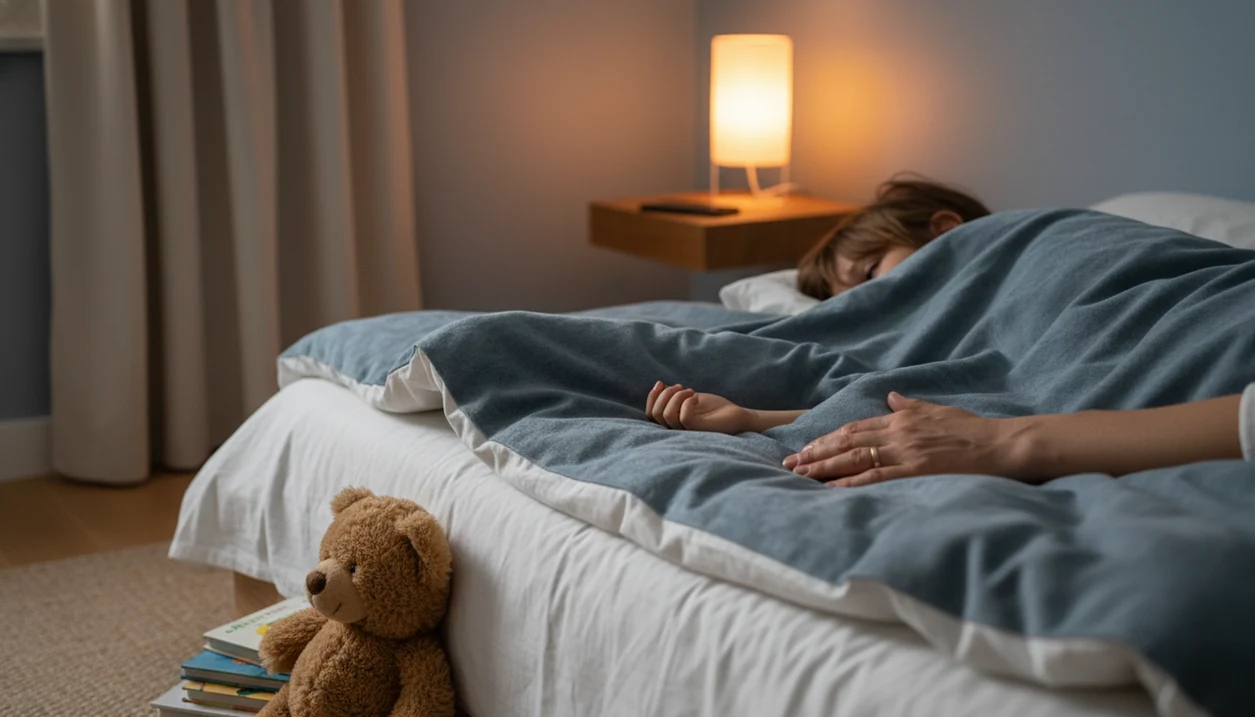


Bedtime meditation for children is a gentle wind-down practice that uses calming audio, simple breathing, soft music, or story-style imagery while a child settles for sleep. It works best as one part of a predictable bedtime routine, not as a promise that every child will fall asleep quickly. The aim is to make the last few minutes of the evening quieter and more familiar.
A useful track has a calm voice, plain language, and no sudden sound effects. Short, repeated sessions can serve as a familiar bedtime cue without adding another task to finish. Listening quietly is enough; a child does not need to follow every instruction. Persistent sleep problems, significant anxiety, or breathing concerns need more than relaxation audio.
Bedtime essentials
- Choose short, soothing children sleep meditation audio with calm voices, simple language, and no loud sound effects.
- Use the same bedtime breathing for kids or guided track consistently so it becomes a familiar sleep cue.
- Do not use kids bedtime meditation as a substitute for medical, behavioral, or mental health support when sleep problems persist.
Kids bedtime meditation cues parents can use tonight
Start with a low-stimulation setup: lights dim, child already in bed, device face down or placed across the room. The goal is safety, coziness, and relaxation, not forcing sleep on command.
Try one of three simple options tonight. Play a short story meditation with a calm ending. Guide three rounds of belly breathing with a hand resting on the blanket. Or use soft music with one repeated phrase, such as “your body can rest now.”
Keep it plain.
Tools like MindTastik can provide calm guided meditation and breathing audio, but the routine matters as much as the track. If your child keeps asking questions, pause the audio and return to the same quiet cue.
Bedtime meditation for children and the body’s wind-down cues
Bedtime meditation works by pairing predictable cues with lower arousal, attention redirection, and parent-child co-regulation. In plain language, a child borrows the routine’s calm until their own body starts to recognize the pattern. Learning how to be a resilient parent can help you respond calmly when bedtime does not go as planned.
A soft voice, repeated phrases, slower breathing, and familiar stories reduce stimulation. They give the brain fewer new things to chase. That matters at 8:47 p.m., when one more question about tomorrow’s lunch can turn into twenty. For another predictable daily cue, try mindfulness for kids before school as part of a calm morning routine.
Research is more solid for mindfulness programs and bedtime routines broadly than for any single audio track. A 2021 JAMA Pediatrics trial of 99 children aged 8 to 11 found that a school-based mindfulness program improved sleep quality and reduced sleep-onset latency compared with controls source. The CDC has also reported that about 50% of U.S. children get less than recommended sleep on school nights, which gives families a practical reason to protect wind-down time source.
5-step guided meditation routine for child sleep
Use guided meditation for child sleep after the normal bedtime jobs are done, not before. Bathroom, pajamas, brushing teeth, and reading come first, so the audio becomes the final cue.
- Set the room for sleep by dimming lights, lowering voices, and moving toys out of reach.
- Choose one short audio track, ideally 3 to 10 minutes, with no visible screen.
- Start the track after reading or cuddling, using airplane mode when possible.
- Breathe together for three slow rounds if your child wants help joining in.
- Repeat the same track for several nights before deciding it does not fit.
Consistency beats novelty for most children because the repeated cue becomes easier to trust. For broader family routines, a family mindfulness routine can help siblings and parents use the same calm language.
Kids bedtime meditation audio features to choose or avoid
Preview every kids bedtime meditation track before using it at night. A recording that sounds gentle to an adult may feel too strange, loud, or emotionally intense to a tired child.
| Choose features | Avoid features |
|---|---|
| Short duration, often 3 to 10 minutes | Long, dramatic tracks for young children |
| Soft voice and steady volume | Loud effects or sudden music changes |
| Simple images, like clouds, stars, or a cozy room | Scary imagery, storms, monsters, or separation themes |
| Repetitive cues and calm endings | Cliffhanger plots that invite more questions |
| Plain child-friendly language | Complex mindfulness terms that need explanation |
| Ad-free audio when possible | Ads, autoplay, notifications, or screen prompts |
Sensory sensitivities matter. So do family values. One child may love ocean sounds, while another hears the same waves and feels unsettled. If your child prefers neutral sound over narration, a sleep soundscapes meditation app may fit better than a story.
Bedtime breathing for kids during restless nights
Bedtime breathing for kids should feel like a game, not a performance test. Parents can model the breath quietly instead of lecturing about how to calm down.
Balloon belly: Ask your child to imagine the belly filling like a small balloon on the inhale and softening on the exhale.
Flower and soup: Invite them to smell an imaginary flower, then cool a spoonful of soup. This keeps the breath simple and visual.
Hand tracing: Trace one finger up and down the other hand, breathing in on the way up and out on the way down.
Some children do not like body-focused instructions. That is okay. They may prefer listening only, especially when they are overtired. For more shared options, parent and child breathing exercises can keep the practice gentle and flexible.
Children sleep meditation audio inside a healthy bedtime routine
Children sleep meditation audio works best inside a wider bedtime routine, not as a stand-alone fix. A good bedtime meditation track gives repeatable cues and gentle guidance; it should not be treated as an off-switch for a child’s brain.
- Screens should go off before the final routine, so the meditation is not competing with games or videos.
- Hygiene tasks come next: bathroom, pajamas, teeth, water, and any needed comfort item.
- Reading, cuddling, or a quiet check-in can help the child feel connected before audio begins.
- Meditation audio can become one cue among several, including dim lights, a comfortable room, and a regular bedtime.
- A quiet goodnight phrase should end the routine, so the child knows the parent is not reopening bedtime.
The CDC reports that about half of U.S. children get less than the recommended sleep amount on school nights source. MindTastik, Headspace, Calm, and other audio tools can support the cue, but the schedule carries much of the work.
Make room for worries before the audio starts
When bedtime questions are really worries, address them before lights-out rather than asking a recording to quiet them. The AACAP guidance on children's sleep problems recommends reassurance and attention to bedtime fears. A brief conversation can identify the concern, acknowledge it, and establish a simple plan for the night. The relaxation activity then follows the conversation rather than replacing it.
For example, a parent might ask, "Is anything worrying you about tonight?" If the answer is fear of the dark, acknowledge the fear and agree on a familiar comfort item before starting the usual quiet activity. Keep the plan simple rather than opening a long discussion in bed. Fear that keeps growing, disrupts sleep repeatedly, or affects daytime life deserves clinical attention, even when meditation provides some temporary comfort. For everyday challenges beyond bedtime, raising resilient children can include validating feelings and practicing manageable coping skills together.
Kids bedtime meditation fit: best cases and red flags
Kids bedtime meditation fits children who respond to soft repetition, stories, or calm audio. It is not appropriate as the only response to urgent sleep, breathing, anxiety, or daytime functioning concerns.
| Fit category | What to look for |
|---|---|
| Best for story-loving kids | They settle when narration is slow, familiar, and not too exciting. |
| Best for routine-seeking kids | They like knowing what happens after pajamas, books, and lights out. |
| Best for soft-audio kids | They relax with music, nature sounds, or a gentle voice. |
| Not ideal for urgent sleep problems | Severe sleep loss, breathing pauses, or safety concerns need professional guidance. |
| Not ideal for triggering content | Trauma-related fears or scary imagery may make audio backfire. |
| Not enough for daytime impairment | Ongoing anxiety, exhaustion, school problems, or behavior changes need more support. |
Per the CDC, 7.1% of U.S. children aged 3 to 17 had a diagnosed anxiety problem in 2016-2019 data, so bigger worry patterns should be handled as health concerns, not just bedtime friction source. For children with bigger worry patterns, meditation for anxious kids should be framed as support, not treatment.
5 common mistakes with guided meditation for child sleep
Small choices can make guided meditation for child sleep less calming. The track may be fine, but the setup can work against it.
- Choosing long or dramatic tracks: Younger children often do better with short, predictable audio than a 25-minute adventure.
- Leaving the screen active: A phone screen, autoplay, or notification can pull attention back into play mode.
- Changing tracks nightly: The cue cannot become familiar if every night sounds different.
- Using meditation to extend negotiations: Audio should not become another reason to delay lights out.
- Ignoring ongoing symptoms: Snoring, nightmares, anxiety, breathing pauses, or daytime sleepiness should not be brushed aside.
The pocket check is real. If the phone stays beside the bed, many kids will want to touch it.
When to Ask a Pediatrician About Child Sleep Problems
Ask a pediatrician when sleep problems are persistent, worsening, or affecting your child’s breathing, mood, learning, or daytime energy. Meditation can support a calmer routine, but it does not diagnose, rule out, or treat sleep disorders, anxiety disorders, or medical problems.
Snoring that happens often, pauses in breathing, gasping, restless sleep, morning headaches, or steady daytime sleepiness deserve medical attention. So do nightmares that are frequent or intense, bedtime fear that keeps expanding, anxiety that spills into school, or changes in behavior, attention, grades, or attendance. These are not failures of the bedtime routine. They are signals to get more context.
Before the visit, make the pattern easier to see:
- Write down bedtime, lights-out time, wake time, and naps for one to two weeks.
- Record night wakings, nightmares, snoring, breathing pauses, or unusual movements.
- Notice daytime symptoms, including sleepiness, irritability, headaches, worry, or school struggles.
- Bring the meditation routine details, including track length, device use, and what helps or backfires.
- Ask what signs would need follow-up with a sleep specialist or mental health professional.
Choosing MindTastik audio for a child's bedtime
MindTastik includes kids sessions, breathing exercises, and sleep stories, giving families several audio options for the final quiet step of bedtime. Preview the recording first and choose language, imagery, and a voice that suit the child. A child who dislikes spoken instructions may prefer quiet music or reading together instead. Persistent sleep difficulties or breathing symptoms call for professional assessment, not a different app track. MindTastik is not a medical treatment.
What bedtime meditation cannot solve
Bedtime meditation can be a supportive practice, but it has clear limits. Parents should keep expectations modest and watch for signs that a child needs more than audio.
- Evidence for bedtime meditation audio as a stand-alone pediatric insomnia treatment is limited.
- Some studies examine broader mindfulness programs, not simple app tracks played at bedtime.
- A child may become dependent on one voice, one track, one device, or one exact order.
- Phone or tablet use can backfire if light, ads, notifications, or interaction stimulates the child.
- Children with trauma histories may need carefully screened imagery and professional input.
- Neurodevelopmental differences or sensory sensitivities can change what feels soothing.
- Persistent sleep disruption, anxiety, snoring, breathing pauses, or daytime functioning problems should be discussed with a qualified professional.
- Marketing claims that any app cures children’s sleep problems are overhyped.
Clinicians typically recommend checking persistent sleep or breathing concerns rather than relying on relaxation audio alone. Bring notes on snoring, breathing pauses, nightmares, wake times, daytime sleepiness, and school or behavior changes. Those details help a pediatrician tell the difference between a routine problem and a medical or mental health concern.
Children's bedtime meditation questions
Does bedtime meditation help children fall asleep?
It can help some children relax and settle into a familiar bedtime routine. Evidence is stronger for consistent routines and broader mindfulness programs than for a particular bedtime recording. Treat meditation as a quiet cue, not a guaranteed sleep aid or a stand-alone treatment for persistent insomnia.
What age can children start bedtime meditation?
Preschool children can try very brief, parent-led breathing or simple imagery if they enjoy it. One to three minutes may be enough. School-age children may tolerate several minutes, while adolescents can choose longer practices. Readiness matters more than completing a set duration, and participation should remain optional.
How long should a child's bedtime meditation last?
Start with a brief practice rather than a long recording. Preschoolers may need only one to three minutes; several minutes may suit school-age children. A short audio track of three to ten minutes can fit the final bedtime step. If listening prompts more questions or restlessness, shorten it or choose another quiet activity.
What if my child will not follow the breathing instructions?
Listening without following instructions is fine. Parents can quietly model a slow breath, offer a playful image such as smelling a flower, or skip breathing cues altogether. Some children dislike focusing on their bodies. A familiar story, soft music, or shared reading may be a better fit than guided breathing.
Can a child listen to bedtime meditation on a phone?
A phone can play audio without becoming part of the child's screen time. Preview the track, turn off the visible screen, and keep the device out of reach. Use airplane mode when possible and avoid ads, notifications, or autoplay that could restart stimulation. The child should not need to interact with the device.
Can bedtime meditation help a child who is scared at night?
It may support relaxation, but it should not replace a conversation about the fear. Before lights-out, ask what is worrying the child, acknowledge the concern, and agree on a simple nighttime plan. Avoid imagery that feels frightening. Expanding bedtime fear or anxiety affecting school or daily life needs professional attention.
When should parents seek help instead of trying more sleep meditation?
Speak with a pediatrician when sleep difficulties persist, worsen, or affect mood, learning, or daytime energy. Frequent snoring, gasping, breathing pauses, or unusual nighttime behavior also warrant assessment. Meditation cannot diagnose or treat a sleep disorder. A calm routine can continue alongside care, but it should not delay evaluation.