
Mindfulness for Students With Trauma: A Trauma-Sensitive Guide
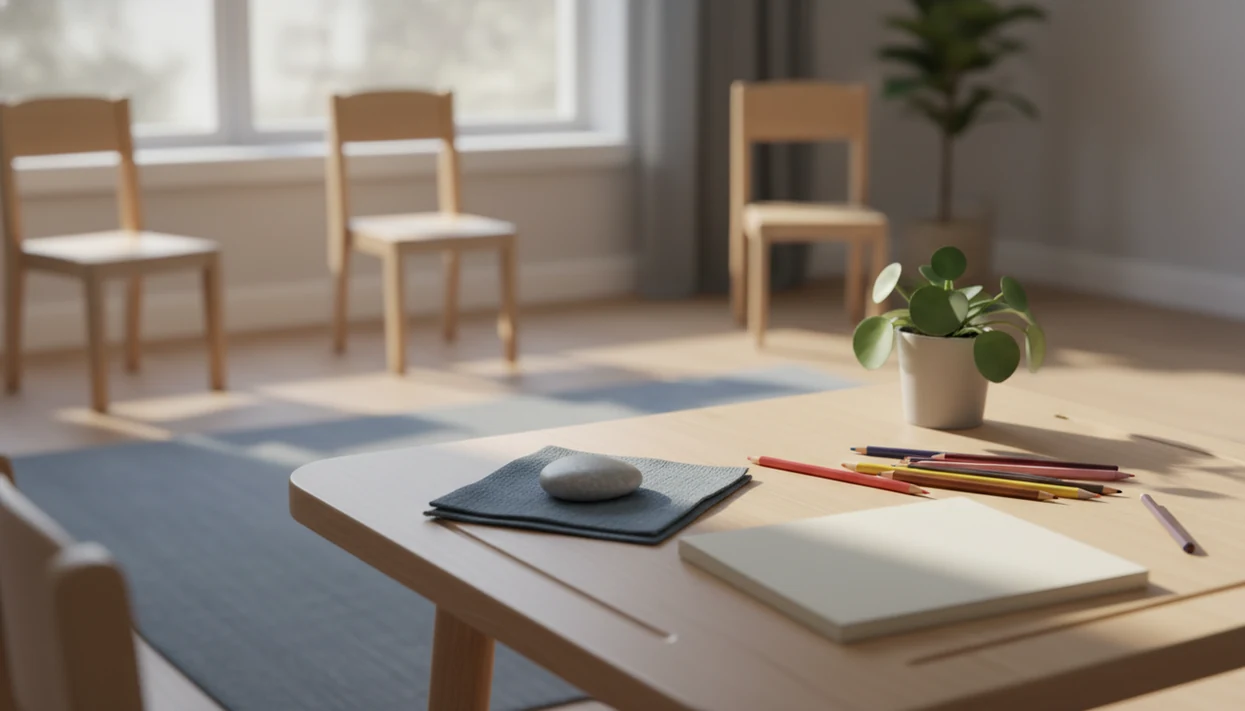


Mindfulness for students with trauma works best as a short, optional, choice-based practice that starts with grounding rather than forced stillness. The aim is to notice the present moment in ways that feel safe and manageable, not to clear the mind or make a student appear calm. Trauma-sensitive mindfulness uses sensory awareness, movement, breathing when comfortable, and predictable routines to support regulation while keeping the student in control.
This guide is educational, not a diagnosis, treatment plan, or substitute for licensed mental health care. Eyes-open practice, permission to move, and an easy opt-out matter more than completing an exercise. If a student is in immediate danger, discloses abuse, or shows signs of self-harm, follow school safety procedures and contact emergency or crisis support immediately.
Safety essentials
- Use short, opt-in practices with eyes open, movement allowed, and clear permission to stop.
- Start with external anchors such as sounds, colors, objects, or feet on the floor before breath or body scans.
- Mindfulness can support anxiety, sleep, and focus, but it is not a standalone treatment for PTSD or complex trauma.
Trauma-Sensitive Mindfulness for Students With Trauma
Trauma-sensitive mindfulness for students with trauma means the student stays in control of the practice. Safety and choice come before any breathing technique, silence, or meditation script.
Ordinary instructions can backfire. “Close your eyes,” “notice your body,” or “sit still for ten minutes” may sound harmless, but some students experience panic, flashbacks, or dissociation when attention turns inward. A student may look calm at a desk while feeling far away inside.
This matters in many classrooms. Trauma exposure is common enough that schools should plan for it. Child Trends, using National Survey of Children's Health data, reports that nearly half of U.S. children have experienced at least one adverse childhood experience: source. That does not mean every student is traumatized, but it does mean trauma-sensitive design should not be treated as rare.
Start with control. Eyes open. Movement allowed. Permission to stop.
5 Mindfulness for Students With Trauma Facts Teachers Should Know
- Trauma-informed design prevents re-triggering. The practice should reduce threat, not test endurance. A student with socked feet on a bedroom rug may need grounding before reflection.
- Long silent meditation is not always safer or better. Short practices often work better because students can return to normal activity quickly.
- Body-based regulation often comes first. Feet on the floor, slow movement, and sensory noticing can be easier than watching thoughts.
- Trusted adults and predictable routines matter. A calm script from a familiar teacher lands differently than a surprise exercise during conflict.
- Mindfulness is an adjunct, not a replacement. A youth mindfulness meta-analysis found benefits for psychological symptoms, with stronger effects in clinical samples, but the authors also note variation across studies and populations: source. Mindfulness still belongs beside appropriate mental health care.
For anxious younger students, a gentle routine may overlap with meditation for anxious kids, as long as adults keep it optional.
Trauma-Sensitive Mindfulness Mechanisms for Student Regulation
Trauma-sensitive mindfulness works by supporting nervous system regulation, not by forcing calm. Regulation means the body gets enough signals of safety to shift away from alarm and toward steadier attention.
External anchors are often the first tool. A student can notice three blue objects, feel shoes against the floor, listen for a hallway sound, or move fingers slowly while breathing. These cues give the brain something present and concrete to track. In simple terms, the practice says, “Here, now, this room.”
Choice-based awareness is different from forced inward attention. Breath focus and body scans can help some students, but they can feel too intense for others. Predictable repetition helps because the student learns what is coming next. For many students, a 60-second routine they can control is often safer than a longer meditation that asks them to stay still with discomfort.
What school mindfulness research can and cannot show
School mindfulness research offers reasons to consider these practices, but it does not establish them as trauma treatment. A 2023 review of school adjustment found small effects on overall school adjustment and academic performance, small-to-moderate effects on attention, and moderate effects on mindfulness compared with controls. Those findings support a supplementary classroom practice, not a promise of better grades or recovery from trauma. For older students, social emotional learning for teens can complement brief mindfulness practices without replacing individualized support.
A 2014 meta-analysis of school-based mindfulness reported an overall effect size of g=0.40, with improvements in attention and learning-related cognitive capacity. Its authors also cautioned that study quality and methods varied. Average results across school programs cannot establish that a particular exercise will help a particular trauma-exposed student. Participation, comfort, and signs of distress still need attention.
Before You Start: Trauma-Sensitive Safety Checks
Before using mindfulness with trauma-exposed students, check that the practice protects choice, privacy, and support. A safe setup matters as much as the exercise itself.
- Make it optional. Tell students they may join, pause, or stop without explaining why, and never connect the practice to discipline, compliance, or earning privileges. Keeping participation voluntary can help teens build self-worth by showing that their preferences and boundaries matter.
- Choose a quiet opt-out. Offer reading, drawing, stretching, or another neutral task so a student can step aside without being noticed or questioned by peers.
- Preview every material. Listen to audio, read scripts, and try exercises first, watching for closed-eye instructions, intense body focus, sudden silence, or language that promises healing.
- Coordinate when needed. Check with caregivers, counselors, case managers, or support staff if a student has known trauma symptoms, an accommodation plan, or recent distress.
- Begin outside the body. Start with room-based anchors such as colors, sounds, objects, or feet pressing into the floor before trying breath focus or body scans.
Agree on participation before introducing a class routine
Before introducing a routine, explain its purpose and limits to families and ask students for age-appropriate agreement to participate. Describe the actual activity, such as noticing objects or stretching, rather than promising calm. Protect religious and cultural freedom by offering a non-meditative alternative without penalty. The review of school mindfulness outcomes reports average benefits, but those results do not justify requiring every student to participate. For identity-affirming options, mindfulness for LGBTQ youth can support voluntary practices that respect each student's needs.
Make that agreement renewable: a student who joined yesterday can decline today. Do not require an explanation or disclosure of trauma. Explain how students can signal discomfort and which adult can help, then monitor for increased anxiety, intrusive memories, dissociation, or upsetting bodily sensations. Keep the alternative ordinary and available to everyone so opting out does not identify a student as having a trauma history.
6 Safe Steps for Mindfulness for Students With Trauma
Use this mindfulness for students with trauma guide as a starting point, not a script to impose. The safest routine is brief, visible, and easy to leave.
- Set a safety frame. Say the practice is optional, and explain that students may stop at any time.
- Offer choices. Let students sit, stand, keep eyes open, use a soft gaze, or look at an object.
- Start with 30 to 90 seconds. Short is enough. A restless start does not mean the practice failed.
- Use external anchors. Invite students to notice sounds, colors, a desk edge, or feet on the floor.
- Watch for distress. If a student freezes, shuts down, laughs nervously, or looks panicked, stop or switch activities.
- Repeat and ask for feedback. Use the same cue each day, then ask what felt manageable. Adults can use mindful ways to build self-esteem in kids by affirming student choices rather than rewarding stillness or silence.
For home practice, some families build similar steps into a family mindfulness routine.
5 Low-Risk Mindfulness Exercises for Students With Trauma
Lower-risk exercises keep attention connected to the room, the senses, and student choice. They are usually safer than long silent meditation because students do not have to close their eyes or focus deeply inside the body.
- Five-senses scan: Name one thing you see, hear, feel, smell, and taste. Skip any sense that feels uncomfortable.
- Color spotting: Choose a color and quietly find five examples in the room.
- Feet-on-floor grounding: Press feet gently into the floor, then release. Students may sit or stand.
- Slow hand breathing: Trace one finger up and down the opposite hand while breathing naturally.
- Mindful walking: Walk slowly to a door, shelf, or mat while noticing each step.
For younger children, calm down meditation for kids should also stay short, concrete, and adult-guided.
Image caption: A student practices feet-on-floor grounding with eyes open and hands resting comfortably.
Image caption suggestion: A student practices feet-on-floor grounding during mindfulness for students with trauma, with eyes open and posture relaxed.
Mindfulness for Students With Trauma: Best-Fit Uses and Red Flags
Mindfulness for students with trauma fits best as a low-pressure regulation support. It is not a crisis tool, discipline strategy, or substitute for trauma care.
| Best for | Not ideal for |
|---|---|
| Mild daily stress before classwork | Crisis response or immediate safety concerns |
| Classroom transitions after recess or lunch | Active flashbacks or dissociation |
| Sleep wind-down with adult support | Forced compliance or punishment |
| Anxiety support before tests or presentations | Untreated PTSD without clinical care |
| Focus resets after overstimulation | Replacing therapy, counseling, or medical support |
NCES reports that 7.5 million U.S. public school students ages 3-21, or 15% of enrollment, received services under IDEA in 2022-23: source. Many students need individualized supports for learning and self-regulation. Some may benefit from mindfulness, but others need accommodations, counseling, behavior plans, or specialist input first.
The most common safe starting point is a short grounding routine combined with adult choice, observation, and follow-up.
MindTastik Support for Student Sleep, Anxiety, and Focus
For students, app-supported mindfulness should be adult-guided, previewed, and used with care.
Caregivers and educators can choose short grounding practices, gentle sleep audio, or simple breathing exercises. They should avoid intense body scans, long silence, or sessions that suggest trauma can be solved by an app. Earbuds on a nightstand, one side slightly tangled around a charging cable, can be part of a bedtime routine, but the adult still sets the guardrails.
Good meditation app for sleep anxiety and everyday calm routines deliver guided structure and repeatable cues, not diagnosis, trauma treatment, or guaranteed emotional change.
Classroom and Home Mindfulness Tips for Students With Trauma
How should adults introduce mindfulness to students with trauma? Start after trust is built, not during conflict, correction, or public distress.
Use the same brief cue each day: “You can look around the room and find three steady things.” Keep the voice normal. Avoid surprise silence, pressure to share feelings, or comments like “You need this.” A quiet opt-out can be reading, drawing, stretching, or sitting near the edge of the group.
At home, mindfulness may fit before bed, before homework, or before a stressful school morning. Dimming the phone screen before starting bedtime audio is a small but useful signal. For sleep-specific routines, bedtime meditation for children should stay gentle and predictable.
For trauma-exposed students, external grounding is often easier than breath focus because it keeps attention connected to the present room.
When to Seek Professional Trauma Support
Seek professional trauma support when a student’s symptoms affect safety, learning, sleep, relationships, or daily functioning. Mindfulness can help some students steady in the moment, but it should stop if it increases fear, numbness, panic, or shutdown.
Watch for flashbacks, dissociation, repeated nightmares, sudden freezing, self-harm comments, suicidal talk, aggression that feels out of character, or disclosures that home is unsafe. A student whispering, “I can’t go back there,” needs protection and a trained adult response, not another grounding exercise.
- Stop the mindfulness practice if symptoms intensify, especially with breath focus, closed eyes, silence, or body awareness.
- Stay calm and present, using simple language and a normal voice while keeping the student’s privacy in mind.
- Involve the school counselor, psychologist, social worker, nurse, or designated safeguarding lead when trauma signs are persistent, severe, or connected to safety.
- Follow mandated-reporting and school crisis protocols for abuse disclosures, threats, self-harm, or unsafe home situations.
- Connect the family or care team with trauma-focused therapy when appropriate, because trauma treatment belongs with licensed professionals.
- Call emergency services or crisis support immediately if there is imminent danger or a student may harm themselves or someone else.
Choosing audio for student grounding and bedtime
MindTastik includes kids sessions, guided meditations, sleep stories, and soundscapes. An adult can preview the guided meditation library for instructions that allow eyes-open practice, movement, and stopping. A familiar recording may suit a voluntary routine before homework or bedtime, but the content should match the student's comfort rather than the adult's wish for quiet.
Students who find recorded guidance unsettling may do better with simple object spotting or movement led by a trusted adult. Active flashbacks, dissociation, or safety concerns require trained support, not another audio session. MindTastik is not a medical treatment.
Where classroom mindfulness falls short after trauma
Mindfulness for students with trauma has real limits. It can support regulation, but it should never be treated as trauma treatment by itself.
- Mindfulness is not standalone treatment for PTSD, abuse, neglect, or complex trauma.
- Some students feel worse with breath focus, closed eyes, silence, or body scans.
- Distress means pause, modify, or stop. Do not ask a student to push through.
- Long-term K, 12 research on trauma-sensitive mindfulness remains limited.
- Not all mindfulness apps, school programs, or scripts are trauma-informed.
- Schools and families may face barriers such as time, privacy, devices, staff training, and access to care.
- Adult PTSD mindfulness evidence is adjacent evidence, not direct proof for children or teens.
- Clinicians typically recommend trauma-focused professional care when trauma symptoms interfere with safety, sleep, learning, or daily life.
A student saying, “I just need something to play when my thoughts get loud,” may need comfort. They may also need a counselor.
Student trauma and mindfulness questions
Can mindfulness make trauma symptoms worse in students?
Yes. Breath focus, closed eyes, silence, or attention to bodily sensations can increase fear, intrusive memories, panic, or dissociation for some students. Stop or change the exercise when distress appears. A student should never be asked to push through symptoms to finish a mindfulness practice.
What mindfulness exercises are lower risk for students with trauma?
Start with external anchors: finding objects of one color, noticing a sound, looking at a desk edge, or gently pressing feet into the floor. Stretching or slow walking are other options. These are lower-risk starting points, not universally safe exercises. Keep participation optional and allow students to skip any uncomfortable instruction.
Should students with trauma close their eyes during meditation?
No. Closing the eyes should never be required. Students can look around the room, use a soft gaze, or focus on a familiar object. Eyes-open practice keeps attention connected to the surroundings. Movement and changes in position should also be allowed rather than treated as poor participation.
How long should a trauma-sensitive classroom mindfulness practice last?
Start with 30 to 90 seconds, followed by a return to the usual activity. There is no need to extend a practice because a student seems restless or has not become visibly calm. Comfort and choice matter more than duration, and students should be able to stop before the exercise ends.
What should a teacher do if a student freezes during mindfulness?
Stop the exercise and avoid pressing the student to continue or explain their feelings publicly. Offer a simple external anchor or a neutral alternative if comfortable for the student. Follow school support procedures and involve a trained adult when freezing, panic, or shutdown persists. Apparent stillness is not proof that a student feels safe.
Can mindfulness replace therapy for a student with PTSD?
No. Mindfulness can be a supplementary regulation practice, but it is not a standalone treatment for PTSD or complex trauma. Symptoms affecting safety, sleep, learning, relationships, or daily functioning need professional assessment and support. Classroom exercises should not delay referrals, safeguarding action, or care from a licensed mental health professional.
Should mindfulness be used when a student is disruptive?
Not as punishment or a condition for returning to class. Introduce optional practices during predictable, lower-pressure moments rather than during correction or public distress. A student can choose grounding as a familiar support, but mindfulness should not replace appropriate behavioral support, relationship repair, or a response to an unsafe situation.