
Mindful Classroom Design Guide
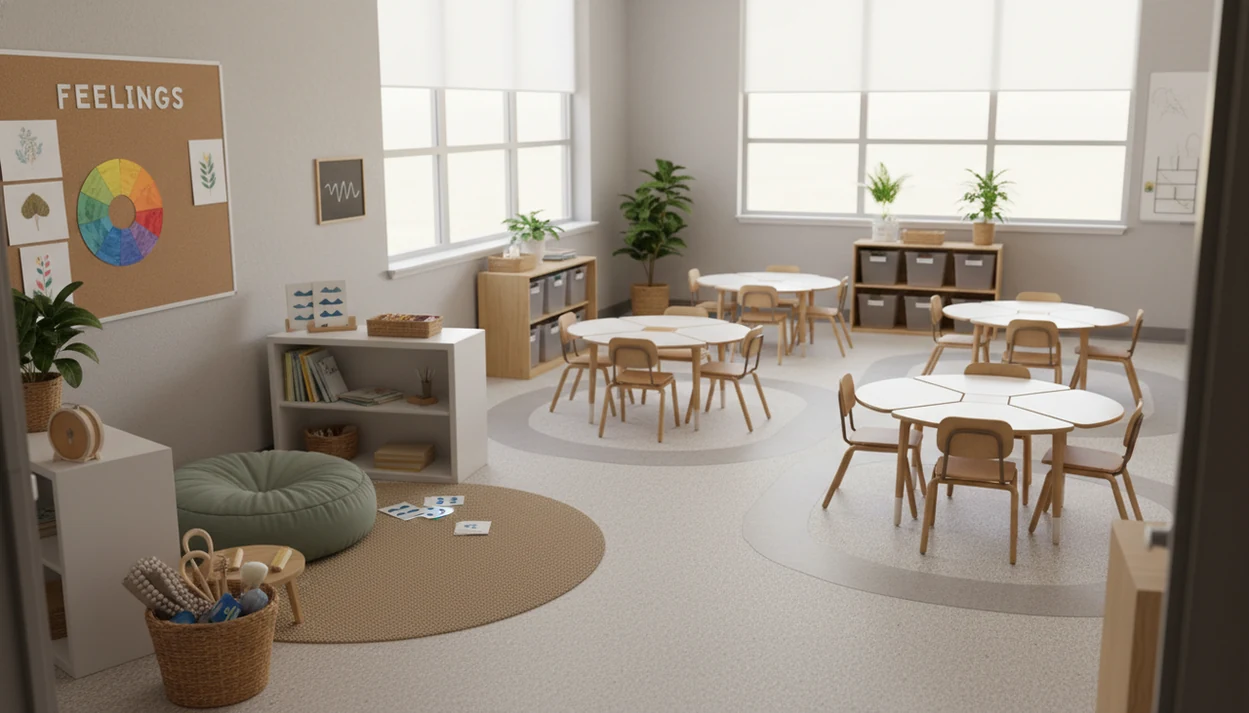


Mindful classroom design means arranging a classroom to support calm attention, emotional safety, and smoother transitions through lower sensory load, clear routines, flexible seating, and small reset spaces. It combines layout, sound, light, movement paths, and predictable cues so students can understand what happens next and find support when they need a pause.
Start with the room’s everyday friction: distracting noise, crowded aisles, harsh lighting, clutter, and hard-to-reach materials. Calming decor and mindfulness tools come later. A reset space needs a clear purpose, a simple routine, and a return-to-learning plan, not just cushions. Guided audio can be optional support when school policy permits, but it should never become a behavior fix or a requirement for participation.
Classroom priorities
- Reduce sensory overload first: noise, clutter, harsh lighting, and confusing movement paths often undermine focus before any mindfulness activity begins.
- Use simple, repeatable cues: calm corners, breathing visuals, transition timers, and reflection boards work best when students know exactly how to use them.
- Treat guided audio as optional support, not a behavior fix; it can fit gently for teacher calm, short breathing resets, sleep support, and focus routines when school policy allows. For adolescents who need help winding down at home, teen sleep meditation offers an optional bedtime practice.
Mindful classroom design essentials teachers should know first
- Mindful classroom design means shaping the room so attention takes less effort. It includes layout, sound, light, seating, routines, and reset spaces.
- Sensory overload comes before decor. A beautiful wall display will not help much if students are straining to hear directions or squeezing through crowded aisles.
- Routines are part of the design. A timer, a hand signal, and a predictable place for materials can calm the room faster than another poster.
- Emotional safety matters. Students need to know that a calm corner is support, not a public signal that they are “in trouble.”
- The evidence is useful but not absolute. A 2019 meta-analysis of school mindfulness programs found small positive effects source, while a 2022 UK trial of 5,017 students found no significant one-year mental health improvement compared with usual provision source.
Tiny changes count.
For younger learners, pair classroom routines with home routines when possible. A simple family mindfulness routine can make school language feel more familiar.
How mindful classroom design works
Mindful classroom design works by lowering the amount of sensory information students have to manage while making the next expected action easier to see. When noise, clutter, glare, and crowding compete for attention, they use up working memory, the short-term mental space students need for directions, reading, problem-solving, and self-control.
Predictable cues reduce the number of tiny negotiations in the day. A visible timer, a consistent hand signal, a labeled materials spot, or a practiced calm-corner routine tells students what happens next before stress rises. Adult modeling is part of the system too: when the teacher pauses, names the next step, and uses the same calm cue, students get a live example of regulation rather than another demand.
- Reduce the sensory load so students are not fighting the room before the lesson starts.
- Repeat clear cues so transitions feel familiar instead of up for debate.
- Model calm recovery when plans change, voices rise, or the room gets busy.
- Adjust supports for individual students, because layout can guide behavior but cannot replace accommodations, counseling, or specialized help. For adolescent students, meditation for teen stress can complement school support for sleep difficulties and strong emotions.
Classroom noise, lighting, traffic paths, and routines
Mindful classroom design works by reducing sensory friction and unnecessary decisions, so students can spend more energy on learning and less energy managing the room.
Noise affects whether children can hear speech clearly. A classroom noise review found that typical levels, often around 65-75 dB, are linked with poorer speech perception and may affect learning and cognitive performance in children source. Lighting matters too. Flicker, glare, or a harsh overhead row can make a room feel tense before the lesson starts.
Traffic paths are just as practical. If students cross three clusters to sharpen a pencil, the room keeps interrupting itself. Clear zones reduce wandering, bumping, and last-minute negotiation.
The mechanism is simple: fewer avoidable triggers, clearer expectations, steadier adult modeling. A teacher who uses the same calm cue every transition gives the room something to lean on.
The laptop fan during a five-minute planning pause can feel loud after dismissal.
5 mindful classroom design steps for teachers
- Audit sensory stressors. Walk the room at student height and note noise, clutter, lighting, crowding, blocked sightlines, and places where bodies bunch up.
- Set clear traffic paths and zones. Name spaces for instruction, collaboration, quiet work, materials, and reset, then test whether students can move without crossing every area.
- Create one calm corner or breathing station. Add simple rules: one or two students, short timer, quiet tools, and a return-to-learning plan.
- Add visual cues and transition routines. Use a timer, voice-level chart, breathing card, or board sequence so students know what happens next.
- Review what works with students. Ask what feels crowded, distracting, or helpful, then adjust one thing at a time.
For anxious children, keep choices concrete. “Draw for two minutes or try square breathing” is easier than “go calm down.” More support ideas are covered in meditation for anxious kids. Older students can also explore mindfulness for teen anxiety, with concrete choices and no pressure to participate.
Check whether a classroom change actually helps
Give each change a specific purpose before deciding whether it helped. For a materials station, check whether students can collect supplies without crowding the teaching area. For a reset space, ask whether students understand its purpose and can return to learning without public explanation. Student feedback belongs alongside attendance, behavior, classroom climate, and well-being measures. A quieter-looking room is not, by itself, evidence of a better learning environment.
Keep room design and mindfulness-program evidence separate. A 2023 review of school mindfulness programs found small effects on overall school adjustment and academic performance, with small-to-moderate effects on attention. Those findings concern programs, not particular furniture, paint colors, or calm-corner layouts. If guided practice is introduced alongside room changes, record both changes rather than attributing any improvement to the decor. Use the results to revise the approach, not to promise higher grades.
Mindful classroom design tips for layout, lighting, and noise
Good classroom design starts with what students see, hear, and bump into all day. Keep sightlines open, walking paths obvious, and high-use materials easy to reach.
Low-cost sensory changes
Visual load: Rotate displays instead of covering every wall. A blank patch near the board gives restless eyes somewhere to land.
Lighting: Soften harsh lighting when school policy allows. Try daylight, lamp zones, or turning off one bank of lights during independent work.
Sound: Productive noise has a purpose, such as paired reading or group planning. Chaotic noise has no boundary. Rugs, felt chair pads, tennis balls on chair legs, curtains, and labeled voice levels can reduce the scrape-and-shout cycle.
Clear movement paths
Traffic flow: Leave a visible route to the door, materials, small-group table, and calm corner. If you have to turn sideways, students will too.
A calm layout should make the expected choice the easy choice.
Best mindful classroom design zones and when to use them
A useful mindful classroom has zones with clear jobs. It does not need expensive furniture or a silent-room feeling.
| Zone | Best for | Not ideal for |
|---|---|---|
| Whole-group zone | Direct teaching, shared reading, morning meetings | Long tasks where students need privacy or movement |
| Small-group collaboration area | Projects, teacher-led groups, peer discussion | Students who need low noise to start work |
| Quiet work area | Independent reading, writing, testing accommodations | Punishment or forced separation |
| Calm corner | Short self-regulation breaks with a return plan | Discipline, isolation, or public shaming |
| Breathing or headphone station | Optional guided audio, breathing cards, quiet reset | Unapproved tech use or replacing adult support |
| Teacher reset space | A discreet pause point for the adult | Leaving students unsupervised |
A calm corner is not a consequence. It is a practiced support, like a pencil sharpener for regulation.
Headphones and guided audio can fit when school policy allows. For age-appropriate audio choices, a meditation for kids app should be reviewed by adults before classroom use.
Optional meditation app support for teacher calm, sleep, anxiety, and focus
Teacher regulation shapes the room. In a randomized trial, an eight-week teacher mindfulness program reduced occupational stress and burnout symptoms and increased self-compassion source. For older students, self-compassion for teen stress offers a way to practice responding kindly to setbacks and difficult emotions.
In this context, it fits mainly as teacher support: a bedtime wind-down routine, a short reset before messages, or a beginner guided session after a hard day.
The 2:13 a.m. lock-screen check is real.
Optional short breathing or focus sessions may be used during transitions only with school policy approval. Some teachers also compare resources such as Headspace, Calm, and mindful.org while deciding what feels manageable and policy-appropriate.
Mindful classroom design mistakes that reduce student buy-in
“Why didn’t my mindful classroom work?” Often, the room looked calmer than it actually felt.
Plants, neutral colors, and soft posters are not enough without routines. Students need to know where to go, what to do, how long it lasts, and how they return. Otherwise, the calm space becomes one more confusing station.
Do not force eyes-closed meditation. Some students feel safer with eyes open, drawing, quiet reading, breathing cards, or headphones. Public emotional disclosure can also backfire. A student should not have to explain family stress in front of classmates to access a reset.
Mindful classrooms do not need to be silent all day. Collaboration, movement, and laughter can belong in a regulated room. The difference is whether the noise has a purpose and a stop signal.
For younger children, simple co-regulation works better than long instruction. Try paired breathing ideas from parent and child breathing exercises before expecting independent practice.
Optional breathing sessions for teacher resets
MindTastik’s breathing exercises and guided meditations suit teachers looking for a pause before class or after a difficult day. Its kids sessions are another optional resource, but classroom use needs school approval and a non-audio alternative. Teachers seeking help with room layout, acoustics, or student accommodations should prioritize school support rather than an app. Students who find breath-focused practice uncomfortable should have another way to reset. MindTastik is not a medical treatment.
What room changes and mindfulness cannot solve
Mindful classroom design is supportive, but it is not a fix for every classroom problem.
- School mindfulness evidence shows small average effects, and not all trials show benefit.
- A 2022 cluster randomized trial of 5,017 UK students found no significant one-year mental health improvement compared with usual social-emotional learning.
- Some students may dislike guided mindfulness, silence, body scans, or closed-eye exercises.
- Trauma, serious mental health needs, unsafe school climates, and understaffing require more than room design.
- Budget, room size, acoustics, fire codes, and school policy can limit what teachers change.
- Meditation apps vary in quality and are not usually rigorously tested for classroom use.
- MindTastik can support sleep, anxiety support, breathing, and calm for adults, but it is not therapy or medical care.
- A calm corner can become harmful if it is used as isolation or punishment.
Clinicians and school mental health professionals typically recommend individualized support when distress is persistent, intense, or affecting safety. Classroom design can make support easier to access, but it cannot replace that care.
Mindful classroom design questions
How can a teacher make a classroom calmer without buying new furniture?
Start by clearing walking routes, moving frequently used materials within easy reach, and reducing competing wall displays. Establish a consistent transition cue and a visible sequence for the next activity. These changes address daily confusion and sensory load before adding furniture, decorations, or mindfulness equipment.
What should go in a classroom calm corner?
A calm corner needs a defined space, simple instructions, a short timer, and quiet tools such as a breathing card or drawing materials. Explain how students request a break and return to learning. It should provide support, not serve as punishment, forced isolation, or a place for public emotional disclosure.
Should a mindful classroom be silent all day?
No. Paired reading, discussion, and group projects all involve useful sound. The aim is to reduce noise that interferes with hearing directions or completing the task. Clear voice-level expectations and separate areas for collaboration and quiet work are more practical than requiring silence throughout the day.
What colors are best for a mindful classroom?
The research notes do not establish a best classroom color. Focus first on glare, visual clutter, clear sightlines, and readable instructional materials. Neutral paint or calming posters cannot compensate for confusing routines or crowded paths. Ask students which parts of the room feel distracting rather than assuming one palette suits everyone.
Can mindful classroom design help students with ADHD?
Clear cues, accessible materials, reduced distractions, and room for movement may support students who struggle with attention. Reviews of school mindfulness programs report some improvements in attention and ADHD-related behaviors, but that does not prove a particular layout treats ADHD. Design changes should complement individual accommodations and appropriate professional support.
How long should a classroom mindfulness break last?
A brief, developmentally appropriate practice of one to five minutes is a reasonable starting point. Options include noticing objects, grounding through the feet, stretching, or breathing. Explain the purpose and the next classroom activity. Longer meditation is not necessary, and students should be able to choose a non-meditative alternative.
What if a student dislikes breathing exercises or closing their eyes?
Do not require either. Offer eyes-open attention to an object, noticing sounds, stretching, quiet drawing, or paced movement. Students should be able to opt out without penalty or explaining personal experiences. Stop a practice that increases distress and follow the school’s support or referral process when further help is needed.
Can a calm corner replace classroom discipline or bullying prevention?
No. A calm corner is a self-regulation resource, not a substitute for safeguarding, consistent behavior procedures, or bullying prevention. Mindfulness should not be used to demand compliance or make a harmed student tolerate unsafe conditions. Room design can support classroom routines, but serious safety problems require direct school action.