
Mindful Parenting Reactions: Choose Your Response Before You Snap
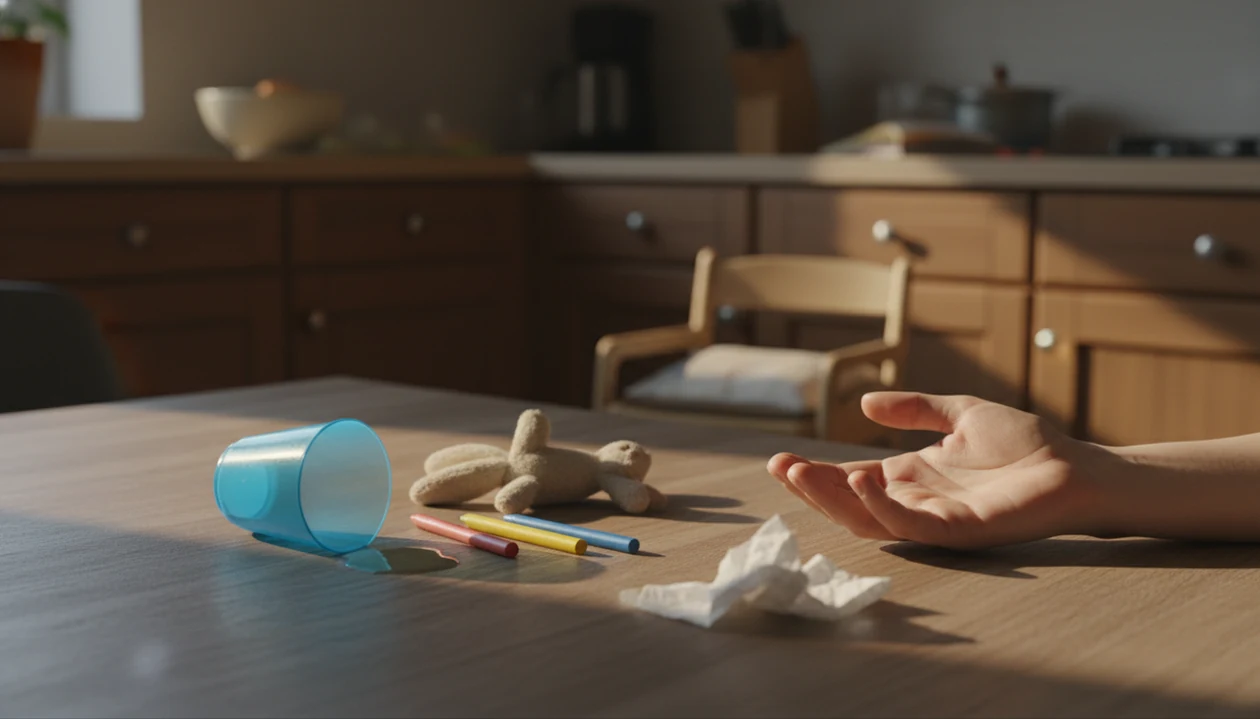


Mindful parenting reactions are intentional responses chosen after pausing, noticing an emotion, and deciding what a child needs next. They combine present-moment awareness, emotional self-regulation, and compassion for both parent and child. Instead of yelling automatically, a parent takes a brief reset: feel both feet on the floor, release a tight jaw, breathe, acknowledge the child's feeling, and state a clear limit.
The aim is not to eliminate anger or agree to every request. It is to notice anger before it determines the next sentence. A response such as “You're upset that playtime is over. It's still bedtime” keeps both empathy and the boundary. Sleep loss, chronic stress, and anxiety can make that pause harder, so practice needs to be brief and realistic.
The pause and the limit
- Mindful parenting does not mean never feeling angry; it means noticing anger before it drives your behavior.
- The core move is pause, name the feeling, breathe, validate, and set a clear limit.
- Sleep loss, chronic stress, and anxiety can make reactive parenting more likely, so short daily practices can support calmer responses.
Mindful Parenting Reactions Quick Definition
Mindful parenting reactions are calm, intentional parent responses built on present-moment awareness, emotional self-regulation, and compassion for both parent and child. Reacting is what happens when you snap before you think. Responding is what happens when you notice the surge, pause, and choose the next sentence on purpose.
That pause can be tiny.
It might be one breath before answering a slammed door. It might be unclenching your jaw before you say, “I won’t let you hit.” Mindful parenting is not perfection, and it is not permissiveness. You can be warm and still hold a boundary. The skill is noticing your emotion without handing it the steering wheel.
For tired parents, one realistic goal is fewer automatic reactions, not a permanently calm voice.
Five Mindful Parenting Reactions Facts Parents Should Know
- Mindful reactions are trainable. Parents practice pausing, noticing triggers, and choosing behavior instead of running on autopilot.
- Big emotions still happen. Anger, embarrassment, and panic can show up, especially during public meltdowns or bedtime resistance.
- Core skills repeat. Present-moment awareness, acceptance, compassion, and self-regulation are the main building blocks.
- Research is encouraging. Studies link mindful parenting programs with lower parenting stress, less harsh parenting, and improved parent-child interaction; see this review on mindful parenting interventions: source.
- Stress reduction may be moderate, not magical. A meta-analysis of 19 randomized controlled trials reported moderate reductions in parental stress and improvements in parent-child relationships, but effects varied by program and family context: source.
Mindful parenting is a skill parents can practice, not a personality type. It is a practiced response pattern. The parent at 2:13 a.m., checking the lock screen and realizing they are still awake, may have less patience tomorrow. That does not mean failure. It means the nervous system needs support before the next hard moment.
How Mindful Parenting Reactions Work in the Brain and Body
Mindful parenting reactions work by interrupting stress arousal before it becomes yelling, threatening, or shutting down. When a child screams, refuses, or throws something, your body may read it as danger. Heart rate rises. Shoulders tighten. Fight-or-flight starts pushing for a fast reaction.
The pause creates a small gap between impulse and response. In that gap, breath and body awareness help self-regulation, which means your body settles enough for your thinking brain to come back online. In plain language, you buy yourself three seconds before saying the thing you’ll regret.
Sleep deprivation and anxiety make this harder; insufficient sleep is associated with poorer emotional regulation and higher stress reactivity, which can make a parent’s first impulse harder to interrupt: source. A parent running on four broken hours may react faster because their baseline stress is already high.
How to Use Mindful Parenting Reactions During a Meltdown
Use mindful parenting reactions during a meltdown by slowing the first adult move, then pairing empathy with a clear boundary. Try this script when your child is loud, rigid, or past reasoning.
- Pause before speaking. Put both feet on the floor and silently say, “Wait.”
- Name your own feeling. Try, “I’m angry, and I can still choose my words.”
- Breathe once or twice with a longer exhale. If your child can join, say, “Let’s take one dinosaur breath.”
- Validate the child’s feeling. Say, “You really wanted that toy,” or “Leaving the park feels hard.” When a child's distress relates to trauma, mindfulness support for kids with trauma calls for patience, safety, and professional guidance.
- Set the limit clearly. Say, “I won’t let you hit,” or “The tablet is done, and I’ll help you be upset.”
The boundary still matters. Mindful parenting does not remove consequences; it changes the tone and timing of your response. For younger children, parent and child breathing exercises can make the breathing step easier to practice before a meltdown.
Mindful Parenting Reactions Guide for Common Triggers
Common triggers become easier to handle when you plan the replacement response before the moment arrives. A tired parent does not need a speech. They need one usable sentence. During separation, mindful parenting during divorce can help parents approach tense conversations while keeping children's needs central.
| Trigger | Automatic reaction | Mindful response |
|---|---|---|
| Whining | “Stop whining right now.” | “I hear you want help. Use your regular voice, and I’ll listen.” |
| Defiance | “Because I said so.” | “You don’t want to stop. The shoes still need to go on.” |
| Sibling conflict | “Everybody separate.” | “You both want the truck. I won’t let grabbing happen.” |
| Bedtime resistance | “Go to bed or else.” | “You wish it were still playtime. It’s bedtime, and I’ll sit for two minutes.” |
| Public meltdown | “You’re embarrassing me.” | “You’re overwhelmed. We’re stepping aside, and I’ll keep you safe.” |
Bedtime is often where patience runs out first. A steady bedtime meditation for children can support the whole wind-down routine, especially when pajamas are warm from the dryer and nobody wants another argument.
What research shows about parenting stress and reactions
Research supports cautious expectations, not a promise that mindfulness will stop yelling. A 2021 review of 20 randomized trials involving 1,003 parents found moderate improvements in general stress, psychological symptoms, and wellbeing. Improvements in parenting stress and parenting behavior were smaller. Those results concern structured mindfulness-based programs, not proof that one breathing exercise or an app produces the same benefits.
The findings are not uniform. A separate 2021 review of 11 studies found no significant overall effect on parenting stress or overall parenting mindfulness, with limited or inconsistent evidence for several family outcomes. Mindfulness is better understood as a possible addition to parenting support. It does not establish that a child's behavior will change simply because a parent practices pausing.
Mindful Parenting Reactions Tips for Daily Practice
Small practices work better than rare long sessions for most parents. Consistency matters more than duration, especially when the day is already crowded. For school-age children, a mindful minute for students can offer a brief classroom pause between demanding activities.
The Doorway Reset: Before entering your child’s room, take one slow breath and relax your face.
The 60-Second Body Scan: Notice your forehead, jaw, shoulders, hands, and belly. Soften one area before speaking.
The Two-Breath Repair: After snapping, breathe twice and say, “I spoke too sharply. I’m trying again.”
The Bedtime Wind-Down: Dim the phone screen before starting bedtime audio, then choose a short guided session instead of scrolling.
Tools like MindTastik, Calm, Headspace, and Mindful.org can support practice with guided meditation, sleep audio, breathing exercises, and self-hypnosis. For families building a shared rhythm, a family mindfulness routine may feel easier than asking one exhausted parent to remember everything.
Best Fit and Poor Fit for Mindful Parenting Reactions
Mindful parenting reactions fit everyday moments where a parent wants more space between feeling triggered and setting a limit. They do not replace safety planning, clinical care, or crisis support.
Best for
| Best fit | Why it helps |
|---|---|
| Parents who yell or snap | The pause gives the adult one step before escalation. |
| Parents who feel overwhelmed | Short resets reduce the pressure to “be calm all day.” |
| Parents who want calmer limits | Validation and boundaries can happen in the same sentence. |
| Families practicing together | Simple cues can be shared through a meditation for kids app. |
Not for
| Poor fit as a standalone tool | What to consider |
|---|---|
| Emergencies or unsafe behavior | Prioritize immediate safety and trained support. |
| Abuse situations | Mindfulness alone is not a safety plan. |
| Severe child behavioral concerns | Professional evaluation may be needed. |
| Untreated parent crises | Trauma, depression, anxiety, or burnout may need clinical care. |
Mindfulness can complement professional support, but it should not replace it. In school settings, mindfulness for students with trauma requires gentle, optional practices and coordination with trusted support staff.
MindTastik Support for Mindful Parenting Reactions
Parent reactions often get sharper when sleep is poor, anxiety is high, or the day has had no quiet reset.
A parent who says, “I just need something to play when my thoughts get loud,” may benefit from choosing a 5-minute breathing exercise instead of a 20-minute body scan. Keep it small. The goal is practice support, not a cure, diagnosis, or therapy replacement.
Use app audio as a practice cue, not as proof that the problem is solved. If yelling, panic, or conflict keeps escalating, the next step is human support from a pediatrician, therapist, parenting coach, or local crisis resource.
Image caption suggestion: A parent sits beside tangled earbuds on a nightstand, choosing audio for mindful parenting reactions before sleep.
This kind of sleep-focused support may also suit parents comparing meditation apps, especially when the goal is a short nightly reset rather than intensive coaching or therapy.
Audio practice for the pause before speaking
MindTastik's breathing exercises and guided meditations suit parents who want a repeatable cue for pausing before a difficult conversation or bedtime routine. Kids sessions can support shared practice when everyone is settled, rather than becoming another demand during a meltdown. Audio is a practice aid, not a medical treatment. Families facing escalating conflict, safety concerns, or significant behavioral needs should seek professional support rather than rely on an app.
When a parenting pause is not enough
Mindful parenting reactions are useful, but they have real limits.
- Mindful parenting is not a quick fix for serious child behavioral or mental health issues.
- Studies on mindful parenting are promising, but many are small, mixed in design, and varied in program length.
- Apps are tools, not cures. They can support practice, but they cannot assess family safety or diagnose anyone.
- Trauma, burnout, depression, panic, or severe anxiety may require clinical support from a qualified professional.
- Cultural expectations, work schedules, money pressure, and crowded housing can make daily practice harder.
- A parent may still snap after practicing. Repair is part of the skill, not proof that the approach failed.
- If a child or adult is at risk of harm, immediate safety support matters more than a breathing exercise.
For anxious children, meditation for anxious kids may be a support tool, but it should be matched to the child’s age and needs.
Questions about responding without snapping
How do I stop yelling when my child will not listen?
Start with the first adult action, not a longer explanation. Pause, loosen the jaw or hands, and take a slow breath before stating one clear limit. For example: “You don't want to stop playing. The shoes still need to go on.” This creates room for a different response, but does not guarantee immediate cooperation.
What can I say during a child's meltdown?
Use a short acknowledgment followed by the boundary: “You really wanted that toy. I won't let you hit.” Keep the immediate focus on safety and the next action rather than reasoning through the whole disagreement. A child does not have to agree with the limit for the parent to hold it calmly.
Is mindful parenting the same as permissive parenting?
No. Mindful parenting combines awareness and compassion with clear limits. A parent can acknowledge disappointment without changing the rule: “You wish it were still playtime. It's bedtime.” The difference is in how the limit is delivered, not in removing expectations or allowing hitting, grabbing, or other unsafe behavior.
What should I do after snapping at my child?
Pause before continuing the exchange, then acknowledge the behavior plainly: “I spoke too sharply. I'm trying again.” Restate the limit without the harsh delivery. Repair does not require pretending the disagreement is over or withdrawing a reasonable boundary. It gives the parent a concrete way to take responsibility and restart the conversation.
Can mindful parenting reduce parenting stress?
It may help, but research findings are mixed. One review of 20 randomized trials found small-to-moderate improvements in parenting stress and behavior. Another review found no significant overall effect on parenting stress. These studies examined programs, so their results should not be treated as a guarantee for brief independent practice.
How can I practice mindful parenting when there is no quiet time?
Attach a small practice to an existing transition. Before entering a child's room, take one slow breath and relax the face. Before answering a repeated request, notice the jaw, shoulders, and hands. The purpose is to rehearse a usable pause, not to add a lengthy task to an already crowded day.
Does taking a breath mean ignoring my child's behavior?
No. The pause comes before the response, not instead of it. A parent can breathe once and then stop hitting, separate children, or state a limit. In an urgent safety situation, protective action comes first. Mindful parenting is not a reason to delay necessary action while trying to feel completely calm.
When should a parent get help for anger or repeated yelling?
Seek professional support when yelling, panic, or conflict keeps escalating, or when family safety is uncertain. Trauma, depression, burnout, and severe anxiety may need clinical care. Significant child behavioral or mental health needs also call for assessment and appropriate support. Breathing exercises and meditation cannot assess safety, diagnose a condition, or replace treatment.