
Mindfulness in Schools Benefits: A Practical Guide for Calmer Learning
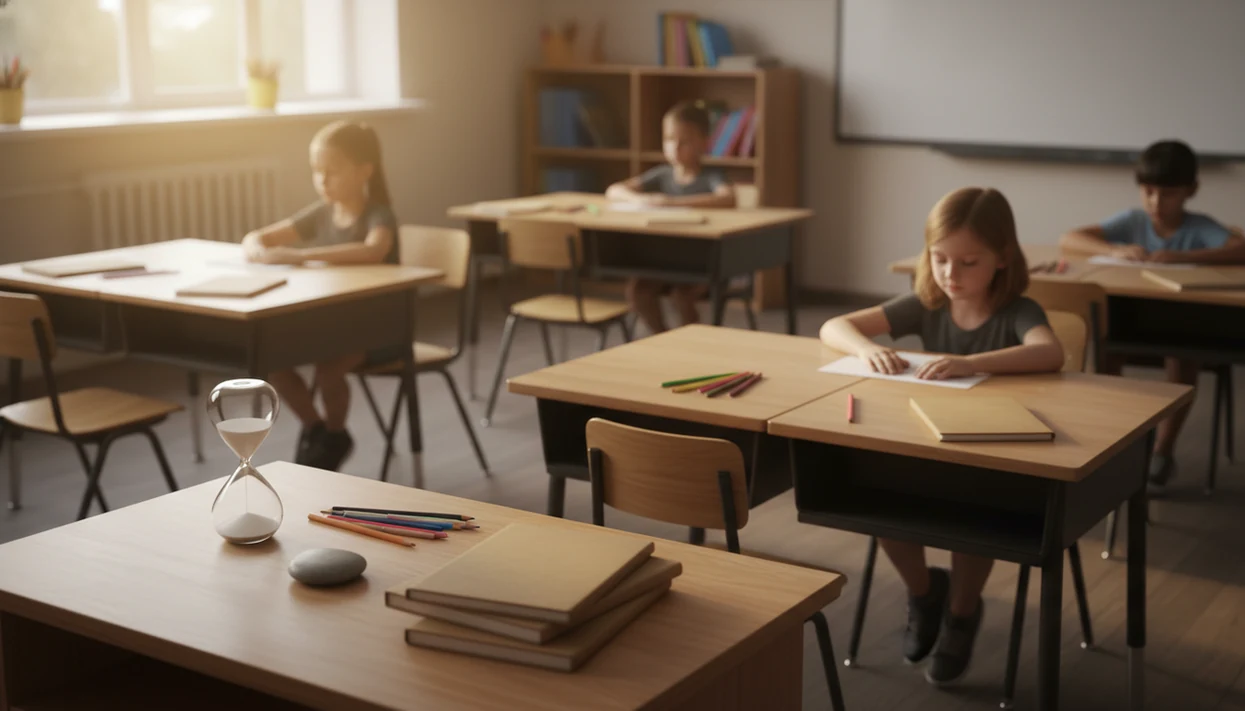


The benefits of mindfulness in schools include modest improvements in attention, stress regulation, emotional control, and calmer classroom behavior. School mindfulness means using secular, age-appropriate attention and awareness practices during the school day. Short breathing exercises, body awareness, and guided pauses help students notice thoughts, emotions, and physical sensations without judgment, then return their attention to learning.
Research is promising, but mindfulness does not produce the same results for every student. A 2023 review of school adjustment found small effects on academic performance and small-to-moderate effects on attention. The practical role is supportive: a consistent routine led by trained teachers, reinforced by family habits, and used alongside sleep, learning supports, and appropriate mental health care.
What matters in the classroom
- School mindfulness is linked with better attention, self-regulation, resilience, and lower stress or anxiety symptoms.
- The strongest classroom benefits come from short, repeated practices led by trained teachers who also understand mindfulness themselves.
- Mindfulness is not therapy, discipline, or a cure-all; it should support, not replace, sleep, counseling, learning supports, and family routines.
Mindfulness in Schools Benefits Guide: 5 Classroom Gains
Mindfulness in schools benefits are usually seen as small to moderate classroom gains, not instant changes in every student. The most supported areas are attention, stress reduction, emotional regulation, social behavior, and classroom calm.
- Attention: Students practice noticing distraction and returning to the lesson, page, breath, or teacher’s voice.
- Stress reduction: Short pauses before tests or presentations can lower the “too much at once” feeling.
- Emotional regulation: A student may learn to pause before snapping, leaving the room, or shutting down.
- Social behavior: Calmer transitions can reduce small conflicts, especially after recess or lunch. Schools can also consider mindfulness to reduce bullying as one supportive practice alongside clear rules and adult intervention.
- Classroom calm: Teachers benefit too, because a shared reset can make the next instruction easier to hear.
Not magic. Still useful.
For younger children, school routines often pair well with home tools like a meditation for kids app, especially when families keep language simple and non-pressured. For younger children, learning how to teach empathy to preschoolers can complement simple attention practices at home and school.
Classroom Learning Mechanisms Behind School Mindfulness
School mindfulness works by training attention, self-regulation, and transition habits through repeated, brief practice. A student notices the mind wandering, then returns to one anchor, such as breath, sound, posture, or the task on the desk.
The mechanism is simple enough for a busy classroom. Breathing and body awareness give students a way to notice activation before it becomes a raised voice, a crumpled worksheet, or a hallway argument. In plain language, the body gets a pause button.
Repeated practice may support executive function, which includes shifting attention, inhibiting impulses, and starting the next task. It does not need dramatic claims about permanent brain change. The practical goal is smaller: return, reset, continue.
For students who struggle after lunch or assemblies, a 60-second transition pause can be more realistic than a long guided session.
Mindfulness Research on Student Attention and Stress
Research suggests school mindfulness can support attention, stress regulation, resilience, and anxiety symptoms, but effects are usually small to medium. That means many students may benefit somewhat, while some feel little change.
A Harvard-reported randomized controlled trial of 99 sixth-graders found that an 8-week school-based mindfulness program reduced perceived stress and improved sustained attention compared with a control group source. A systematic review and meta-analysis of 24 school-based mindfulness studies found small-to-moderate improvements in cognitive performance, resilience, and stress measures source.
A 2020 meta-analysis of 24 randomized controlled trials also reported positive effects on resilience, mindfulness, and anxiety, with small-to-medium effect sizes source. Small-to-medium means the average shift is meaningful enough to consider, but not strong enough to promise results for every class. When considering mindfulness benefits for teens, look beyond test scores to stress management, resilience, and everyday well-being.
The best way to use school mindfulness is as a repeated classroom routine, not as a one-time calming activity.
Judge the routine by classroom outcomes, not quietness alone
A quieter room is not enough to show that a mindfulness routine is helping students learn. A 2023 systematic review of school adjustment found small effects on overall school adjustment and academic performance, alongside small-to-moderate effects on attention. Schools should therefore treat mindfulness as a supplementary practice, not evidence that grades will rise or that learning difficulties have been addressed.
Before introducing a routine, staff can choose a few outcomes to review: attendance, behavior, classroom climate, and student well-being. These measures help keep the purpose tied to school life rather than meditation performance. Reviews show substantial variation in program quality and results, so an average research benefit cannot establish that a particular classroom routine is useful. Evaluation should leave room to adapt or stop a practice that is not helping.
How to Use Mindfulness in Schools
Use mindfulness in schools as a short, predictable classroom routine that helps students pause and return to learning. The goal is not to make every child calm on command, but to offer a steady reset they can choose to use.
- Choose one daily trigger for practice, such as arrival, a noisy transition, the minute before a test, or dismissal. Keep it tied to a real classroom moment, not a vague promise to “be mindful sometime.”
- Use one neutral anchor students can notice without pressure: breath, a bell sound, feet on the floor, hands on the desk, or the feeling of desk contact.
- Keep participation optional by allowing eyes-open practice, looking down, quiet observation, drawing a small mark, or using another nonverbal alternative.
- Repeat the same plain script for several weeks before deciding whether it fits the class. Changing the activity every day makes it harder to know what is helping.
- Ask students what made the routine easier to use, without requiring private emotional disclosure or public stories about stress.
Small and steady usually works better than long and dramatic.
5 Classroom Mindfulness Activities for Teachers
Teachers can use school mindfulness in 1 to 5 minutes when the practice is secular, consistent, and developmentally appropriate. Keep student choice visible, including the option to look down instead of closing eyes. Teachers working with older students can adapt these routines using practical tips for teaching mindfulness in high school.
- Set a predictable time, such as before a test, after recess, or during a noisy transition.
- Choose one short anchor, like three breaths, feet on the floor, a bell sound, or shoulder relaxation.
- Practice with plain language: “Notice breathing,” “Feel the chair,” or “Return to the next problem.”
- Repeat the same routine for several weeks, rather than changing activities every day.
- Review what helped, without asking students to disclose private feelings.
A pre-test breathing pause often works better than a speech about staying calm. For home practice during stressful weeks, families may also try parent and child breathing exercises.
Student Fit Checklist for School Mindfulness
School mindfulness fits best when it supports learning routines, not when it is used as therapy, punishment, or forced emotional sharing. Students should not be required to close their eyes, reveal feelings, or sit in a posture that feels unsafe.
| Fit question | Best for | Not ideal for |
|---|---|---|
| Classroom transitions | Quieting the room after lunch, recess, or assemblies | Replacing behavior plans or special education supports |
| Test stress | A 1-minute breathing reset before starting | Treating severe anxiety without professional help |
| Emotional resets | Helping students pause before reacting | Trauma treatment or crisis response |
| Focus practice | Returning attention to reading, math, or listening | Expecting instant attention from every student |
| Social-emotional learning | Naming feelings and practicing self-control | Replacing sleep, counseling, medical care, or family support |
For anxious students, mindfulness usually works best when it is optional, brief, and paired with trusted adult support. Some families may find extra practice in meditation for anxious kids.
What staff should do when a practice causes distress
Student choice needs to extend beyond keeping eyes open. Schools should explain the purpose and limits to families, seek age-appropriate student assent, and offer a non-meditative alternative without penalty. Staff should also watch for increased anxiety, intrusive memories, upsetting bodily sensations, or dissociation. The 2014 review of school mindfulness interventions reports average benefits and variable study quality, not proof that every practice is suitable for every student.
If a student becomes distressed, participation should stop rather than become a test of compliance. Alternatives can include looking at objects in the room, noticing external sounds, stretching, or paced movement. Persistent or significant distress calls for the school's established support and referral pathways. Staff should not ask for personal disclosures in front of classmates or describe discomfort as a failure to be mindful. Mindfulness must not replace safeguarding or clinical care.
MindTastik Home Support for School Mindfulness Routines
School routines can carry home when families use the same simple cues: breathe, notice, reset, return. MindTastik is a wellness app with guided meditation, sleep audio, breathing exercises, and self-hypnosis for everyday calm.
At home, guided meditation may help parents or older students choose a starting point after a long school day. Sleep audio can support a wind-down routine, and breathing exercises can offer a short reset before homework. Self-hypnosis sessions may fit adults who want habit-focused calm outside school hours. For mothers balancing school schedules and family responsibilities, meditation for moms offers another option for a personal calming routine.
A student at the table may say, “I just need something to play when my thoughts get loud.” That is a support moment, not a medical plan. Tools like MindTastik, Calm, and Headspace should stay optional and age-appropriate.
School Mindfulness Image Caption and 5 Activity Ideas
Image caption idea: Students doing a quiet breathing pause before a lesson or test, showing mindfulness in schools benefits through a short classroom reset.
- Three-breath reset: Students breathe in and out three times before opening a quiz or returning from recess.
- Five-senses check: Students silently name one thing they see, hear, feel, smell, and notice in the room.
- Desk body scan: Students notice feet, legs, hands, shoulders, and jaw while staying seated.
- Transition bell pause: A soft sound marks 20 seconds of quiet before the next instruction.
- Pre-test breathing: Students breathe slowly while keeping eyes open or lowered.
Activities should be adapted by age, culture, language, disability needs, and classroom context. For example, let a student keep eyes open, use a visual timer, stand at a desk, or choose a sound anchor instead of body focus. For evenings, a gentle bedtime meditation for children can echo the same calm routine without turning home into another classroom.
Short home practices that match classroom routines
MindTastik's kids sessions and guided meditations offer families an option for practicing a familiar pause outside school. Its breathing exercises may suit a brief reset before homework, while sleep stories can form part of a bedtime routine. These are home wellness options, not a school curriculum or medical treatment. Students who find breath-focused practice uncomfortable should have a different activity available. Families seeking help with persistent anxiety, learning difficulties, or school refusal need appropriate professional support rather than an app alone.
What school mindfulness cannot promise
Mindfulness is helpful for many schools, but it has real limits. Those limits matter, especially when students have complex needs.
- Evidence often shows small-to-moderate average effects, not large guaranteed changes.
- Many studies use short follow-up periods, so long-term durability is still uncertain.
- Poor teacher training can make routines feel awkward, inconsistent, or performative.
- Some students resist stillness, silence, or body-focus practices, and that should be respected.
- Cultural mismatch can occur if programs ignore family beliefs, language, or community context.
- Forced participation can backfire, especially if students must close eyes or share feelings.
- Mindfulness does not replace sleep, counseling, special education supports, medical care, or crisis support.
- Commercial app overhype can make mindfulness sound bigger than the evidence.
- More rigorous long-term studies are needed across age groups, school types, and student needs.
Clinicians typically recommend professional evaluation and care when anxiety, depression, trauma symptoms, or sleep problems interfere with daily functioning.
School mindfulness questions
Does mindfulness at school improve grades?
Research suggests small average effects on academic performance, not a reliable increase in grades for every student. Attention may improve more than academic results. Mindfulness is best treated as a supplement to teaching and learning supports, not a stand-alone academic intervention or a replacement for help with specific learning difficulties.
Can students opt out of mindfulness at school?
Participation should be voluntary, with an alternative that does not carry a penalty. Students should not have to close their eyes, focus on breathing, remain still, or share personal feelings. Quiet observation, noticing objects, or gentle movement can offer another way to pause without requiring meditation.
Can school mindfulness help students with anxiety or ADHD?
Reviews report improvements in anxiety symptoms, attention, and some ADHD-related behaviors on average. That does not make a classroom practice treatment for an anxiety disorder or ADHD. Students with persistent symptoms still need appropriate assessment, learning accommodations, and clinical support. Some may also need an alternative to breath or body-focused exercises.
Is mindfulness in public schools religious?
School mindfulness should use secular, age-appropriate attention practices, such as noticing sounds, posture, or a task on the desk. Schools should explain the purpose to families and respect religious and cultural freedom. A non-meditative alternative should remain available when the activity conflicts with a student's or family's beliefs.
Can mindfulness prevent bullying at school?
Some reviews report better school climate and fewer bullying-related incidents, but those findings do not establish that mindfulness alone prevents bullying. A pause may support self-regulation, but schools still need safeguarding, clear reporting routes, and evidence-based bullying and behavioral interventions. Students experiencing harm need protection, not instructions to become calmer.
Do teachers need training to lead mindfulness?
Trained staff are important because school mindfulness involves more than reading a breathing script. Teachers need to understand age-appropriate practice, student choice, cultural fit, and signs of distress. They also need clear referral pathways for students who require clinical care. A short routine should remain a learning support, not become therapy or discipline.
What if a student feels worse during mindfulness?
Stop the activity and offer a different option, such as noticing objects or sounds, stretching, or paced movement. Increased anxiety, intrusive memories, or upsetting body sensations should not be dismissed as poor participation. Persistent or significant distress needs appropriate school support or clinical referral, rather than pressure to continue practicing.