
Mindfulness for Preschoolers: A Practical Parent Guide
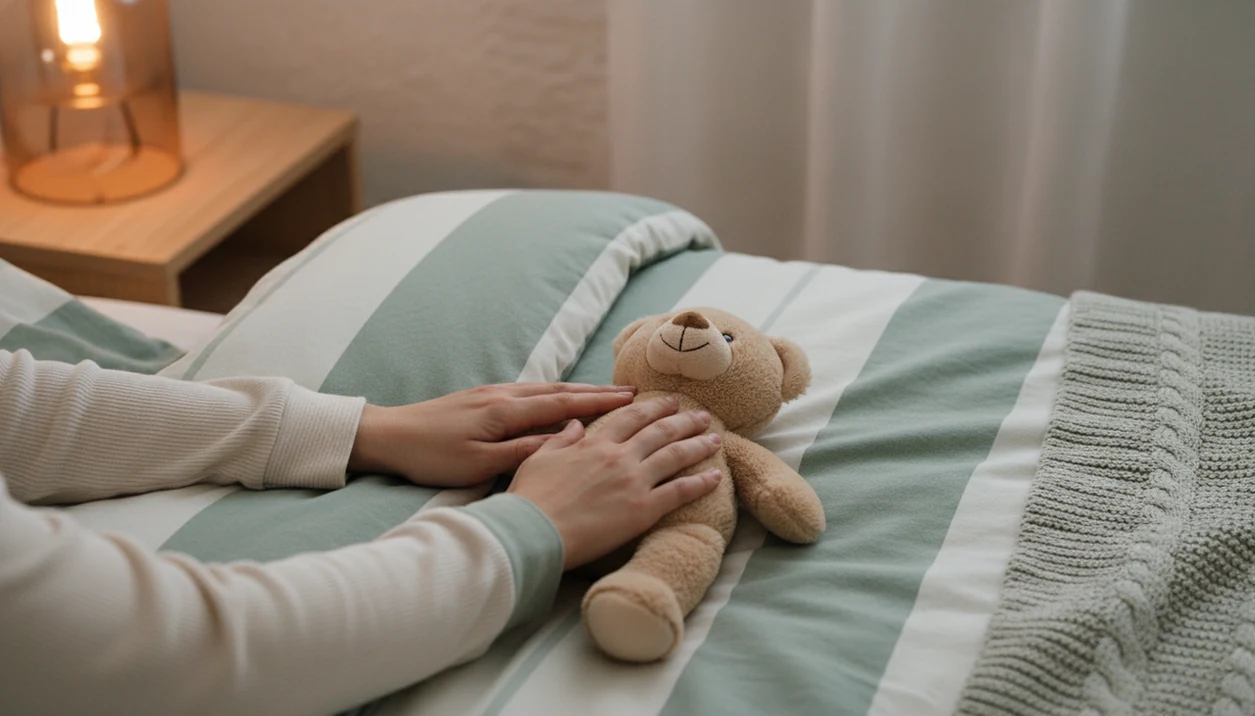


Mindfulness for preschoolers means short, playful activities that help young children notice their breath, body, feelings, and surroundings in the present moment. A child might watch a teddy rise on their belly, listen for room sounds, or name a feeling beside a calm adult. The aim is noticing with curiosity and kindness, not clearing the mind or sitting silently.
Start with a shared routine lasting two to five minutes, and finish sooner if the child loses interest or feels uncomfortable. Children’s Health of Orange County recommends a few minutes a day for preschoolers, with caregivers practicing alongside them. Familiar moments, such as putting on pajamas or returning from preschool, give these small activities a place in daily life.
The preschool approach
- Keep preschool mindfulness short, playful, and routine-based: 2-5 minutes is enough.
- Use breathing games, sound listening, teddy-belly breathing, movement, and feeling-name check-ins.
- Audio tools can support adult-led calming routines when parents keep the practice brief, co-listened, and connected to bedtime, breathing, or everyday calm cues.
Mindfulness for Preschoolers in Five Parent-Friendly Facts
- Mindfulness for preschoolers means noticing the now. That can mean breath, belly movement, feet on the floor, room sounds, a soft toy, or a feeling word.
- Preschoolers are not tiny adult meditators. They should not be expected to clear their minds, sit silently, or stay still for long stretches.
- Consistency matters more than length. For many families, a two-minute breathing game after pajamas works better than a long weekend “mindfulness lesson.”
- Research is promising, not absolute. A 2021 meta-analysis of school-based mindfulness programs found small-to-moderate benefits for cognitive performance and resilience, with additional support for stress and emotional problems source.
- Adult co-regulation is the center. A preschooler learns calm partly by borrowing it from a steady adult voice, relaxed shoulders, and repeated phrases.
The most useful preschool mindfulness routine is short, sensory, and shared with an adult because young children regulate through connection first.
What preschool research says about putting mindfulness into practice
A 2022 pilot trial in six Australian early-learning centers studied an eight-week mindfulness-informed program involving 25 educators and 188 preschoolers. It did not meet feasibility criteria in four of seven educator-reported areas: implementation, practicality, adaptation, and limited efficacy testing. Parent feasibility could not be established because too few parents used the program.
These findings do not show that every home breathing game is ineffective. They show why an appealing program should not be assumed to fit everyday family life. Classroom participation and home participation are separate questions. A brief shared activity is a reasonable starting point, but the research does not establish one routine that reliably improves sleep, attention, or emotional regulation for every preschooler.
How Mindfulness for Preschoolers Works
Mindfulness for preschoolers works by giving a young child one safe thing to notice while a steady adult helps their body settle. The mechanism is simple: connection first, attention second, calm as a possible outcome.
Co-regulation is the heart of it. A preschooler’s nervous system is still learning how to come down from big feelings, so the adult’s slow voice, relaxed face, and predictable words become part of the practice. The child is not being ordered to calm down; they are practicing calm beside someone who is already modeling it. Practicing mindful parenting reactions can help adults respond thoughtfully when a child's feelings become intense.
Attention anchors are small sensory targets that bring the child back to the present. Breath can be an anchor, but so can a bell sound, a hand on the heart, feet pressing the floor, or slow animal walking. These anchors give busy minds something concrete to return to.
Feeling labels add another layer. When a parent says, “That was anger” or “Your worry showed up,” the child begins linking body signals with emotion words. Over time, that early awareness can support self-regulation, but preschool mindfulness should never be used to force quiet, obedience, or hidden distress.
How to Use Mindfulness for Preschoolers
Use mindfulness for preschoolers by attaching one tiny practice to a moment your child already recognizes. Keep it short, sensory, and shared so it feels like a familiar pause, not another demand.
- Choose one predictable routine before you add anything else. Bedtime, leaving the house, coming home from preschool, or the quiet minutes after a tantrum are easier than starting at a random time. During family changes, mindful parenting during divorce can help caregivers maintain reassuring routines and steady emotional support.
- Set a brief limit of about two to five minutes. End while your child is still willing, even if the practice felt imperfect or silly.
- Pick one sensory anchor your child can notice with the body. Try teddy belly breathing, listening for three sounds, feeling feet on the floor, or resting a hand on the heart.
- Model it beside your child instead of calling instructions from across the room. Sit nearby, soften your voice, and let your own breathing become the cue.
- Repeat the same phrase daily until it becomes recognizable. A simple line like “soft belly, slow breath” or “listen, then breathe” can become the doorway into calm.
Brain, Body, and Co-Regulation in Mindfulness for Preschoolers
Mindfulness for preschoolers works through co-regulation, attention anchors, emotional labeling, and body awareness. In plain language, children practice noticing one safe thing at a time while an adult helps their nervous system settle.
Co-regulation means a child “borrows” calm from an adult. A parent sitting nearby, breathing slowly, and saying, “Your body had a big feeling,” gives the child a model they can copy. Not instantly. Over time. As children grow, mindful parenting for teenagers can help parents keep modeling calm during more complex conversations.
Simple anchors train attention without pressure. A preschooler might listen for the hum of the refrigerator, feel socks against toes, or watch a teddy rise on their belly. These small anchors support early executive function skills, which are still developing fast at this age.
Emotional labeling also matters. “That was frustration” or “Your worry showed up” helps a child connect body signals with feeling words. A 2015 kindergarten mindfulness study found greater gains in executive function and emotion regulation compared with controls source. Mindfulness supports regulation, but it should not force calm or teach children to hide distress.
5-Step Home Routine for Mindfulness for Preschoolers
Use mindfulness for preschoolers inside a routine your child already knows. The goal is not a flawless session; it is a familiar shared pause.
- Pick one daily routine such as bedtime, leaving the house, coming home from preschool, or post-tantrum recovery.
- Set a 2-5 minute limit so the practice ends before your child feels trapped or bored.
- Choose one sensory anchor such as breath, room sounds, teddy belly, feet on the floor, or hands on heart.
- Model the practice with your child instead of directing from across the room.
- Repeat the same phrase or game daily until it becomes predictable, like “soft belly, slow breath” or “listen for three sounds.”
Try this before bed.
A child who resists “meditation” may accept a game called “sleepy bear breathing.” If your child is younger or very wiggly, a short meditation for toddlers style may fit better than a preschool routine with more words.
Daily Situation Chart for Mindfulness for Preschoolers
Mindfulness for preschoolers is easiest when each family moment has one matching practice. Parents do not need a full curriculum; they need a small menu they can remember when shoes are missing and dinner is cooling.
| Daily situation | Mindfulness practice | Parent phrase |
|---|---|---|
| Bedtime | Teddy-on-the-tummy breathing or a gentle sleep story | “Let’s watch teddy ride the breath.” |
| Tantrum recovery | 3-breath reset after the peak has passed | “The big feeling passed. Now we breathe together.” |
| Transitions | Mindful feet or walking like a quiet animal | “Can your fox feet feel the floor?” |
| Focus time | Sound detective listening game | “Find three sounds before we start.” |
| Separation worry | Hand-on-heart breathing with a parent phrase | “My love stays with you while I’m away.” |
The bedtime version often works well with dim lights, pajamas, and a parent voice kept low. For a longer wind-down plan, bedtime meditation for children can build on the same idea without turning bedtime into a performance.
Breathing Game Menu for Mindfulness for Preschoolers
Breathing games work better than breathing instructions for many preschoolers. Keep the language simple, and avoid turning breath control into a test they can fail.
Balloon Breathing
Balloon breathing asks the child to place hands on the belly and imagine it gently filling like a balloon. The parent breathes too, so the child has something visible to copy.
Teddy Belly Breathing
Teddy belly breathing works well at bedtime. The child lies down with a small stuffed animal on the tummy and watches it rise and fall for a few breaths.
Other easy options include “smell the flower, blow the candle” and bubble breathing with long, slow exhales. If bubbles get silly, that is not failure. It is preschool.
For families who want more shared breath ideas, parent and child breathing exercises can help adults keep the practice connected instead of corrective.
An outdoor noticing game for children who prefer moving
An outdoor pause can replace seated breathing when movement feels more inviting. Choose one sense at a time: listen together for a nearby sound, look closely at a leaf, then notice how the ground feels under shoes. There is no need to cover every sense or complete a checklist. NHS Fife’s guidance for young children supports brief, age-appropriate practices rather than long periods of quiet sitting.
For example, an adult might say, “I hear a bird. What can we hear next?” or “This leaf has little lines.” Let the child point, talk, or keep walking. The practice is the shared act of noticing, not producing a correct answer. This is an evidence-informed adaptation of sensory attention and adult modeling, not a proven treatment or a requirement to become calm.
Bedtime, Worry, and Listening Games for Mindfulness for Preschoolers
Can mindfulness help a preschooler sleep, worry less, or focus? It can support calming routines, feeling-name practice, and short attention games, but it does not guarantee sleep or replace care for serious concerns.
At bedtime, mindfulness works through predictability. The same story voice, breathing phrase, or teddy-belly ritual tells the body, “We do this before sleep.” It may help settling, especially when the room is dark and the day still feels loud.
For worry, the practice is noticing and naming. “Worry is here” is different from “Stop worrying.” A parent can add reassurance, touch, and a simple plan. For focus, sound detective games or mindful feet give the child one clear target.
Sleep and calming audio tools can offer guided sessions, breathing cues, and repeatable routines, but they should not be treated as diagnosis, treatment, or a replacement for pediatric or mental health care. Tools like MindTastik can support adult-led sleep audio, breathing exercises, anxiety support, and everyday calm when the parent stays involved.
Best-Fit Checklist and Red Flags for Mindfulness for Preschoolers
Mindfulness for preschoolers fits ordinary family routines best. It is not a discipline strategy, a medical treatment, or a way to make a child instantly quiet.
| Best for | Not ideal for |
|---|---|
| Bedtime wind-down routines | Forcing obedience |
| Transitions between activities | Stopping a peak tantrum instantly |
| Mild worries with adult reassurance | Replacing therapy or pediatric care |
| Body awareness and feeling words | Treating severe anxiety alone |
| Parent-child connection | Managing chronic sleep disorders alone |
Some children need adaptations. Sensory sensitivities, trauma histories, autism, ADHD, language delays, or strong body discomfort can make eyes-closed or body-focused practices feel unpleasant. Keep practices optional, brief, and connected. Families adapting these routines for attention differences may also benefit from mindful parenting for ADHD strategies.
For anxious preschoolers, mindfulness usually works best as a supportive practice alongside reassurance and predictable routines, while professional care fits persistent fears that disrupt sleep, school, or family life. A calm down meditation for kids approach may help older children who can follow slightly longer prompts.
MindTastik Support for Family Mindfulness Routines
Apps can help family mindfulness when adults use them as shared cues, not as a substitute for connection. The parent still sets the tone, chooses the moment, and helps the child come back to real life afterward.
In a preschool home, that means the adult may use a guided session to steady their own voice before leading a child through one small practice.
Screens should stay minimal. Audio can be the cue, then the habit becomes offline: hand on heart, three slow breaths, teddy on belly, lights low. Earbuds on a nightstand, one side tangled around a charging cable, are a reminder that the adult routine matters too.
MindTastik, calm.com, headspace.com, and mindful.org can all give adults ideas, but preschool mindfulness works best when the grown-up co-listens, co-plays, and adapts.
Audio support for a shared bedtime pause
MindTastik includes kids sessions, breathing exercises, and sleep stories for a bedtime routine. A caregiver can choose an audio session to listen to together, or use a guided meditation themselves before leading a brief, offline breathing game. The adult’s presence matters more than finishing the recording.
Children who dislike recorded voices or prefer movement may do better with a sound-listening walk or teddy-belly breathing without audio. Persistent sleep problems or severe anxiety need appropriate care, not an app alone.
What preschool mindfulness cannot promise
Mindfulness for preschoolers is promising, but parents should treat it as a support tool, not a guaranteed outcome. Study quality varies, programs differ, and children respond in very different ways.
- Evidence is still emerging, with many small studies and uneven program design.
- Benefits are not guaranteed for every child, classroom, family, or bedtime situation.
- Mindfulness is not a quick fix for chronic sleep problems, severe anxiety, ADHD, trauma, or behavior disorders.
- Some children find body scans, eyes-closed breathing, or stillness uncomfortable or activating.
- App-based practice can be less useful when it replaces adult warmth, touch, play, or repair.
- Using mindfulness as punishment, such as “go breathe until you behave,” can make children resist it.
- Families should seek pediatric or mental health guidance for serious, worsening, or persistent concerns.
Clinicians typically recommend extra evaluation when sleep, anxiety, behavior, or attention concerns regularly interfere with daily life. Mindfulness can sit beside that support, but it should not delay it.
Preschool mindfulness questions
How long should a preschool mindfulness activity last?
Two to five minutes is a practical starting range, not a target every child must reach. Pediatric guidance recommends beginning with only a few minutes daily. End sooner when interest fades or discomfort appears. A short, willing exchange is more useful than making a child finish a timer.
What can I do if my preschooler will not sit still?
Stillness is not required. Try noticing feet while walking, listening for sounds, or looking closely at a leaf together. Keep the adult’s instructions short and concrete. A child can move and talk during the activity. The point is shared attention, not demonstrating the posture or silence of an adult meditator.
Can mindfulness stop a preschooler’s tantrum?
Mindfulness is not a reliable way to stop a tantrum at its peak. The existing routine may fit better after the strongest feelings have passed, when an adult can offer a few shared breaths or a feeling word. It should not become a demand to calm down or a condition for receiving comfort.
Can mindfulness help a preschooler fall asleep?
A familiar breathing game or gentle story can support bedtime settling by becoming a predictable part of the routine. It does not guarantee sleep or treat a chronic sleep problem. Keep the practice brief and shared, and seek pediatric advice when sleep difficulties persist rather than continually extending the meditation.
Does mindfulness help preschool anxiety?
Noticing and naming a worry can give a child a way to describe it while an adult offers reassurance and a simple plan. Preschool research remains limited, so mindfulness should not be presented as an anxiety treatment. Severe or persistent anxiety calls for appropriate professional care, with calming activities used only as support.
Should preschoolers close their eyes during mindfulness?
No. Eyes-closed breathing, body scans, and stillness can feel uncomfortable for some children. Watching a teddy, looking at a familiar object, or listening with eyes open are alternatives. If attention to the body feels upsetting, stop that activity and choose an external sound or sight instead.
How can preschool teachers introduce mindfulness?
Teachers can offer a short, shared noticing activity at a familiar transition, such as listening for sounds before the next task. Model the activity rather than requiring silent performance. Classroom programs still face practical challenges, so participation, comfort, and ease of use matter alongside any hoped-for benefits.