
Short Meditation for Toddlers with Parent Help
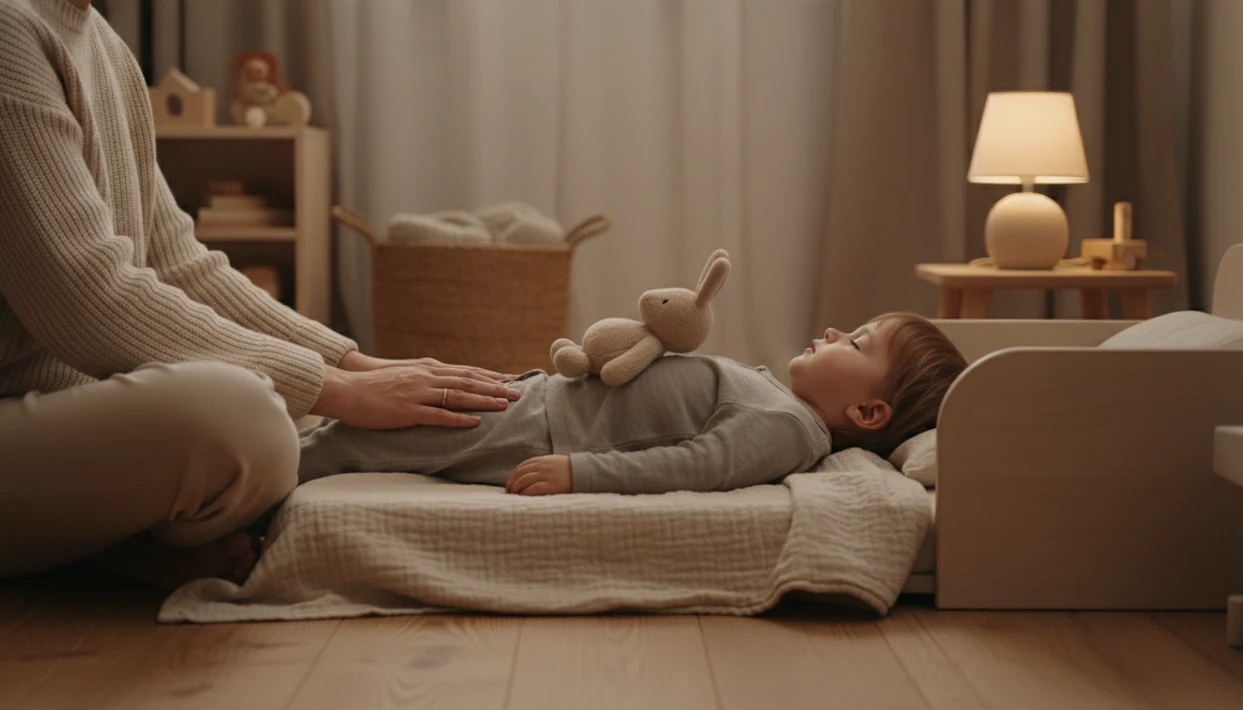


A short meditation for toddlers is a 1-3 minute parent-led calming moment built around breathing, soft sounds, cuddling, movement, or playful cues, not a formal sit-still practice. Its purpose is to help a young child feel safe and settle their body at bedtime, during transitions, or after distress has begun to ease. Two breaths with a stuffed animal can be enough.
Toddler meditation uses simple sensory cues and repetition, with an adult staying close and guiding the activity. Children’s Health of Orange County recommends starting preschool mindfulness with a few minutes and making it part of a routine. Calm audio can provide background support, but it cannot replace responsive parenting or professional help for serious concerns.
Toddler calm basics
- Keep toddler calm meditation to about 1-3 minutes because toddler attention spans are very short.
- Use concrete cues like belly breathing with a stuffed animal, listening for a chime, or blowing pretend candles.
- Calming audio can support parents with soft sounds and breathing prompts, but it should not replace responsive parenting or professional help when concerns are serious.
Short Meditation for Toddlers in 1-3 Minutes
A short meditation for toddlers should usually last 1-3 minutes. That is often enough, and often better, because toddlers are not built for long guided sessions or quiet adult-style focus.
Toddler calm meditation can look like a cuddle, a rocking rhythm, a slow breath with a toy, or listening for one soft sound. It does not need crossed legs, closed eyes, or silence. A toddler may breathe twice, wiggle away, then come back for a hug.
That still counts.
Pediatric guidance commonly describes toddler attention spans as very short, often only a few minutes for one activity. So the aim is safety, repetition, and body settling. Not perfect focus. For young children, a repeated 60-second cue before pajamas may do more than a five-minute track they resist.
For older siblings, you may want a longer calm down meditation for kids, but toddlers need a smaller starting point. For siblings in early adolescence, mindfulness for middle schoolers offers ideas suited to a different developmental stage.
How Toddler Calm Meditation Works in a Young Brain
Toddler calm meditation works mainly through co-regulation. A toddler borrows calm from a parent’s voice, breathing pace, facial expression, body warmth, and predictable routine.
The useful term here is co-regulation, which means the adult nervous system helps the child’s nervous system settle. A soft “in, out” said the same way each night can become a cue. Over time, repetition helps the toddler connect the sound, phrase, or cuddle position with slowing down. Parents of older children can also explore the Finnish bedtime rule as a separate approach to evening connection.
Direct evidence on formal meditation in toddlers is limited. Most research looks at preschoolers, school-age children, and teens. A 2019 JAMA Pediatrics systematic review found small-to-moderate improvements in attention, executive function, and emotional regulation across youth mindfulness programs (source). A 2015 youth mindfulness meta-analysis also reported small benefits for anxiety, stress, and well-being (source).
That does not prove toddler meditation treats anxiety. It supports a modest idea: brief, repeated calming routines may help children practice regulation when the routine fits their age.
Preschool research does not establish toddler benefits
A 2022 pilot trial in six Australian early-learning centers studied an eight-week mindfulness-informed program involving 25 educators and 188 preschoolers. It did not meet feasibility criteria in four of seven educator-reported domains, including implementation and practicality. Parent feasibility could not be established because too few parents used the program. These findings concern a structured preschool program, not a brief toddler cuddle or breathing game.
The practical lesson is to separate a manageable calming routine from claims of proven treatment. NHS Fife’s guidance for young children favors short activities and gives approximately one minute per year of age as a rule of thumb. That is a flexible guide, not a required target. A toddler who accepts one playful breath does not need to complete a longer session.
Five Toddler-Friendly Mindfulness Facts Parents Should Know
- Toddlers need very short routines. Most toddler calm meditation should stay around 1-3 minutes, especially at first.
- Concrete cues work better than abstract instructions. “Feel teddy go up and down” is easier than “clear your mind.”
- Breathing exercise for toddlers should be playful. Try candle breaths, flower smelling, lion sighs, bunny sniffs, or stuffed-animal belly breathing.
- Meditation works better as a routine than a rescue tool. Use it during calm moments, not only when crying has already taken over.
- Apps and audio can structure calm time. Parents should preview every track, lower the volume, and adapt the cue to the child.
For toddlers, sensory cues usually work better than verbal explanation because the body understands them first. Blow. Feel. Listen. Hug. Repeat. For outdoor family time, try nature mindfulness activities that use simple listening and noticing cues.
If you want a shared rhythm for more than one child, a family mindfulness routine can make these tiny practices feel normal instead of like a correction.
How to Use Guided Meditation for Toddlers at Home
Use guided meditation for toddlers when your child is already partly calm. The height of a meltdown is usually the wrong moment to teach a new skill.
- Choose one calm time first, such as after bath, before nap, or after a snack.
- Set the length to 30 seconds, then build toward 1-3 minutes only if your toddler accepts it.
- Sit close enough for contact, using a lap, floor cushion, or bedtime spot.
- Breathe with one playful cue, such as “smell the flower, blow the candle.”
- Listen to soft audio only if it helps; preview the track first, keep the volume low, and stop if your toddler seems overstimulated.
- Repeat the same cue daily so the routine becomes familiar.
The parent’s voice should stay in charge. Audio is just a background support, especially for toddlers who need eye contact, touch, and quick reassurance.
Simple guided audio, not a lecture. That matters.
Best Times for a Breathing Exercise for Toddlers
The best time for a breathing exercise for toddlers is before full distress or after the child has already begun to settle. Consistency matters more than length.
| Moment | Better use case | Less useful moment | 30-second to 3-minute routine |
|---|---|---|---|
| Bedtime | After pajamas, before lights out | When the child is overtired and running | Three candle breaths, then one soft sound |
| Nap wind-down | After books or rocking | During a nap refusal battle | Teddy belly breathing for one minute |
| Car ride | Before a long drive or after buckling in | During screaming peak | Listen for three quiet sounds |
| Post-tantrum recovery | After crying slows | While kicking or unsafe | Hug, rock, slow animal breaths |
| Transitions | Before leaving the park | At the exact moment of refusal | “Blow the leaf” breaths together |
| Quiet play | During blocks or stuffed animals | When the child wants active play | Bell sound, then slow hands |
A bedtime cue may pair well with bedtime meditation for children when older siblings are involved. For toddlers, keep the piece you use tiny.
Simple Toddler Calm Meditation Scripts and Cues
Simple scripts work best when they sound like play. If your toddler resists, stop and try again later.
- Birthday Candle Breaths: “Hold up one finger candle. Smell the cake. Blow it out. Again, slow blow.”
- Teddy Bear Belly Ride: “Teddy sits on your belly. Feel teddy go up. Feel teddy go down.”
- Listen for the Bell: “We listen until the sound hides. Hands quiet. Ears listening.”
- Sleepy Animal Breaths: “Be a sleepy bear. Big slow breath. Soft bear sigh.”
- Cloud Hands: “Hands float up like clouds. Hands float down. Slow clouds.”
These scripts should feel almost too simple. That is the point. Toddlers do not need an explanation of mindfulness for toddlers; they need one action they can copy.
A child may giggle through the whole thing. Fine. If the room gets softer afterward, the cue is doing its job.
Best For and Not For Toddler Mindfulness Routines
Short mindfulness for toddlers is best for gentle transitions, bedtime signals, everyday calming practice, and parent-child connection. It is not a way to force stillness or stop every tantrum. To bring a caring focus to shared calm time, consider kindness practice for families alongside these brief routines.
| Best for | Not for |
|---|---|
| Gentle transitions between activities | Forcing a toddler to sit still |
| Bedtime or nap wind-down signals | Stopping every tantrum immediately |
| Everyday calming practice | Replacing a consistent sleep routine |
| Parent-child connection | Treating clinical anxiety or sleep disorders |
| Simple breathing and sound cues | Handling trauma without professional support |
Evidence in older children is promising, but toddler-specific evidence is limited. A short routine can support regulation practice; it should not carry the whole job.
For toddlers, parent-led breathing is often easier than app-led instruction because the child can copy a face, voice, and body right in front of them. If you want more cue ideas, parent and child breathing exercises gives simple shared practices.
MindTastik Audio for Parent-Led Toddler Calm
For toddler use, the parent should remain the guide. You can preview audio, choose soft soundscapes, borrow one breathing cue, and play it quietly while your child cuddles or rocks. The useful part may be the steady background, not the full spoken session.
MindTastik should not be used as a treatment for toddler sleep disorders, anxiety disorders, trauma, or developmental concerns. If you use it around a toddler, keep the volume low, skip anything too wordy, and let your own voice lead. For sound-only support, a sleep soundscapes meditation app style routine can be easier than spoken guidance.
Soft background sound, with a parent leading
MindTastik’s sleep soundscapes can provide quiet background sound while a parent cuddles, rocks, or repeats a familiar breathing cue. The adult should preview the track, keep the volume low, and remain the guide. A full spoken meditation may be too wordy for a toddler.
Children who find sounds unsettling may do better with a familiar voice and no audio. Families seeking help for persistent sleep difficulties, anxiety, trauma, or developmental concerns need professional assessment rather than an app-led routine.
What toddler meditation cannot treat or guarantee
Short toddler meditation has real limits. It can be a supportive practice, but it is not a clinical tool for every concern.
- There is very little direct research on formal meditation in toddlers.
- Most evidence comes from preschool, school-age, and adolescent mindfulness studies.
- Short meditation is unlikely to work during the peak of a meltdown.
- Some toddlers find voices, music, bells, or animal sounds overstimulating or scary.
- Meditation and breathing exercises do not replace clinical assessment for significant anxiety, trauma, developmental disorders, or sleep disorders.
- Rigid expectations can make calm time stressful. Stop if your child resists.
- A 2009 randomized trial of mindfulness-based cognitive therapy reported anxiety reductions in 8-12-year-olds, but that is older-child evidence, not toddler proof (source).
Clinicians typically recommend seeking professional guidance when sleep, fear, behavior, or development concerns are persistent, intense, or affecting daily family life.
If calm time becomes a battle, shrink it. One breath together may be enough today.
Questions about toddler breathing and calm
Can a 2-year-old meditate?
A 2-year-old can take part in a brief, adult-led calming activity, such as watching a stuffed animal move with breathing or listening for a soft sound. That is different from independent meditation. The goal is shared calm and familiarity, not sustained attention or sitting still.
How long should meditation for a toddler last?
Start with about 30 seconds and extend toward 1-3 minutes only if the child remains comfortable and interested. A couple of breaths or a short cuddle can be the whole routine. There is no need to finish a track or reach a fixed duration.
What breathing exercise is easiest for toddlers?
A pretend candle gives a concrete cue: hold up one finger, then model a gentle blow to put it out. Another option is watching a stuffed animal rise and fall on the belly. Keep the activity playful, and stop if the child resists rather than insisting on correct breathing.
Should I try meditation during a toddler tantrum?
The peak of a tantrum is usually not a useful time to teach a new breathing skill. Stay close, attend to safety, and offer familiar comfort. Once crying slows and the child begins to settle, a known cuddle, rocking rhythm, or breathing cue may fit.
Can short meditation help a toddler fall asleep?
A familiar calming cue can be part of bedtime, such as a brief cuddle and two gentle breaths after pajamas or books. It is not a guaranteed sleep aid and should not replace a consistent sleep routine. Persistent sleep difficulties call for professional assessment, not progressively longer meditation sessions.
What if my toddler will not sit still or dislikes calming audio?
Stillness and audio are optional. Try slow hand movements, rocking together, or noticing one quiet sound without a recording. Some children find music, voices, or bells overstimulating or scary. Stop an activity that causes distress and return to familiar comfort rather than treating participation as a requirement.