
How To Teach Empathy To Preschoolers: A Practical Parent Guide
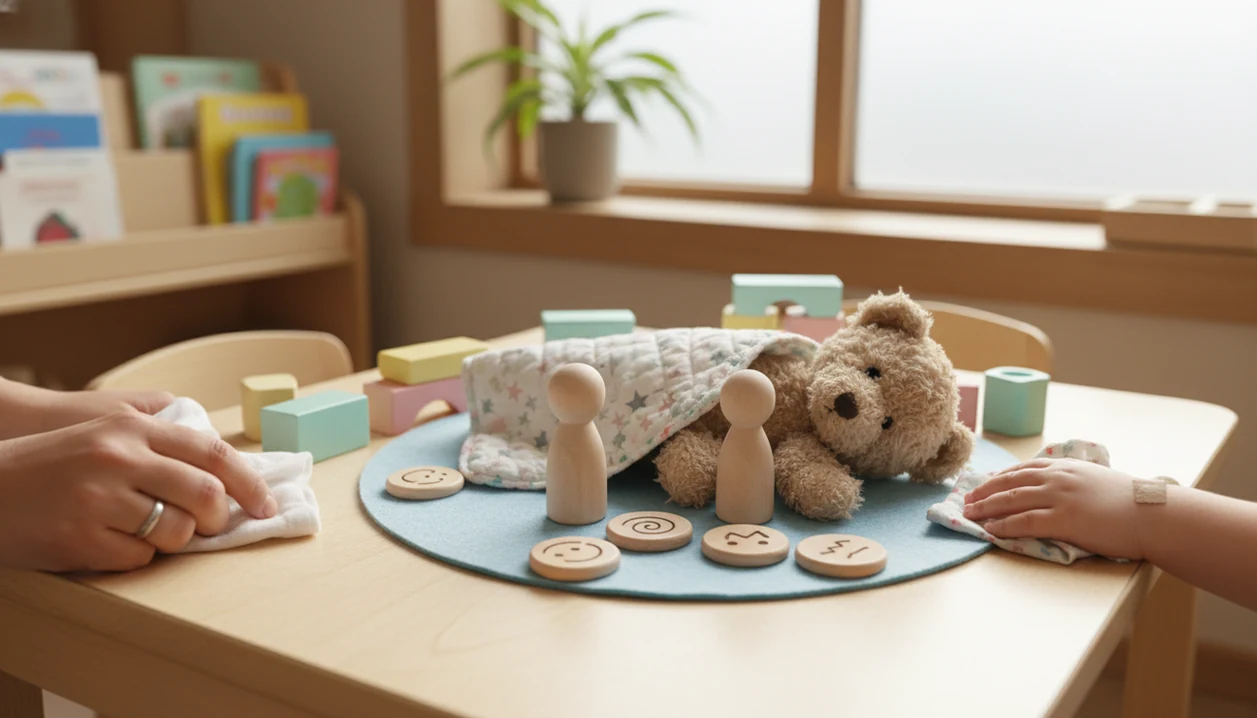


Teaching empathy to preschoolers means helping children ages 3 to 5 notice other people’s feelings, care about them, and respond with simple kindness. It starts with adults modeling caring behavior, naming feelings aloud, and practicing helpful responses through stories, play, turn-taking, and calm-down routines. The useful lessons are small and concrete: someone is crying, a toy was taken, or a friend needs space.
Recognizing sadness and choosing a caring response are different skills. A preschooler may manage one before the other, especially when tired or upset. Gentle coaching connects them: describe what happened, name the feeling, and offer a possible repair. Breathing and calm routines can make room for that conversation, but they do not replace it.
The essentials
- Preschool empathy grows through repeated modeling, emotion naming, play, stories, and gentle coaching.
- Forced apologies are less useful than helping a child notice what happened, how someone felt, and what repair might help.
- Mindfulness, breathing, sleep routines, and calm adult responses can support empathy by helping children regulate big feelings first.
How To Teach Empathy To Preschoolers In Daily Life
The simplest way to teach empathy to preschoolers is to model it in front of them, then coach it in tiny daily moments. Listen kindly, validate feelings, help someone who is upset, apologize when you snap, and let your child hear gentle words in real time.
Preschoolers learn empathy while sharing toys, waiting for a turn, comforting a friend, and repairing hurt feelings after a rough moment. A child may understand “she is sad” before they can reliably choose a caring response. That’s normal.
The block tower falls. Everyone freezes.
In a nationally representative U.S. sample, Child Trends reported that 86% of parents of children ages 0 to 5 said it was very important that their child grow up to help others in need (source). That goal fits preschool development, but it needs repetition. Early empathy is possible at this age; steady adult coaching makes it usable.
How Empathy Works In Preschoolers’ Brains And Behavior
Empathy in preschoolers works as a chain: notice an emotion, understand a simple cause, care about it, then choose a response. If one link is missing, the child may look uncaring when they are really overloaded or unsure.
Preschoolers are still building language, impulse control, perspective-taking, and self-regulation. Those are executive function skills, meaning the brain processes that help a child pause, remember a rule, and shift behavior. In plain terms, they are still learning how to stop and think.
A tired child may grab the red truck and miss the other child’s tears. A hungry child may hear “use kind words” and still yell. Early prosocial behaviors, such as sharing and helping, have been linked in longitudinal research with better later social adjustment and fewer behavior problems (source). For preschoolers, empathy usually works best when adults regulate the moment first, then teach the caring response.
Five Empathy Facts Preschool Parents Should Know
These five facts are the core of any practical how to teach empathy to preschoolers guide. They also keep expectations realistic.
- Empathy is built through repetition. One lecture rarely changes preschool behavior; many small coached moments do.
- Adult modeling is the strongest tool. Children copy how adults listen, apologize, comfort, and speak during stress.
- Feelings words matter. Words like sad, mad, scared, lonely, excited, and proud help children identify emotions in themselves and others.
- Play makes empathy concrete. Books, puppets, role-play, and turn-taking games let children practice without a high-stakes conflict.
- Calm-down skills support caring. A child who can breathe, pause, or ask for help has more room to notice someone else.
A randomized trial of the Preschool PATHS social-emotional learning curriculum found improved social competence and reduced behavior problems in young children (source). The pattern is useful at home too: teach the skill before the conflict, not only during it.
Before You Start Teaching Empathy To Preschoolers
Start empathy teaching when your preschooler is calm enough to hear you, not while everyone is already in survival mode. The goal is to set up tiny, realistic practice moments so caring behavior feels possible.
- Choose a calm window. Try after snack, during play, or while reading together instead of beginning in the middle of a meltdown.
- Use familiar feeling words. Stick with simple labels your child already knows, such as sad, mad, scared, happy, tired, or lonely.
- Check the body first. Look for hunger, poor sleep, sensory overload, or transition stress before assuming your child is ignoring someone’s feelings. When tiredness makes caring harder, explore the Finnish bedtime rule for anxiety as a separate family sleep resource.
- Agree on repair language. Ask other caregivers, grandparents, or teachers to use the same short phrases, such as “What can we do to help?” or “Let’s fix it.”
- Keep practice brief. Aim for less than five minutes. One feeling, one clue, and one kind action are enough for a preschool attention span.
Short practice protects the lesson. A child who feels safe and regulated has more space to notice someone else.
How To Use Empathy Activities For Preschoolers Step By Step
Use empathy activities in short, concrete steps. Preschoolers do better with one clear feeling, one visible clue, and one helpful action than with a long talk.
- Name the feeling. Say, “She looks sad,” “You seem mad,” or “He sounds scared.”
- Point to the clue. Connect the feeling to a face, body, voice, or behavior: “His shoulders are down.”
- Ask one perspective question. Try, “How do you think they feel?” or “What might she need?”
- Offer two caring choices. Say, “You can bring the toy back or ask if he is okay.”
- Praise the behavior specifically. Use, “You noticed Maya was lonely and invited her in,” not “You’re a good girl.”
Keep it small. One child may choose a hug; another may give space. Both can be caring if the other child wants it. For breathing before repair, parent and child breathing exercises can give families a simple starting rhythm.
Best Empathy Activities For Preschoolers At Home And School
Play-based empathy activities work better than lectures because preschoolers learn through bodies, stories, repetition, and pretend scenes. Try a few that fit your home or classroom.
- Emotion I Spy: Look for feelings in faces, picture books, cartoons, or family photos. Ask, “What tells you he feels worried?”
- Story pause: Stop during a book and ask what a character might feel, want, or need next.
- Puppet repair: Use two toys to act out grabbing, knocking down, or excluding. Then practice fixing it.
- Helper jobs: Water a plant, feed a pet with supervision, comfort a sibling, or make a card. For outdoor practice, try nature mindfulness activities for families to notice living things and respond with care.
- Turn-taking games: Practice waiting, losing, winning, and noticing how other players react.
The point is not a perfect answer. It is noticing. If bedtime is when your child is most open to gentle stories, bedtime meditation for children can pair calm listening with simple kindness themes.
Empathy Scripts For Preschool Conflicts And Apologies
“Should I make my preschooler say sorry?” Forced apologies can become automatic, especially when a child is angry, embarrassed, or still dysregulated. A better sequence is: stop harm, name feelings, describe impact, offer repair, then move on.
For hitting: “Stop. Hitting hurts. Leo is crying. You can get a cold cloth or sit near me while he has space.”
For grabbing: “Mia was using that. Her face looks upset. You can give it back or ask, ‘Can I have a turn next?’”
For excluding: “Sam wanted to play and heard ‘go away.’ That can feel lonely. What is one kind choice?”
For breaking something: “The tower fell. Sam is crying. His block tower fell. What can we do to help?”
Skip shame words like mean, selfish, or bad. Also skip courtroom questioning. Too many questions can flood a preschooler who already has no brakes.
How Mindfulness Supports Empathy In Preschoolers
Mindfulness does not teach empathy by itself. It can help preschoolers pause, breathe, notice body signals, and become available for coaching after big feelings.
Useful practices are short: belly breathing, hand-on-heart breathing, quiet listening, bedtime body scans, and gentle guided stories. One child may like pretending to smell a flower and blow out a candle. Another may only manage three breaths beside the cubbies. Fine. Start there. For a brief calm-down routine, short meditation for toddlers can offer another option before practicing a caring response.
A 12-week Kindness Curriculum randomized trial in public preschools found improved social competence and prosocial behavior. A meta-analysis of 24 school-based mindfulness interventions also found small but significant effects on prosocial behavior and social skills. That suggests support, not guarantees.
MindTastik provides guided meditation, sleep audio, breathing exercises, and self-hypnosis sessions for adults who want sleep, anxiety, and everyday calm support. For families, MindTastik fits best as caregiver support or a calm routine aid, not a replacement for relationship-based teaching. A meditation app for sleep can only support repeatable pauses; it cannot create empathy without adult modeling, repair, and practice.
Calmer behavior is not the same as greater empathy
Research on children’s mindfulness often measures attention, self-regulation, or prosocial behavior rather than empathy itself. These outcomes matter, but they are not interchangeable: waiting for a turn does not establish that a child understands another person’s feelings. A 2023 review of group mindfulness interventions found mixed results for children’s emotion regulation, with improvements in some studies rather than a consistent effect.
A 2026 review of mindful movement for children aged 0 to 10 also found a suggestive, but not statistically significant, overall social-emotional effect, with considerable variation between studies. This supports modest expectations for breathing or movement activities. Use them as possible preparation for noticing feelings and practicing repair, not as proof that empathy will improve or as a substitute for adult coaching. As children grow, mindfulness for middle schoolers offers age-specific ideas that differ from the short practices preschoolers need.
Best For And Not For Empathy Teaching Tips
The right empathy strategy depends on the child, the setting, and the stress level in the room. Sleep, hunger, overstimulation, anxiety, temperament, and neurodiversity can all change how a child responds.
| Method | Best for | Not ideal for |
|---|---|---|
| Modeling | Daily empathy lessons children can copy | Adults who are too escalated to stay kind |
| Books | Naming feelings and discussing repair calmly | A child mid-meltdown |
| Role-play | Practicing toy conflicts before they happen | Children who feel mocked or put on display |
| Forced apologies | Quick social closure for adults | Real perspective-taking or meaningful repair |
| Mindfulness breaks | Helping bodies settle before coaching | Treating empathy as a breathing-only skill |
| Reward charts | Remembering routines like helper jobs | Turning kindness into performance |
Adapt the strategy before assuming the child does not care. A child with sensory overload may need quiet first. A child with limited language may need picture choices. Families building a broader family mindfulness routine can use the same calm-down language across adults and children.
Common Mistakes When Teaching Empathy To Preschoolers
The first common mistake is expecting empathy after one talk. Preschoolers need practice on Tuesday, Thursday, and again in the grocery line.
Another mistake is assuming they are too young to care. Many preschoolers notice sadness, crying, and unfairness, but they need help turning that noticing into action.
A third mistake is focusing only on “say sorry.” Repair matters more: return the toy, rebuild the blocks, check on the friend, or give space.
Labels also hurt the lesson. Mean, selfish, bad, and naughty often produce shame, not understanding.
The adult’s nervous system is part of the teaching. If we tower over a child and lecture loudly, we are modeling escalation. Calm caregiver behavior is a daily empathy lesson, even when the words are simple and imperfect.
Audio support for calming down before empathy practice
MindTastik’s kids sessions, sleep stories, and breathing exercises can support calm family routines around empathy practice. Its breathing exercises are an option for adults looking for a guided pause before returning to a difficult conversation. A calmer moment is the setting for teaching, not the empathy lesson itself.
Families seeking help with persistent aggression, developmental concerns, or trauma-related difficulties need support beyond an app. Children who dislike listening to audio may prefer a picture book, puppet play, or quiet time beside a trusted adult.
What empathy coaching and mindfulness cannot guarantee
Empathy teaching is important, but it has limits. Preschool children develop unevenly, and some need much more repetition than others.
- Temperament can affect how quickly a child notices or responds to distress.
- Language ability changes how well a child can name feelings or explain repair.
- Developmental differences, trauma history, and neurodiversity may require adapted strategies.
- Mindfulness evidence in very young children is promising, but effects on empathy are not guaranteed.
- Digital tools and apps cannot replace secure relationships, adult modeling, and face-to-face coaching.
- Sleep loss, anxiety, hunger, sensory overload, and family stress can temporarily reduce caring responses.
- Frequent hurting, intense distress, or loss of skills deserves extra support from a pediatrician, early childhood specialist, or qualified clinician.
Apps such as MindTastik, calm.com, headspace.com, and mindful.org may support adult calm or guided routines. They should not be treated as therapy, diagnosis, or a guaranteed empathy tool for children. For younger children who need very brief audio, short meditation for toddlers may be a better fit than longer sessions.
Preschool empathy questions
Can a 3-year-old understand empathy?
A 3-year-old can begin noticing feelings and practicing simple caring actions, but responses may be inconsistent. Recognizing that someone is sad is different from knowing what to do next. Adults can connect the two with a clear description and a choice, such as returning a toy or helping rebuild.
Why does my preschooler seem not to care when someone cries?
A child may notice crying but feel overwhelmed, miss its cause, or not know how to respond. Hunger, tiredness, language skills, and sensory overload can also affect the moment. Describe what happened without calling the child uncaring, then offer one manageable response when they are calm enough to listen.
Should I force my preschooler to say sorry?
A forced apology may produce the words without helping a child understand the harm. First stop the hurtful behavior, describe its effect, and offer a repair: return the toy, rebuild the blocks, or give the other child space. An apology can be part of repair without being the only goal.
What should I say after my preschooler hits another child?
Start with a clear limit: “Stop. Hitting hurts.” Attend to the child who was hurt, then help the other child settle. Later, name the impact and offer a concrete repair, such as getting a cold cloth. Keep the explanation brief rather than demanding a long conversation during distress.
What activities help preschoolers practice empathy?
Picture-book discussions, puppet conflicts, helper jobs, and turn-taking games make feelings and responses visible. During a story, ask what a character might feel and what could help. With puppets, act out a grabbed toy and practice returning it. Choose one feeling and one helpful action rather than a long lesson.
How can I teach empathy without forcing my child to share?
Use turn-taking to practice noticing another child’s wishes while keeping the current turn clear. Try, “Mia is using the truck. Sam wants a turn next.” Coach waiting and asking rather than treating every refusal as unkind. After grabbing, returning the toy gives the child a concrete way to repair.
Does mindfulness make preschoolers more empathetic?
Mindfulness may help some children pause, notice feelings, and settle enough to hear coaching. That does not establish a direct improvement in empathy. Research findings vary, and some studies measure self-regulation or prosocial behavior instead. Pair brief calming activities with real conversations about feelings, impact, and helpful responses.
How do I adapt empathy activities for a child with limited language?
Use short feeling words, visible clues, and actions the child can show rather than explain. Point to a character’s tears, say “sad,” and demonstrate offering help. Puppet play and picture books can reduce the need for lengthy answers. Developmental differences may require adapted strategies and more repetition, not stronger demands.